Why the Upington site needed a cooling change
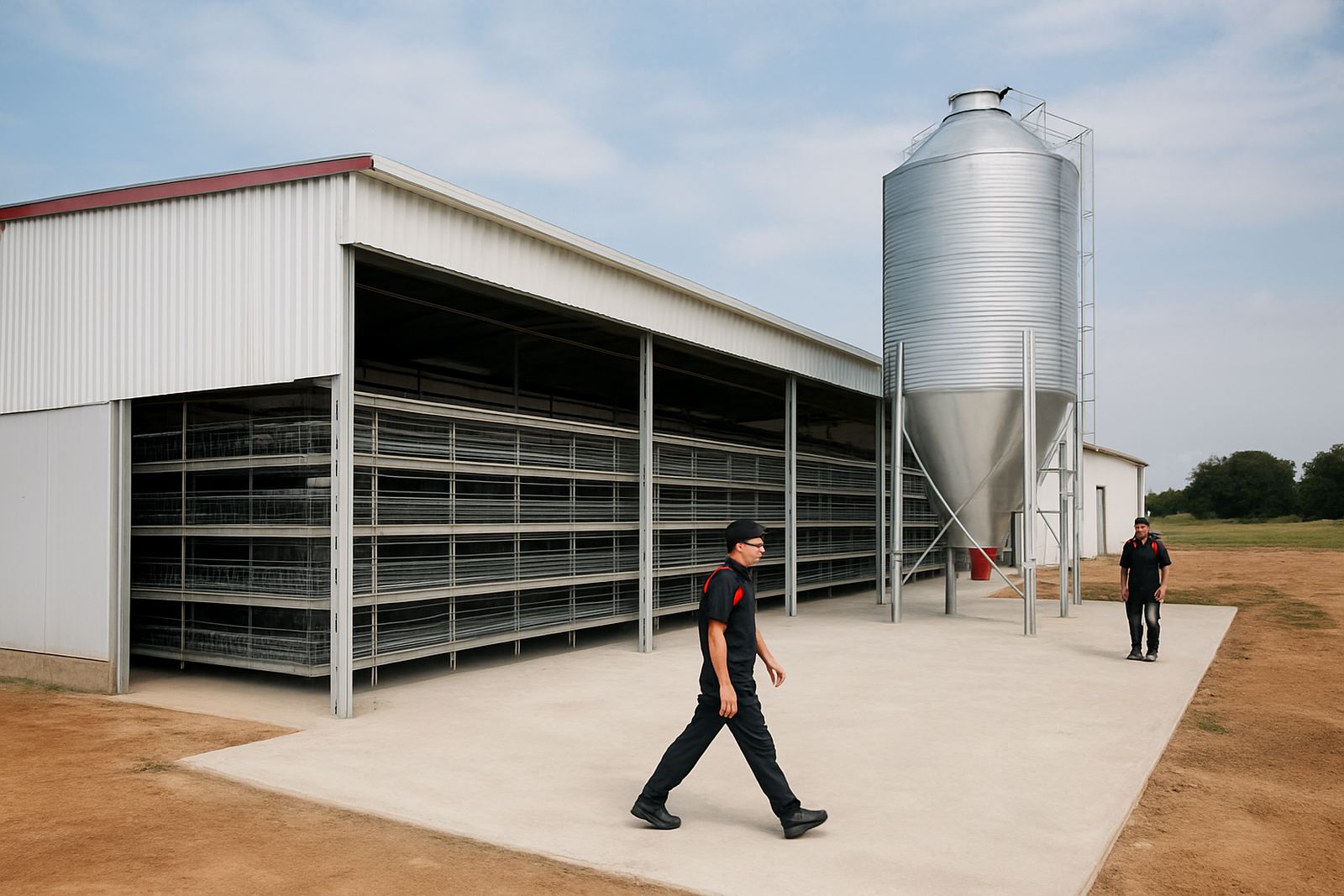
The client runs a poultry operation outside Upington, where daytime heat can sit high for long stretches and the air stays very dry. In those conditions, houses that were coping well in winter can start to struggle in late spring and early summer, especially when stocking density rises and birds get heavier. The brief was simple enough on paper: reduce heat stress, improve airflow through the house, and keep the system practical for farm staff to run day to day.
The existing setup was not failing outright, but it was working too close to the limit. During hotter periods the house was slow to recover after midday, and the team had to work harder to keep temperature differences from front to back under control. Water use also had to be managed carefully because this part of the Northern Cape does not allow wasteful cooling or poor pad maintenance. We planned the upgrade around low maintenance, easy cleaning, and steady performance in dry weather rather than chasing high specification parts for no reason.
Site constraints we worked around
Upington brings a few practical constraints that shape the job from the start. Heat is one part of it, but dust, wind, long cable runs and water quality are just as important. The client needed a solution that would not block access along the house side, would not overload the existing power supply, and could be serviced without pulling the whole house out of action for days.
- Hot, dry conditions with rapid temperature rise from late morning onward
- Dust loading that can reduce pad life and restrict airflow if filtration is ignored
- Water conservation requirements and a need to avoid runoff around the house base
- Existing structure that needed modification without major civil work
- Farm staff who needed a simple operating routine, not a complicated control panel
We also checked the layout against the prevailing wind on site. In Upington, if you ignore wind direction you can end up fighting the weather every afternoon. The final layout was set to work with the house orientation and not against it, which saved the client unnecessary fan run time and made the cooling response more stable.
What we supplied and installed
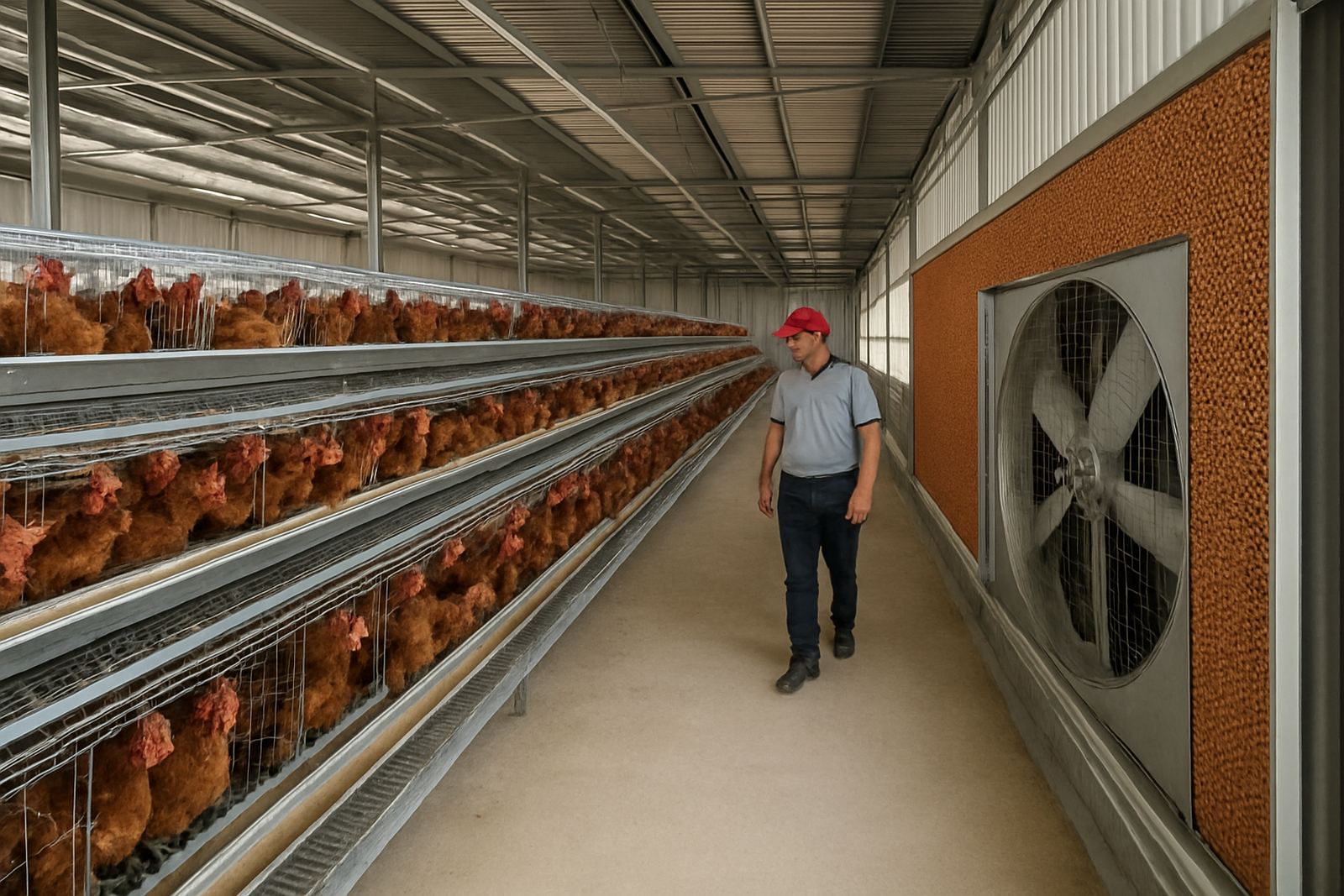
The upgrade centred on a matched ventilation and evaporative cooling package sized to the house length and bird load. We supplied and supervised installation of high-volume fans, cooling pads, water distribution lines, circulation pumping, and control equipment with basic alarm functions. The aim was to create even air movement through the tunnel section and reliable wetting across the full pad face.
Key items included a set of axial extraction fans with guards, corrosion resistant pad frames, cellulose cooling pads, distribution pipework, end tanks, float control, washable strainers, and a controller set up for staged fan operation. The system was also configured to allow manual override, which matters on farms where staff want to test conditions or respond quickly if the weather changes.
- Evaporative cooling pads sized for full end-wall coverage
- Fan stages arranged for stepped heat response rather than all-or-nothing operation
- Water circuit arranged for easy flushing and pad maintenance
- Temperature and pressure checks carried out during commissioning
- Access points left clear for cleaning and regular inspection
Installation and commissioning over four weeks
The project was completed over four weeks from final measure-up to handover. Week one covered site assessment, final sizing, electrical checks, and confirmation of house dimensions. Week two was for fabrication, equipment preparation and delivery planning so the site did not sit waiting for material. Week three covered installation supervision, mounting of fans and pad frames, pipe routing, and control wiring coordination. Week four was dedicated to testing, water balancing, airflow checks and staff training.
Because the house was in active farm use, we had to sequence the work carefully. We kept the shutdown periods short and made sure the client could still move around the site safely while equipment was being fitted. There was also a small but important detail around water drainage. The pad line had to be set so excess water returned cleanly and did not pool against the house or create mud at the base, which is a common problem in dry areas when cooling is set too low or left to overrun.
During commissioning we checked that the fans started in the correct stages, the pads wetted evenly from top to bottom, and the house responded properly as external temperatures changed through the day. The operator training covered daily checks, pad flushing, strainer cleaning, and what to look for if airflow suddenly drops.
What changed after the upgrade
The result was a house that held temperature more steadily through hot afternoons and recovered faster when the outside heat climbed. Bird comfort improved, and the team reported fewer pressure points around the hottest part of the day. Most importantly, the staff could now manage the house with a repeatable routine instead of trying to compensate by hand all the time.
From an operations point of view, the client wanted three things: better heat management, lower stress on staff, and equipment that would hold up in dusty dry weather. The upgrade delivered all three. Fan staging reduced unnecessary power use, the cooling pads gave a proper evaporative response, and the controls were simple enough for the team to follow without calling for support on every small adjustment.
- More even house temperature from end to end
- Better control during peak heat in dry weather
- Lower risk of heat stress at critical growth stages
- Cleaner, more manageable water handling around the pad area
- Less manual intervention needed during hot afternoons
What we would repeat on the next Upington job
If we were doing the same type of project again in Upington, we would follow the same approach: confirm the house orientation first, check water quality early, and size the ventilation before talking about extras. That order matters because in dry heat the cooling pad is only as good as the air you pull through it. A bigger pump or more water does not solve a badly balanced house.
We would also keep the maintenance plan simple from day one. That means monthly inspections during the hotter season, pad flushing on a set routine, and cleaning points that staff can reach without climbing over equipment. For farms in the Northern Cape, practical upkeep beats fancy features every time. John F Marshall has handled poultry projects across South Africa since 2009, and this job was another reminder that the best results come from matching the equipment to the town, the climate and the people running it.
Project support from our Gauteng team
This upgrade was coordinated from our Jet Park base in Boksburg, with support from our project and technical team. The client dealt with a single team for planning, equipment selection, installation supervision, commissioning and training, which kept the job moving without confusion between suppliers. For farms in Upington and similar inland areas, that coordination makes a real difference because every delayed delivery or wrong fitting costs time in the heat.
Our team on this project included operations, technical sales, project coordination and aftercare support. Once the system was running, we stayed available for follow-up checks and advice on seasonal settings. That is the part many people overlook, but it matters just as much as the hardware when a house has to perform through the full summer cycle.
Key facts
| Project type | Ventilation and evaporative cooling upgrade |
|---|---|
| Location | Upington, Northern Cape |
| Timeline | 4 weeks from survey to handover |
| Main equipment | High-volume fans, cooling pads, water distribution and control gear |
| Main goal | Better heat management in dry conditions |
| Service scope | Planning, installation supervision, commissioning and operator training |