Client Brief: Small Footprint, Clean Collection
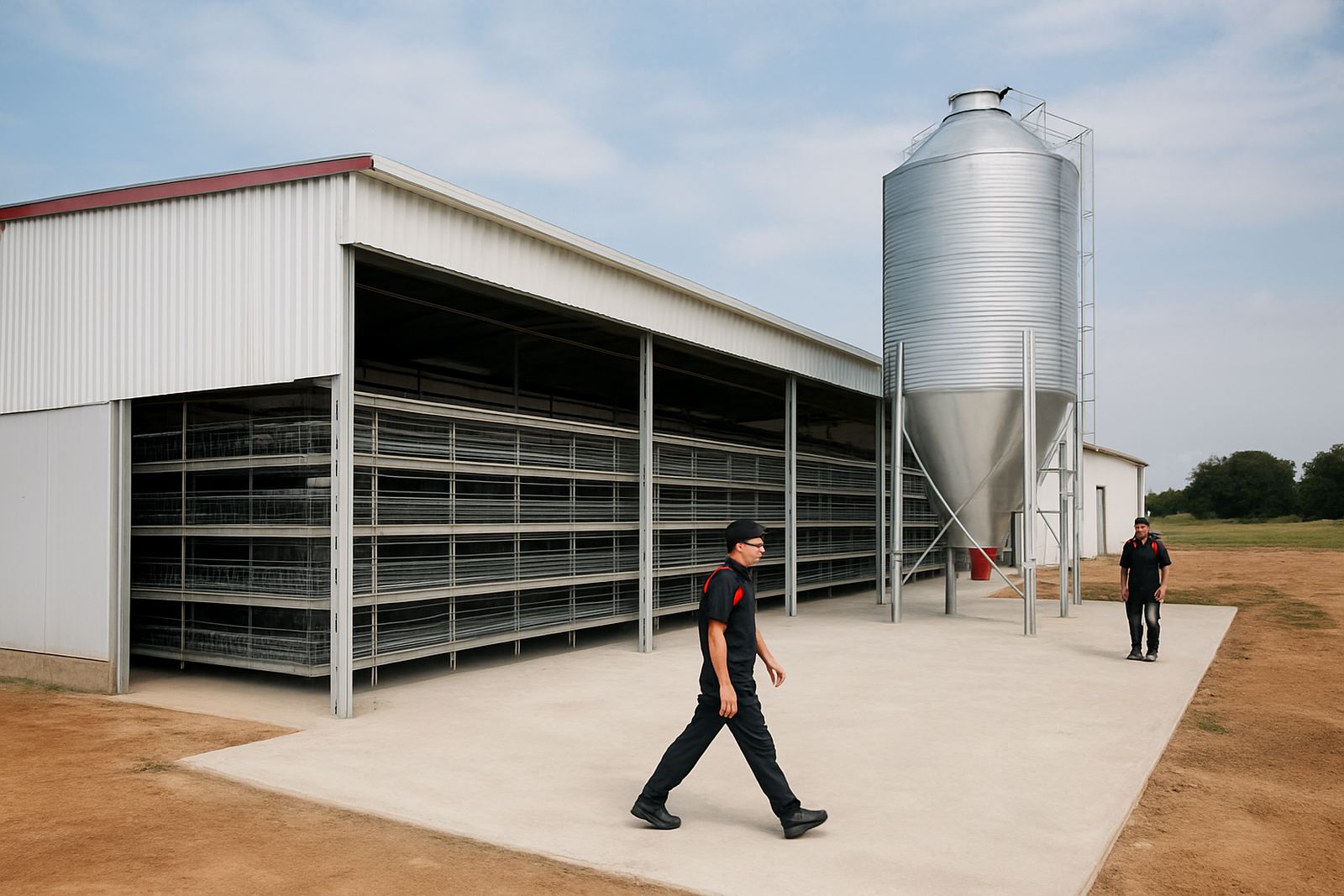
The client was a local farming family near Graaff-Reinet looking to move from mixed backyard rearing into a more orderly quail unit for eggs. The brief was straightforward: keep the footprint tight, make daily egg collection quicker, and set up housing that would be manageable with limited labour and variable water pressure. The site sits in a dry inland climate, so dust control and ventilation mattered just as much as stocking numbers.
They wanted a practical setup for around 1 200 laying quail, with the option to step up later without rebuilding the whole house. The main challenge was that the building shell was already in place, but the internal layout was not suited to bird flow, cleaning or tray access. We needed to work around a narrow service passage, low roof sections and a supply schedule that had to fit a working farm outside town.
- Species focus: laying quail
- Target capacity: 1 200 birds
- Area focus: egg production and easy collection
- Location: Graaff-Reinet, Eastern Cape
What We Supplied And How It Was Arranged
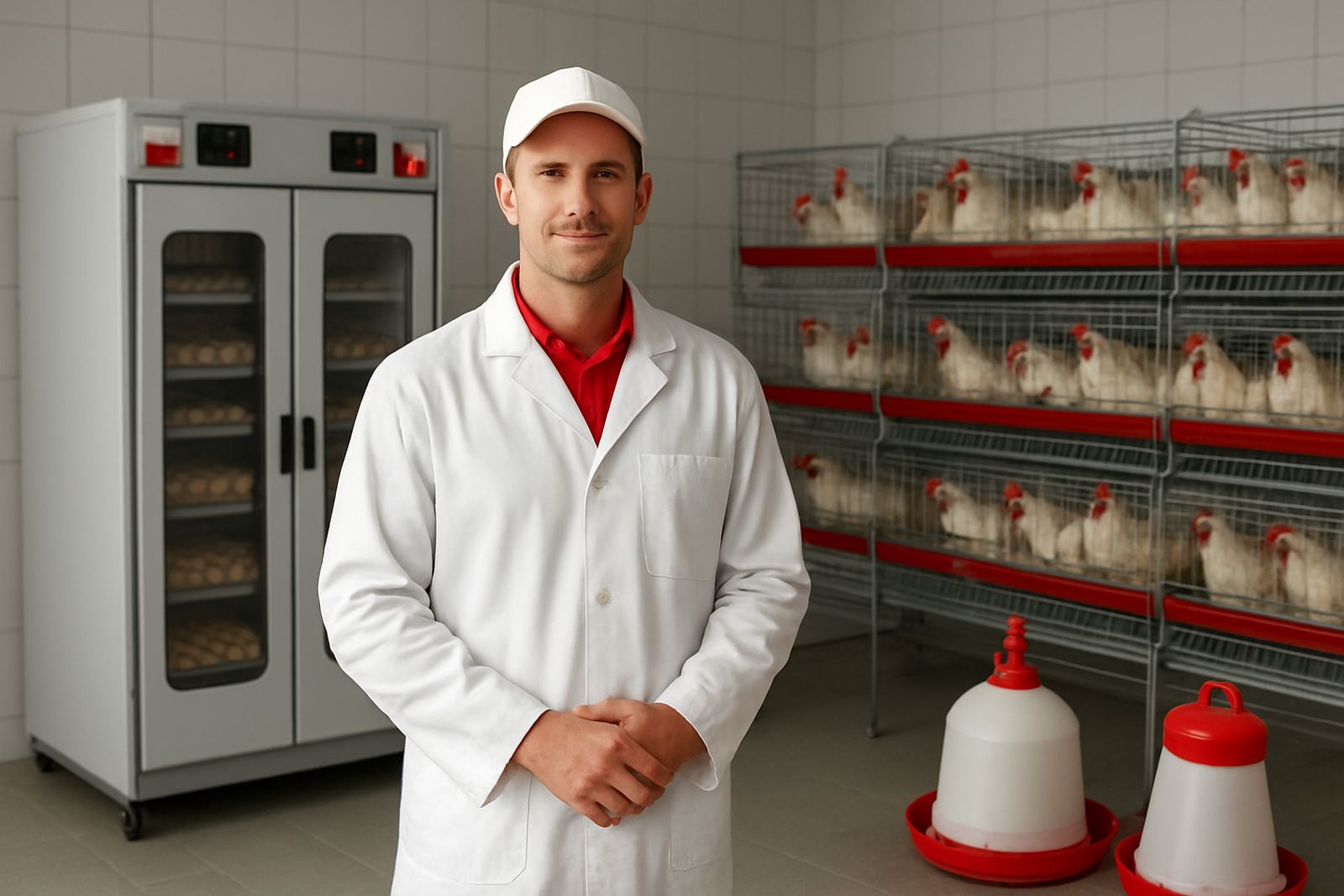
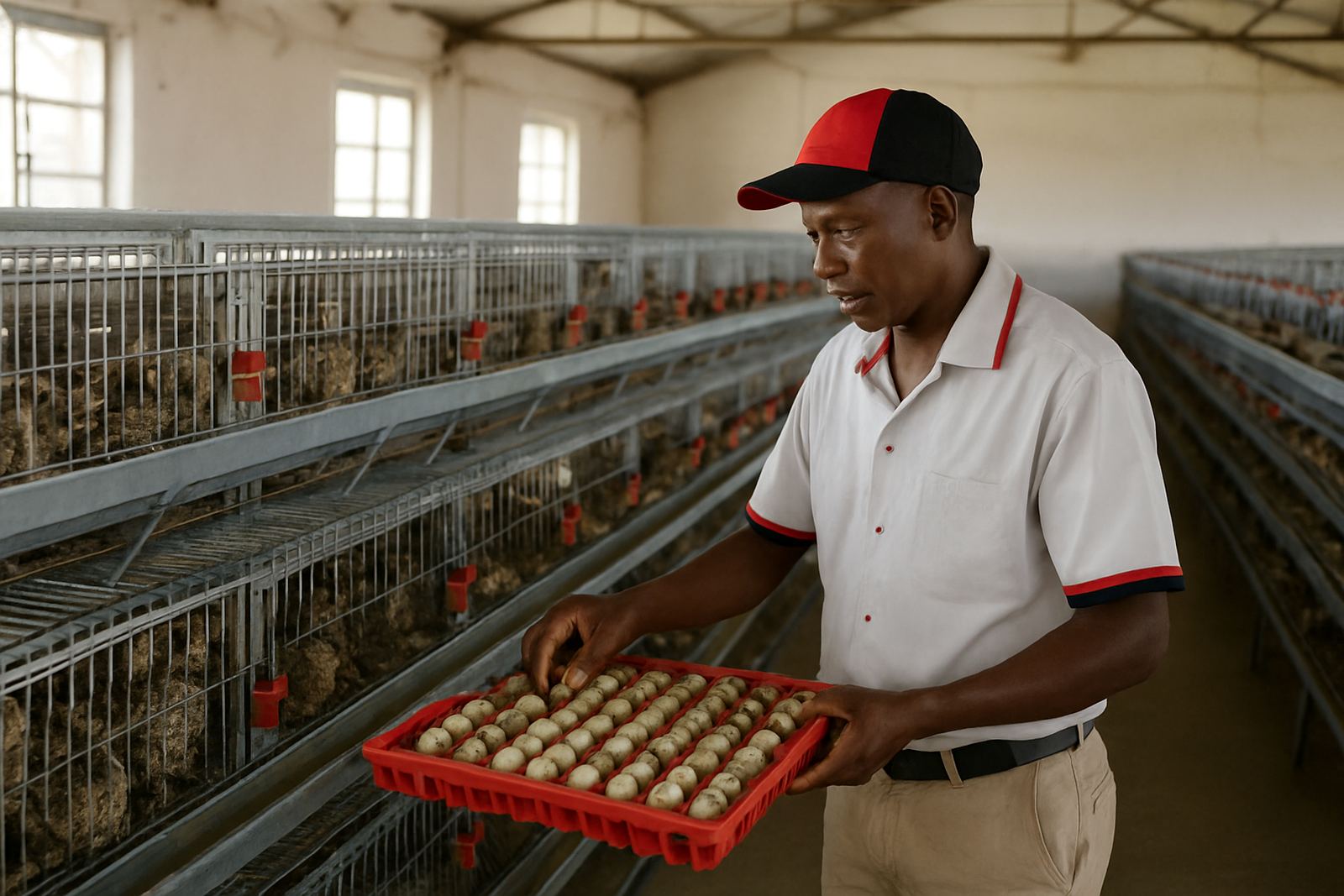
We supplied compact multi-tier quail cages with front egg roll-out, feed troughs and drinker lines suited to small birds. The cage banks were arranged in two runs with a central working aisle, giving enough room for staff to collect eggs without lifting trays over one another. The house was fitted with metal stands, drip trays and washable components so the client could keep the unit cleaner between cycles, even during windy weeks when dust finds every gap.
To support the daily routine, we included nipple drinkers with pressure control, hanging feed bins for controlled fill rates, and removable egg collection trays. The equipment spec was chosen for simple management rather than showy features. In a quail unit, too much complexity just creates maintenance headaches. We also supplied guard mesh sections at the ends of each bank to help reduce bird stress during movement and cleaning.
- Multi-tier cage banks for quail
- Nipple drinking system with pressure control
- Feed troughs and hanging bins
- Egg roll-out trays for quicker collection
- Washable drip trays under each tier
Site Constraints In A Karoo Town
Graaff-Reinet brings its own set of practical issues. Summer heat can rise sharply, while winter mornings can be cold enough to slow bird activity. The client also had to work within municipal water availability and the usual inland dust that comes with open farm roads. That meant we prioritised airflow, easy hose-down surfaces and a layout that would not trap manure in corners.
Power reliability was another point. The unit needed to continue basic management during load-shedding, so the team planned for manual egg collection, gravity-fed storage where possible and equipment that did not depend on a complicated control panel. The house also had to remain accessible for feed deliveries and waste removal, so the walkway widths and door positions were set out before any fixed equipment went in. A small planning error at this stage can cost a lot later, especally in a compact house.
- Heat and dust management for inland conditions
- Simple systems to reduce load-shedding risk
- Service access for feed, cleaning and egg movement
- Layout built around existing building limits
Installation, Commissioning And Training
Installation and commissioning took three weeks on site, after a first round of measurements and equipment checks at our Jet Park base. Lerato Mokoena coordinated the operations side, while Sibusiso Dlamini handled the project flow with the client and site crew. The equipment was set level, water lines were tested for pressure consistency, and the feed points were marked for daily use so the staff could move through the house without crossing each other’s path too often.
Once the birds were introduced, Musa Cele ran a practical training session on watering, cleaning, egg collection and simple fault finding. The client’s team needed clear routines, not theory. We covered what to check first if a line blocked, how to keep eggs clean in dry weather, and how to spot stress signs before they turn into production losses. Thabo Nkosi later followed up with a service call to confirm the drinkers and cage fixings had settled properly after the first stocking cycle.
- 3 week on-site installation and commissioning
- Level checks and water pressure testing
- Operator training for cleaning and egg handling
- Follow-up service after first stocking
Results After Stocking
After stocking, the client saw a cleaner routine almost immediately. Egg collection was faster because the roll-out trays were set at a consistent angle, and the central aisle kept movement organised. The birds settled well because the housing was not overcrowded and air movement through the house remained steady. In practical terms, that meant fewer cracked eggs, less feed spillage and easier end-of-day cleaning.
The site also reported better labour control. One person could manage the water checks and a second person could collect eggs without disrupting the whole house. That matters on family farms where the same team may also handle crop work, repairs and deliveries. The setup has room for a measured expansion later, which gives the client a path to grow without tearing out the original investment.
- Quicker daily egg collection
- Cleaner bird area with less spillage
- Better staff flow in a tight building
- Space reserved for future expansion
What We Would Repeat On The Next Quail Job
We would use the same approach again for any small commercial quail unit in a dry town setting like Graaff-Reinet. Start with the building dimensions, confirm the bird numbers, then lock the service aisle width before ordering cages. That sequence saves time and avoids expensive rework. We would also keep the focus on simple plumbing, easy wash-down surfaces and clear training from day one.
For projects like this, John F Marshall’s strength is practical poultry planning: site planning, equipment selection, house layouts, installation supervision, commissioning, operator training, maintenance programmes and spares supply. If the client later wants to add more laying capacity or move into a processing room fitout, the existing layout now gives them a sensible base to work from. That is what good project work should do, it should leave the farm easier to run, not harder.
- Plan around the building first, then the cage count
- Keep water and cleaning systems simple
- Train staff before full stocking begins
- Leave room for future bird numbers
Key facts
| Project | Graaff-Reinet Quail Unit |
|---|---|
| Bird type | Laying quail |
| Target capacity | 1 200 birds |
| Timeline | 3 weeks on site |
| Location | Graaff-Reinet, Eastern Cape |
| Key supply | Quail cages, drinkers, feeders, egg trays |