Broiler house brief for a growing poultry unit in Delmas
The client was a commercial poultry operation in Delmas, Mpumalanga, running a new broiler house as part of a phased expansion. The brief was straight forward: set up equipment that could take a full growing cycle, reduce labour at feeding and watering points, and keep conditions steady during the early brooding period, when temperature swings can set a flock back quickly.
Delmas can see cold mornings, warm afternoons and strong dust movement, so the house had to cope with changing air movement and simple maintenance between cycles. The owner wanted a layout that local staff could operate without complication, with parts that are easy to clean and inspect. A main concern was fitting everything into the house plan without blocking service walkways or making future wash-down awkward.
The project was also timed around electrical and civil work already underway on site. That meant our team had to work with the contractor on final floor levels, inlet positioning and hanging heights, instead of forcing a one-size approach. That kind of early co-ordination saves a lot of time later and avoids expensive rework.
Equipment supplied for feeding, drinking and brooding control
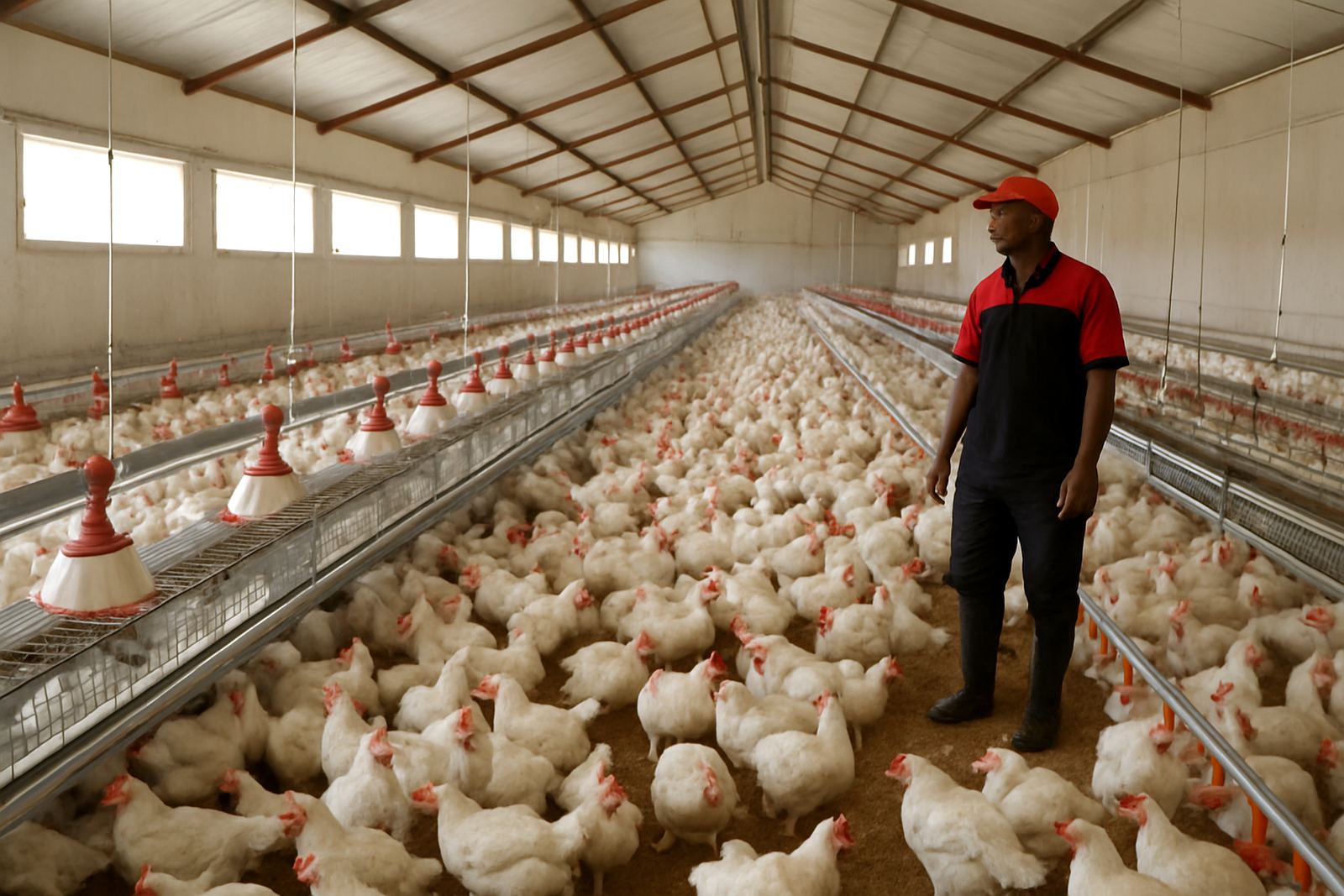
We supplied the broiler house with feeding lines, drinker lines, brooding equipment and supporting hardware sized for the house footprint and target bird numbers. The feeding system was set up for even feed distribution along the full building length, while the drinking line spacing was planned to keep access clear for chicks and older birds alike. The brooding section was arranged to help the first days after placement, when birds need stable heat and easy access to feed and water.
- Automated feed delivery lines with adjustable height suspension
- Nipple drinking lines with drip control and height adjustment
- Brooding support equipment for early-stage chick management
- Ventilation components to support air movement and temperature control
- Suspension materials, clamps and mounting hardware for house installation
- Service spares and setup consumables for commissioning
The build was kept practical for everyday use. Operators needed to reach all points for cleaning, checking, and minor adjustments without climbing over equipment. We also made sure the layout allowed for routine inspection of lines and access to end units. In poultry work, a small problem left unattended can spread fast, so access matters just as much as the equipment itself.
House layout, ventilation and brooding details that mattered
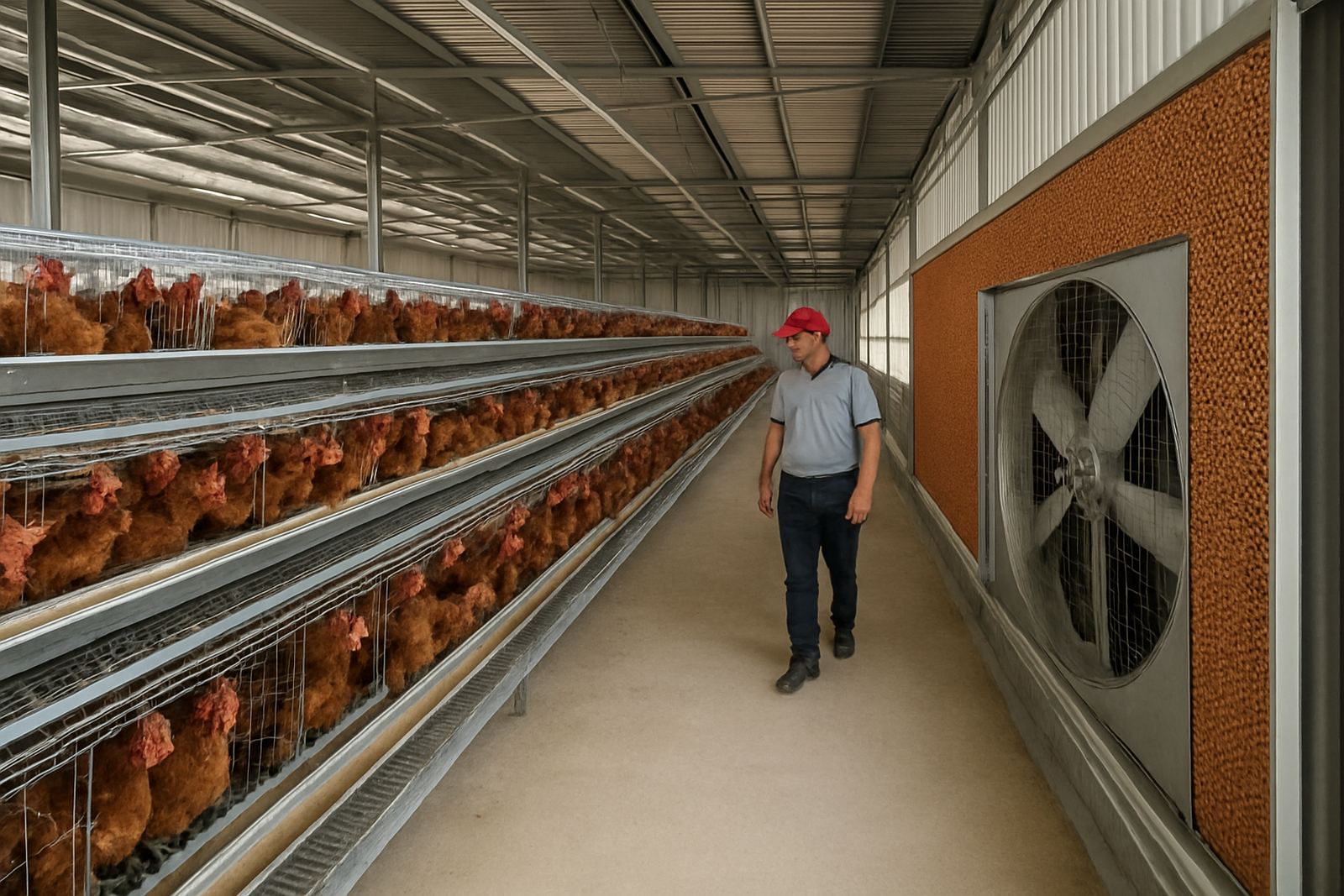
The shed layout was checked against the actual house dimensions before installation started. That included the ridge line, sidewall clearance, feed bin position and the route for water supply. Ventilation equipment was positioned to support cross-house air movement and to help manage heat build-up on warmer afternoons. In Mpumalanga, a broiler house can go from cool to stuffy quicker than people expect, so air movement is not something to leave to chance.
Brooding was treated as its own stage, not an afterthought. We worked to create a centre area that could hold temperature better in the first days, then open out as the birds grew. The goal was to reduce chick scatter, keep feed and water close, and avoid cold corners that can cause uneven growth. That approach helped the team settle the flock faster and with less handling.
- Confirmed house measurements before equipment placement
- Checked service access around inlets, lines and hanging points
- Adjusted brooding focus for early chick comfort
- Set ventilation positions to suit local dust and airflow conditions
Installation supervision and commissioning on a working site
Our scope included installation supervision and commissioning rather than simply dropping off equipment. On a live poultry site, that is the part that saves time and avoids mistakes. Sibusiso Dlamini coordinated the project programme with the builder, while Anika van der Merwe handled equipment planning and technical checks. Thabo Nkosi supervised final set-up and made sure the line adjustments were correct before birds came in.
The practical issues were the usual ones: keeping fittings aligned, making sure supports carried the weight properly, and checking that feed and water points were level from one end of the house to the other. A small tilt in a line can create uneven output and wet patches, so the team checked it carefully. We also trained the operators on basic daily checks, start-up routines and what to look for during the first 48 hours after placement.
Because the site was in an area where weather and power interruptions can affect timing, the commissioning plan was kept flexible. The house was handed over in stages so the client could keep moving with the rest of the farm works. That approach kept the project on track and reduced idle time for the contractor, which matters when labour and equipment are already booked.
Results at placement and the first production cycle
The finished house gave the client a cleaner working pattern for feeding, watering and early brooding. Once the flock was placed, the house held temperature better in the brooding zone and the operators could reach the lines and controls without wasting steps. Water access was even, feed spread was consistent, and the team reported easier daily checks compared with the earlier manual arrangement.
For the client, the main gain was control. Instead of reacting to uneven bird behaviour, the team could manage the house in a more planned way. That helps with uniformity, especially when the house is being worked with local staff on a tight schedule. It also means less strain on the equipment, because systems that are installed and used properly tend to last longer between major repairs.
There was also a training benefit. The operators now understood line height changes, basic cleaning routines and what parts to inspect before each new cycle. That kind of practical knowledge cuts down on avoidable call-outs and keeps the house running between planned services.
What we would repeat on the next Delmas broiler shed
If we were starting a similar project again in Delmas or a nearby town, we would follow the same process: confirm the house plan early, co-ordinate with the builder before the first fixings go in, and keep the brooding section simple to manage. That sequence works because it aligns the equipment with the building, not the other way round. It also lets us spot small clashes before they become costly delays.
We would also keep the training close to commissioning. When the people on site understand the system from day one, the house settles in faster and the equipment gets used correctly. For commercial poultry work, that is worth more than fancy add-ons. It is the practical habits that keep birds moving well and reduce losses between cycles.
John F Marshall has been handling poultry projects from Jet Park, Boksburg since 2009, with work across Gauteng, Mpumalanga, Limpopo, North West, Free State and KwaZulu-Natal. This Delmas shed fit-out was a good example of what we do best: site planning, equipment selection, installation supervision and support that keeps the farm moving.
Key facts
| Project location | Delmas, Mpumalanga |
|---|---|
| Client type | Commercial broiler producer |
| Scope | Broiler house fit-out with feeding, watering, ventilation and brooding equipment |
| Project duration | 4 weeks from site check to commissioning |
| House type | Single broiler shed for commercial cycle production |
| Services included | Site planning, equipment selection, installation supervision, commissioning and operator training |