Why pressure changes drinker performance
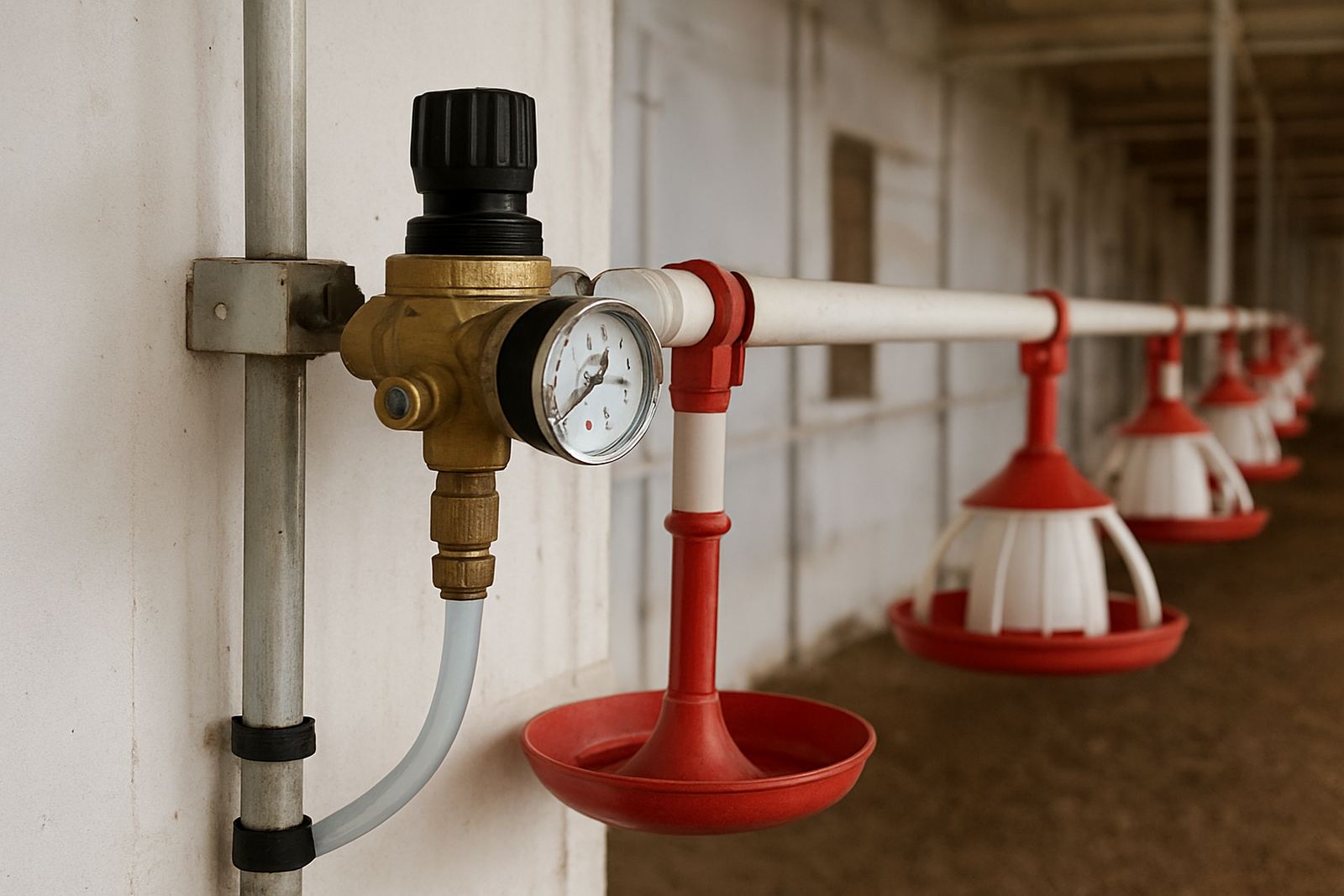
Most poultry drinkers are built to work within a set pressure range. If pressure is too low, birds may struggle to trigger flow and the system can look half full even when the tank is not empty. If pressure is too high, cups overflow, nipples drip and water ends up in the litter instead of in the bird.
That matters because water intake drives feed intake, growth and egg output. A small drop in water access can show up first as uneven bird size, more floor moisture and extra ammonia smell in the house. In hot weather, especially in North West or Limpopo, pressure problems can become obvious within a few hours.
The pressure range that suits most poultry houses
There is no single setting for every system, but the point is always the same: match pressure to the drinker type, line length and bird age. Chicks need gentle flow and easy trigger action. Older birds can cope with higher pressure, but only if the cups, regulators and piping are set correctly.
- Too low: weak flow, poor access and uneven water intake
- Too high: dripping nipples, splashing and wet litter
- Too uneven: birds at one end of the house drink better than birds at the other
A proper pressure gauge at the line and a regulator that works properly are basic tools, not extras. Without them, operators are guessing.
House height, tank position and slope all count
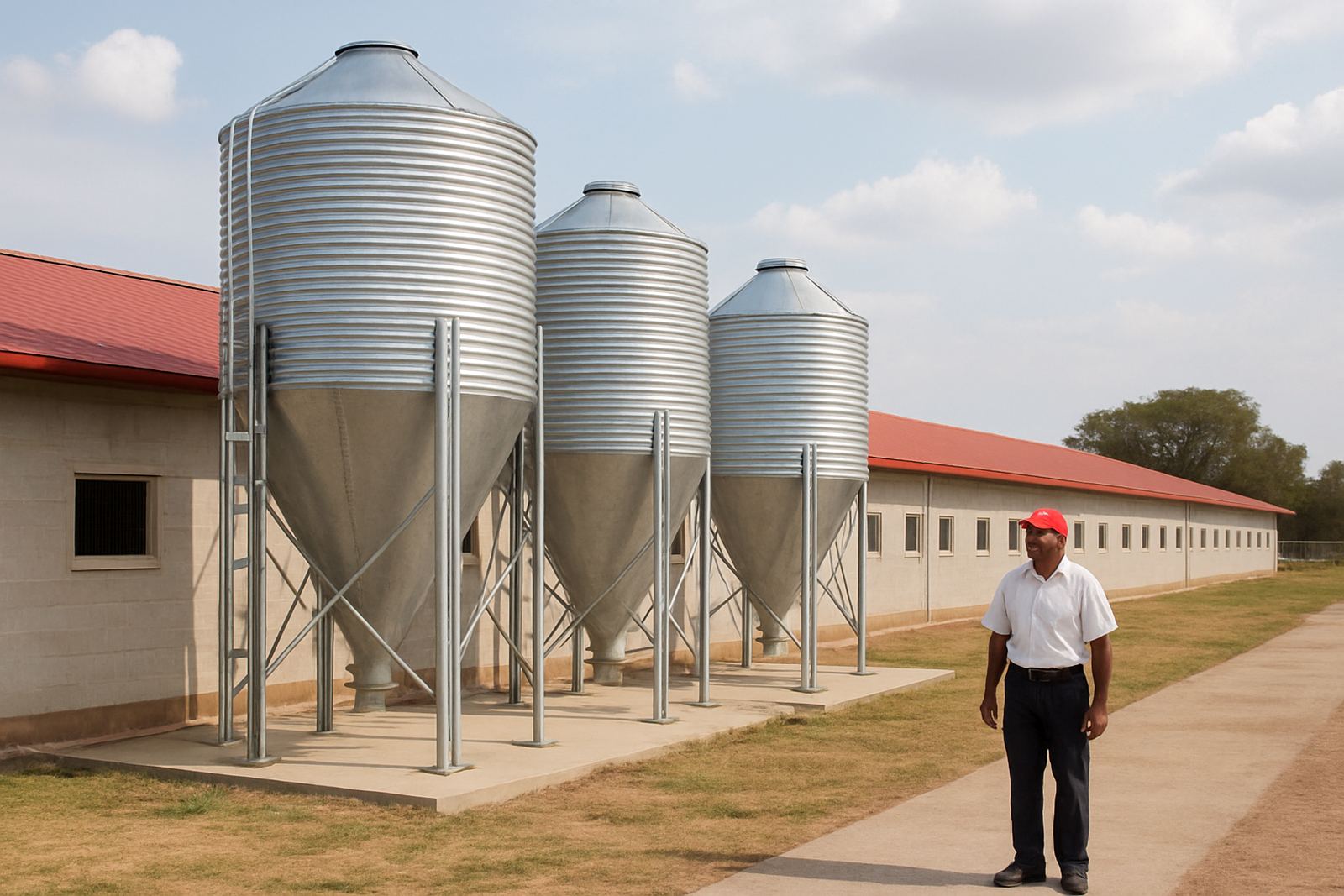
Water pressure is affected by how the house is built. A storage tank on a raised stand, a long pipe run and a slight slope in the line can all change the pressure birds see at the drinker point. In a long broiler house in Jet Park or a larger site outside Middelburg, the first and last lines may not behave the same if the layout is not checked.
That is why site planning and house layout matter before equipment goes in. A line that looks fine on paper can still perform badly if the tank is too low, the pipe size is wrong, or the line has air trapped inside it.
- Check tank height before installation
- Keep pipe runs as short and direct as possible
- Make sure the line can be flushed properly
Load-shedding and municipal water cuts make pressure unstable
South African poultry farms do not always have a perfect supply. During load-shedding, pump performance can drop if the system depends on electrical pressure boosting. Municipal interruptions or uneven borehole delivery can also cause air locks and pressure swings.
When that happens, operators often notice birds crowding certain drinker points or pecking at fittings because flow is inconsistent. A pressure loss after a power cut may only take a few minutes to affect the house, so backup planning matters. On coastal farms in KwaZulu-Natal, humidity and corrosion can also affect fittings and valves if they are not checked regularly.
What operators should look for during a daily walk-through
Good pressure management is not only a technical job. It is also a daily observation job. A trained operator can spot pressure trouble early by looking at bird behaviour, line condition and the state of the litter under the drinkers.
- Wet patches under specific lines
- Birds stretching too far to reach water
- Air bubbles or uneven flow in the line
- Drip marks on fittings after the system rests
If the litter is damp near one section but dry at the other end, do not assume it is just a ventilation issue. Pressure may be part of the problem, and it can also make ventilation harder by adding moisture into the house.
A simple Gauteng example from a working broiler unit
A broiler unit near Boksburg had repeated wet patches in the centre lanes and smaller birds at the far end of the house. The owner thought the problem was feed, but the water line test showed higher pressure near the inlet and much lower flow at the last section. The tank was fine, but the regulator was not matched to the line length and the house was taking water unevenly.
After the layout was corrected, the line flushed properly and the pressure was balanced from front to back. Litter stayed drier, bird movement improved and the team had fewer complaints about blocked drinkers. It was not a big change, only proper set-up and regular checking.
Pressure checks should be part of maintenance, not an emergency fix
Pressure problems are easier to prevent than repair. A planned maintenance programme should include regulator inspection, flushing, leak checks and a quick test of the full line after cleaning or line changes. Spares should cover the parts that fail most often, such as seals, valves and pressure fittings.
For farms expanding in Mpumalanga, Limpopo or the Free State, pressure needs should be reviewed again when houses get longer or bird numbers increase. Once the system changes, the old settings may no longer suit the load. Small pressure faults can keep repeating if the equipment is never rebalanced.