Start with flock numbers and daily feed use
The first step is to work backwards from the flock. A broiler house, layer house or rearing unit will all draw feed at different rates, so the same silo size does not suit every project. If you know the bird count, age profile and feed form, you can estimate daily tonnage with far more accuracy than guessing from house size alone.
For laying hens, the feed draw is steadier than in fast-growing broilers, but it still changes with age, temperature and production stage. Hot weather in Limpopo or KwaZulu-Natal can reduce intake for a period, then demand picks up again when conditions cool. That is why a silo should cover more than just one good week on paper, because real farms are never that tidy.
- Count the birds at full stocking density, not the starter number.
- Work on peak consumption, not average monthly use.
- Allow for wastage during transfer, cleaning and small supply delays.
Match silo capacity to delivery pattern
The next question is how often feed trucks can reach your site. A farm near Jet Park may get regular deliveries with shorter notice, while a site in North West or Limpopo can wait longer if roads are busy, rain cuts access or a supplier’s route changes. If deliveries are daily or every second day, you can use a smaller silo. If trucks only arrive twice a week, you need more buffer.
A good rule is to size the silo around the longest realistic gap between deliveries, not the shortest promise from the supplier. If the feed mill normally comes every five days, allow for seven. If a public holiday, municipal roadworks or heavy rain can stretch that to nine, then the silo should cover that period with a little spare room. Leaving the silo too full all the time also creates problems because there is no safe headroom for delivery, and that leads to spillage.
- Frequent deliveries: smaller silo, lower capital outlay.
- Infrequent deliveries: larger silo, more supply security.
- Remote sites: add extra buffer for weather and road delays.
Why one house size can need two different silo choices
Two farms can have the same bird count and still need different silo sizes. The first may have a feed bin close to the house and a smooth truck route. The second may have a compact yard, narrow turning space and deliveries that must happen before 8 am to avoid other traffic. In the second case, it can be smarter to install more than one smaller silo rather than one large unit, especially where access is tight.
There is also the question of feed type. Pellets, crumbs and mash can behave differently in transfer and storage. Feed with more fines may bridge more easily if the cone angle or discharge setup is not right. In coastal areas, humid air can also cause clumping if the silo is overfilled and left sitting too long. That is one reason we look at the whole supply chain, not just the storage drum itself.
When planning a new poultry project, we also check whether the site may expand later. It is often cheaper to prepare the base and service layout for a larger silo now, rather than rebuilding the yard after the first flock cycle. That small bit of planning saves a lot of grief later on.
Keep access, cleaning and maintenance in mind
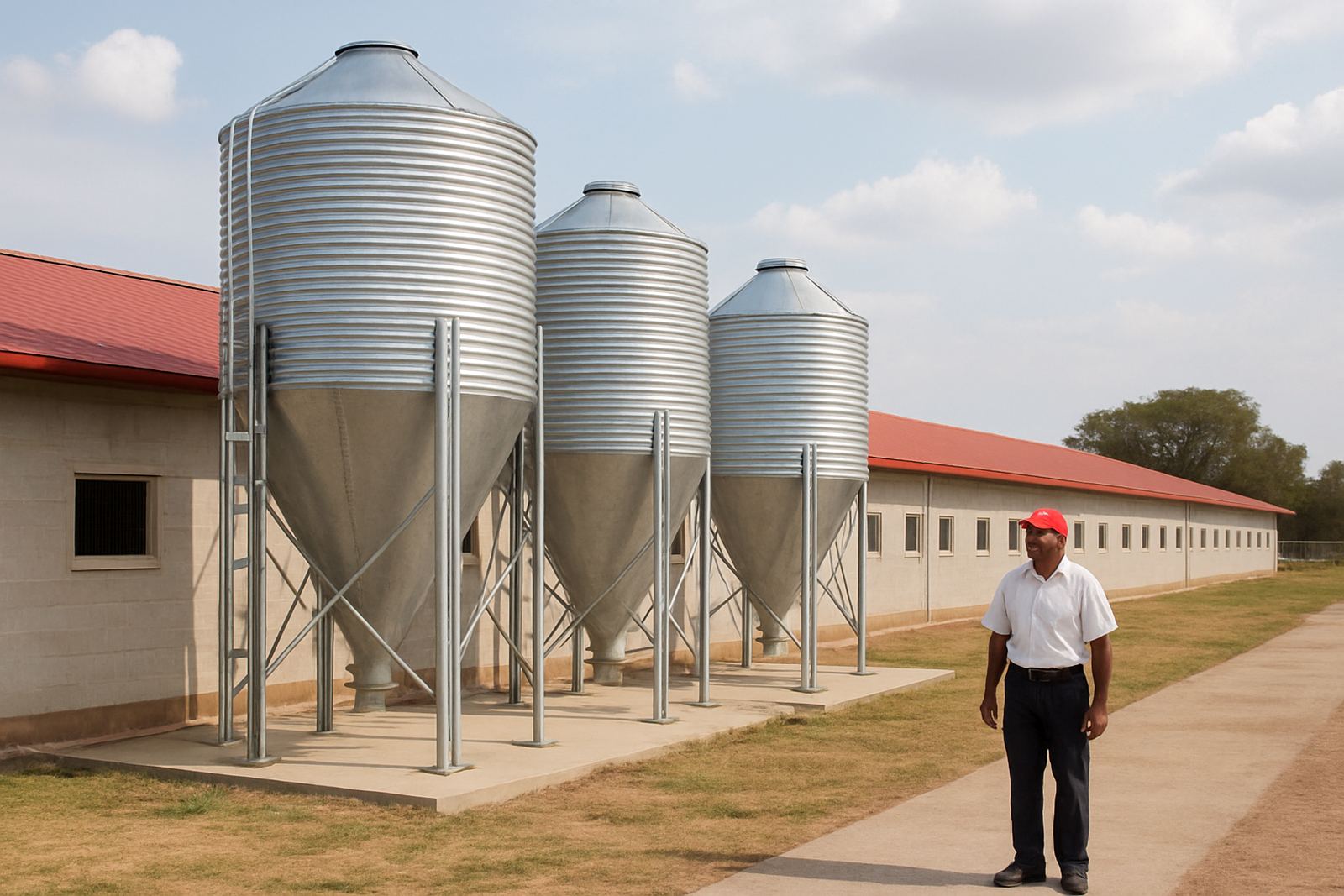
Silo size should not create maintenance trouble. A bigger bin is not useful if the auger angle, support legs or fill line are difficult to reach safely. The delivery truck must park on level ground and the operator should be able to inspect the top, bottom and discharge area without climbing over pipes or wet soil. In the rainy season, especially on clay soils in Gauteng and Mpumalanga, poor drainage can turn a delivery point into a mess within one storm.
Think about cleaning and service access too. Dust build-up, condensation and old feed in dead spaces can lead to blockages. If the silo is too large for the flock and feed stays for long periods, the risk of poor flow increases. A sensible size keeps turnover healthy so the feed does not sit there for weeks on end.
- Leave enough space for delivery hose and truck movement.
- Check that the fill point is easy to inspect and service.
- Provide proper drainage so the base stays dry after rain.
Local example from a layer project in Gauteng
On a layer project in the East Rand, the flock size called for a steady weekly draw, but deliveries could only be scheduled every six days because the feed mill combined loads for several farms. The site also had limited yard space and a narrow gate. Instead of forcing one oversized silo into the yard, the team selected a size that covered the delivery gap with a safety margin, then arranged the house layout so the truck could unload without reversing across soft ground.
That project worked because the choice was based on real conditions, not just the bird count. The farm manager wanted enough feed on hand to avoid emergency calls, but did not want a bin so big it would stay half full all the time. That balance matters more than people think, especially when labour is tight and the owner is off site. We see the same thing in Free State and KwaZulu-Natal projects where farms are spread out and a missed delivery can upset the whole week.
A practical sizing checklist before you order
Before you commit, walk the site and answer the basics in plain numbers. How many birds will the house hold at full production? What is the daily feed requirement in kilograms or tonnes? How often will trucks deliver, and what happens if one load is late? Do you have room for safe truck access, future growth and proper drainage?
If you can answer those questions clearly, silo selection becomes much easier. The best choice is usually not the largest one available, but the one that matches the flock, the delivery pattern and the real working conditions on the farm. That is the difference between storage that supports production and storage that creates extra work.
- Bird numbers at full capacity
- Average and peak daily feed use
- Delivery frequency and backup plan
- Site access, drainage and maintenance space
For poultry sites across Gauteng, Mpumalanga, Limpopo, North West, Free State and KwaZulu-Natal, careful silo sizing helps keep feed flow predictable and keeps the house supplied without constant interruptions.