1. Start with the site and the numbers
The first step is not the quote, it is the site. Before any cages, feeders or drinkers are ordered, we look at the land, the house size, access for delivery trucks, water supply, power supply and where the manure and waste will go. A good start saves weeks later, because a poultry house that looks fine on paper can still fail when the floor levels, ventilation points or road access are not right.
For a laying-hen project, the main numbers are bird capacity, house width, house length, stocking density and the production target. A small project in Mpumalanga may only need one house and a simple packing area, while a larger KwaZulu-Natal site can need staged expansion, spare bays and a better feed store. If the farm is close to the coast, we also factor in corrosion from humid air and the need for stronger maintenance planning.
2. Early enquiry, site visit and practical planning
Once the enquiry comes in, the next stage is a site visit or a detailed remote review. We check where the project will sit, how the houses will be orientated, and what can move through the site without trouble. In Gauteng and North West, municipal rules and zoning can shape the layout. In Limpopo or the Free State, distance from suppliers and service support has to be considered early, because delays on a rural site can cost more than the equipment itself.
At this point the client should have a clear idea of what is needed now and what may come later. It is far cheaper to leave room for an extra feed line, a larger egg store, or a future processing room than to cut and rebuild six months after commissioning.
- Confirm bird numbers and growth phases
- Check water pressure, borehole yield or municipal supply
- Confirm power availability and load-shedding backup
- Allow access for delivery, lifting gear and future maintenance
- Identify any local permissions, environmental or health requirements
3. Equipment selection and house layout drawings
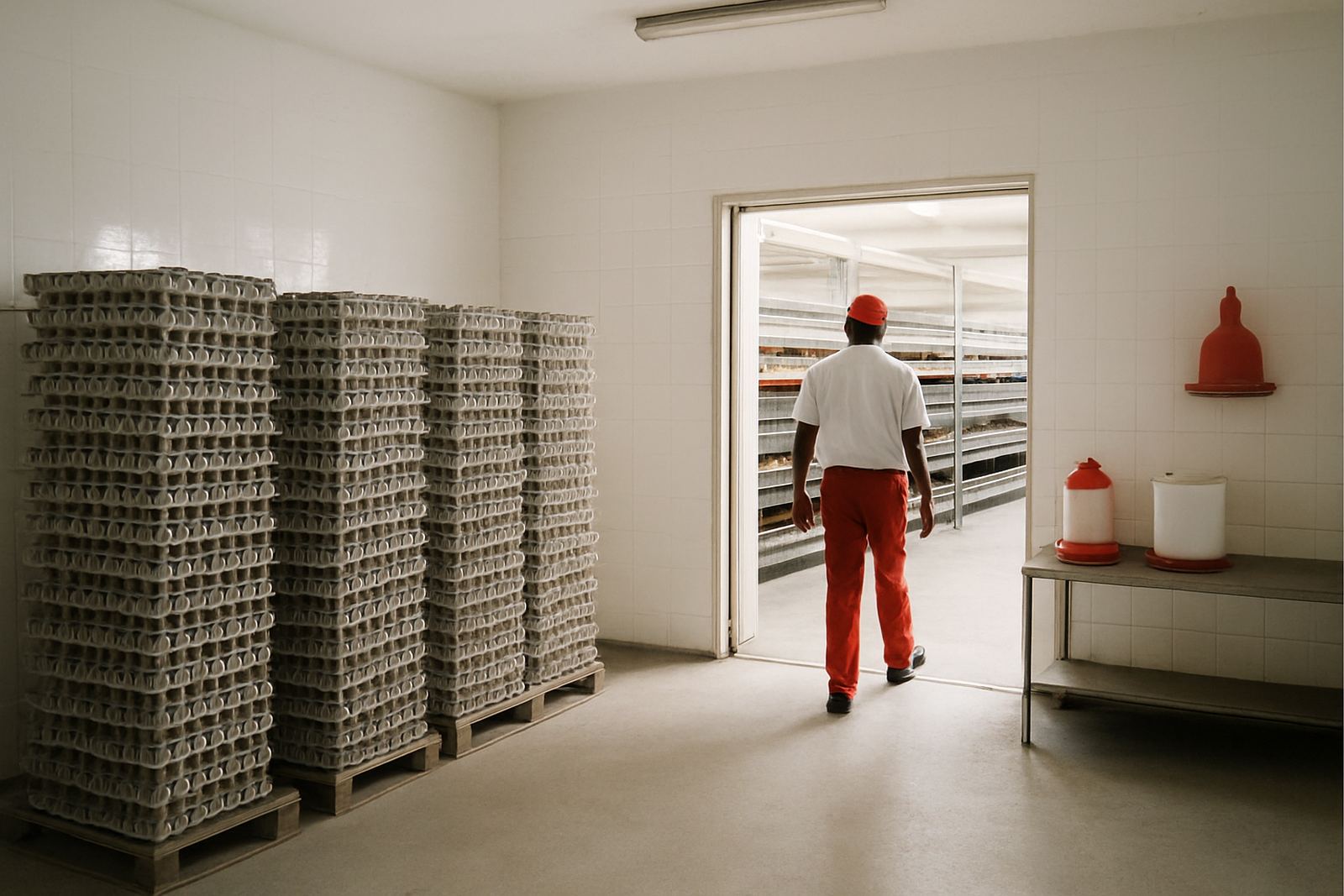
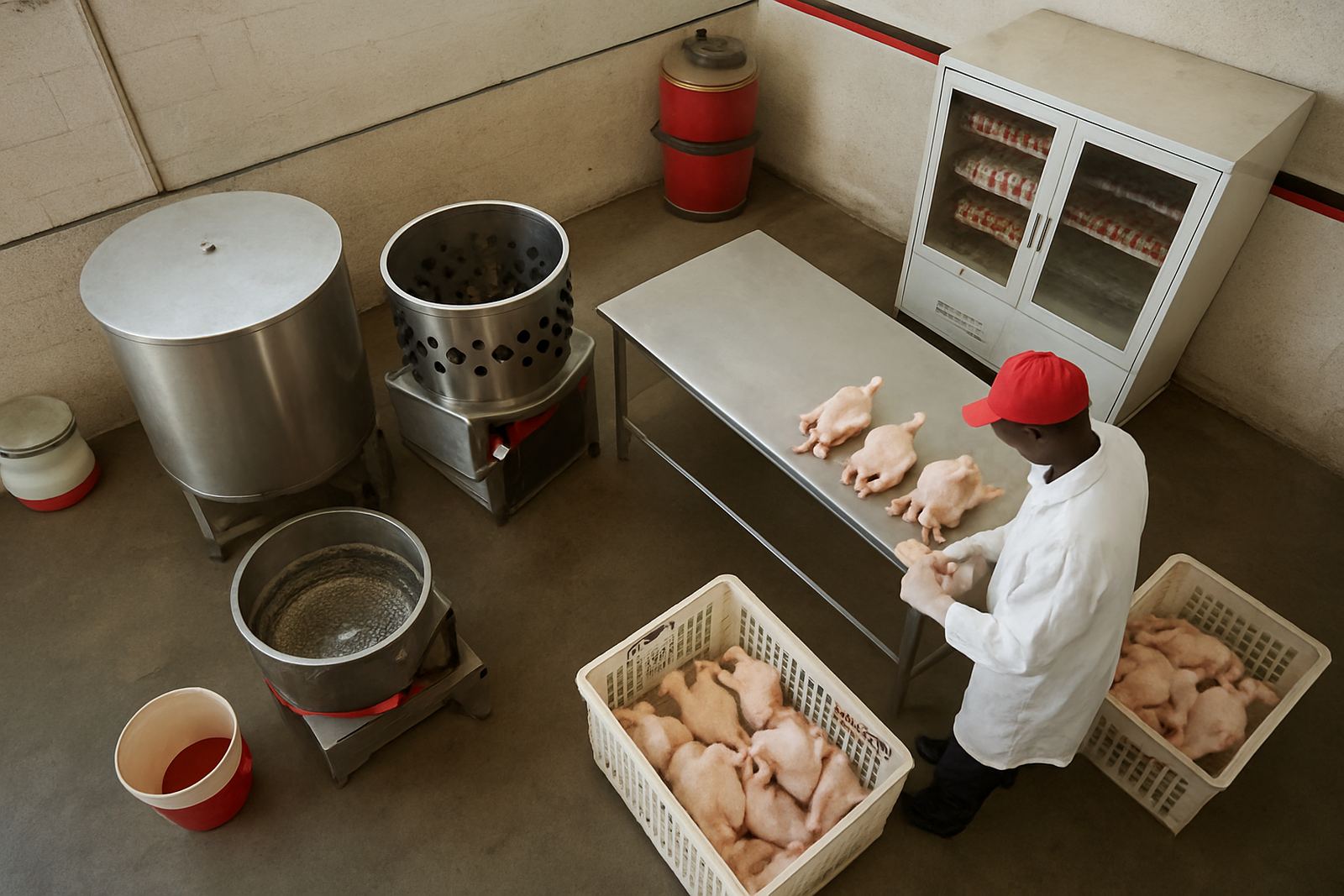
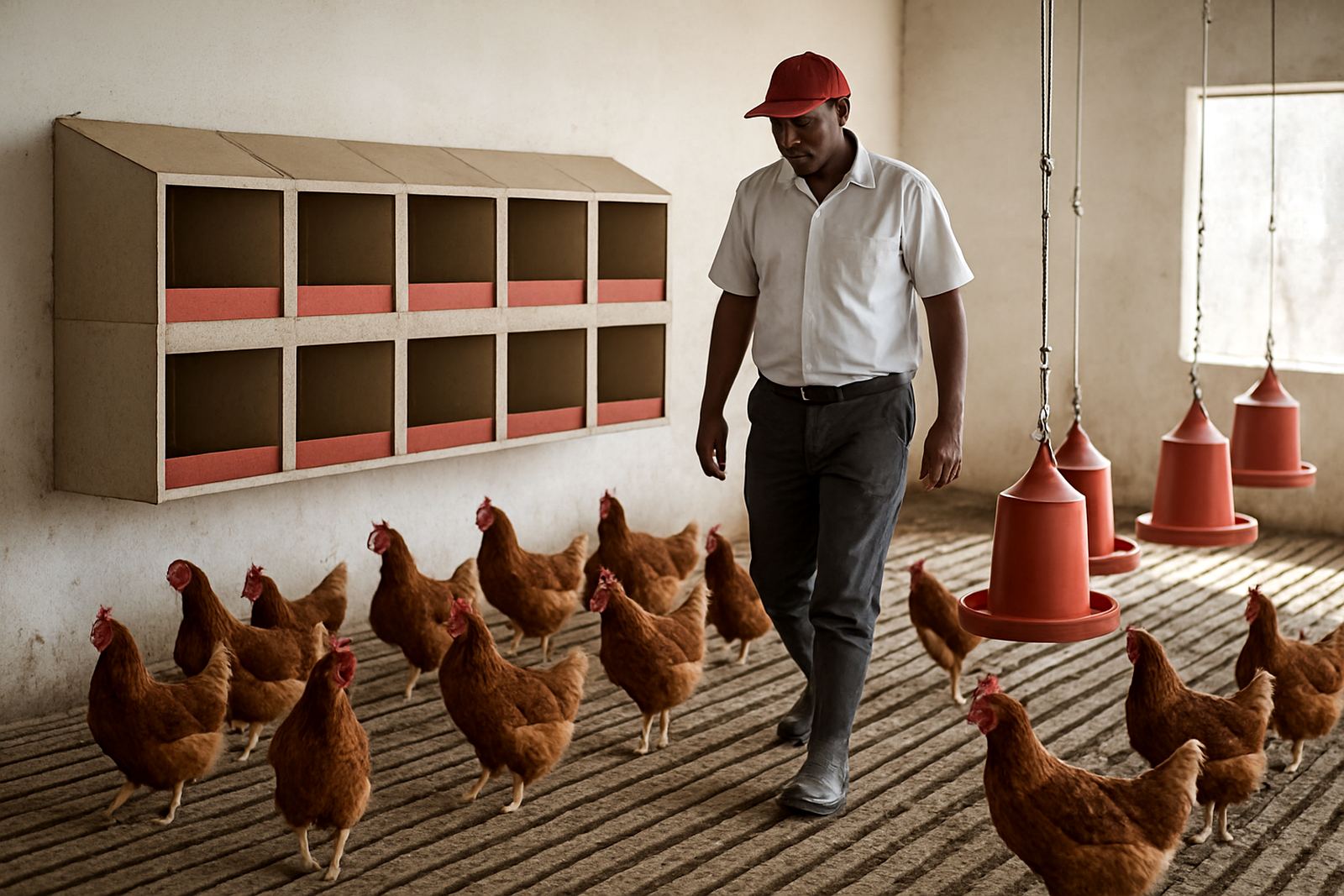
After the site facts are clear, equipment selection becomes much easier. A proper turnkey project normally includes laying-hen cages, feeders, drinkers, egg handling points, lighting, ventilation and where required, incubators, brooders or abattoir equipment for a broader poultry operation. The aim is not to fill the house with as much equipment as possible, but to match the system to the production target and the staff who will run it every day.
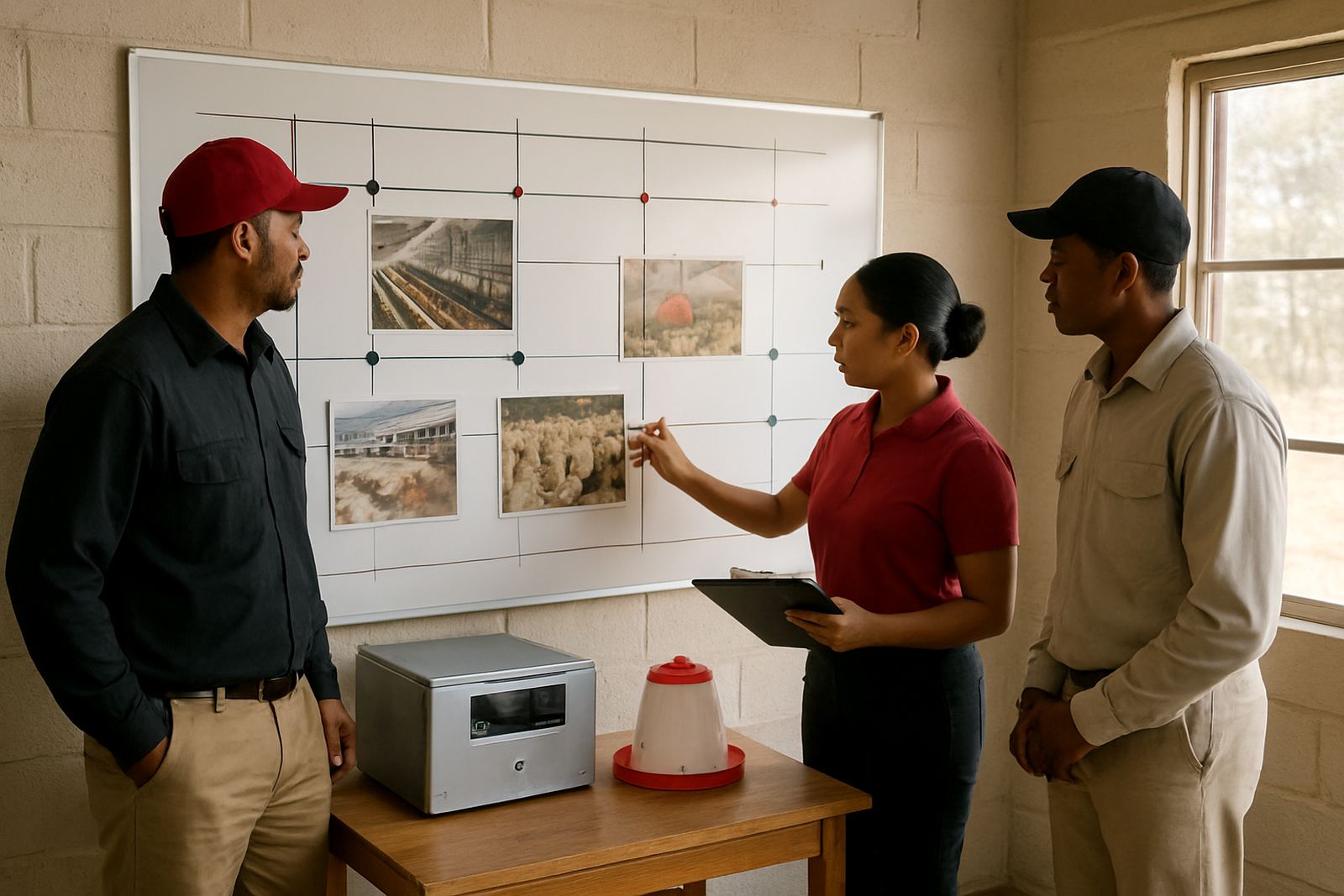
House layouts then show where each system fits. This step is where many delays are avoided, because the installation team can see cable routes, water points, service gaps and maintenance access before anything is loaded onto a truck. If the layout is rushed, the project can still be saved, but it usually means extra cost and extra time. A clean layout also helps when the house must be inspected by a lender, insurer or local authority.
4. Ordering, procurement and fabrication lead times
Once the design is approved, procurement begins. Some items are standard and can move quickly, while others need longer lead times, especially if the project includes custom layouts, processing room fitout or an upgrade to an existing house. This is where a practical timeline matters. Clients often think the job starts when the trucks arrive, but the work has already started in the ordering, checking and packing stage.
Materials, fasteners, pumps, controls and spare parts need to be checked against the project schedule. If the site is in a remote part of the Free State, one missing valve can hold up commissioning by several days because transport is not instant. That is why spares planning should be built into the order from the beginning, not left for later.
- Approve final drawings before procurement
- Check all electrical and plumbing requirements against the house layout
- Order critical spares with the main equipment
- Confirm delivery dates against civil work progress
- Keep one contact person on the client side for sign-off and queries
5. Installation supervision and site coordination
Installation supervision keeps the job moving in the right order. The house must be ready before equipment lands, and the contractor must understand where each item goes. Good supervision reduces rework, damaged parts and wasted labour. It also matters for safety. Poultry projects involve lifting, drilling, water lines, electrical work and sometimes cold-room or processing-room fitout, so the sequence has to be managed carefully.
In practice, this stage is where weather can bite. Heavy rain in Mpumalanga can delay concrete work, and load-shedding in Gauteng can interrupt testing if backup power has not been arranged. A site that is one day behind can still recover, but only if the team communicates early and keeps the install sequence realistic. It is not unusual for a project to be held up by a simple issue like a late delivery gate code or a house floor that is not fully dry yet.
6. Commissioning, training and the first production cycle
Commissioning is the stage that turns equipment into a working poultry system. Water lines are tested, feeders are set, cages are checked, ventilation is confirmed and the house is run through its operating steps. If incubators or brooders are part of the project, they must be checked for temperature stability, airflow and alarms before any chicks or eggs are placed inside. This is also where the operator training happens, and it should be done with the actual staff who will run the house.
The first production cycle is the real test. A project is not finished just because the final bolt is tight. The team should know how to clean the house, spot wear early, and follow a maintenance programme so small issues do not become big shutdowns. In many cases we also schedule a follow-up visit after the first cycle, because a few adjustments can improve the next round quite a bit.
- Test all lines and controls before stocking
- Train staff on daily checks, cleaning and safety
- Record temperatures, water use and feed use from day one
- Plan maintenance and spare parts for the first 90 days
- Review the first cycle and adjust where needed
7. A local example: from Jet Park to a working house in Limpopo
A practical example helps to show the timetable. A client in Limpopo may start with an enquiry for a medium laying-hen unit and a small processing room. The site review happens first, then the layout is drawn and approved. Procurement follows, while the civil contractor finishes the house base and services. Installation supervision then takes place as equipment arrives, and commissioning is arranged once power, water and access are ready. The full process can move steadily if each stage is signed off on time, but if one item slips, the whole handover can shift.
That is why a turnkey poultry project should always be treated as a sequence, not a single delivery. From Jet Park in Boksburg, projects across Gauteng, Mpumalanga, Limpopo, North West, Free State and KwaZulu-Natal each need their own timing based on distance, season and site readiness. The right timeline is the one that fits the farm, the staff and the local conditions, not just the calendar.