Start with the bird flow, not the building shape
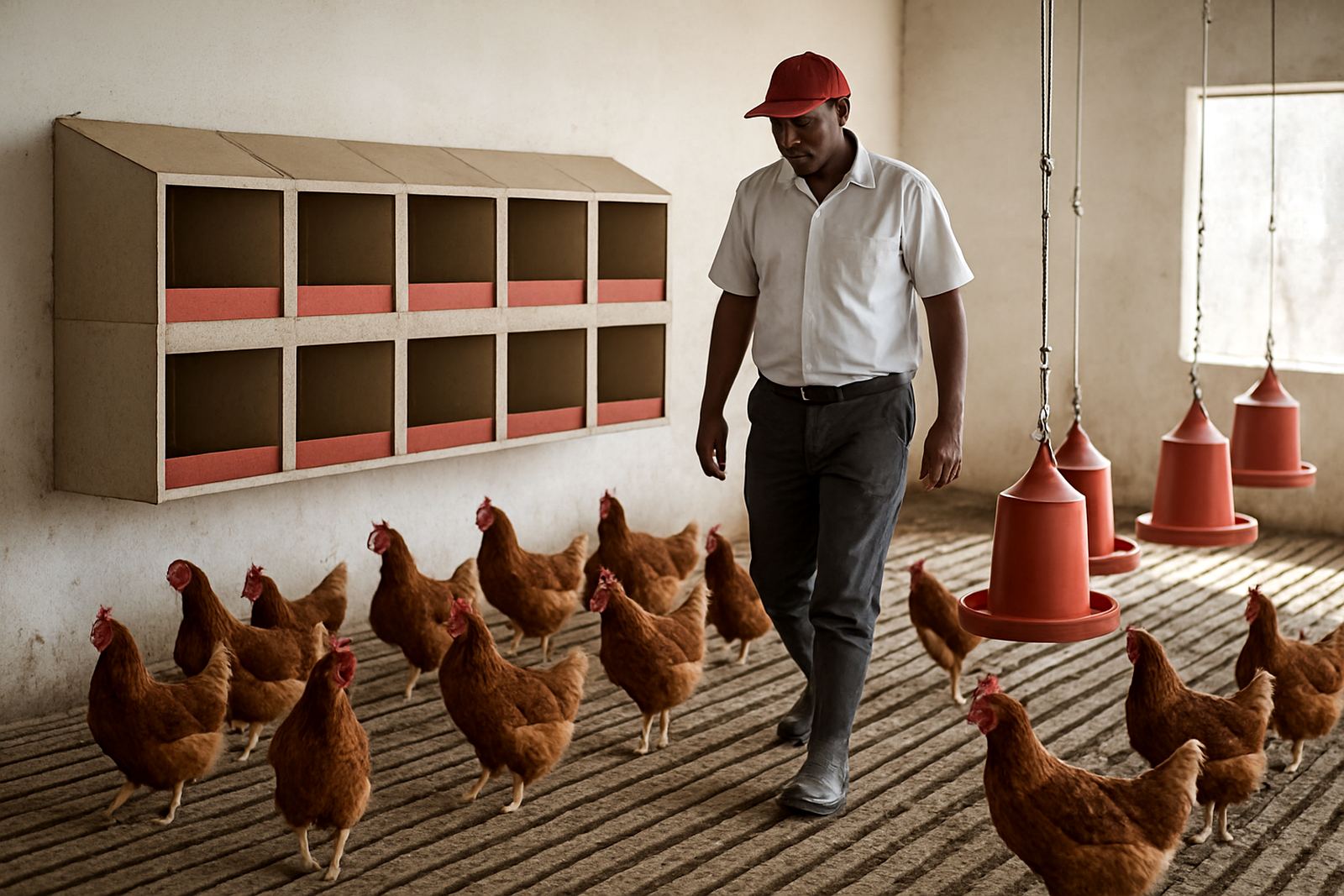
Good nest placement begins with how the birds move through the house. Hens should reach the nests without crossing heavy traffic areas, feeding lines, or water spillage zones. If birds have to squeeze past busy equipment to lay, they often choose the floor instead. That becomes a habit very quickly and it is hard to reverse.
For breeder houses, put the nest line where birds can enter and exit without being disturbed by walkways or corners that trap shy hens. In free-range setups, place nests inside the house where the birds settle for the day, not right by the pop holes. If nests are too close to the outside opening, you can get draughts, sudden light changes and birds lingering in the wrong place.
- Keep a clear movement path from perches or resting areas to the nest entrance.
- Avoid placing nests in dead corners where droppings build up.
- Do not force hens to pass under bright lights to reach the nests.
- Leave enough space for egg collection without disturbing the flock.
Height and access matter more than fancy fittings
Most hens prefer nests that feel safe, but they also need easy access. The nest should be high enough to stay dry and clean, yet low enough for birds to enter without jumping or crowding. In many South African houses, a practical height is around 45 to 60 cm off the floor for floor-mounted systems, depending on the breed and house design. For raised systems, the key is to avoid making the birds work too hard to get in.
If your birds are large breeders, check that the front lip is not too high. Younger pullets need a gentler entry point, while mature hens can handle a slightly stronger step up. In older houses around places like Delmas or Piet Retief, we often see nests placed too high because the original layout was copied from a different house size. That causes floor eggs and sore legs over time.
- Match nest height to bird age and body size.
- Use stable platforms where birds need a step up.
- Make sure entry edges are smooth and not sharp.
- Leave enough headroom so birds do not hesitate at the opening.
Light control decides where hens want to lay
Light is one of the biggest drivers of laying behaviour. If the nest area is brighter than the surrounding house, hens may ignore it. If the nest is too dark, they can hesitate and lay elsewhere. The aim is steady, gentle light with no harsh contrast. That becomes especially important in houses that rely on natural light and in areas where the power supply is not always steady.
In load-shedding conditions, sudden changes from artificial light to darkness can upset the flock routine. If the nest zone sits near windows, open sides or bright reflections from white roofing, use curtains, shade cloth or layout adjustments to soften the light. In the humid coastal belt, ventilation is important too, because stale air around the nest can make birds avoid the area even when the light looks right.
- Keep nest light more even than the rest of the house, not brighter.
- Reduce glare from corrugated roof sheets or reflective walls.
- Use curtains or side protection where wind and dust are a problem.
- Check light levels at bird height, not only at human eye level.
Spacing should support clean eggs and easy collection
Spacing is where many farms make the same mistake: too few nests means crowding, while too many can waste space and complicate cleaning. A nest line should be sized to the flock and the collection pattern. Birds need enough room to enter without waiting in a queue, because waiting birds start pecking and restless hens often lay on the floor nearby.
For breeder houses, uniform access is critical. If one end of the house has easier access than the other, you will see a pattern of overused nests and neglected sections. In free-range houses, the nest area must be easy for workers to reach early in the morning, before eggs get dirty or broken. The route for collection should also be practical for wheelbarrows, trays or trolleys, especially in bigger houses around Middelburg, Standerton and Kroonstad where labour teams may cover more than one shed in a morning.
Think about maintenance too. Can a worker clean under and behind the nest without climbing over drinker lines? Can spares be replaced without shutting down the whole row? A nest that is hard to service ends up being neglected and that soon shows in egg quality.
Floor bedding, draughts and humidity can change nest use
Even a well placed nest can fail if the surrounding conditions are wrong. Wet litter, cold draughts and high humidity make birds uncomfortable, so they move away from the nest area and lay on the floor. This is common in winter when side curtains are too open, or in summer when water leaks soften the bedding near the house edge. The birds respond to comfort, not to what the plan says on paper.
Make sure the floor around the nests stays dry and level. Repair leaking drinkers quickly and check that water lines are not dripping overnight. In KwaZulu-Natal and parts of Limpopo, where humidity can stay high for long periods, ventilation around the nest bank needs more attention. In drier inland areas, dust can become the issue, so a balance of airflow and protection is needed. Clean, dry litter around the nests helps birds settle and reduces contamination on shell surfaces.
- Keep nest surroundings free of wet patches and caked litter.
- Fix leaks before they spread across the laying area.
- Use side protection where seasonal winds cause draughts.
- Inspect daily for floor eggs near corners, doors and water points.
A practical Gauteng example from a breeder unit
On a breeder unit in Gauteng, near Boksburg, we saw a house where the nests had been installed close to the pop hole because that was the easiest place for the crew to fit them. It looked tidy enough at first, but the birds were laying in patches on the floor, especially on colder mornings. The problem was not the nests themselves, it was the placement. Birds were entering the house, turning back toward the warmer central area, and laying wherever they felt settled.
After adjusting the nest line further inside the house and improving the light balance around the entrance, floor eggs dropped noticeably. We also raised the surrounding bedding standard and changed the morning routine so staff collected earlier. The result was simpler housekeeping and better egg handling, without adding more nests. That is the point: placement should work with the flock behaviour, not against it.
For farms planning new houses or expansion upgrades, it is worth checking the nest position before any equipment is installed. A small shift of a few metres can make a real difference to egg cleanliness, bird comfort and daily labour. If the house is already built, a review of traffic flow, light and ventilation can still improve results without major structural work.