Start with the house, not the weather
Before summer arrives, walk each poultry house from end to end and look at it as a heat problem first. In many Gauteng and North West houses, the biggest issue is not the outside temperature but trapped heat inside the roof space, blocked side inlets and poor airflow around the flock. Check that ridge vents, curtains, mesh and louvers are clear of dust, feed bags, cobwebs and old equipment. If the house has shade netting or tree cover, make sure it is not stopping the wind where you actually need it.
Look for gaps where hot air can enter at bird level and where cooler air should be moving through. Doors, end walls and service openings should close properly. If a house is in a coastal area like KwaZulu-Natal, pay extra attention to corrosion and sticky dust because humidity makes heat feel worse and fans work harder. This is the time to fix small problems. A bent panel or worn seal in November can become a bird stress issue by December.
It also helps to test your house layout against stocking density. If birds are packed too tightly, even good ventilation will struggle. Keep a clear record of where trouble starts in the house and note any warm spots on still afternoons. That gives you a practical map before the first proper hot spell hits.
Water systems must move faster than the birds drink
Water is the first line of defence in summer. Birds that cannot get enough cool clean water will stop eating, pant, and fall behind quickly. Flush drinker lines before the season starts and check for slime, scale build-up and dead ends where water sits too long. If the lines are exposed to sun, insulation or better routing may be needed.
Check pressure at the start and end of each line, then compare with actual bird response. A house can look fine from the outside while one section gets poor flow. In hot weather, even a slight pressure drop can make a real difference. Make sure tanks are covered where possible and positioned so they do not sit in direct sun all day. If you use borehole water, test it before peak heat because mineral content often changes with drought conditions.
- Flush all drinker lines and nipples before the first heatwave
- Inspect valves, filters and pressure regulators
- Check backup water storage and fill points
- Confirm that every house can be topped up quickly during load-shedding
- Keep spare seals, clips and connectors on hand
Simple water checks done early can save a lot of trouble later. Birds do not wait for the repair team to finish another job, they need water now.
Fans, cooling and backup power need a proper run test
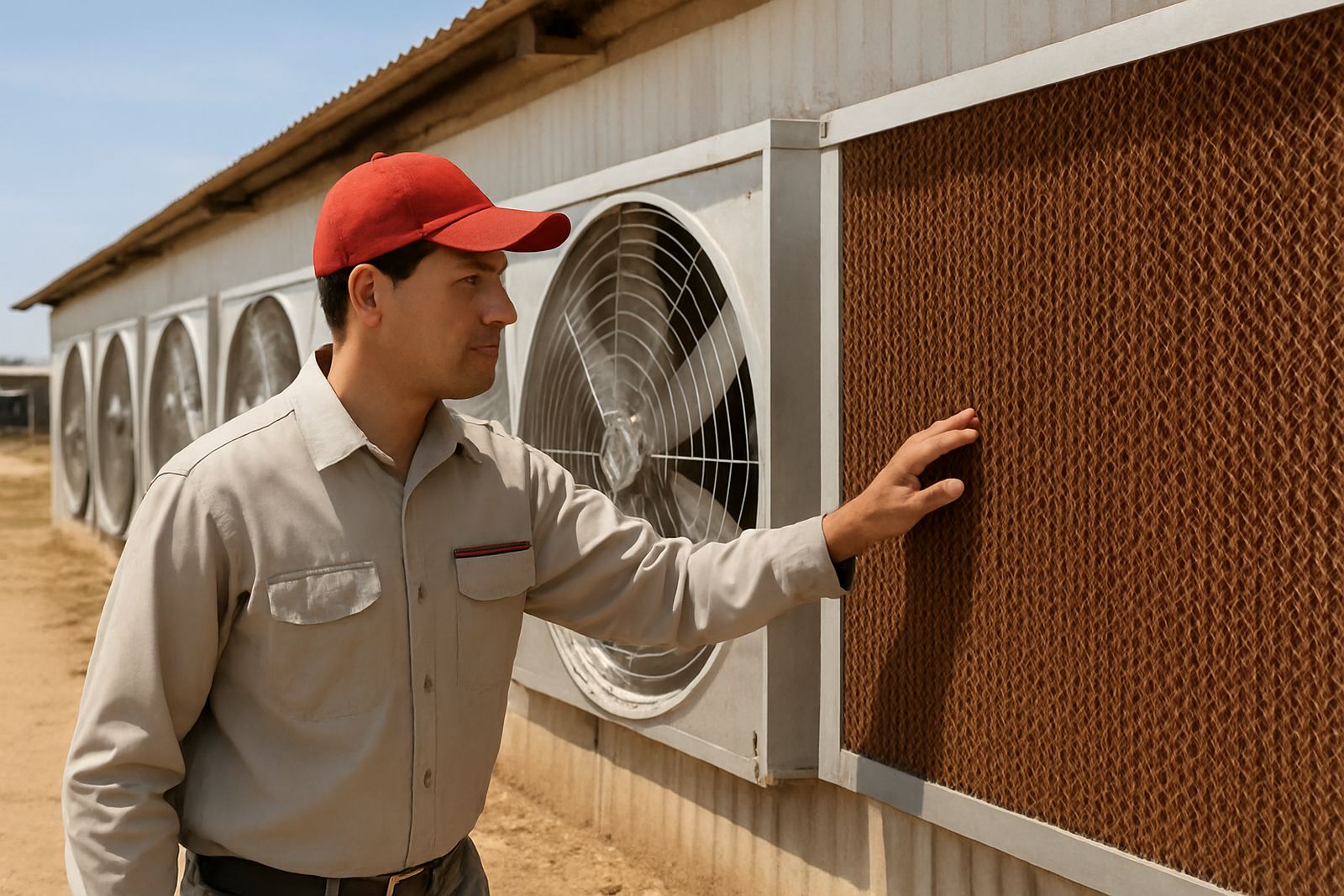
Summer preparation is not complete until every fan, pump and controller has been tested under working conditions. Switch the full system on and leave it running long enough to see if motors overheat, belts slip, shutters stick or breakers trip. It is common to find one weak fan hidden among a row of working units, and that one fan can affect the whole house in still weather.
If you use foggers, pads or spray cooling, check that nozzles are not blocked and that pumps deliver evenly. Uneven cooling wastes water and can create damp patches on litter, which leads to extra ammonia and bird discomfort. For houses in Limpopo and Mpumalanga where afternoon heat can rise fast, the response time of the cooling system matters just as much as the system size.
Load-shedding is still part of planning in many towns, so test your generator, change oil where needed and confirm fuel storage is clean and secure. Start-up delays are a problem if power fails during the hottest part of the day. Keep the transfer process simple and train the team on who does what when the lights go out. A good backup plan is one the whole crew can carry out without confusion.
Feeding schedules should match the heat, not the clock
Birds often eat less during the hottest part of the day, so feeding times should be adjusted to suit conditions. Early morning and late afternoon feeding usually works better than heavy feeding in the middle of the day. If feed sits too long in hot conditions it can lose quality faster, especially where the house has poor airflow or where bins stand in direct sun.
Check feed storage for damp, insects and contamination. Heat often brings sudden humidity changes, and that can affect pellets, mash and additives. Keep storage areas clean and dry, and make sure delivery routes are clear so bins can be filled without delay. In some municipal areas, road access and site cleanliness are watched closely, so it helps to keep the yard tidy and easy to move through.
- Shift more feeding to cooler parts of the day
- Inspect bins, augers and feed troughs for wear
- Keep storage dry and raised off the floor where needed
- Remove stale feed and sweep spillages daily
- Watch bird behaviour after each feeding run
When birds remain active and the feed line is reliable, summer management becomes much easier. If appetite drops, act early instead of waiting for a bigger setback.
Train the team before the hot days arrive
Good summer management depends on people who can spot trouble early. The team should know the signs of heat stress, including panting, wings held away from the body, crowding near drinkers and reduced movement. Everyone on site should know what to do first, who switches on backup systems and who checks the worst sections of the house. It sounds basic but under pressure, a clear routine saves time.
At John F Marshall, practical site planning and operator training are part of keeping poultry projects working through South African conditions. That matters in houses from Jet Park and Boksburg through to farms in Free State and KZN, where climate, power supply and water conditions can change a lot. A good team does not just react, it knows the house well enough to act before birds start to suffer.
Set a short written summer checklist on site and make sure new staff are shown the steps in person. One quick round each morning and another in the afternoon is often enough to catch a small issue before it grows.
A Pretoria example: the small fixes that matter most
A layer operation outside Pretoria recently reviewed its summer set-up before the first real heat. The manager expected the biggest problem to be the fans, but the real issue was slower water flow in two lines and a few blocked vents on the western side. After line flushing, seal replacement and a better fan test routine, the house became easier to manage during the hottest afternoons. Birds stayed more settled and staff spent less time firefighting small problems.
That is usually how summer preparation works in practice. It is not one dramatic upgrade, it is several small checks done before the pressure hits. If you are running laying-hen cages, brooding areas or a processing room, this is also the right time to review spares, service intervals and any expansion plans so you are not patching worn equipment in peak heat.
For poultry businesses across Gauteng, Mpumalanga, Limpopo, North West, Free State and KwaZulu-Natal, a proper summer checklist is a practical way to protect birds, reduce strain on staff and keep the house running through the hardest weeks of the season.