Why water planning comes before birds arrive
Remote poultry sites in Gauteng, Limpopo, Mpumalanga and beyond often have good land but weak water certainty. A borehole may give enough volume in summer and fall short in winter, or the supply may be fine at ground level but struggle to hold pressure across a long house run. That is why water planning should start before the first cage, feeder line or brooder is installed.
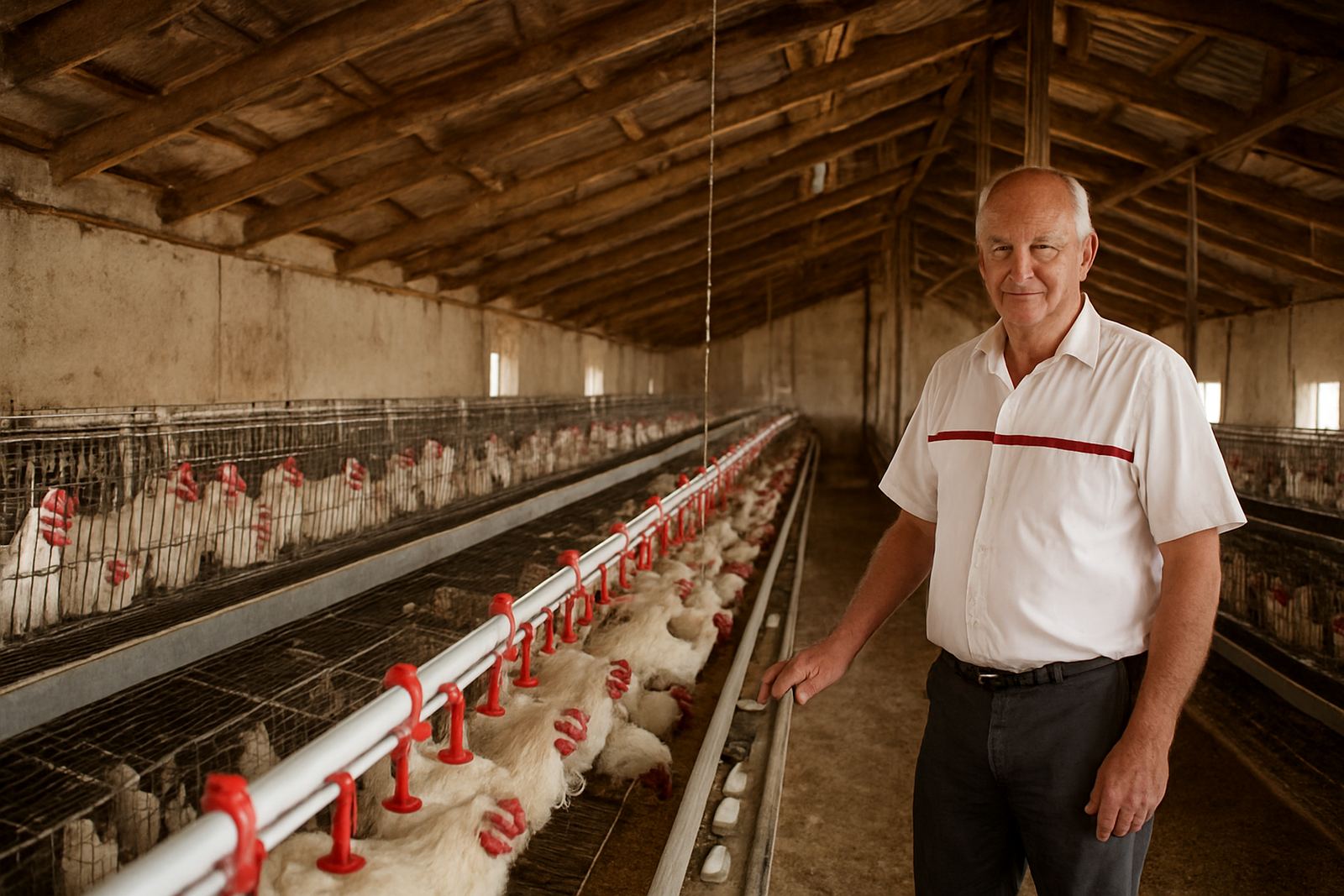
At John F Marshall we look at the whole site, not just the house. That means daily bird demand, cleaning demand, staff handwash points, processing room needs and emergency reserve. A site that carries laying hens, broilers or hatchery equipment all need different water behaviour, and the layout should match that. If you know the peak draw and the storage available, you can avoid panic tankers and rushed pump changes later.
Work out storage from real daily demand
Water storage is best sized from actual usage, not guesswork. A small layer house may use far less than a multi-house site, but high summer temperatures, wash-downs and extended load-shedding can double the pressure on the system. The aim is to carry enough reserve so that a short outage does not interrupt drinkers or cleaning points.
- Measure daily use over at least one normal week and one hot week.
- Allow extra volume for cleaning, vehicle wash-down and staff water points.
- Keep a reserve for at least one full day, and more if the area has long outages.
- Place tanks where delivery trucks can reach them for filling or maintenance.
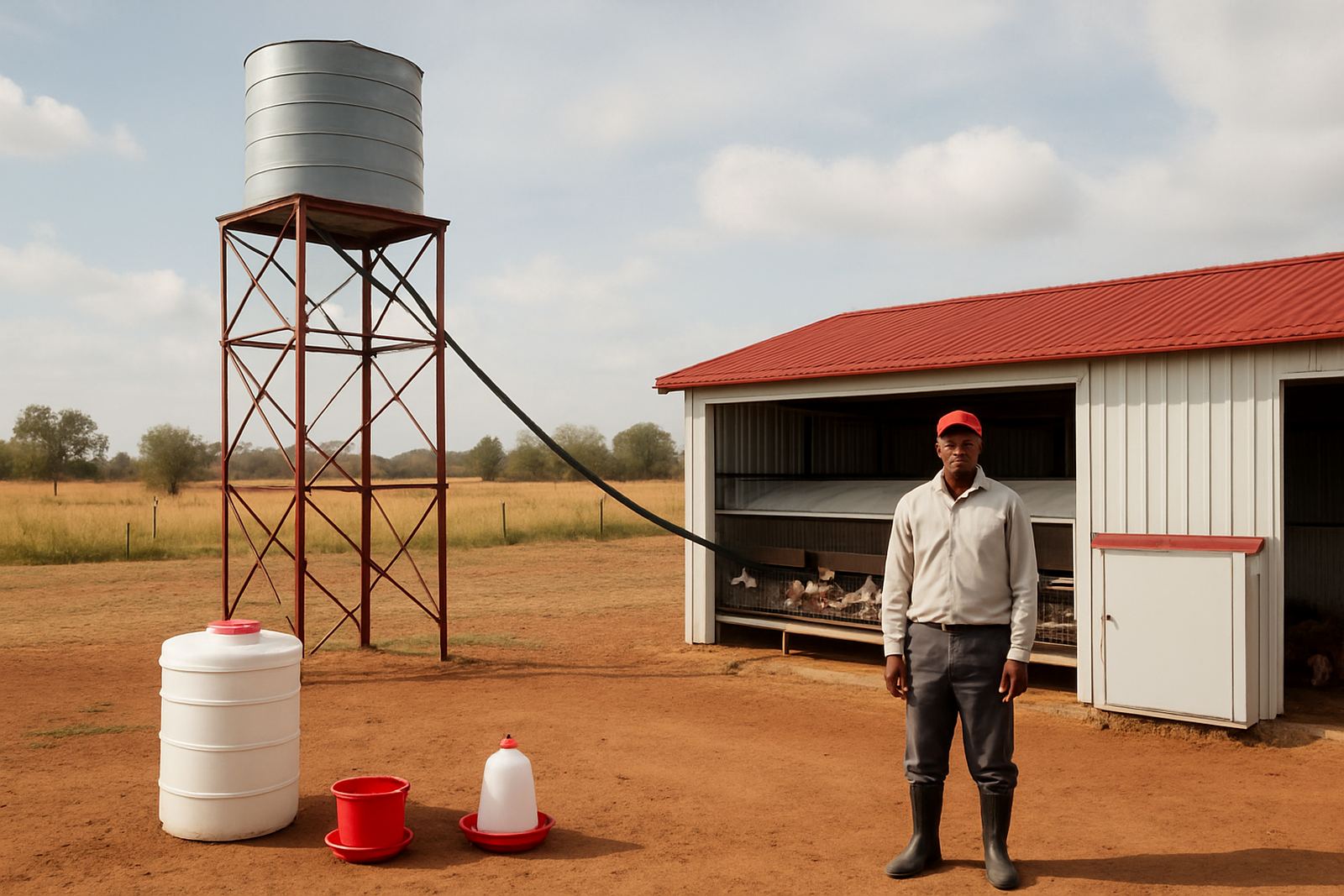
For many rural sites, the right answer is not one large tank, but two or more tanks with a changeover line. That gives you flexibility if one tank needs cleaning or a fitting fails. It also helps when a site expands in phases and the water system must grow with the houses.
Pressure control for drinkers, wash bays and long runs
Pressure matters as much as litres. Water can be available in the tank but still not reach the far end of a house line with enough pressure for drinkers or spray equipment. Long pipe runs, height differences and undersized fittings all take their toll. On rural farms, it is common to see plenty of water at the source but poor delivery at the point of use.
Correct pump selection, pipe diameter and valve layout reduce this problem. Where the site has more than one block, each block should ideally have its own controlled branch. This makes it easier to isolate a fault and keep the rest of the site running. If a processing room is included, its wash-down and hygiene points should be treated separately from the poultry house supply.
- Use a pressure gauge at the tank outlet and again near the far end of the line.
- Choose pipe sizes for the longest practical run, not only the first 10 metres.
- Fit non-return valves where backflow could contaminate clean water.
- Keep filters accessible so they can be cleaned during busy production days.
Backup supply for load-shedding and pump failure
On many farms the biggest water problem is not rainfall, it is power cuts. A borehole pump, pressure pump or transfer pump that stops during load-shedding can leave tanks full but the houses dry. That is why backup should be planned as part of the water system, not added later as a quick fix.
Backup can take several forms. A gravity feed from elevated storage may keep basic drinker supply moving for a period. A standby pump can take over automatically. In some cases a generator is needed for the borehole and pump room, especially where there are hatchery or processing demands as well. The best option depends on the site, but the principle is the same: birds must still drink when the lights go out.
- Keep a reserve tank above house level where possible.
- Install changeover points that can be operated quickly by the team on site.
- Store critical spares such as float valves, pressure switches and seals.
- Test the backup system under load, not only during calm weather.
Water quality, cleaning and coastal conditions
Quantity alone does not solve water problems. In rural areas the source may carry sand, iron, sediment or biological growth. In coastal humidity or hot inland summers, tanks and fittings can also corrode faster than expected. If the line becomes dirty, drinker performance falls and cleaning time increases, which costs labour and can affect bird health.
Simple planning steps help a lot. Use filtration where needed, keep tanks covered, and route pipework so it can be drained and flushed. For sites in KwaZulu-Natal or other humid areas, fittings and supports need attention because rust appears quickly on the wrong material. It is also worth separating clean water for birds from lower-grade water used for wash-down where local rules allow. That reduces strain on the main supply.
A practical example from a remote North West site
A layer project outside Rustenburg came to us with a common problem. The farm had a borehole that supplied water reliably in the morning, but pressure dropped by afternoon and the generator only covered part of the system. The owner wanted to add another house, but first the water had to be sorted properly.
We mapped the daily demand, checked the pipe runs, and split the site into separate supply zones. Two storage tanks were added, with one serving the poultry houses and one reserved for wash-down and emergency use. A pressure pump was fitted with the right controller, and the far end of the longest house line was tested during peak use. The result was simple but important: birds drank consistently, staff could clean without delay, and the next phase of expansion could go ahead without reworking the whole site.
Plan the water system with the building layout
Good rural water planning works best when it is tied to the house layout from the start. If the tanks, pumps and pipe trenches are considered during site planning, the farm avoids wasted metres of pipe, too many joints and hard-to-reach valves. That saves money now and makes maintenance easier later.
For turnkey poultry projects, the practical sequence is clear: assess the source, set storage, confirm pressure, add backup, then match the layout to the production flow. That approach suits new sites and expansions alike. It is also the best way to keep rural farms running through dry spells, power cuts and the normal wear that comes with daily production.