Why quail need their own equipment plan
Quail grow quickly, lay early and are more sensitive to crowding than laying hens. If you try to run them on standard chicken gear, you usually get more stress, more injury and more waste. Their bodies are smaller, their eggs are lighter, and their movement patterns are different, so the whole house layout needs to match the bird.
With quail, the first mistake is often using chicken thinking for a quail house. A feeder that suits pullets can be too deep for quail to reach properly, and a drinker line set for hens can leave chicks struggling in the first few days. The result is uneven growth, poor feed conversion and bird losses that could have been avoided.
In practical terms, quail equipment must suit smaller bird size, tighter control and faster turnover. That means more attention to tray edges, wire spacing, brooder heat and collection systems, not just the number of birds per house.
Cage spacing, floors and egg handling are different
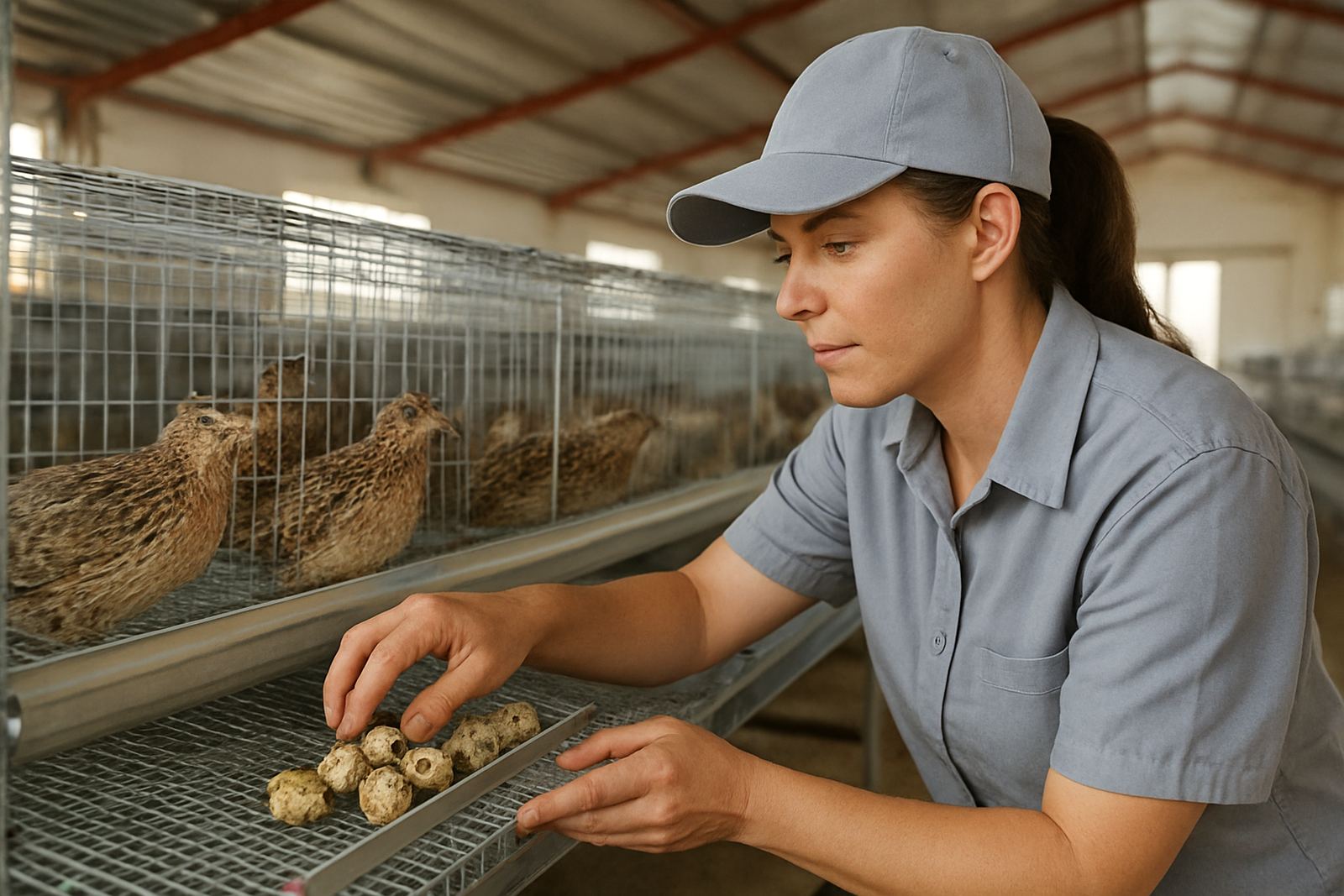
Quail cages are generally finer and lower than laying-hen cages. The wire spacing has to prevent foot slips and reduce the risk of birds getting caught. Floor angle also matters because quail eggs are smaller and can roll differently, especially if the slope is too steep or the egg tray lip is poorly set.
Many producers in Gauteng and Limpopo start with a chicken cage frame and only change the trays. That can work badly if the platform height, mesh size and access points are not set for quail handling. Quail need calmer movement during inspection and collection, because they can panic quickly and damage themselves against hard edges.
- Use finer mesh or tighter floor spacing than a standard layer cage
- Check that egg collection trays suit the smaller egg size
- Keep access points low enough for easy bird checks and cleaning
- Allow for less hand pressure during handling, catching and grading
Brooding needs more precise heat and airflow
Quail chicks are tiny and lose heat fast. In the first days, even a small cold spot can cause piling, poor feeding and dehydration. Brooder equipment must give steady heat, but not create hot patches that push chicks away from the feed line. That balance is more important for quail than for chickens because the birds are smaller and less forgiving.
Ventilation also needs care. In winter, many houses close up too tightly and moisture builds fast. In summer, especially in warmer parts of Mpumalanga and KwaZulu-Natal, the air can move too hard across low brooder areas. The right brooder layout should support even temperature across the floor and enough fresh air without chilling the chicks.
- Set brooder height and heat output for very small chicks
- Keep thermometers at chick level, not only at wall height
- Check for draughts near doors, vents and feed entry points
- Plan backup power for load-shedding periods if heat and ventilation depend on electricity
Feeders and drinkers must suit small beaks and fast growth
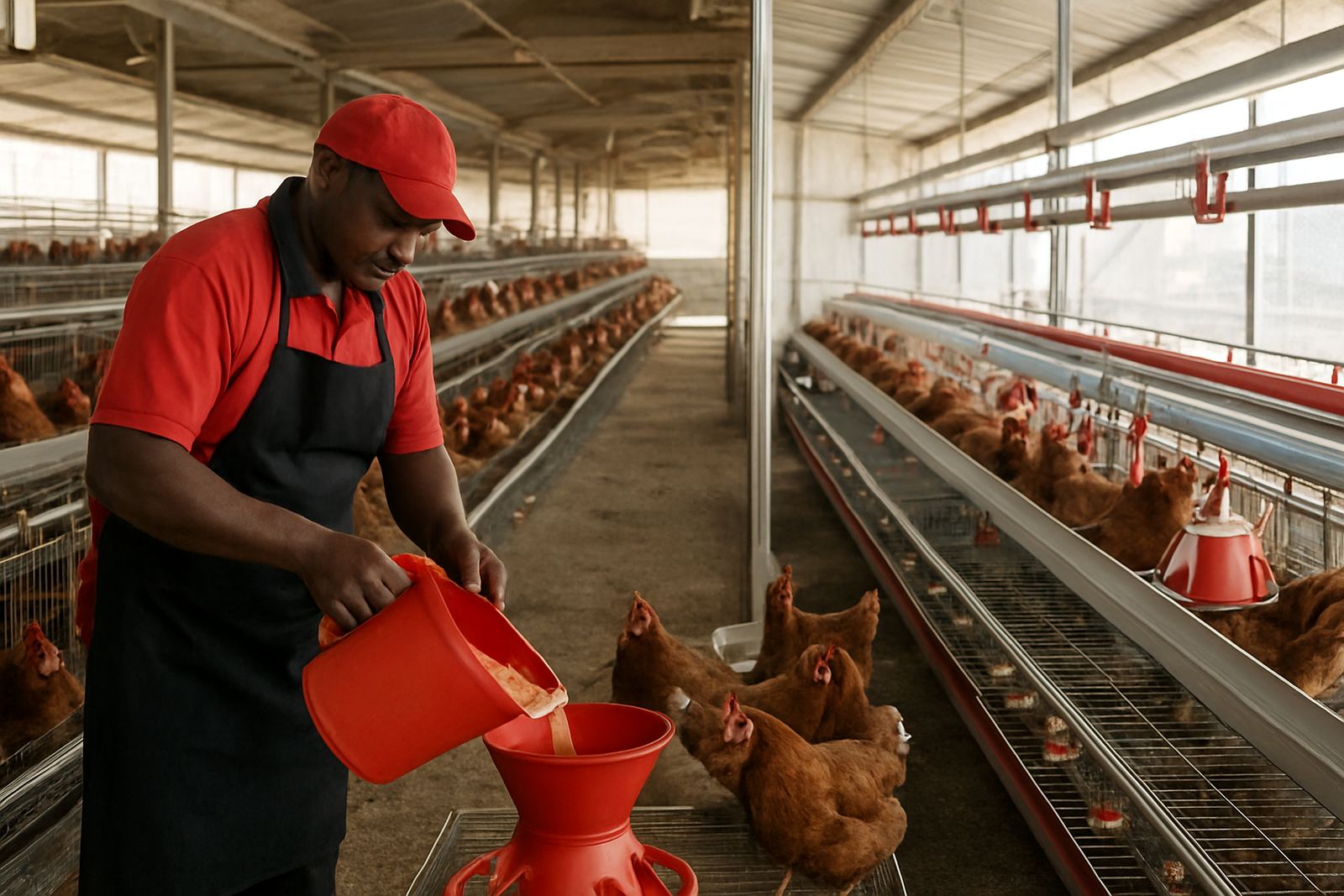
Quail eat frequently and need easy access to feed all day. A feeder that is too tall or too deep causes wastage and uneven intake. Drinkers must also be set low enough for chicks but not so low that litter contamination becomes a problem. Small adjustments in height can make a noticeable difference to daily performance.
In houses where standard chicken lines are used, quail often peck around the equipment rather than feeding properly. That leads to feed dust, spillage and wet floors around drinkers. On a commercial site, that extra waste can become a real cost by the end of the month, especially where feed prices and transport costs are already high.
The practical approach is to match the line to the bird stage. Start low, watch the birds and adjust often during the first two weeks. Operators should be trained to notice uneven filling, wet patches and birds standing away from the feed line.
Processing room and abattoir gear need a gentler flow
Quail are handled differently from chickens at processing stage. Their size means picking, hanging, stunning and feather removal all need lighter contact and more controlled movement. Standard poultry processing equipment can work if it is set up correctly, but the line speed and fixture size usually need adjustment.
For small-scale and medium-scale operators, the real issue is not only the machine itself but the flow of the room. A quail processing room needs clean receiving, a simple wash-down route and enough space to move birds without squeezing cartons or crates through narrow gaps. This matters in towns where water supply and drainage rules are strict, because a cramped room becomes harder to keep clean.
- Use smaller crates and gentler holding systems
- Keep scalding and defeathering settings matched to quail size
- Allow for easy wash-down and separate clean and dirty areas
- Plan drainage and waste flow before equipment is installed
A local example from a small Gauteng quail unit
A client outside Boksburg wanted to start quail production in a converted poultry building. The house already had chicken feeders, standard drinkers and old cage frames, so the first thought was to use what was there. After checking the layout, it was clear the cages were too open, the drinkers hung too high and the brooder area would have created too much heat loss on cold nights.
We reworked the house plan with tighter cage spacing, lower drinker points and a brooding layout that allowed better temperature control during load-shedding periods. The operator also needed a simpler cleaning routine because the site was close to neighbours and water use had to stay under control. Once the setup matched the bird, mortality dropped and the birds started evenly. A small change in equipment spec made a big difference to daily labour and bird comfort.
That is the main lesson with quail. The house may look similar from the outside, but the details inside must suit the bird size and the way the unit is managed.
What to check before you buy quail equipment
Before ordering anything, measure the house and decide what production level you want to reach in the first year. Quail equipment should be chosen around bird age, handling method, cleaning access and whether you are producing eggs or meat. A system that suits a 500 bird start-up may not suit a larger layer unit six months later.
It is also worth planning for spares and maintenance from the beginning. Small parts, drinker fittings and heating items wear out quicker than many new operators expect. If your site is in a rural area or a coastal climate with higher humidity, corrosion and cleaning cycles need extra attention. Good planning now saves a lot of trouble later.
- Confirm bird numbers and production purpose before choosing cages or brooders
- Check height, spacing and access for cleaning and egg collection
- Plan for backup power, spare parts and operator training
- Match processing equipment to the bird size, not to general poultry use