Why orientation matters before the slab is poured
Orientation is one of those decisions that is easy to get wrong because it looks simple on a plan. In practice it affects internal temperature, how air moves through the house, where rain blows in, how long floors stay damp and how easy it is to work each end of the building. For laying-hen houses and broiler houses alike, the first layout choice can save a lot of trouble later.
In South Africa the sun path, wind direction and seasonal storms vary by province, so there is no single rule that fits every site. A house in Gauteng with open veld around it will behave differently to a coastal site in KwaZulu-Natal or a humid block in Limpopo. That is why orientation should be looked at together with site planning, equipment selection and drainage, not as a separate afterthought.
Working with sun and heat, not against it
Heat is often the main reason farmers ask about orientation. Long walls that take full sun through the day can push internal temperatures up quickly, especially where roof insulation is light or there is no shade from trees or other buildings. In very hot months, that extra heat can make fans work harder and feed conversion suffer, even before load-shedding or power dips are factored in.
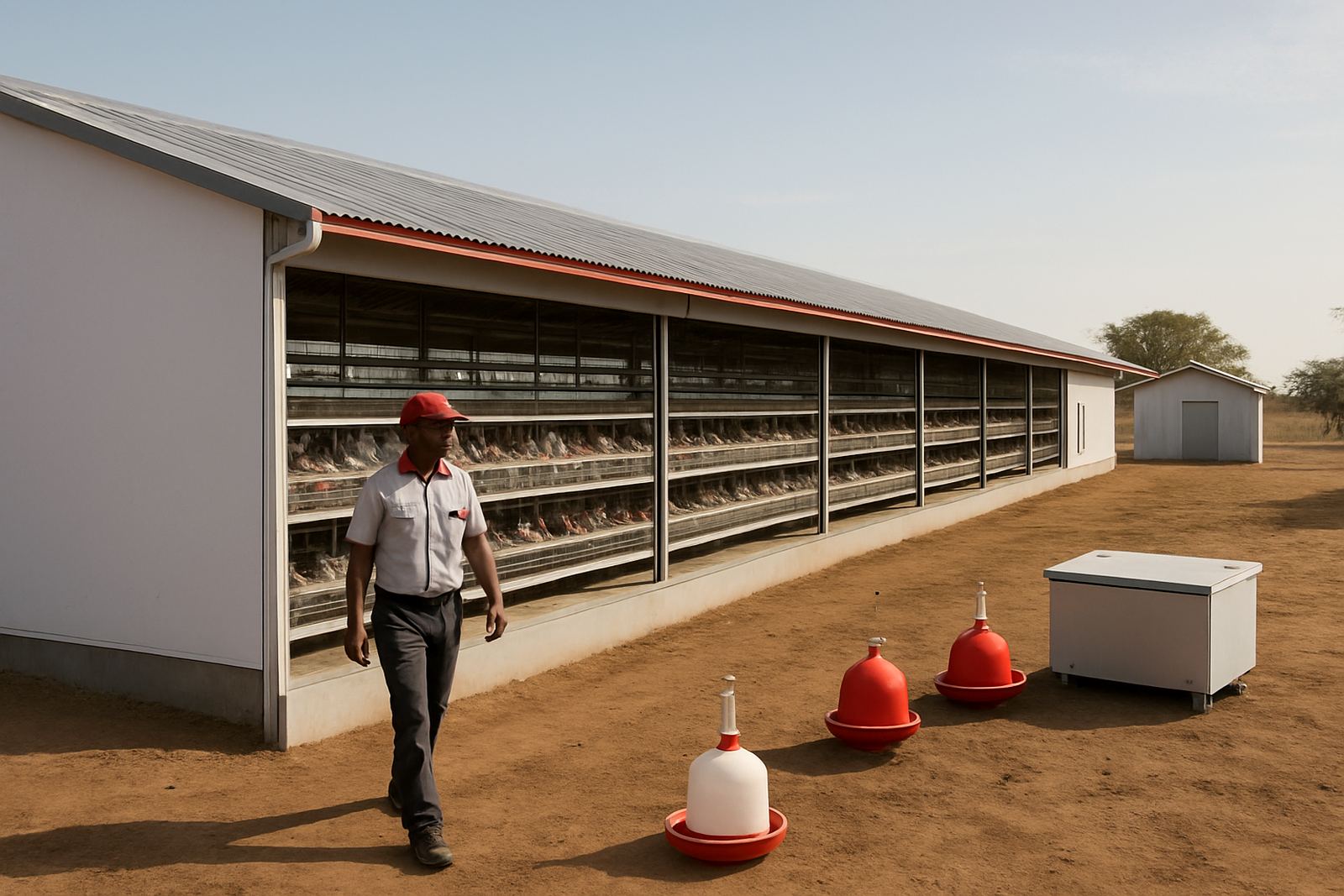
A practical approach is to study the site for morning and afternoon sun, then place the building so the hottest sun exposure is managed as well as possible. On many sites, that means reducing direct sun on the longest side walls and planning roof overhangs and side cladding with local conditions in mind. The aim is not to fight nature at every point, but to keep the house as even as possible through the day.
- Check where summer sun hits first and where late afternoon heat builds up.
- Allow for shade lines from nearby sheds, poles, trees or storage yards.
- Use roof and wall details that help control heat gain, not just the main orientation.
- Remember that coastal humidity changes how fast heat leaves the building at night.
Wind direction, airflow and the real behaviour of a house
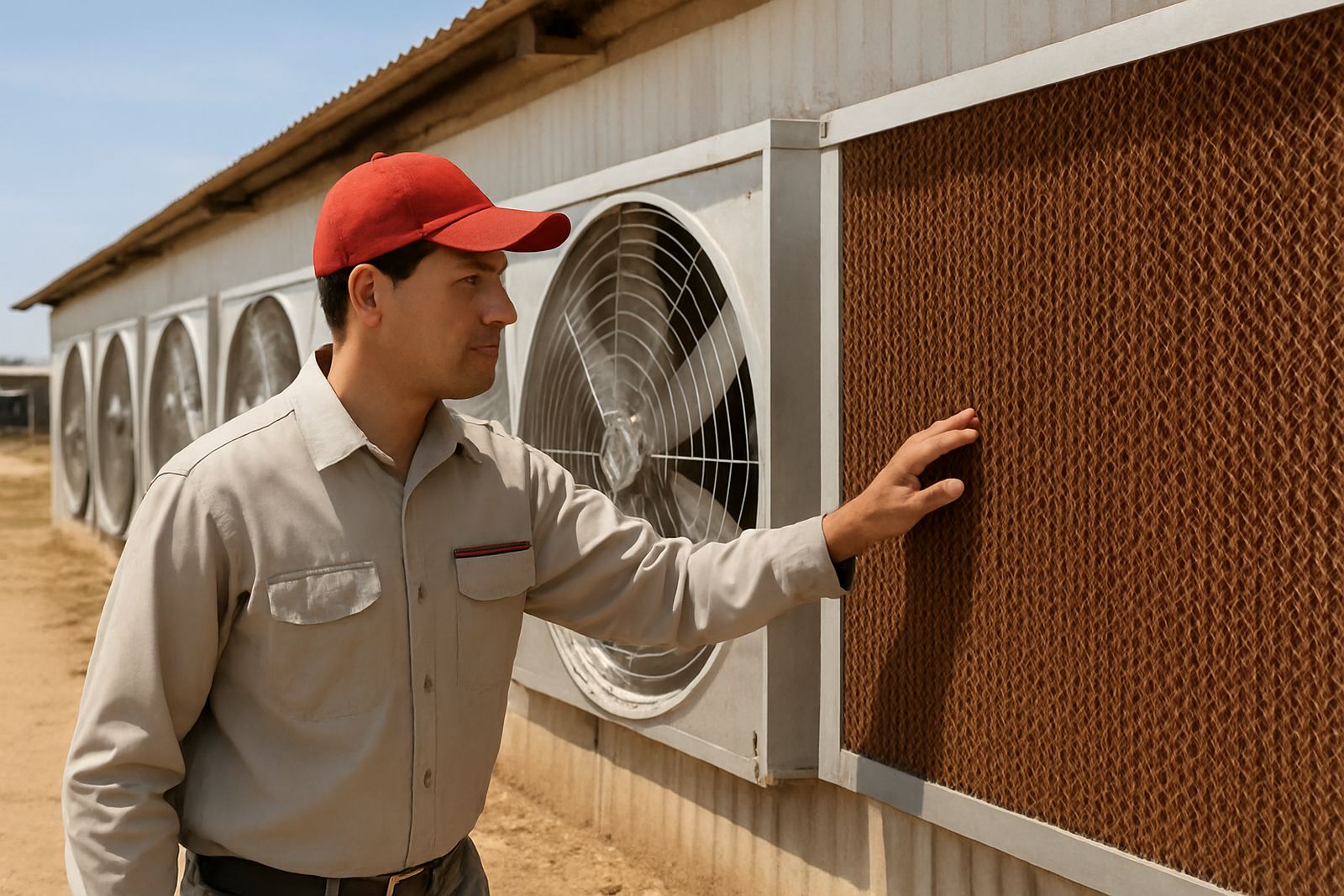
Orientation should always be checked against prevailing wind. A house that faces the wrong way can end up taking dust into inlets, pushing rain through openings or creating dead spots where air moves poorly. In cross-ventilated houses, that can affect temperature uniformity from one end to the other. In tunnel-ventilated houses, the way air enters and exits becomes even more important.
The simple question is this: where will the air come from, and where will it go once it has passed through the house? On windy days in the Free State or North West, a site can change by the hour. On more sheltered land near towns and industrial areas, buildings and walls can block air in ways that are not obvious on paper. Good orientation reduces the chances of wind fighting your fans or creating pressure problems.
- Map prevailing wind for both summer and winter, not only the windiest month.
- Avoid placing openings where dust from a yard, road or feed store will be drawn inside.
- Keep enough clearance around the house for air movement and maintenance access.
- Take note of nearby drainage channels, because a strong wind can carry spray and fine moisture too.
Drainage, rain splash and keeping the floor dry
A house can be well oriented for sun and wind but still perform badly if water collects around it. Site slope, natural run-off and roof-water discharge all need to be considered early. Damp ground near the house makes dust control harder, increases odour and creates conditions that are simply not good for bird health or staff movement.
In places where summer storms hit hard, especially in parts of Mpumalanga and KwaZulu-Natal, the way the roof sheds water matters as much as the direction of the building. Rain splash against side walls and standing water along the apron can creep into the house through small gaps. That is where a proper site plan, correct falls and sensible storm-water routes pay off in daily use, not just on paper.
How orientation changes daily work for staff and equipment
Orientation is not only about birds. It also affects how people load feed, carry out cleaning, move crates, service drink lines and get access to spares or tools. If the house faces into prevailing rain or harsh afternoon sun, those tasks become harder. Over time that can lead to slower routines, more wear on doors and more avoidable damage to equipment.
For turn key poultry projects, we look at practical movement as part of the layout. That includes where vehicles park, where staff enter, how service teams reach the house and where processing room access should sit if the project includes an abattoir section or packing area. A good orientation should make work easier each day, not just satisfy a drawing.
- Plan access routes so feed trucks and service vehicles do not cross biosecurity areas unnecessarily.
- Place entry points where morning work can start without harsh sun in staff faces.
- Keep space for maintenance ladders, panels and spare parts stock, without blocking airflow.
- Think about load-shedding: if backup systems are needed, their position should also suit the site layout.
A Gauteng example from a tight site in Boksburg
On a recent Gauteng project on a tight Jet Park side site, the owner wanted to fit more capacity into a limited footprint. The first sketch looked acceptable, but once we checked sun path, boundary walls and afternoon wind off the industrial area, the house position changed. The final orientation reduced heat load on the longest wall and kept the service side easier to reach for maintenance and training visits.
That small shift also helped with drainage. The site already had a slight fall, so the house could be set to move water away from the working side and toward a controlled outlet. The result was not flashy, just practical, which is usually what matters most on a working farm or production yard. Those small decisions often save money over the full life of the house.
A simple checklist before final approval
Before you commit to orientation, walk the site at different times of day and compare what the plan says with what the ground actually does. Local weather, surrounding structures and future expansion plans can all change the best answer. It is far easier to adjust a drawing than to correct a house after the slab is down.
- Confirm sun exposure at 8 am, midday and late afternoon.
- Check wind direction in more than one season.
- Inspect drainage after rain, not only when the ground is dry.
- Allow access for operators, technicians and cleaning crews.
- Leave room for future houses, store rooms or processing room fitout.
At John F Marshall, we treat orientation as part of the full poultry project, alongside house layout, equipment selection, installation supervision and commissioning. Done properly, it helps the whole site work better from the first flock onward.