
Why footbaths matter
On layer and broiler farms we work with, from Gauteng to the Eastern Cape, outbreaks of disease are often traced back to people moving between houses without changing or cleaning boots. Organic matter like manure and mud carries pathogens, and a well-kept footbath with the right disinfectant reduces that risk at the door.
Setting up the station
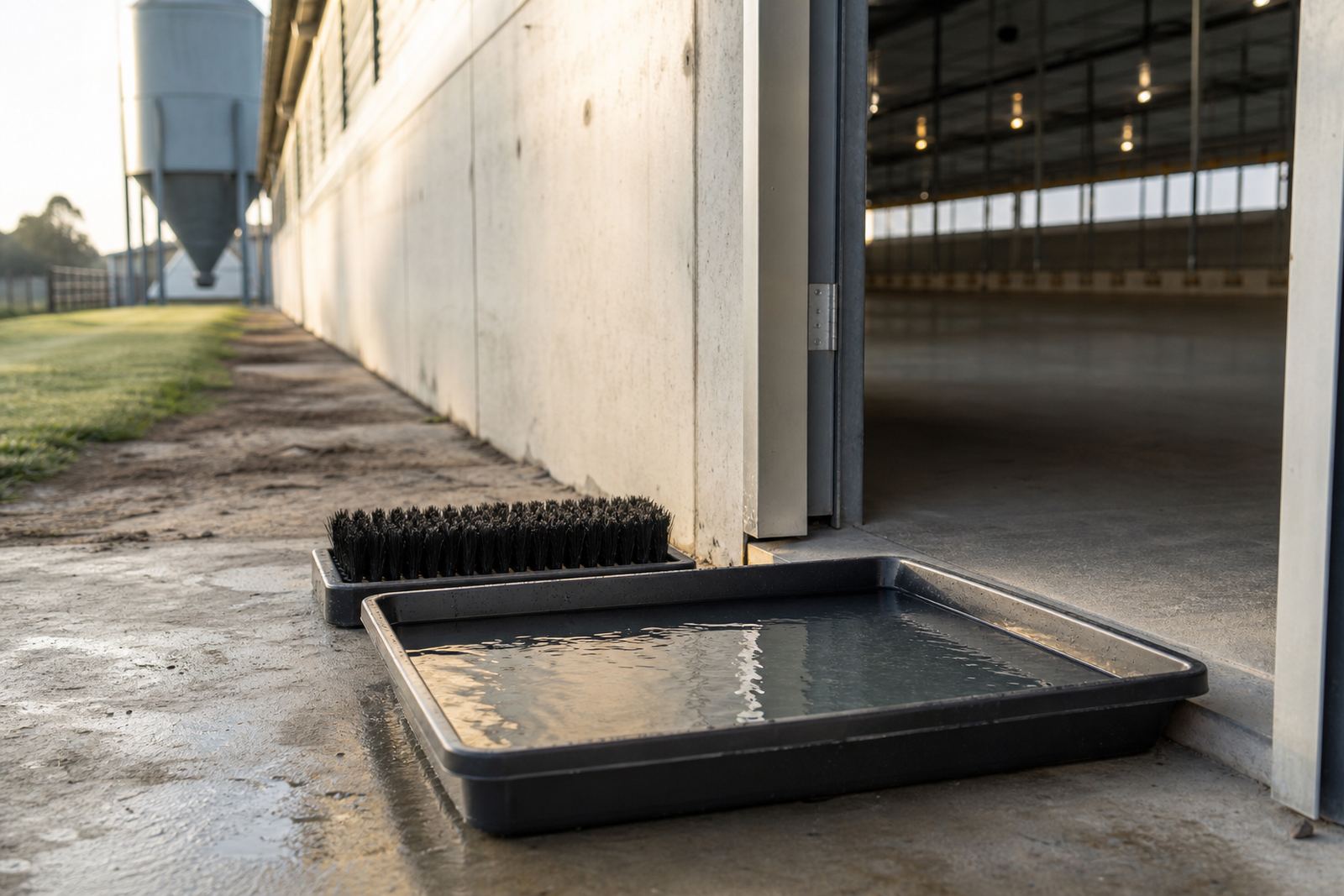
The footbath should sit just inside or right at the entrance, under a roof so rain does not dilute it. It needs to be deep enough to cover the sole and lower part of the boot, and long enough that people cannot step over it.
- Place a boot brush and scraper before the bath to remove mud first
- Use a disinfectant approved for poultry at the correct dilution
- Keep a separate bath for each house, not one shared for the farm
- Add a bench and a clean-side boot rack for a full boot change
Keeping it effective
Disinfectant loses strength quickly once it is full of soil. Change the solution at least daily, more often in wet weather or if it looks dirty. Write the change time on a board next to the door. Train staff and visitors that the footbath is not optional, including managers and contractors.
For new houses, we design entrances with a dedicated hygiene area: a dirty side, a footbath and a clean side with house boots. It costs very little at the planning stage and makes biosecurity easier to stick to.
Part of a wider plan
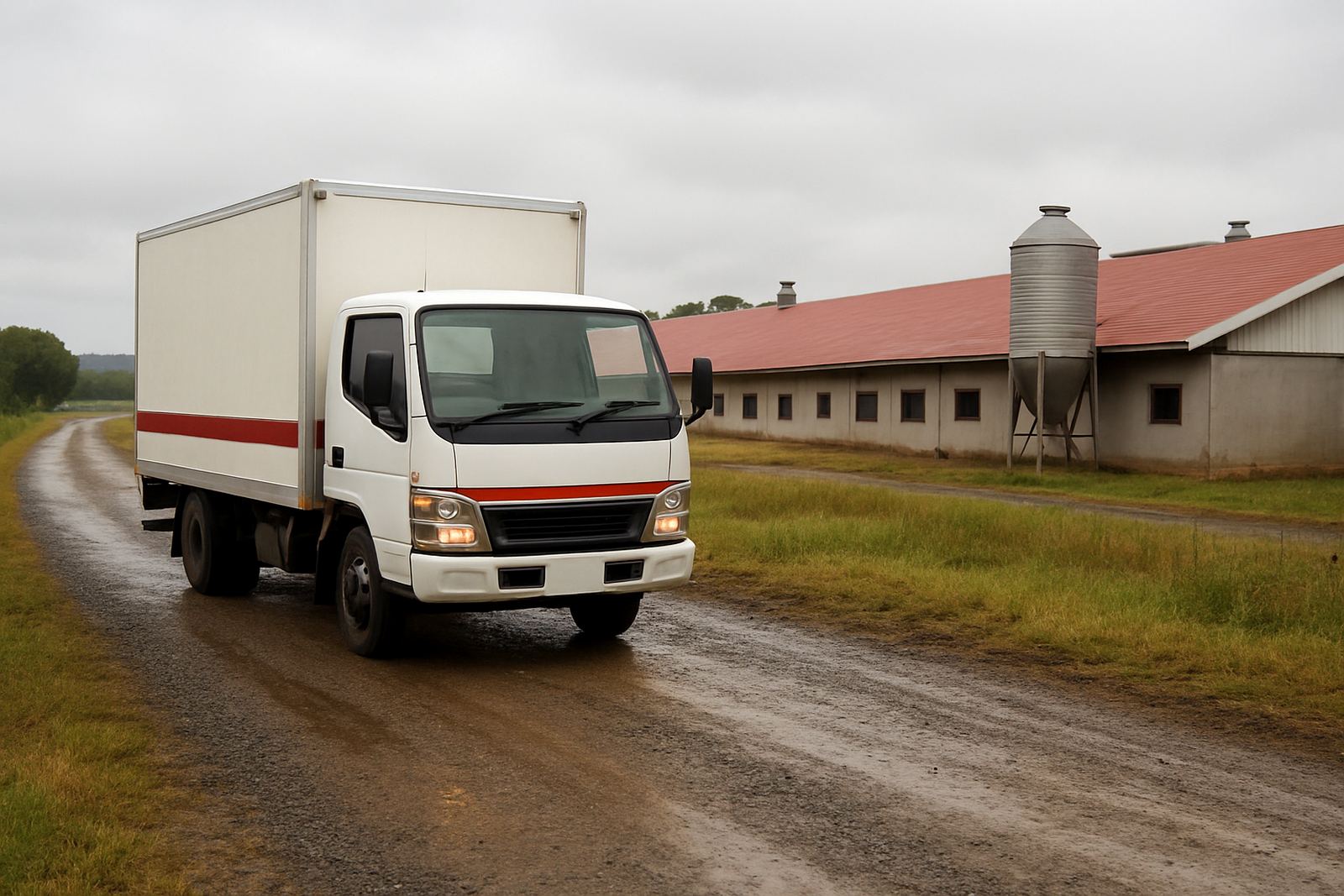
Footbaths work alongside wheel dips for vehicles, controlled visitor access, rodent control and proper cleaning between batches. If you are expanding or retrofitting a farm, talk to our team about entrance layout as part of the house design. We supply complete poultry houses and the equipment that goes inside them.