Why the last kilometre matters more than the long road in
When people plan a poultry unit, they usually focus on house size, cage layout and power supply first. That makes sense, but the last stretch into the farm often decides whether equipment arrives on time and whether technicians can get back later for servicing. A narrow gravel road, a low bridge, soft shoulders or a steep final rise can slow a delivery vehicle, damage loads or force extra offloading by hand.
For laying-hen cages, feeders, drinkers, incubators and abattoir equipment, the delivery point is only part of the job. The route from the main road to the poultry house also affects where a crane truck can stand, how far materials must be carried, and whether a generator or water tank can reach the shed without trouble. In Gauteng we see this on peri-urban sites and smallholdings, while in Limpopo and KwaZulu-Natal the wet season can change a firm track into a slippery problem in one afternoon.
Road width, turning space and vehicle clearance
Before an order is packed, the access road should be measured properly. Not by eye, and not from the gate only. A truck needs enough width to pass fences, poles, trees and parked farm vehicles, with room to turn without reversing into soft ground. A low branch or sharp bend can be enough to stop a delivery vehicle, especially where the road comes in between outbuildings.
- Measure the narrowest point from fence to fence or edge to edge.
- Check turning space at gates, yards and loading bays.
- Look for overhead lines, hanging wires and low tree branches.
- Note whether the road allows a vehicle to swing wide without dropping a wheel into a ditch.
If the road is tight, equipment may need to be broken into smaller sections, which takes longer and can raise labour cost. For abattoir equipment or larger house-fit items, planning the offload point early prevents delays on site and avoids the common problem of a truck arriving with nowhere safe to stand. That kind of hold-up can throw off the whole day, and sometimes the weather turns before the work is finished.
Surface condition in dry weather and in the rain
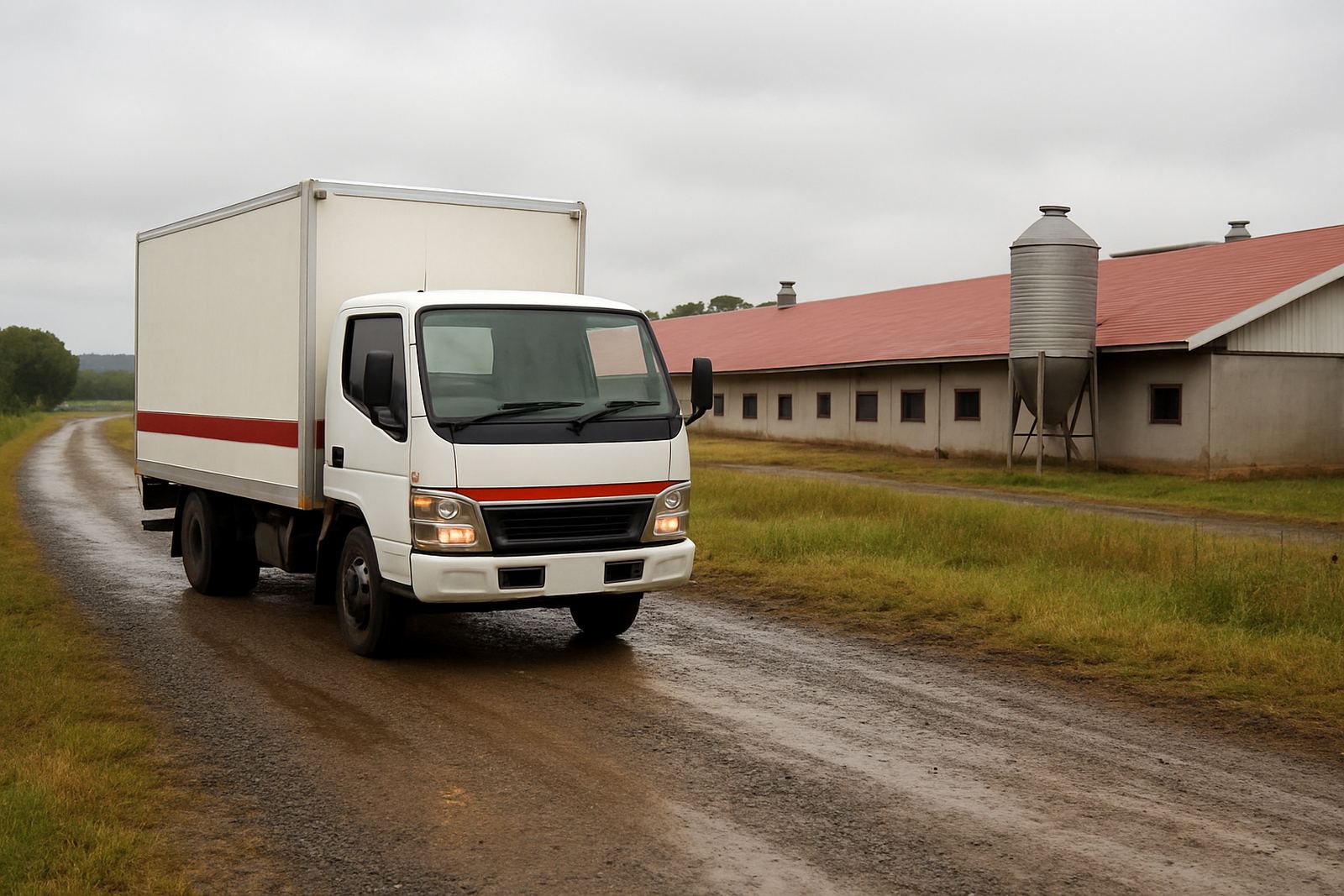
Hard gravel, compacted clay and well-maintained farm tracks all behave differently. In the dry months a road may seem perfectly fine, then after one storm it develops ruts, hidden holes or a soft shoulder. On sandy ground near parts of North West and Limpopo, a vehicle can lose grip even when the surface looks dry. In wetter areas, drainage becomes just as important as the road itself.
Good access planning means checking the road under load, not only on a quiet day in a bakkie. If the site will take regular servicing, then the road must suit repeated trips by technicians carrying tools, spares and sometimes motors or control parts. A service vehicle that can enter once but not return after heavy rain is not really accessible. It is also worth looking at dust, because fine dust can work into bearings, panels and moving parts if the route is rough and untreated.
- Check for standing water after rain.
- Look for ruts deeper than the lowest clearance on a vehicle.
- Identify places where the road washes out at culverts or dips.
- Make sure drainage does not push mud across the access line.
Loading points, offload space and safe handling
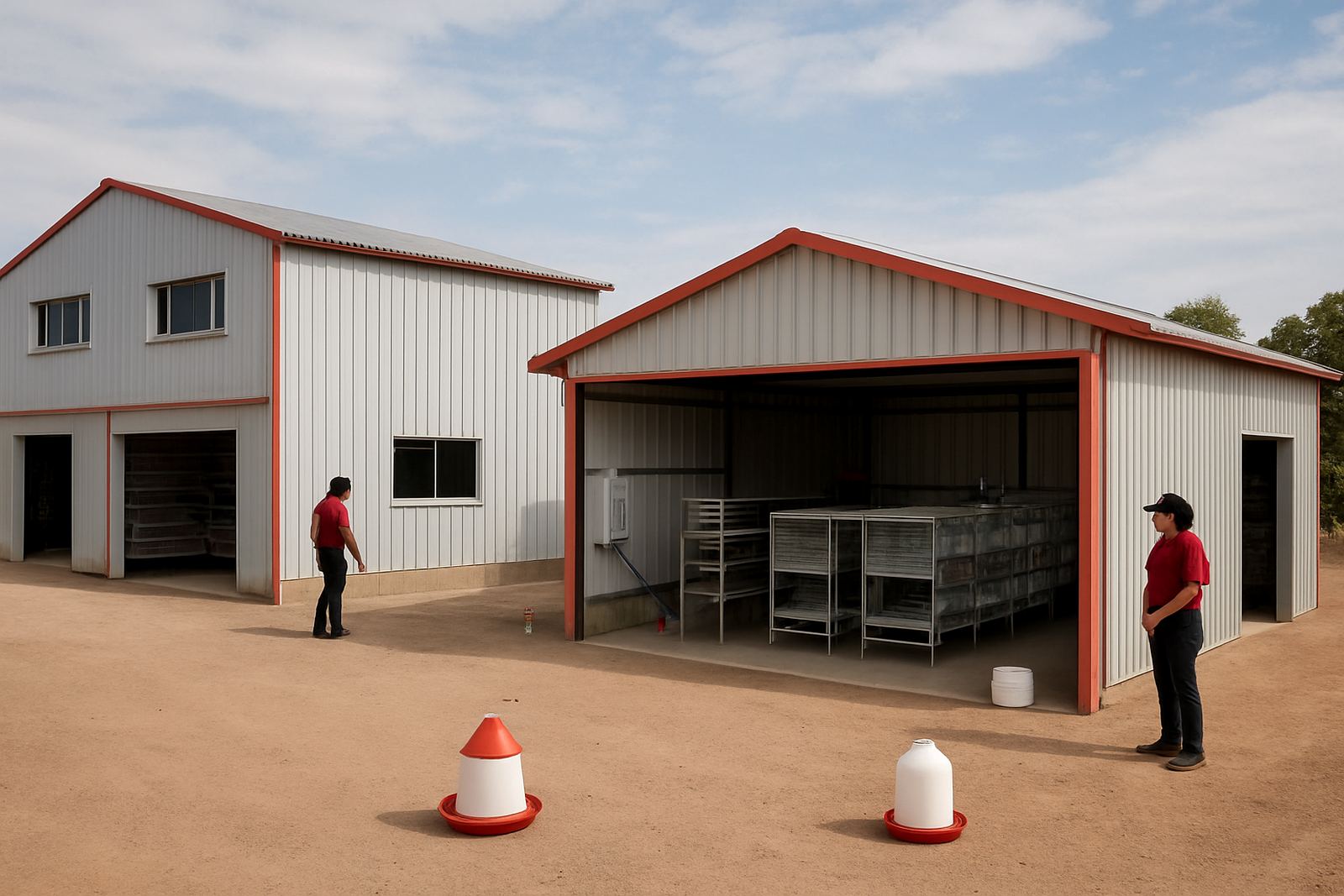
The farm gate is seldom the best place to offload equipment. A practical site needs a level area where the vehicle can park, the load can be checked and items can be moved without crossing soft soil or uneven stones. If cages, panels, tanks or processing-room items must be carried over long distances, the handling time goes up and damage becomes more likely. Simple site preparation can save a great deal of time later.
We always advise owners to think about the route from the road to the poultry house as a working path, not just a vehicle route. That path should be clear of feed sacks, scrap steel, irrigation pipe and loose stones. If the project includes multiple houses or a processing room fitout, then each building should have its own access note so the delivery team knows where to go first. It sounds basic, but missed details here can hold up installation and service visits more than most people expect.
- Prepare a firm offload area close to the house or store.
- Keep gates wide enough for the largest expected vehicle.
- Mark the safest route with simple signs or flagged poles.
- Move livestock, children and workers away from the offload zone.
How access affects later servicing and spare parts runs
Access is not only about the first delivery. Once a poultry unit is operating, you will need call-outs for wear parts, motor checks, alignment work, drinker repairs and periodic maintenance. If the road is poor, every service trip takes longer and the project becomes harder to keep running properly. That matters even more during load-shedding, when teams may be moving during early mornings or after dark to avoid heat and to work around power windows.
For farms in Gauteng, Mpumalanga and the Free State, a service run may also depend on municipal timing, water restrictions or road work near the property. Where the main access road is controlled by a gate or security post, it helps to have written entry instructions and a named contact. We recommend keeping an access note with the project file, listing the gate code, nearest landmark, road condition and any seasonal limits. It saves time for everyone, and it avoids back-and-forth phone calls when a repair is urgent.
A local example from a smallholding near Delmas
On a poultry project near Delmas, the main road to the farm was good, but the last 800 metres crossed a low-lying section that held water after rain. The owners had planned for the house and equipment, but not for repeated access during the wet months. The first delivery made it through, although the truck had to stop short of the shed and materials were moved in stages. After that, the road was graded and a few problem spots were filled, which made later servicing much easier.
That change did more than help deliveries. It also reduced wear on tyres, kept mud out of the work area and made daily movement between the feed store and the poultry houses easier for staff. A small fix at the access point can protect the bigger investment inside the farm. It is the sort of detail that is easy to miss until the first heavy rain, then everyone sees the issue at once.
The access checklist to complete before equipment is dispatched
Before a poultry project moves into delivery, it helps to confirm the route in writing and walk it if possible. A short check with photos can prevent a lot of wasted time, especially where roads change with the season or where new fencing has narrowed the approach. If there is any doubt, the site should be assessed again before final dispatch so there are no surprises at the gate.
- Confirm the main access road and the backup route.
- Measure width, gradient and turning points.
- Check surface condition after rain and after heavy traffic.
- Record gate codes, contact names and delivery hours.
- Note any low wires, culverts, bridges or soft shoulders.
Good farm road access does not need to be fancy. It just needs to be practical, known in advance and maintained well enough for the equipment and the people who have to use it. That is the difference between a project that arrives smoothly and one that keeps costing time long after the first birds are in the house.