Why the drinker choice matters from day one
In a poultry house, water is not just another utility. If birds cannot reach it easily, or if the system leaks, turns dirty, or takes too long to manage, you will see it in growth, litter condition and labour hours. That is why the first question is not which drinker looks neater, but which one suits the birds, the house and the people running it.
Nipple and bell drinkers both have a place in South African poultry production. Each can work well when installed correctly and maintained properly. The difference is in how the birds access the water, how often the system needs attention, and how clean the house stays between batches. In a small broiler unit near Bronkhorstspruit, or a larger layer project in KwaZulu-Natal, the same water source can perform very differently once it is matched to the right drinker type.
Nipple drinkers: cleaner houses, tighter control
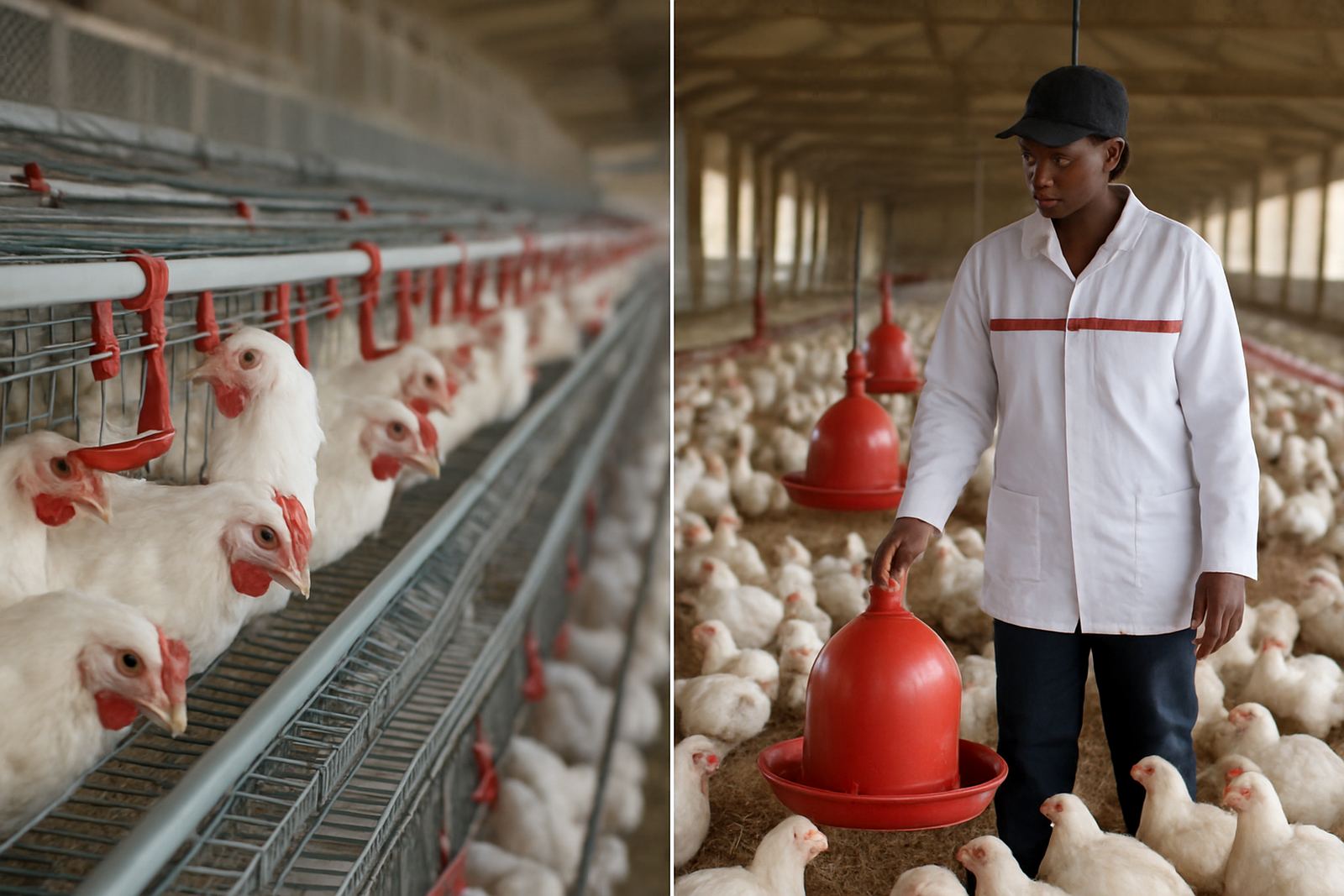
Nipple drinkers are widely chosen where hygiene and water saving matter most. Birds peck the nipple and only take what they need, which helps reduce spillage and wet litter. That is a real advantage in houses where ammonia must be kept down and where floor conditions must stay dry, especially in damp coastal areas or in winter when ventilation is sometimes limited.
They also reduce labour. Once the lines are set at the right height and pressure, staff spend less time topping up open containers or scrubbing drinkers. For layer houses and broiler houses with good management, this can mean fewer wet patches under the lines and less risk of coccidiosis pressure from soggy litter.
- Less standing water and lower contamination risk
- Better control over consumption and line pressure
- Useful where labour is tight or houses are long
- Works well with automated systems and dosing equipment
That said, nipples are not fool proof. Young chicks need careful start-up, correct line height and enough birds per line so they find the water quickly. If pressure is too high or too low, birds waste energy or underdrink. In a new house, good operator training matters as much as the hardware.
Bell drinkers: simple, visible and familiar
Bell drinkers remain popular because they are easy to see, easy to understand and suitable for many rearing situations. Birds can spot the water quickly, which helps during brooding and early placement. For some farmers, that clear access is useful when staff are still learning house routines or when bird numbers are smaller.
They do, however, need more day to day attention. Bells can spill water, collect dirt and create wet litter if the level is not set properly. In hot inland conditions, birds may crowd the drinkers and splash more water around. That can be managed, but it needs discipline.
- Clear water access for chicks and young birds
- Simple to inspect during routine house checks
- Good for systems where staff prefer direct visual control
- Needs regular cleaning to stay sanitary
For growers who are still building up a progamme of house checks, bell drinkers can feel more forgiving at first. The trade-off is that the house usually asks for more cleaning time and tighter supervision of water height. If the team falls behind, the litter tells the story quickly.
Hygiene, labour and bird access compared
The cleanest system is the one your team can manage properly every single day. Nipple drinkers usually win on hygiene because the water is enclosed and birds are not dipping beaks into an open pan. Bell drinkers can also perform well, but only if cleaning, flush routines and water levels are kept in line.
Labour is another big difference. Nipple systems reduce the need for constant topping up and lower the chance of accidental spills. Bell drinkers can be more labour intensive, especially in large houses or where staff numbers are limited. On the other hand, bell systems give very direct visual confirmation that water is present, which some growers like during brooding and daily inspections.
Bird access should be judged against age and house setup. Chicks often find bell drinkers quickly, while nipples need correct height and sometimes a short training period. Once birds are older, nipple lines usually become easier to manage. In a laying house, bird access, line spacing and perch layout all need to be considered together so the birds are not crowded at the drinkers when the lights come on.
What works in South African conditions
Our conditions vary a lot from Gauteng to Limpopo, and that changes the watering decision. In dry inland areas, dust and temperature swings can push water systems harder. In coastal and humid regions, keeping the litter dry is a bigger issue. For houses in Johannesburg, Boksburg or Middelburg, water pressure and municipal supply consistency also matter, because many farms rely on storage tanks to bridge interruptions.
If you are running a turnkey poultry project, the drinker choice should follow the house plan, not the other way around. We look at stock density, bird age, cleaning method, local water quality and how the team will manage daily routines. A well set nipple line in a broiler house near Tzaneen can save labour and keep litter drier. A bell system may still be suitable in a small brooding unit where simple access matters more than automation.
- Check borehole or municipal pressure before finalising the layout
- Allow for flushing points and easy cleaning access
- Plan for load-shedding if pumps or dosing units are involved
- Match the drinker height and spacing to the bird type
Our practical approach to selecting the right system
There is no one answer for every farm. The right system depends on the way the house will be run, the number of staff on site, and whether the project is a new build or an upgrade. At John F Marshall, we start with site planning, house layouts and equipment selection so the watering system suits the rest of the poultry house, not just the price sheet.
For many clients, the decision is not only nipple or bell, but how the chosen system fits with feed lines, ventilation, cleaning access and future expansion. If you are planning another house later, it is better to set the infrastructure now so the next phase can be added without ripping out the first one. Good fittings and sensible pipe runs save trouble later, and they help operators keep the house in order instead of chasing faults after every batch.
Our team in Jet Park supports projects across Gauteng, Mpumalanga, Limpopo, North West, Free State and KwaZulu-Natal, with installation supervision, commissioning, operator training and spares supply. That means the advice does not stop once the equipment arrives. It carries through to the first flock and the next one after that.
A local example from the field
A farmer outside Delmas wanted to cut labour in a layer house while keeping the litter dry through winter. The original open drinkers were easy to use, but the cleaning time was heavy and the wet patches under the lines were becoming a problem. After reviewing the house layout, the team changed to nipple lines with correct pressure control and a simple flushing routine.
The result was not magic, just a better fit. The house stayed cleaner, the staff spent less time on water buckets, and the birds settled into a more even routine. The key was not only the hardware, but the training and the way the lines were set for bird height. That is where many projects succeed or fail: in the daily details.
For growers comparing systems, that is the main lesson. Choose the drinker that matches your birds, your labour and your housekeeping standard. If the farm needs low spillage and lower labour, nipples usually lead. If early chick visibility and simple manual checks are the priority, bells can still do the job well. Either way, correct planning beats guesswork every time.