What healthy airflow should do in a broiler house
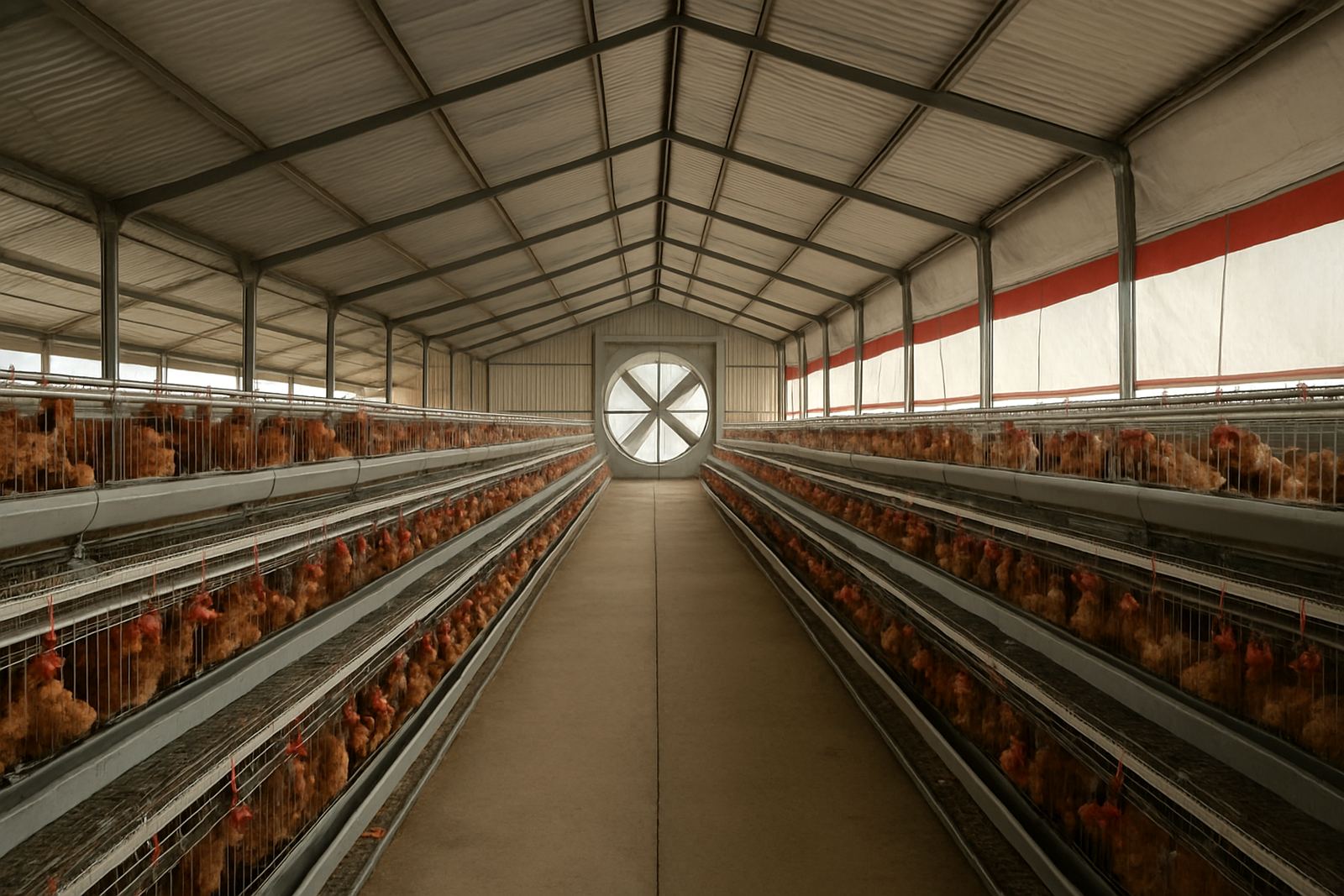
A productive broiler house needs air to move in a controlled path, not just any direction at all. Fresh air should enter cleanly, mix if needed, and reach the birds without leaving dead spots along side walls, corners or under feeders. At the same time, used air must leave the house fast enough to take heat, moisture and carbon dioxide with it.
When airflow is right, birds stay more uniform. Litter dries quicker after drinker spills, ammonia stays lower, and the house is easier to manage during hot afternoons in places like Delmas, Bronkhorstspruit or Middelburg where heat can shift quickly. If the airflow is poor, birds on one side can grow differently from the other side and you end up chasing problems with temperature settings that never quite fix the real issue.
- Air reaches bird level evenly
- Dead spots are limited to small corners only
- Litter remains dry enough to break down properly
- Dust, moisture and odours are removed before they linger
The signs that your shed is moving air properly
You do not need fancy equipment to spot good airflow. Walk the house and look at how the birds behave. If they are spread evenly, not crowding one side, and the litter looks similar from end to end, that is a useful start. Check hanging curtains, inlet gaps and fan outlets too, because uneven openings often cause short-circuiting where fresh air goes straight to the exhaust without passing through the house.
Another practical test is smoke or light tissue at different points in the house. You want to see a clear, steady movement, not swirling pockets or areas where the air sits still. In summer, especially in low-lying areas around Limpopo and parts of KwaZulu-Natal, you may also notice heat pockets at the ridge or near the back wall. That usually points to poor fan balance or inlet settings that need attention.
- Birds are not panting on one side while calm on the other
- Litter moisture stays more or less even across the shed
- No strong stale smell builds up near the centre line
- Air movement can be felt consistently at bird height
Why inlet control matters more than fan count alone
Many growers focus on fan size, but fans alone do not make good airflow. If the inlet openings are wrong, air comes in too fast, too slowly, or in the wrong direction. That affects pressure inside the shed and can make one end too cold while the other end stays warm. Proper inlet control is what helps the air travel across the ceiling before dropping to the birds in a planned way.
On a cold morning in the Free State, for example, you may need tighter inlet control to stop cold air from dropping straight on chicks. In hotter weather, the same house may need more open area and a different fan sequence. This is where a good commissioning process makes a real difference, because a shed that looks fine on paper can behave differently once the birds are in it and the weather changes.
- Adjust inlet openings to suit bird age and outside temperature
- Check that fans are staged in the correct order
- Look for air leaking through gaps, doors and service openings
- Confirm that air is not short-circuiting near the ceiling
Heat, humidity and load-shedding planning
Broiler airflow is not only a summer problem. In winter, damp air can sit in the house and make litter heavy, which increases ammonia and slows bird comfort. In coastal or humid periods the house may need more careful ventilation to get moisture out before it settles in the bedding. Once litter starts to cake, it becomes harder to correct, so early action saves time and feed.
Load-shedding adds another layer. If the house depends on powered ventilation, backup planning is not optional. A few minutes without airflow can turn into stress quickly in a full house, especially if stocking density is high. Keep the backup system tested, make sure the transfer is understood by staff, and check that critical fans, alarms and controls come back properly after interruption.
- Have a clear generator or backup power plan
- Test restart procedures before peak heat periods
- Keep spare belts, motors and control parts on site
- Train staff to recognise early heat stress signs
A practical example from a Gauteng grow-out unit
A grow-out operation near Gauteng was seeing uneven growth and damp litter along one wall, even though temperatures looked acceptable on the controller. After checking the house, the issue turned out to be a mix of blocked inlets, one underperforming fan and poor sealing around service points. The birds closest to the weak airflow side were slower to settle and the litter stayed wet longer after watering.
Once the inlets were corrected, the fan layout balanced and the leakage points sealed, the house performed more evenly. Birds spread out better, the litter dried faster and staff spent less time trying to solve a problem that had been hiding in the airflow pattern. That sort of result is common because airflow faults often look like feeding, temperature or health issues when the real cause is movement of air through the shed.
- Check airflow before changing feed programmes
- Inspect the full house, not just the controller reading
- Compare both sides of the shed during daily rounds
- Record what changes are made so results can be tracked
How to keep airflow working as birds grow
Airflow needs change as the flock grows. Chicks need protection from direct cold drafts, while older birds need stronger air exchange to keep heat and moisture under control. That means the ventilation plan should be reviewed through the cycle, not set once and forgotten. Houses with good airflow tend to have clearer routines because the staff can see when something drifts out of place.
Regular maintenance is part of the answer too. Dirty fan blades, sagging curtains, blocked insect screens and worn seals all reduce performance. A small fault can have a bigger effect than people expect, especially in long houses. The best time to deal with it is before the next placement, when there is space to clean, test and reset the system properly.
For broiler producers across Gauteng, Mpumalanga, Limpopo, North West, Free State and KwaZulu-Natal, good airflow is not a theory. It is what keeps houses manageable during heat, humidity and power interruptions, and it is one of the clearest signs that the shed is doing its job.
When to bring in a poultry equipment team
If you are constantly adjusting settings and still seeing uneven birds, wet litter or hot spots, the house needs a proper inspection. A site review can pick up inlet faults, poor fan staging, layout problems and installation issues that get missed in day-to-day work. For new builds and upgrades, airflow should be planned with the house layout from the start, not corrected after birds are already inside.
John F Marshall works with poultry projects from planning through to installation supervision, commissioning, training and maintenance. That means the airflow question is handled with the rest of the house, from equipment selection to operator support and spare parts supply. It saves time later because the shed is set up to work as a system, not as separate items bolted together.