Why backup power is not just about keeping the lights on
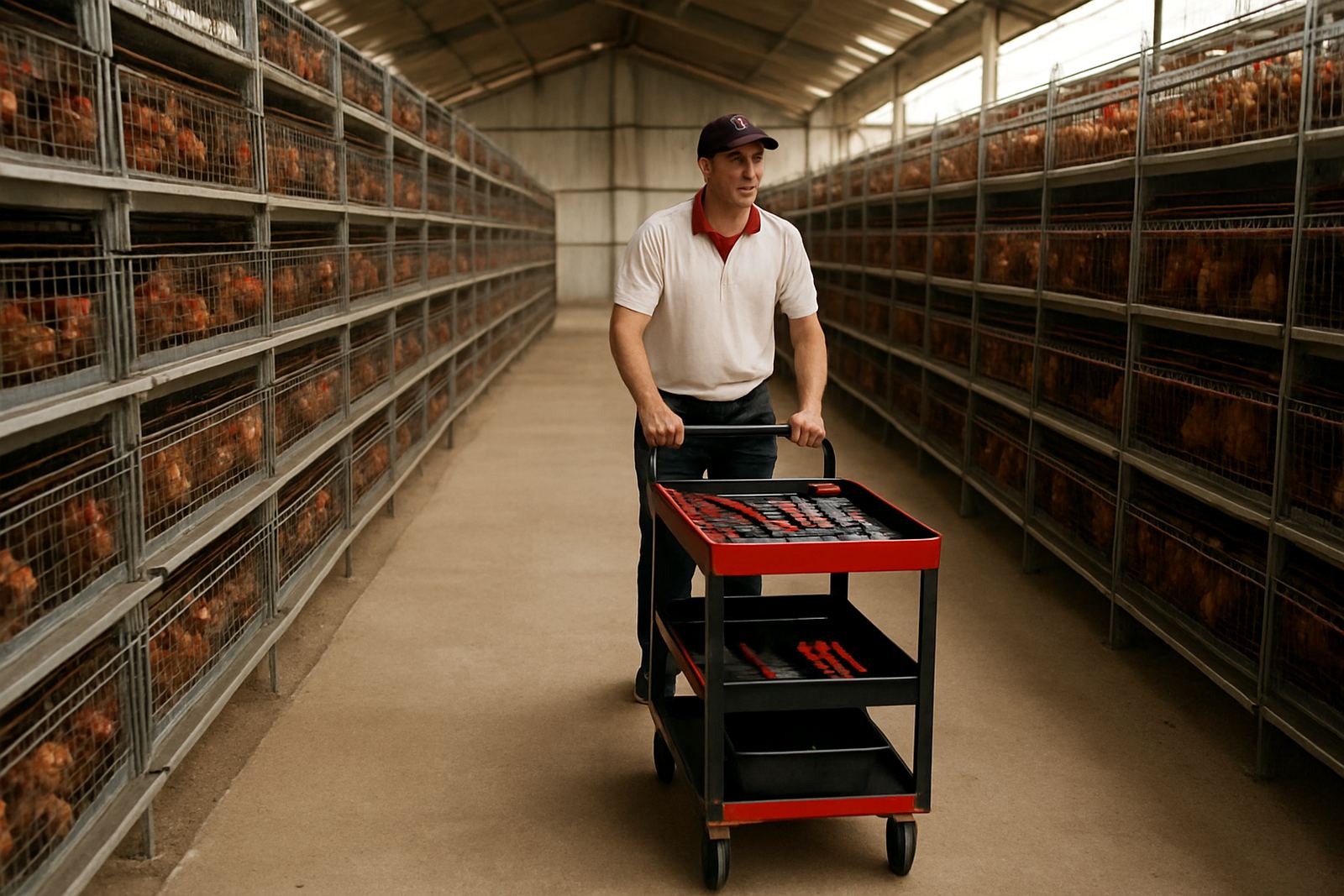
In a poultry house, power failure affects much more than lighting. Feed lines stop, drinkers may lose pressure, ventilation slows, controllers reset and temperatures move fast. On a warm day in Limpopo or KwaZulu-Natal, even a short outage can push conditions outside the safe range for birds.
Generator readiness means knowing exactly what must stay live and for how long. It is not enough to say a house has backup power. You need to work out which circuits are essential, which can wait and how the load changes during brooding, growing and peak heat. If the plan is vague, the generator gets overloaded or the wrong equipment is switched on first.
For turn-key poultry projects, we normally start with the house function, not the machine size. That means mapping the ventilation fans, lighting, controls, feed systems, pumps and any alarm equipment before a generator is selected. A house that is built for 20 000 birds has a very different power profile from a small breeder unit or a hatchery support room.
Start with the load list, not the generator quote
The most common mistake is buying a generator by kVA alone and hoping it will cope. In practice, poultry systems have starting currents, duty cycles and sensitive controls that must all be considered. Motors for fans and pumps draw more at start-up, while electronic controllers prefer stable power with clean changeover.
- List every item that must run during an outage
- Separate critical loads from non-essential loads
- Check starting current for each motor
- Allow for future expansion, not only current use
- Confirm whether the system uses single phase or three phase supply
At Jet Park in Boksburg, we often see sites with good equipment but poor load planning. The result is a generator that can carry the house in theory, but trips as soon as all fans kick in at once. A proper load schedule avoids that problem and makes maintenance easier later.
Changeover timing matters more than many owners expect
Load-shedding has made many operators used to a manual response, but poultry systems need quicker action than a person standing watch can always give. If the generator starts late, even by a few minutes, temperature and airflow can move outside safe limits. In brooding houses, young chicks are especially vulnerable.
Automatic changeover can help, but only if it is set up correctly and tested under site conditions. Voltage dips, delay settings and control panel behaviour all need checking. If the controller reboots each time power returns, there is a risk of feed interruptions or alarms that nobody notices until much later. That is why commissioning should include full outage simulation, not only a brief test run.
A practical generator plan also includes fuel storage. In rural parts of North West or Free State, deliveries may be delayed during rain or road disruptions, so the tank size must match the likely outage duration. If your farm can only hold one day of diesel, the whole backup plan depends on fuel arriving on time, which is not ideal.
House design and generator planning should be done together
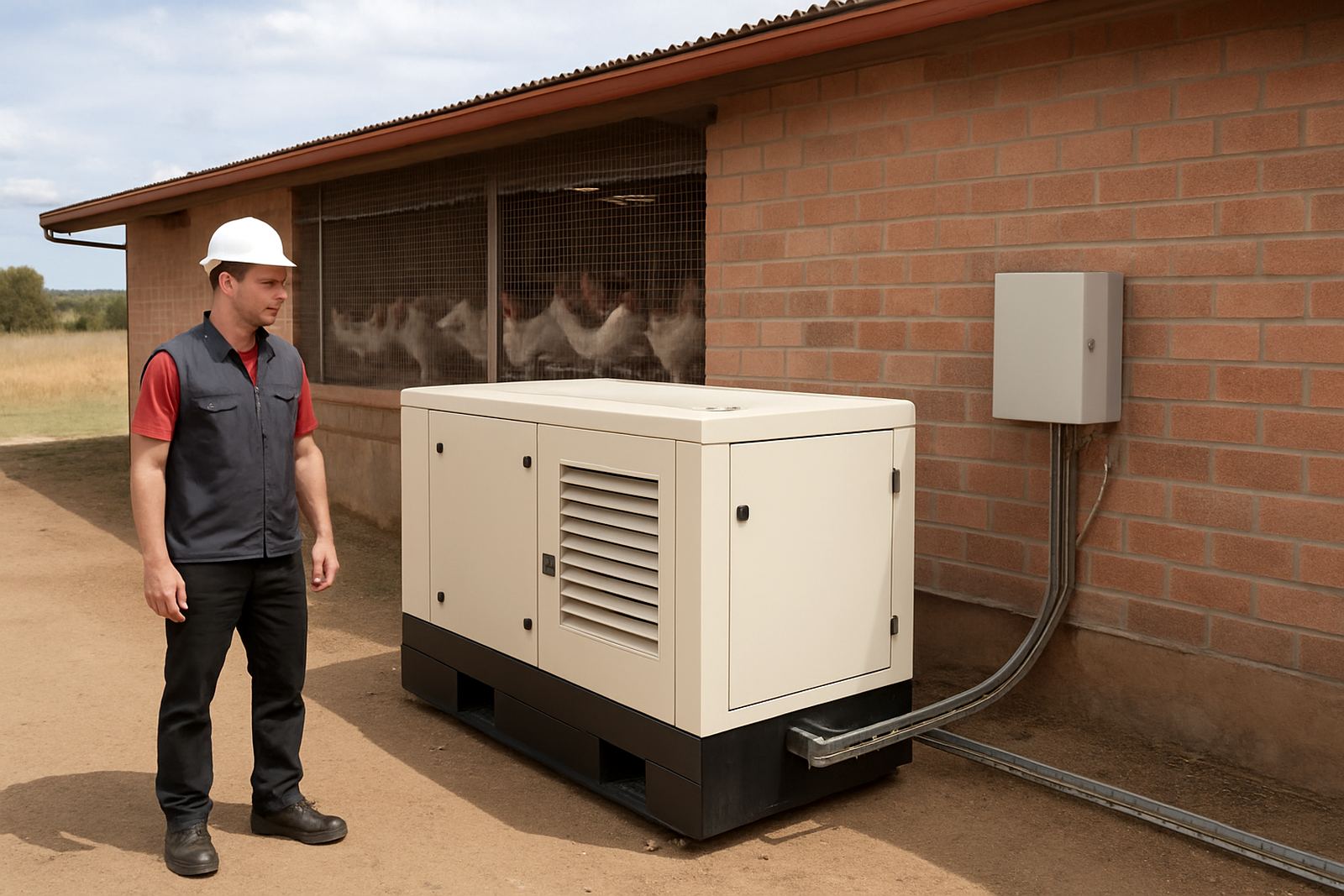
Generator readiness is easier when it is built into the layout from the start. Cable runs, switch positions, ventilation for the generator set and space for fuel handling all matter. If these are left until the end, the result can be long cable lengths, awkward access or a generator placed where dust and heat shorten its life.
We see this often in older houses being upgraded across Gauteng and Mpumalanga. A site adds extra feed motors, better air movement and more lighting, but the backup plan still reflects the original small setup. Then the owner has to choose between protecting the birds properly or switching off non-essential equipment just to keep the generator within limits.
- Leave enough space for safe maintenance access
- Keep generator air intake clear of dust and crop residue
- Plan cable routes so they are protected from water and vermin
- Position fuel storage with municipal safety rules in mind
- Mark all emergency circuits clearly for operators
On coastal sites in KwaZulu-Natal, humidity and corrosion also need attention. Terminations, enclosures and cable glands should be checked more often than inland sites, because salt air and moisture can shorten service life if the installation is not maintained.
A generator test should feel like a normal working day
Testing must go beyond a quick start-up. A proper test checks how the poultry house behaves when the generator takes over under real load. Fans should run, drinkers should maintain pressure, lighting should stay stable and control panels should hold their settings. If one section fails, you want to know before birds are in the house.
Our service teams also look at operator response. Someone on site should know where the isolators are, how to read alarms and what to do if the generator starts but does not carry the full load. Training matters because backup power is only useful if the people on duty can use it fast under pressure.
Maintenance programmes should include weekly or monthly checks depending on how hard the site works. Oil, filters, belts, battery condition and fuel quality all affect readiness. A generator that starts once a week in a controlled test is very different from one that is expected to carry a live house after a sudden outage at 2 am.
Local example: a breeder house outside Middelburg
A breeder operation outside Middelburg had repeated outages during evening feeding, and the owner thought a medium size generator would solve it. After a site review, the real issue was that the house had grown through expansions, but the emergency plan had never been updated. Additional fans, extra lighting and a water pressure pump had all been added over time.
Once the loads were mapped properly, the backup system was reconfigured to cover the critical circuits in the right sequence. The changeover setting was adjusted, the start-up order was corrected and staff were shown how to check the status panel before opening the house. The same equipment now does the job better because the plan fits the actual building, not the old version of it.
That is the point of generator readiness. It protects production, but it also protects the equipment you have already paid for. A correct plan reduces stress on motors, gives operators a clear routine and helps keep bird conditions steady during load-shedding or an unexpected trip from the municipal supply.
The practical checklist before the next outage
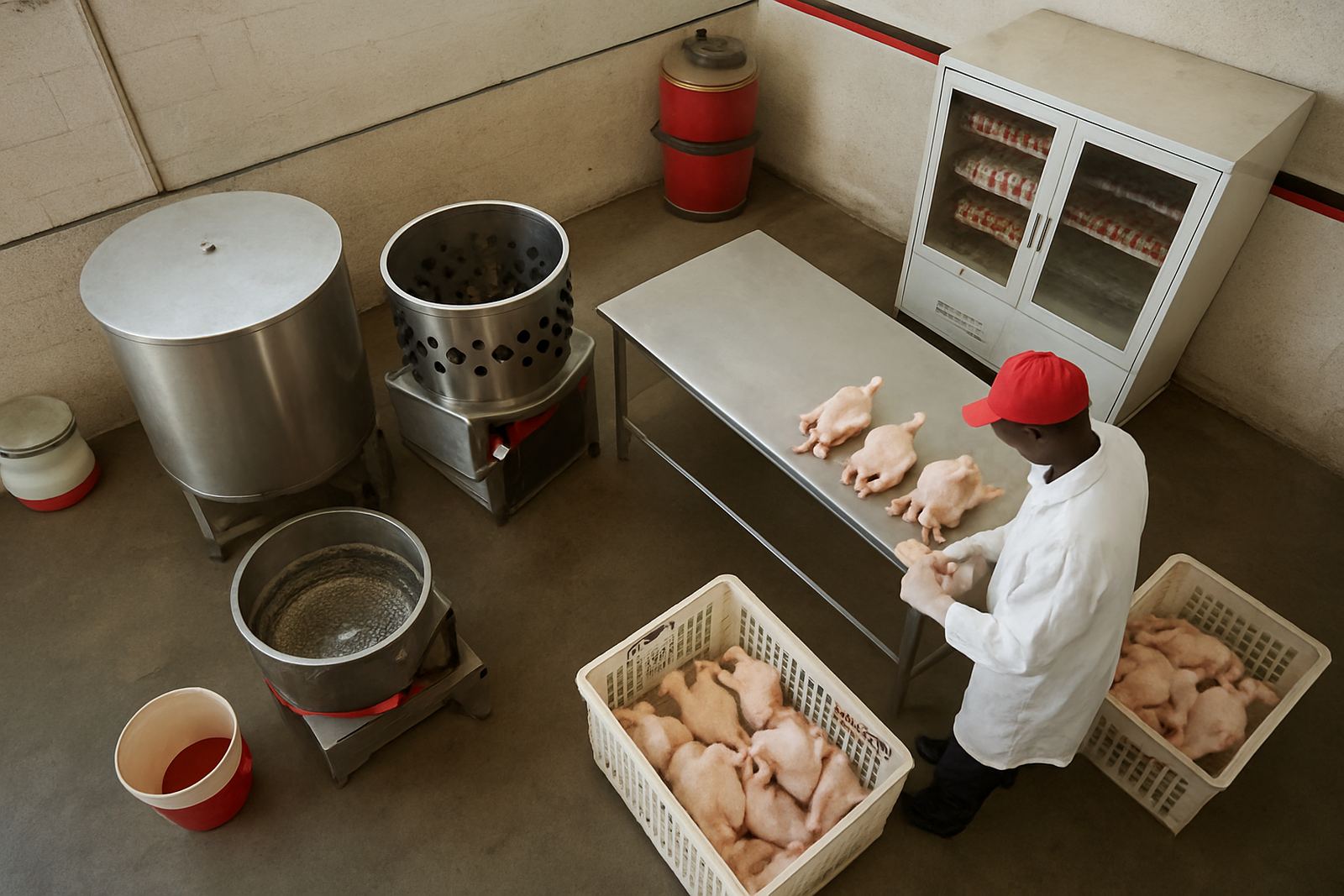
Before winter, before peak heat and before your next expansion, review the backup power plan as a whole. If you are adding feeders, drinkers, control panels or processing room equipment, the generator may need a different load balance. Do not wait for a failure to reveal the gap.
- Confirm current and future load requirements
- Test automatic and manual changeover functions
- Check fuel storage, battery condition and service intervals
- Brief operators on start-up, alarms and safe shutdown
- Review whether the generator can support the next house upgrade
For poultry projects across Gauteng, Limpopo, North West, Free State, Mpumalanga and KwaZulu-Natal, backup power should be part of the build conversation from the beginning. That way the house, the equipment and the power plan all work together when the lights go out.