Start with the house style before you choose a manure system
There is no single manure solution that suits every poultry site. A deep litter house, a laying hen cage house and a fully enclosed layer complex all produce waste in different forms, so the handling method must follow the housing layout and the daily routine on the farm. In practical terms, the first question is not what equipment is available, but how the birds are housed, how often manure must be removed, and where the waste will go once it leaves the building.
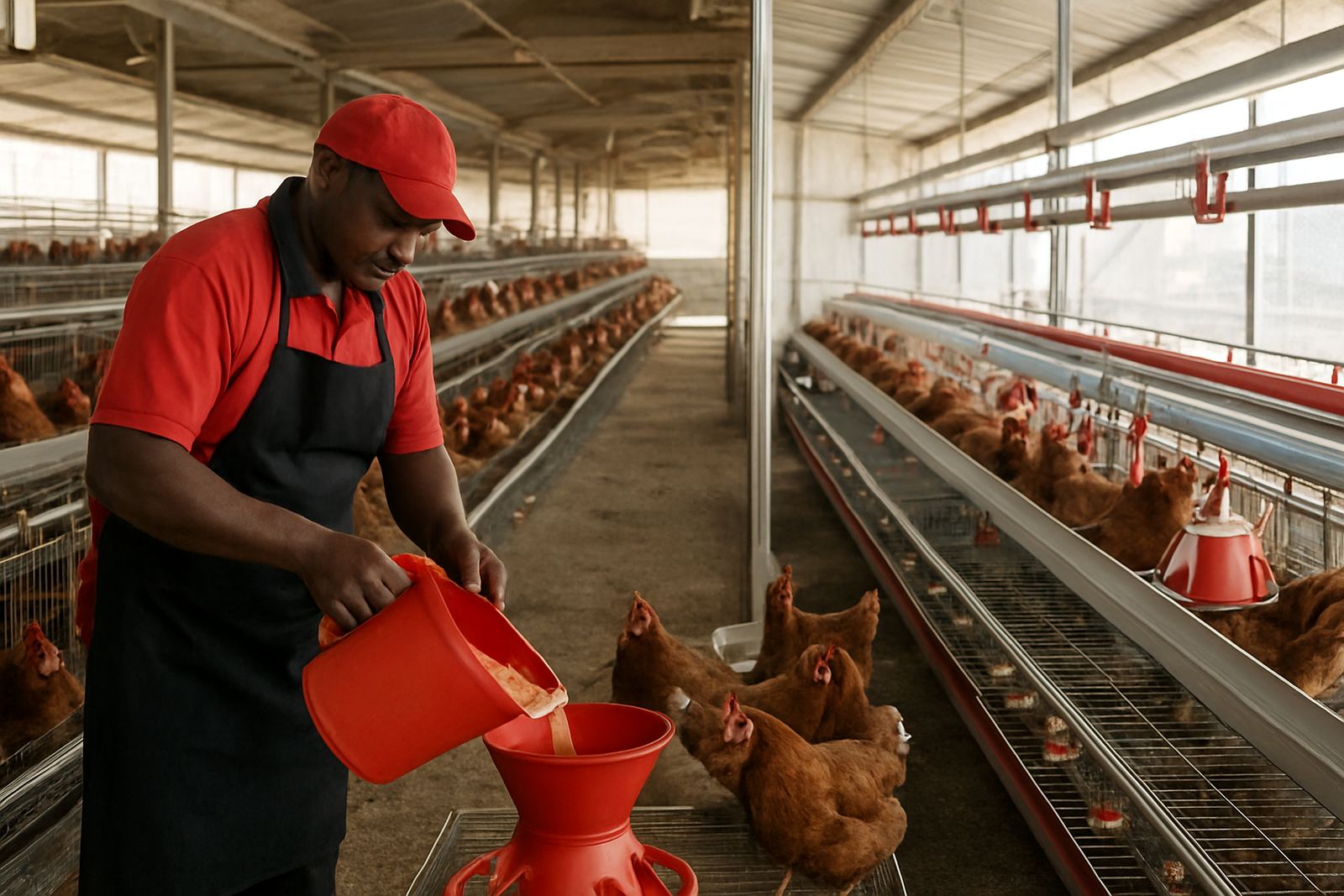
For cage layers, droppings fall below the cages and can be managed on belts, scrapers or under-house collection. For floor systems, the waste mixes with litter and needs regular turning, drying or removal. In wet summer areas, especially around Mpumalanga and KwaZulu-Natal, moisture control matters more than people expect. If the base stays damp, you will fight ammonia, flies and caking, and the whole poultry house becomes harder to manage.
Dry handling works best where access is planned and movement is controlled
Dry manure handling is common where the site has enough access for trolleys, tractors or collection vehicles. It suits smaller to medium farms that can remove waste in batches rather than every day. The main advantage is simple operation. You do not need pumps, sumps or washwater handling, and you can often use the manure as compost or sell it to growers once it is properly cured.
- Best for houses with good vehicle access and open space for temporary stacking
- Useful where labour is available for scheduled clean-outs
- Suitable for litter-based systems, breeder houses and some cage installations
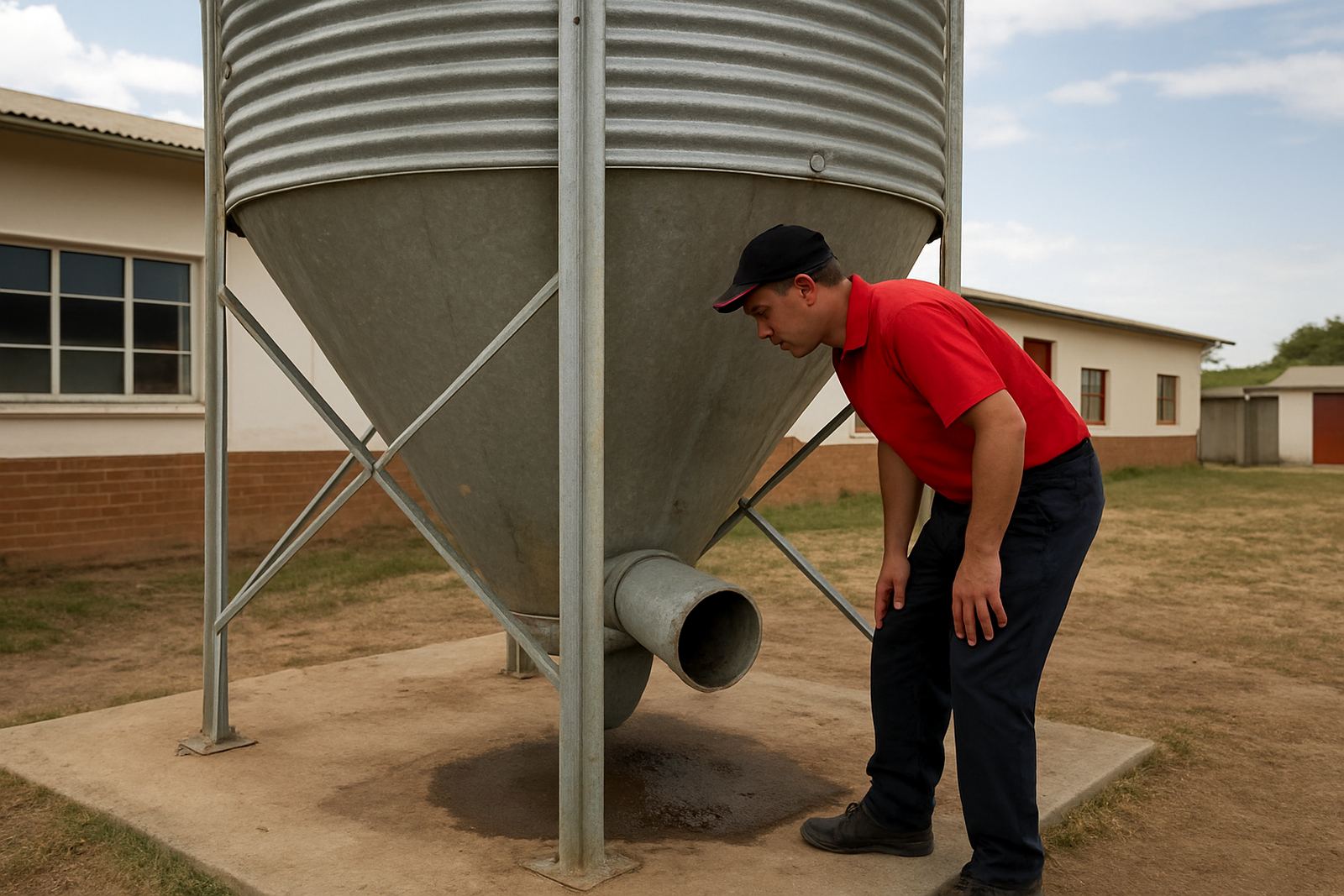
- Needs a dry, covered storage point to limit odour and run-off after rain
In Gauteng and the Free State, dry handling can work very well if the storage area is level and stormwater is kept away. A simple concrete apron with drainage to a controlled point makes a big diffrence. Without that, you end up with a muddy edge, poor hygiene and complaints from neighbours or the local municipality.
Belts and scrapers keep cage houses cleaner and reduce labour
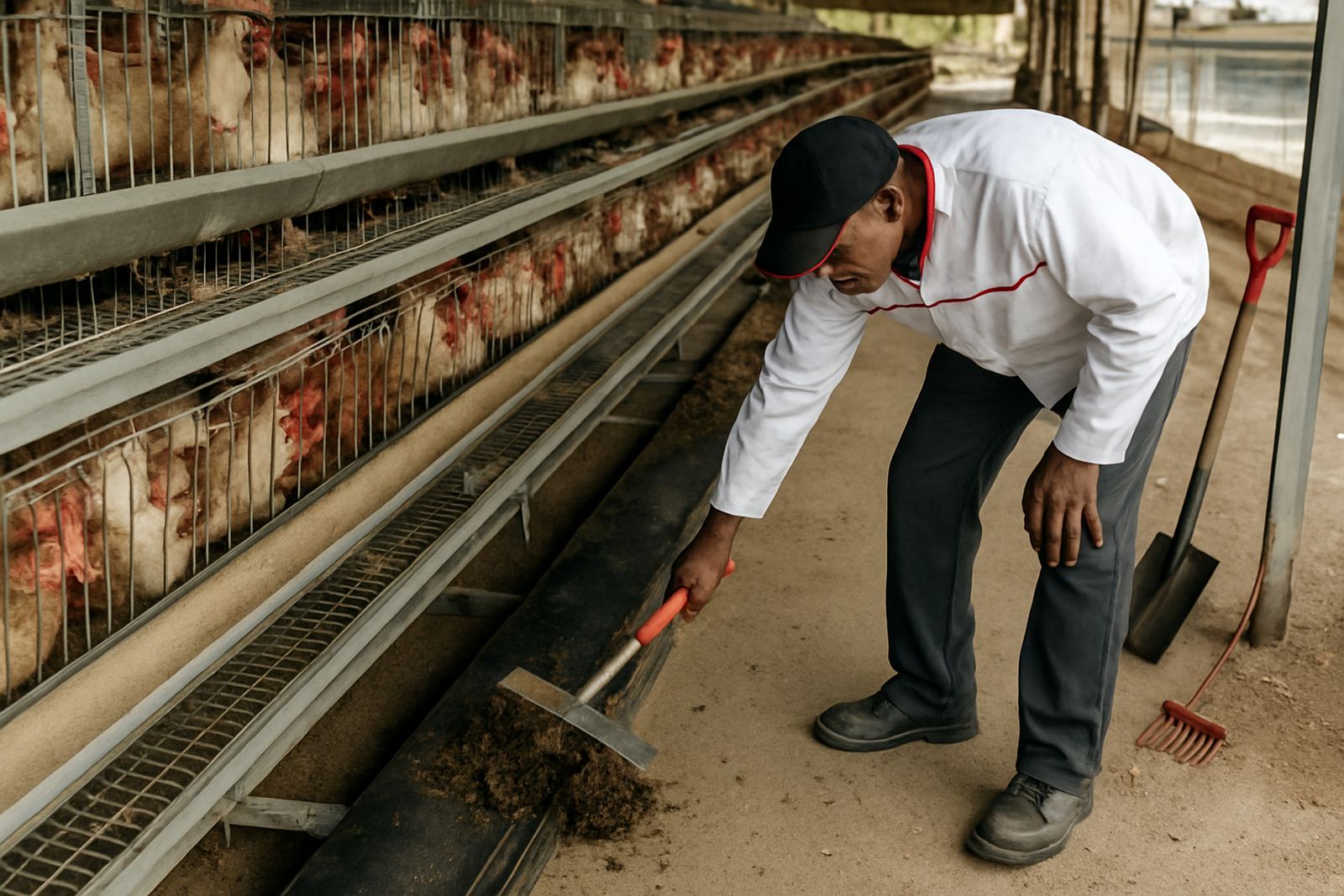
Where laying hens are in cages, manure belts or scraper systems are worth serious attention. They remove droppings from below the birds before the waste builds up, which helps with smell, flies and internal air quality. This is especially useful in warmer districts and in houses where ventilation must already work hard during load-shedding or summer peaks.
Belts move the manure to a transfer point for collection, while scrapers push waste to a channel or pit. Both systems can lower manual labour, but they need good installation, regular maintenance and operators who understand the sequence. If the drive units, tensioning and discharge points are not set up correctly, the system starts creating problems instead of solving them.
- Improves hygiene in high-density layer houses
- Reduces time spent entering the house for manual clean-up
- Helps control ammonia build-up under cage rows
- Needs spare parts and routine checks to avoid stoppages
Wet systems need more caution than most farms expect
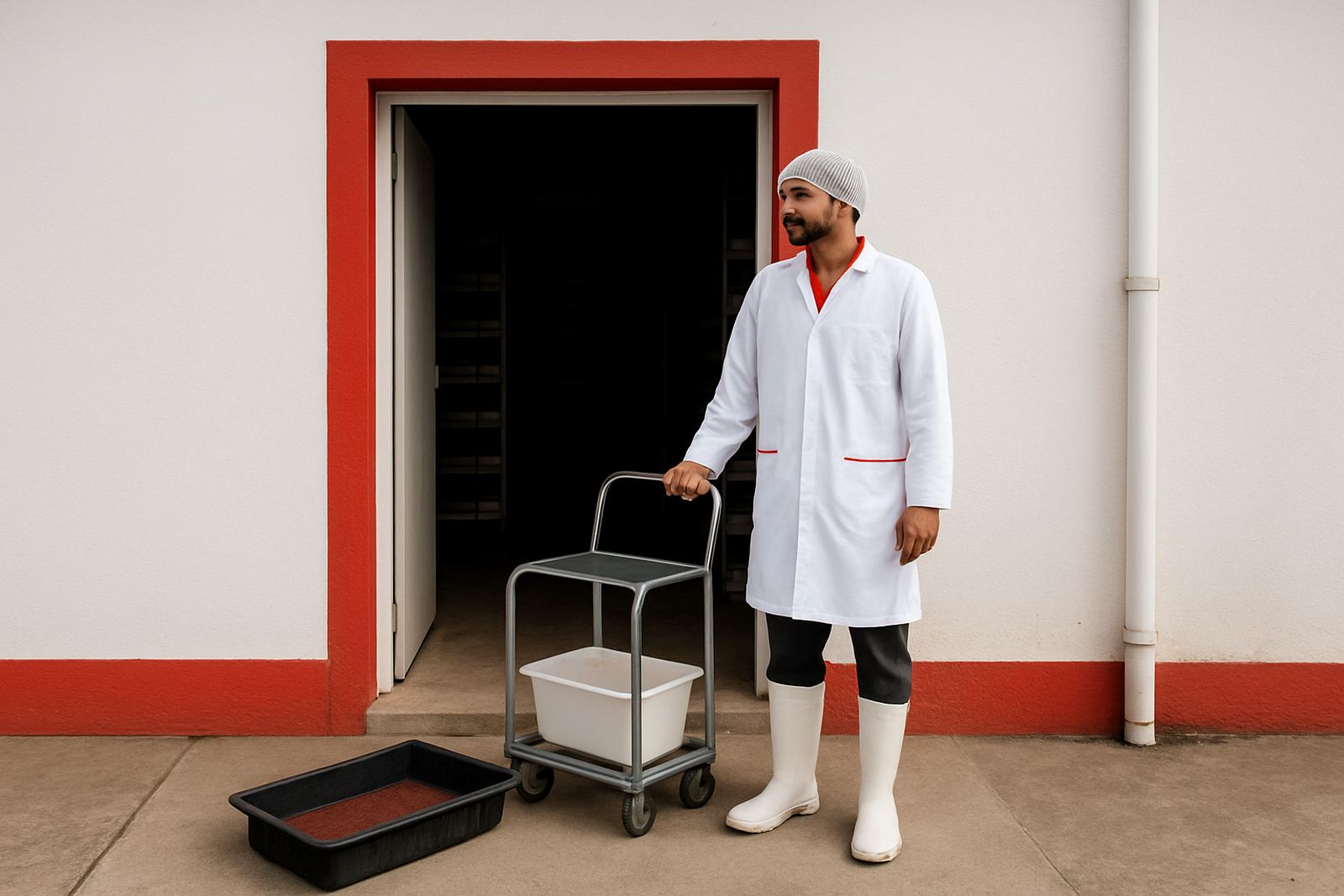
Some poultry and processing sites use water-based waste handling or washdown systems in selected areas. These can work in abattoir zones, egg rooms and processing spaces where cleaning hygiene is tightly controlled, but they are not a simple answer for manure in every house. Once water enters the waste stream, you must think about drainage, effluent control, storage capacity and environmental rules.
On coastal or high rainfall sites, wet handling can quickly create overflows if the drains are undersized or the settlement area is not maintained. Even inland, a system that looked fine on paper can fail during a heavy storm or when one pump goes down. That is why any wet option must be planned as part of the whole site, not as an add-on. It also means matching the system to the municipal by-laws and the actual cleaning pattern on the farm, not just the weekly schedule on paper.
Composting and stockpile planning turn waste into a usable product
If the farm has enough land and the right access, composting can turn manure into a useful soil input. The key is control. A compost area must be away from waterways, down-slope runoff and neighbour boundaries where possible, and the base should be prepared so that leachate does not disappear into the ground. Good composting also depends on the right balance of moisture, carbon material and turning.
A basic approach is often enough for many farms: stacked windrows, a covered area, and a simple turning plan. But the site still needs a proper layout so trucks can enter, load and leave without dragging waste back into the poultry zone. On mixed farms around North West and Limpopo, this can be a practical option because crop residues are often available to mix with manure.
- Keep the compost pad above stormwater flow lines
- Cover fresh piles where heavy rain is expected
- Mix with dry carbon material to reduce smell and improve breakdown
- Leave enough space for turning and curing without blocking farm traffic
A local example: a Gauteng layer site cut clean-up time by changing the handling plan
A layer project in the Jet Park and greater Boksburg area needed a better answer for manure build-up under a cage house. The problem was not only the waste volume, but the way it was being moved off site. Trucks were arriving too late, the storage point was too small, and the cleaning crew was spending too much time working around the birds. After reviewing the house layout, the team changed the handling flow, improved the holding area and set a clearer removal schedule.
The result was less smell around the house, fewer flies and cleaner walkways for the operators. Just as important, the farm could train staff to follow a fixed routine instead of reacting to problems as they came up. That is usually where manure management succeeds or fails. If the site plan, access routes and collection timing are right, the system stays manageable. If not, the best equipment can still become a daily frustration.
Choose for the whole project, not only the first build
Manure management should be treated as part of the original poultry design, whether you are building one house or phasing in a larger project over time. Think about where waste leaves the building, where it is stored, who handles it, and what happens during rain, heat or a power cut. Also think about future expansion. A farm that starts with one house may add another row in 18 months, so the waste route must leave room for that growth.
For turnkey poultry projects, the best manure option is the one that fits the house style, the labour available, and the local conditions on site. In Gauteng, Mpumalanga, Limpopo, North West, Free State and KwaZulu-Natal, the right answer can differ quite a bit from farm to farm. That is why a proper site plan, clear house layout and practical installation supervision matter just as much as the equipment itself.
When the handling plan is done well, manure stops being a daily nuisance and becomes a controlled part of the operation. That saves time, protects bird comfort, and makes the farm easier to run in the long term.