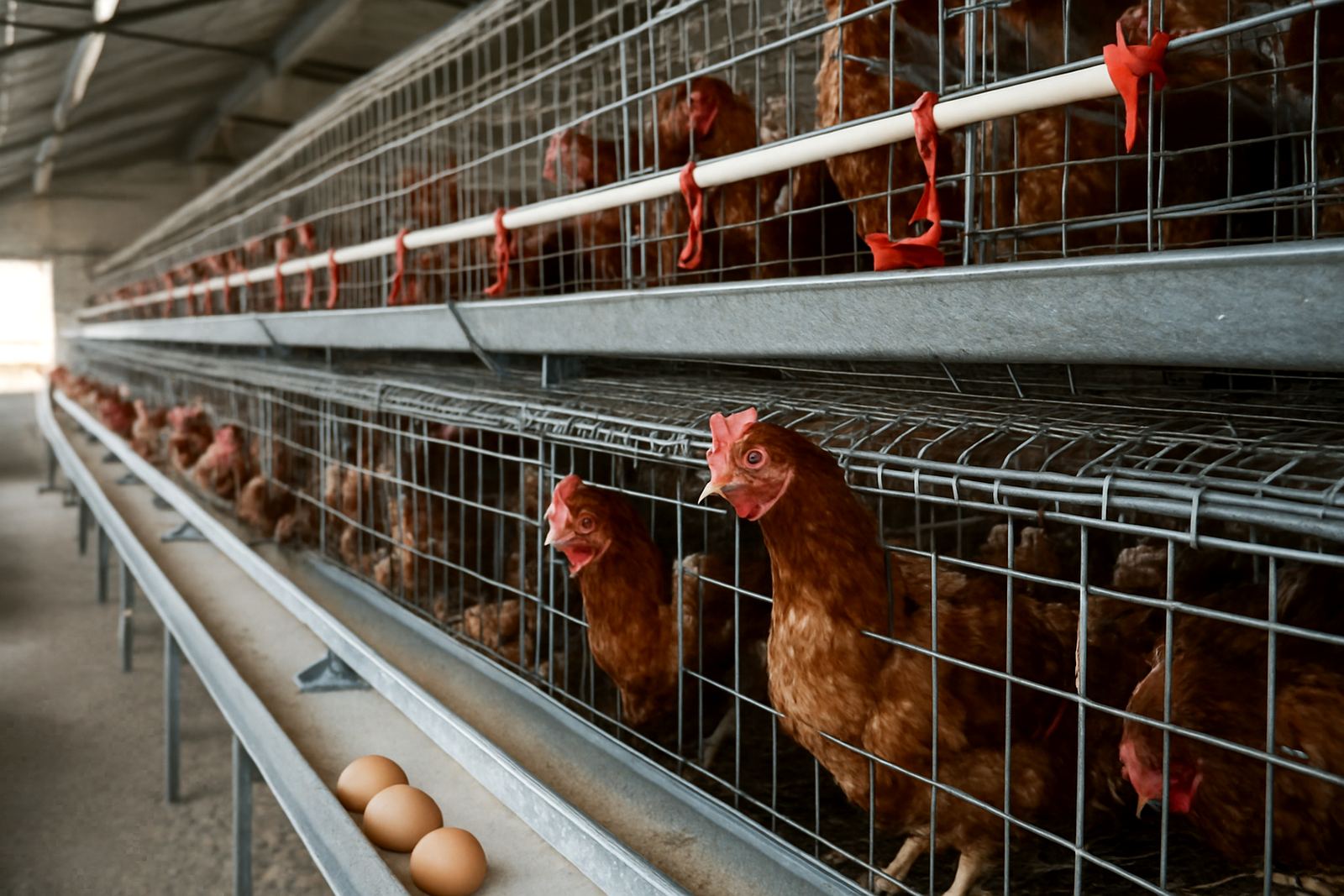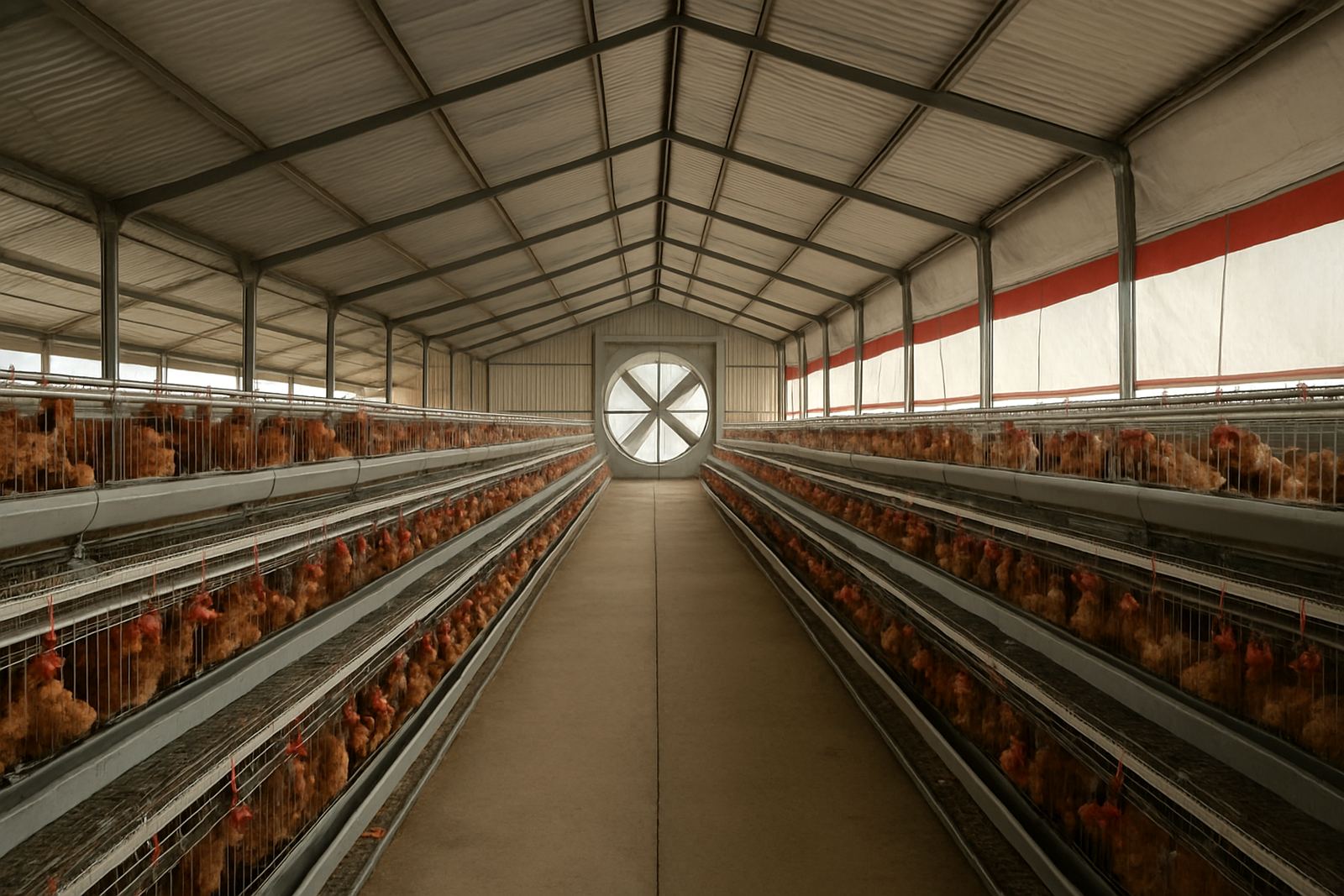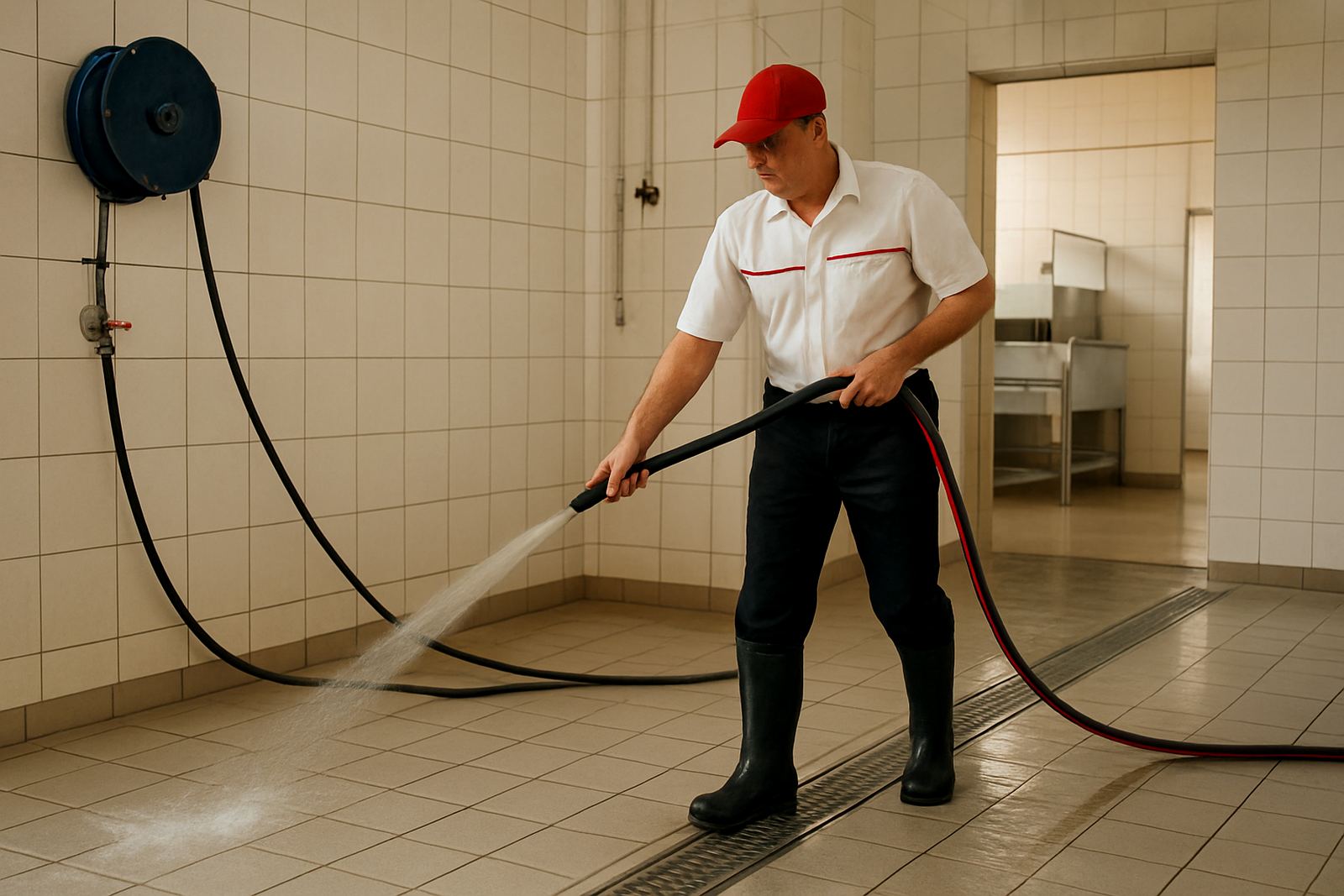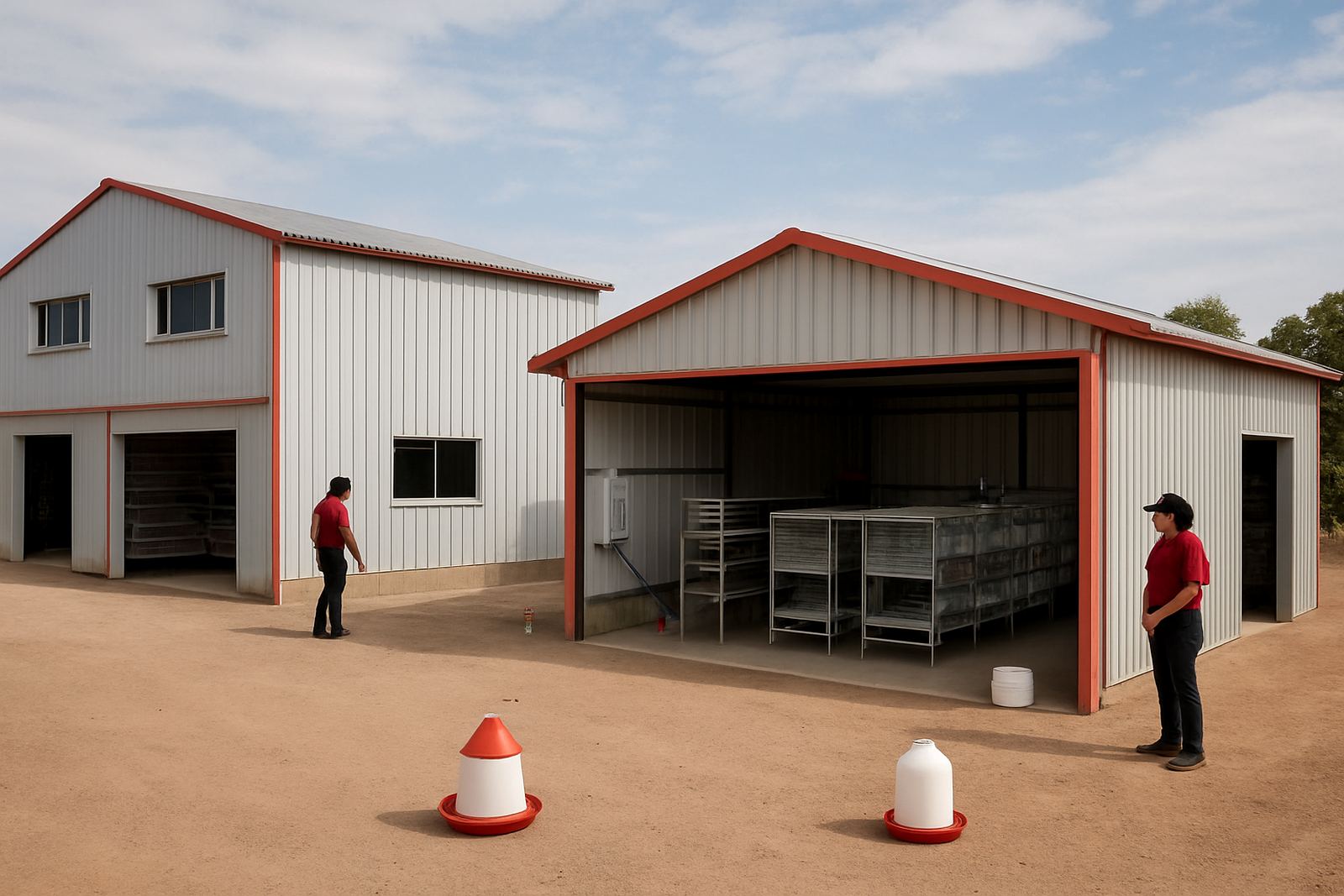
Start with the ground, not the cages
Before you order more cages or book another shed frame, check whether the site can actually carry the extra production. In many parts of Gauteng and the North West, the first limit is not demand, it is space, stormwater and service access. You need room for feed delivery, egg collection, waste removal and a fire break that makes sense for the local municipal requirements.
Look at the ground slope, drainage and soil condition. A flat-looking piece of land can still trap water after summer rain, especially on clay soils around parts of Mpumalanga and Limpopo. If the new block sits too low, humidity rises, litter stays damp and your flock health starts slipping before the first tray of eggs is out.
- Measure clear land space for the shed, vehicle access and turning circles.
- Check where rainwater will run during a heavy storm.
- Confirm access for feed trucks, service vehicles and egg collection.
- Allow space for future manure handling and dead bird disposal as required.
Can your power, water and backup plans handle the extra load?
Expansion often exposes weak points in services. A second shed can double the demand on lighting, ventilation, pumps and feed equipment, and that matters during load shedding or when municipal supply is unstable. If you already run close to the limit, a small extra block can push the whole farm into trouble.
Water is just as important. Drinkers must be supplied with clean water at the right pressure, and the storage tanks need enough reserve for hot days. In summer, a water line issue in KwaZulu-Natal or Limpopo can become a welfare problem very quickly. Power backup should cover the systems that keep birds alive, not only the lights.
- List every electrical load in the new shed, including fans and control gear.
- Check whether the existing backup supply can carry the added demand.
- Confirm water storage, line pressure and tank cleaning access.
- Keep spare parts on site for the items that fail most often, not just the expensive ones.
If the current site already runs on mixed supplies or a patchwork of extensions, fix that before building on. A neat expansion on paper can still become a mess if cables, pipes and switches are all running in different directions.
Will labour and bird flow still work after the upgrade?
One of the biggest mistakes in a growing layer farm is adding capacity without rethinking movement. If staff must walk too far between feed, eggs, culls and cleaning points, time gets wasted and biosecurity weakens. The same goes for birds. A poor layout makes handling harder and lifts stress on the flock.
Ask who does what in the expanded setup. More birds means more daily checks, more records and more chances for small faults to be missed. If you already have a busy team, such as operators, maintenance staff and a supervisor covering several houses, the workflow must stay simple enough for normal shifts and not just for peak days.
- Keep clean and dirty routes separate where possible.
- Place feed storage and egg collection points for short travel times.
- Make sure training covers the new house layout and equipment.
- Build in space for trolleys, crates and service tools.
On a recent project near Delmas, the farm had enough land for a second cage block but the real issue was movement. The first house had eggs travelling across a shared yard where feed trucks also reversed. We changed the layout so the egg route stayed clear and the service route ran on the outside edge. That one change cut daily delays and reduced breakages, no fancy fix needed.
Check the numbers before you commit
It is easy to focus on bird numbers and forget the full cost of expansion. A new house or cage block changes feed usage, labour, maintenance, packaging, heating, cooling and transport. If the market cannot absorb the extra eggs at a steady price, the new capacity can sit underused while fixed costs keep running.
You should also test whether the current house is performing properly before copying it. If the first unit has poor egg collection, weak ventilation or high mortalitiy, building the same design again simply repeats the problem. Expansion works best when the base unit is already stable and profitable.
- Compare projected egg output with feed, labour and energy costs.
- Check whether the market channel can take the extra volume every week.
- Review current production losses before repeating the same layout.
- Allow contingency money for civil work, cabling, plumbing and commissioning.
In practice, a farm in Free State may have lower land costs but higher exposure to wind and dry air. A coastal site may have corrosion and humidity to manage. Those local conditions must be included in the budget, otherwise the quote looks fine until the first maintenance cycle.
Plan for maintenance before the first bird moves in
New equipment always looks good on delivery day. The real test starts when dust, humidity, power interruptions and daily handling begin. If maintenance access was not planned into the expansion, small problems become shutdowns. That is especially true in older poultry setups where the new block sits beside ageing feed lines or worn electrical panels.
Ask how spares will be stored, who will inspect the system and how often preventative checks will happen. A farm with two sheds needs a different maintenance routine from a farm with one. The team must know what to do when a drinker line leaks at 4 am or a feeder motor stops after a surge.
- Keep a simple maintenance programme with daily, weekly and monthly checks.
- Store spares close enough for quick response but away from dust and moisture.
- Train operators to spot early signs of wear, noise or blockages.
- Record faults properly so repeat issues can be fixed at the source.
Good maintenance is not extra admin, it protects output. A small issue caught early saves eggs, feed and labour. On a busy farm near Polokwane, for example, a loose connection on a control circuit can cause more trouble than a broken panel because it comes and goes, which makes it harder to trace.
A practical rule before you add another house
If the current house is not running well, do not scale the problem. Fix the layout, services, training and maintenance routine first, then expand with a proper plan. That is the difference between buying more equipment and building a stronger farm.
John F Marshall works with poultry projects across South Africa, from Gauteng and Mpumalanga to Limpopo, North West, Free State and KwaZulu-Natal. We help with site planning, equipment selection, house layouts, installation supervision, commissioning, operator training, maintenance programmes, spares supply, processing room fitout and expansion upgrades. If you are adding another shed or cage block, the first step is a site review that looks at the whole operation, not just the next order.