Start with what the birds need, not only what the worker needs
Cage house lighting should give a steady level of light that lets hens find feed and water, settle after disturbance and keep a normal laying rhythm. Too little light and the house becomes uneven, with shy birds staying still and weaker hens missing feed. Too much light can cause restlessness, feather pecking and unnecessary stress, especially in warm months when birds are already under pressure.
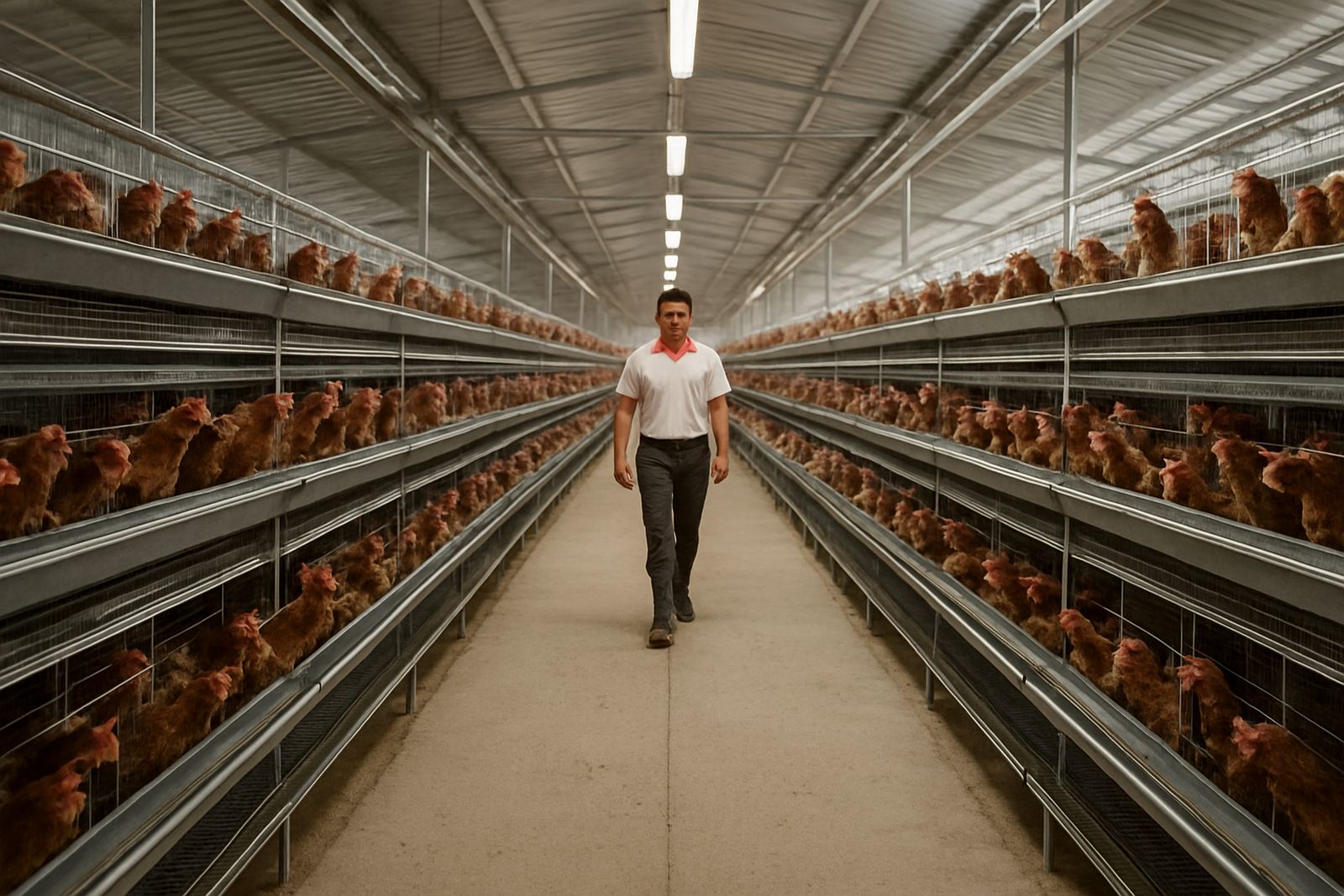
In practice, the aim is even coverage across every row and tier, with no dark ends and no harsh bright spots at the side walls. A common mistake is to fit lights only down the centre passage and hope the rest will carry. In a cage house that arrangement leaves shadow lines on the outer rows, and it makes inspection slower and less reliable.
- Check the light level at bird height, not only at ceiling height.
- Walk the house at egg collection time and at dusk to see shadow areas.
- Look for flicker, which can agitate birds more than many people realise.
Inspection lighting must help you spot trouble early
A good inspection routine depends on being able to see feed spill, wet patches, damaged drinkers, dirty nests and birds that are sitting poorly. When the lighting is weak, a daily round turns into guesswork. That is where ammonia smells build up, drinker leaks go unnoticed and mortalities are found later than they should be.
For cage houses in Gauteng or Limpopo, dust can build up quickly on light fittings, especially where birds are moved and the house is opened often. A fitting that looked fine in winter can lose a lot of output by mid-summer if it is not cleaned. Coastal humidity can also affect fittings and wiring, so a quick visual check is never enough.
- Keep a simple lighting log and note dim areas after any service visit.
- Wipe fittings during planned cleaning, not only when a lamp fails.
- Replace failed units in sections so the house keeps a consistent feel.
Bird behaviour changes when light is uneven
Hens read the house through light. If one row is brighter than the next, the flock can bunch in certain areas and avoid others. That leads to uneven wear on equipment and more localised dirt build-up. It also affects how birds settle after feeding or handling. A calm house usually shows better, more predictable movement between active periods and rest periods.
In a cage house near Boksburg, for example, a producer may notice that birds in the outer row are slower to rise after a power outage if the backup lights come back on too suddenly. The fix is not only about having backup power. It is also about using the same general light level and warm-up pattern every time the house is brought back online. Birds cope better with a steady routine, not a surprise.
- Avoid patchy light that creates bright and dark bands across the house.
- Keep switching times consistent so birds do not get disturbed at random hours.
- Use the same approach in all houses on the farm where possible.
Working safety matters just as much as bird comfort
Staff need enough light to move safely between rows, read labels on drinkers and feeders, inspect wiring and carry trays or parts without strain. Poor light is a real safety issue in a cage house because there are narrow paths, wet floors and repeated bending. If a team is working after sunrise or during early winter evenings, the house can become a place where small trips and cuts happen far too easily.
Safe lighting also helps during cleaning and maintenance. When a broken line, loose cable or leaking pipe is easier to see, repairs happen sooner and there is less damage to surrounding equipment. Good visibility is part of good housekeeping. It saves time, and it helps prevent mistakes when the house is under pressure.
- Check emergency lighting and ensure backup power covers critical walkways.
- Keep switches accessible and clearly marked for each house section.
- Make sure maintenance staff can work without carrying portable lights in one hand.
Plan for load-shedding and power dips before they cause losses
Across South Africa, lighting must work with the reality of load-shedding and voltage swings. A cage house that depends on one power line with no proper backup can go from normal to difficult very quickly. Birds may stop feeding, workers may struggle to inspect cages, and the whole house can lose rhythm in a matter of minutes.
For this reason, lighting layout should be considered together with standby power, control settings and the way the house is divided into zones. If one section is lit and the next is dark, the transition should be planned rather than left to chance. This is where a site-specific layout matters more than a general rule. Every house is different, depending on row length, ceiling height, wall finish and the number of birds per section.
- Test backup lighting under real conditions, not only on paper.
- Use zones that match the house layout and daily work pattern.
- Review lighting settings after any electrical change or equipment upgrade.
A simple maintenance routine keeps the whole house more predictable
Lighting is often treated as a fit-and-forget item, but that approach causes trouble over time. Lamps age, fittings collect dust, reflectors lose their finish and some areas become weaker without anyone noticing straight away. A monthly check is usually enough to catch most issues before they turn into larger problems. In houses with higher humidity or heavy dust, checks may need to be more frequent.
When planning a new cage house or upgrading an older one, it helps to include lighting in the same discussion as cage layout, ventilation and service access. That way the team can see the house properly, move around safely and keep bird conditions steadier from end to end. For producers working in places like Mpumalanga, North West or KwaZulu-Natal, this kind of practical planning makes a difference every day, not just when the house is first set up.
- Schedule lamp cleaning and replacement with other routine maintenance.
- Keep spare fittings and bulbs where they can be reached quickly.
- Recheck light levels after cleaning, repairs or house expansion.
Local example: a Gauteng cage house that needed better visibility
A producer outside Boksburg had a long cage house where the middle rows looked fine but the outer rows were consistently harder to inspect. The problem was not one broken fitting. It was a layout issue, with light falling too strongly in the centre passage and fading towards the side. After a review, the house was divided into clearer lighting zones and the fittings were repositioned to spread the light more evenly across the bird area.
The result was practical rather than dramatic. Staff could see damaged drinkers faster, collection was less rushed and the birds in the outer rows became easier to check during the morning round. That kind of improvement does not make headlines, but it does help a poultry house run more smoothly. In a busy farm operation, that is what counts.