Start with a morning walk through the house
Do the first check early, before the sun has warmed the house. Stand inside for a few minutes and listen for rattles, draughts, dripping water and uneven bird movement. In winter, those small signs usually point to bigger issues at the curtains, side walls, roof edges or drinker lines.
Walk the full length of the house and look from both ends. If one section feels colder, find out why before the next cold front arrives. On a Gauteng or Free State site, a house can lose heat quickly when a curtain gap or loose board lets wind straight in.
- Check for gaps at doors, curtain edges and service openings.
- Look for damp patches under drinker lines and around fittings.
- Watch bird behaviour for bunching, shivering or crowding near heat.
- Note any areas where litter feels cold or wet.
Inspect curtains before the wind picks up
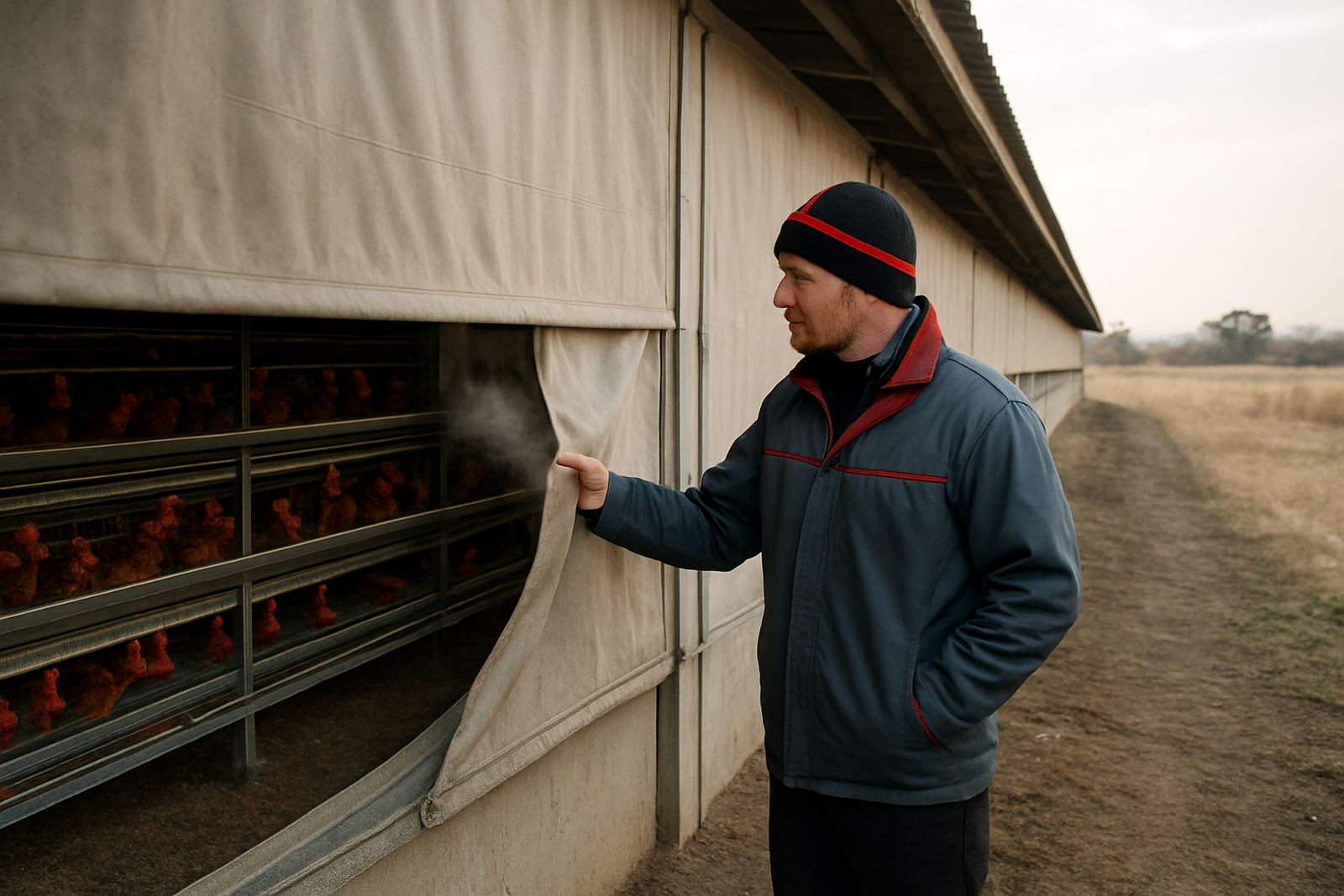
Curtains do a lot of work in winter. They need to close properly, hold their shape, and keep the house tight against wind without trapping too much moisture. A torn curtain or a loose tie down can waste heat and upset the house conditions all day.
Open and close each curtain fully so you can see how it tracks. If a side is sagging, repair it now rather than waiting for a storm. In coastal areas the salt air can wear fixings faster, while inland dust and sun can make older material brittle.
- Check ropes, pulleys, clips and bottom weights.
- Look for tears, stretched sections and missing fasteners.
- Make sure curtains seal evenly along the full length.
- Keep spare ties, repair strips and tools ready on site.
Hold heat in without shutting fresh air out
Birds need warmth in winter, but they still need air movement. The aim is to keep heat inside while allowing enough fresh air to carry out dampness and ammonia. If a house is sealed too tightly, moisture builds up and the litter turns cold and sticky. That is hard on birds and hard on staff too.
Check the balance by looking at condensation, smell and bird comfort. If the house feels stuffy, do not just close it tighter. Work with the ventilation pattern and make sure the warm air is moving through the house, not sitting above the birds.
- Inspect roof vents, side openings and end wall gaps.
- Confirm that heaters or brooding areas spread heat evenly.
- Watch for cold corners where birds avoid standing.
- Keep doors shut when not in use, especially at night.
Keep water flowing on cold mornings
Water lines often show winter problems before anything else. Cold nights can slow flow, create partial blockages or leave nipples sticking if the system is not checked properly. Birds will reduce intake quickly if water is hard to reach, and that affects growth and feed use.
Flush lines early and test pressure at several points in the house. Look for leaks where fittings have contracted in the cold. If tanks or exposed pipes are used, insulate them where possible and protect them from direct wind. On some farms in Limpopo and North West, water storage is close to the house and extra insulation makes a real difference.
- Check tank levels, pumps and pressure before birds need top-up water.
- Test each line for flow and drips.
- Clear airlocks and blocked nipples straight away.
- Keep drain points accessible for cleaning and winter flushing.
Match litter, feeders and drinkers to winter conditions
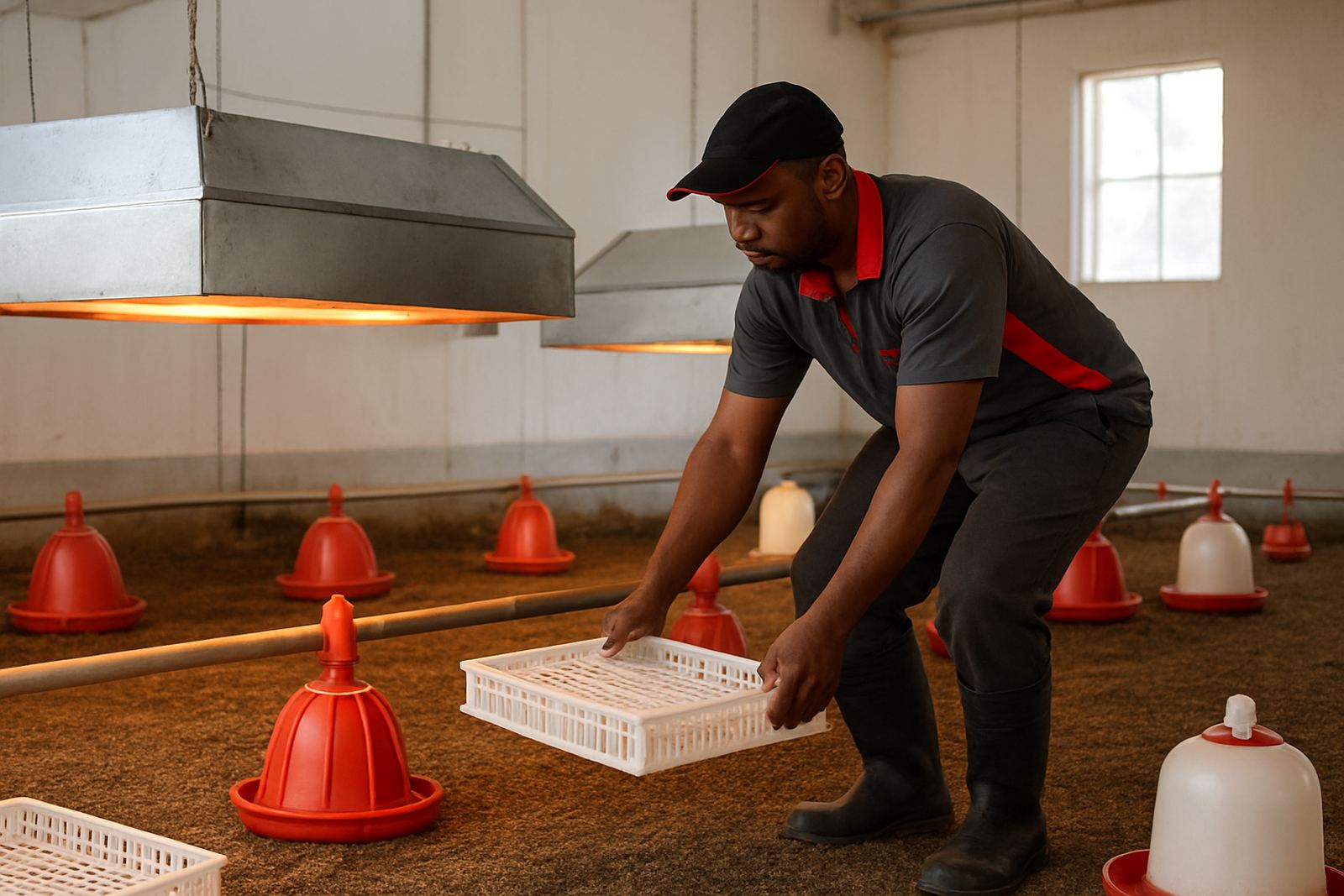
Winter checks are not only about heat. Litter condition, feed access and drinker height all affect how well birds handle the cold. If litter is wet, birds lose body heat faster. If feeders are set too high or too low, weaker birds waste energy reaching feed. Small adjustments now can stop a lot of trouble later.
Go through the house and correct anything that makes birds work harder than they should. Replace damaged trays, straighten hanging lines and clear blocked access points. A clean, even setup supports steady intake and keeps the house easier to manage.
- Top up litter where cold floors show through.
- Set feeders at the correct bird height.
- Check drinker height and line level across the house.
- Remove wet patches, caked litter and broken equipment.
Use a simple winter checklist every week
A weekly routine keeps winter management consistent. Write down what you find so the same problem does not return unnoticed. Even a short checklist helps with planning repairs before the next cold spell or power interruption. In parts of South Africa where load-shedding affects heating and pumping, that record is especially useful.
Keep the check practical and short enough to finish every time. If one person can do the same route each week, it becomes easier to spot changes in curtains, water flow, litter condition and house temperature. Small faults are cheaper to fix early than after birds have been affected.
- Inspect curtain condition and sealing.
- Test water flow and pressure.
- Look for cold spots and draughts.
- Check litter dryness and smell.
- Confirm heaters, pumps and backup power are ready.