Set up the room for easy cleaning from the start
A small processing room should be arranged so dirt does not collect in corners, under tables, or around drains. Keep the workflow one way if you can: live bird receiving, killing and bleeding, scalding, plucking, evisceration, washing, chilling, then packing. The less product back-tracks, the easier it is to keep hands, floors and equipment clean.
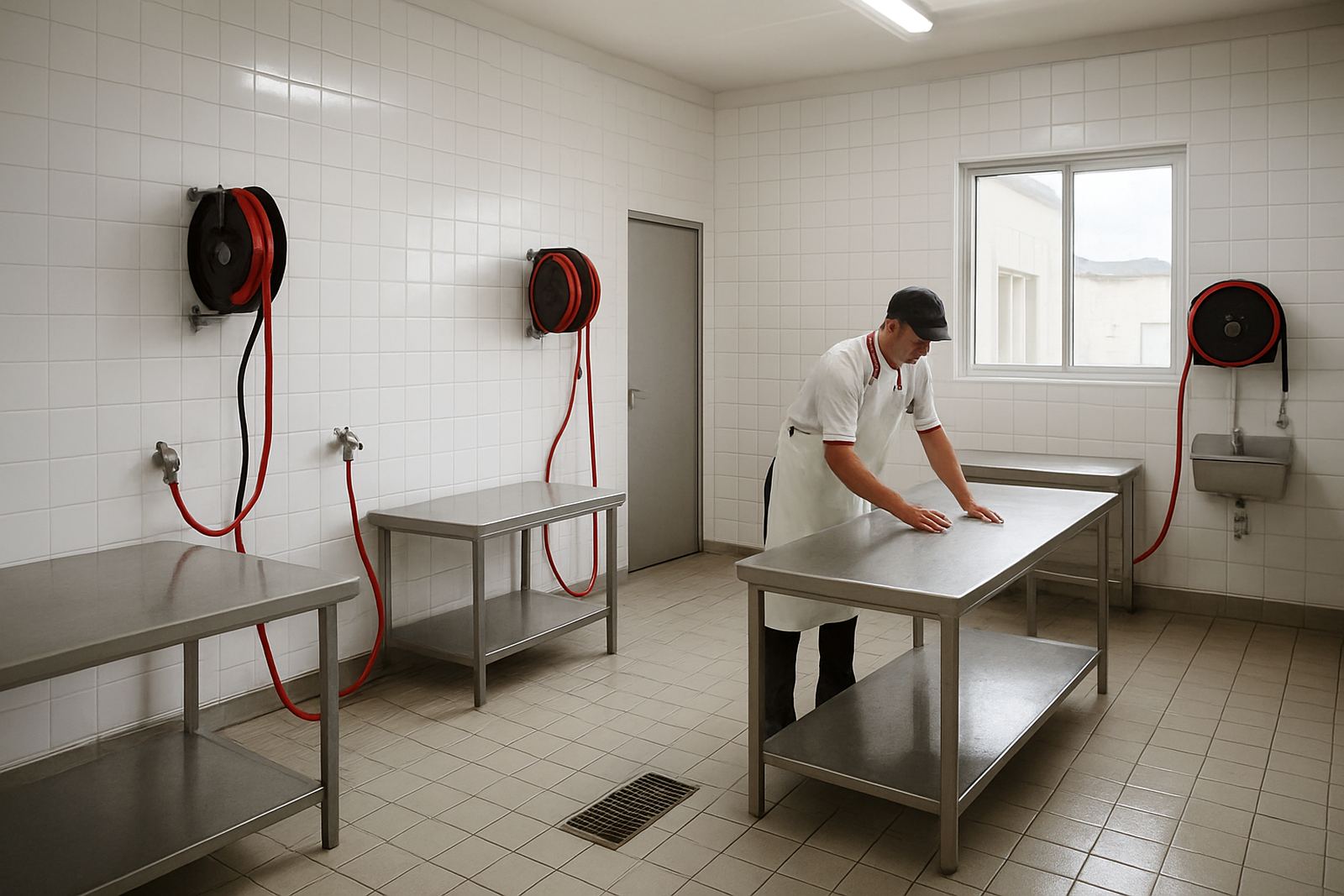
Use smooth, non-absorbent surfaces on worktops and splash zones. Joints should be sealed, with no cracked tiles or open timber edges. In hot months or coastal areas, humidity can make residue stick faster, so ventilation and fast cleaning matter. If the room is in Gauteng, Mpumalanga, Limpopo, North West, Free State or KwaZulu-Natal, plan for water supply, drainage and waste removal that matches local municipal requirements.
- Keep clean tools and dirty tools separate.
- Provide hand wash points close to work areas.
- Use covered bins for offal and waste.
- Mark clean and unclean zones on the floor if the room is busy.
Clean surfaces between batches, not only at the end of the day
For smaller throughput, batch cleaning is usually the best way to stay ahead. Do not leave blood, feathers, fat or protein build-up to dry on tables, hooks and guards. Once residue dries, it takes more scrubbing and you use more water. A quick wash-down between batches also helps with odour control, which is important in enclosed rooms and attached farm buildings.
Start with dry removal, then wash with warm water and a suitable detergent. Scrub the high contact areas first, then rinse from top to bottom so dirty water does not run over already cleaned parts. Pay attention to switches, handles, hose reels and frame legs. If loadshedding interrupts the room, stop at a clean break point, secure the product and restart with a full surface wipe before production continues.
- Remove visible waste before applying water.
- Use dedicated brushes for floors and another set for food contact surfaces.
- Rinse squeegees, knives and trays after each batch.
- Check that drains are flowing freely before restarting work.
Manage water, chemicals and rinse control properly
Good hygiene depends on clean water and the right chemical use. Store detergents and sanitisers in clearly labelled containers, away from open product and packing material. Mix only the amount needed for the shift and follow the supplier’s instructions carefully. Too little leaves residue behind, while too much can leave a smell or damage equipment finishes.
Use potable water for washing product contact areas, especially where carcasses or portions are handled. If borehole water is used, test it regularly and treat it where needed. Keep hoses off the floor when not in use, because puddles around fittings can spread dirt back onto clean areas. In very small rooms a simple rinse control routine helps alot: first wash, second rinse, final sanitise where required.
- Label all cleaning containers by use and strength.
- Keep separate buckets for floor wash and equipment wash.
- Flush hoses after use and hang them properly.
- Check the water pressure before each shift.
Control hands, clothing and movement in the room
People carry more dirt than equipment does, so staff discipline is part of hygiene. Provide a simple changing point for aprons, boots and gloves. Clean clothing should not touch the floor or waste bins. Hands must be washed before starting, after handling waste, after breaks and after touching dirty surfaces. Where the room is busy, one person should be responsible for reminding the team to reset between tasks.
Visitors should not move in and out of the room without permission. If a technician, buyer or owner must enter, provide clean boots or overshoes and keep them away from the processing line. Training works best when it is short and repeated. Musa Cele and the support team often see better compliance when the same hand wash steps are posted near the basin and reviewed with supervisors every week.
- Keep nails short and jewellery off.
- Use clean gloves only for clean tasks.
- Replace damaged aprons and torn gloves immediately.
- Do not carry phones, keys or loose items into the room.
Set a daily cleaning checklist that actually gets used
A checklist only helps if it is practical and signed off. Keep it short enough for the operator, but detailed enough to catch the usual problem areas. For a small room, a morning check, shift clean and end-of-day clean is usually enough if it is done properly. Include drains, door handles, scales, cutting surfaces, splash guards and the waste area.
Use one person per shift to confirm the clean is complete. If the room is shared with cold storage or packaging, add a final check before doors are locked. A paper checklist on the wall is often better than a file kept in the office because the team can see what was done and what was missed.
- Floors washed and dry enough for safe footing.
- Worktops, knives and trays cleaned and sanitised.
- Drains cleared and free of feathers or solids.
- Waste bins emptied and lids closed.
- Cleaning chemicals stored away from food areas.
Fix the small faults before they become hygiene problems
Small faults become cleaning problems very quickly. A leaking tap creates a wet patch, a broken floor joint traps dirt, and a loose drain cover catches waste. In older rooms, check for rust on racks, chipped paint and damaged seals around doors and windows. These issues are easier to repair during downtime than after a complaint or failed inspection.
When you plan upgrades, think about cleaning access at the same time as production flow. It may be worth adding a better hose point, a stronger light over the wash area or more space around the work table. For sites in Boksburg, the wider Gauteng area and other provinces, John F Marshall can help with room layout, equipment selection and processing room fitout so the hygiene plan fits the actual work being done.
For advice on smaller poultry rooms, processing equipment and layout planning, email info@johnfmarshall.co.za.