Why nest hygiene matters for egg quality
A clean nest is not only about appearance. It helps reduce dung on eggs, lowers the chance of cracked shells, and keeps hens using the nest instead of laying on the floor. When eggs stay cleaner at collection, there is less time spent sorting and less waste during packing or grading.
In South African houses, dust, litter moisture and weather changes can all affect nest conditions. Gauteng winter dryness can increase dust build-up, while coastal humidity in KwaZulu-Natal can make bedding damp faster. If nests are left unchecked, hens start avoiding them, and floor eggs become more common. That means more labour and more chance of contamination.
Good nest hygiene also helps with flock behaviour. Hens prefer private, dry and calm places to lay. If they find dirty boxes, wet litter, or broken eggs left behind, they may shift to other spots in the house. A simple routine keeps the laying pattern steady and makes the whole house easier to manage.
Daily nest checks that prevent bigger problems
Daily attention takes only a few minutes, but it saves a lot of work later. Check nests at the same time each day, ideally before the main laying period starts. If your team is already doing morning feeding or water checks, nest inspection can be folded into that route.
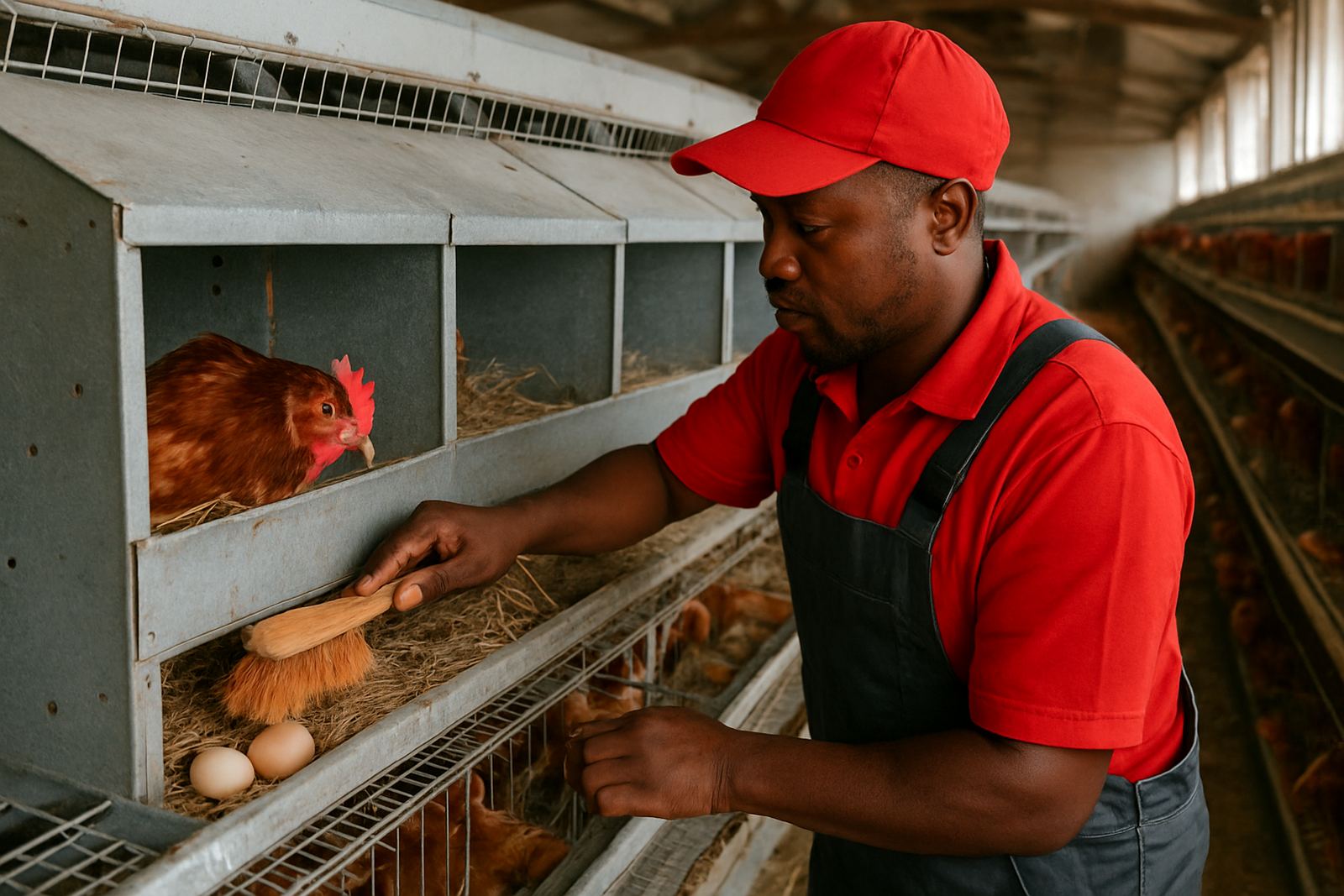
- Remove broken eggs, shell pieces and dirty bedding from the nest tray or pad.
- Check for wet patches caused by leaking drinkers nearby.
- Look for hens roosting in nests overnight, which usually means the area is too attractive after lights out.
- Make sure doors, curtains or nest flaps are working properly and not jammed.
- Replace any bedding that has become compacted, dusty or damp.
A small notebook or checklist helps keep the routine consistent, especially when different staff members are covering shifts. If one house starts showing more floor eggs than the others, the cause is often simple, like a broken latch or a nest that is too dark, noisy or dirty.
Weekly cleaning routine for nest boxes and liners
Weekly cleaning should be planned, not done only when nests look bad. Start by removing loose dirt, feathers and small bits of shell. Wipe hard surfaces with a suitable poultry-safe cleaner, then allow the area to dry fully before use. If nest liners are used, inspect them for wear, excess moisture and build-up at the corners.
On farms using manual collection, the collection route often passes through the same house several times a day. That makes it important to keep handling surfaces clean too. Dirty hands, crates or trolleys can undo a lot of nest care. It is worth setting one clear route for egg collection and one for cleaning so traffic does not cross more than necessary.
In older houses, poor ventilation can leave nests smelling stale. If you notice a heavy smell or visible mould, do not just add more bedding on top. Remove the problem material and identify where moisture is entering. A leaking roof sheet, blocked gutter or a drinker positioned too close to the nest row can be the real cause.
Bedding choices that help hens use nests properly
Good nest bedding should stay dry, hold shape and not irritate the bird. Too little bedding leaves eggs exposed to hard surfaces. Too much bedding can roll eggs out or make the box uneven. The aim is a neat, comfortable layer that supports the shell and stays in place through normal use.
For many houses, chopped clean material or purpose-made nest pads work well if they are kept dry. Whatever system is used, consistency matters. Hens dislike sudden changes. If the nest feels different from one week to the next, they may begin laying outside it. Keep the depth even and replace damaged sections promptly.
- Use bedding that is clean, dry and free from mould.
- Keep nest depth even across all rows and tiers.
- Check that bedding does not block egg roll-out paths.
- Remove compacted material before adding fresh layers.
- Store spare bedding off the floor and under cover.
In humid areas, covered storage is not optional. If bedding gets damp in the store room, it will bring moisture straight into the nest. That creates the kind of problem that keeps coming back week after week.
Managing eggs, debris and floor laying
Egg handling is part of nest hygiene. Eggs should be collected often enough that they do not sit in the nest for long periods, especially in warm weather. Leaving eggs too long increases the chance of dirt, hairline cracks and birds pecking at them. It also makes it harder to spot fresh droppings or damage in the box.
Keep broken eggs and debris out of the house as quickly as possible. If they are left near the nest line, birds may become interested in the area and that can lead to pecking or more mess. A clean collection tray and a clear disposal point save time and reduce risk. Floor eggs should be picked up early, recorded and used to check whether nest access, lighting or house layout needs attention.
If floor laying becomes frequent, do not only focus on the eggs themselves. Look at nest height, light spread, perch placement and whether birds are being disturbed during the morning. In some houses, a simple adjustment to lighting timing or nest opening time makes a visible difference within a few days.
Staff checklist for a cleaner nest programme
Clear roles make nest care easier to maintain. The person collecting eggs should know what to report, and the person cleaning should know what to fix or escalate. When everyone follows the same list, small faults are picked up before they turn into routine losses.
- Check nests open correctly before birds start laying.
- Remove dirty material and broken eggs each day.
- Confirm drinkers are not leaking into the nest area.
- Record floor eggs and note the house section where they occur.
- Report damaged hinges, latches, pads or frames immediately.
- Keep spare parts and cleaning supplies in a dry store area.
A weekly walk-through by the supervisor should include the corners, not just the main aisle. Problems often begin in one small section, then spread if nobody notices them early. If the team knows what a good nest looks like, they can protect that standard without needing constant correction.
When to call for a house review or equipment upgrade
If nest hygiene is being maintained but eggs are still dirty or floor laying remains high, the issue may be with layout, airflow, bird flow or equipment condition. This is where a proper house review helps. A nest system that suited a smaller flock may not work well after expansion, especially if bird numbers, lighting or collection routines have changed.
A review can help identify whether the problem is the nest design, the house flow, or the way the team is using the equipment. In some cases, better access, more consistent collection points or a corrected layout will solve the issue. In others, worn parts or outdated systems need attention before cleaner egg production can be expected. The key is to treat nest hygiene as part of the whole poultry house, not as a separate task.
For farms planning upgrades or new houses, nest placement should be considered alongside ventilation, lighting, feed access and worker movement. That way the routine stays practical for the team and the birds continue to use the nests properly day after day.