Starting small, but planning for more birds later
Most smallholder projects begin with one poultry house, a few hundred birds and a clear aim: egg sales, meat birds, or a mixed farm that can grow in stages. The common problem is buying equipment one item at a time without matching it to the house size, water supply or labour available. That leads to uneven growth, dirty floors and birds that are hard to manage.
For a starter flock, we usually look at the number of birds first, then the available floor space, power supply and water pressure. A good project can start with 250 to 1 000 layers or a similar small broiler setup, then expand once sales and feeding routines are stable. In places like Gauteng, Limpopo and KwaZulu-Natal, heat control and ventilation matter just as much as the cages or feeders.
Starter equipment that keeps day-to-day work simple
A smallholder unit does not need complicated fittings. It needs dependable equipment that is easy to wash, easy to inspect and simple for one or two people to run. We help farms choose items that match the bird age, house width and cleaning routine, with allowances for municipal water limits and load-shedding where needed.
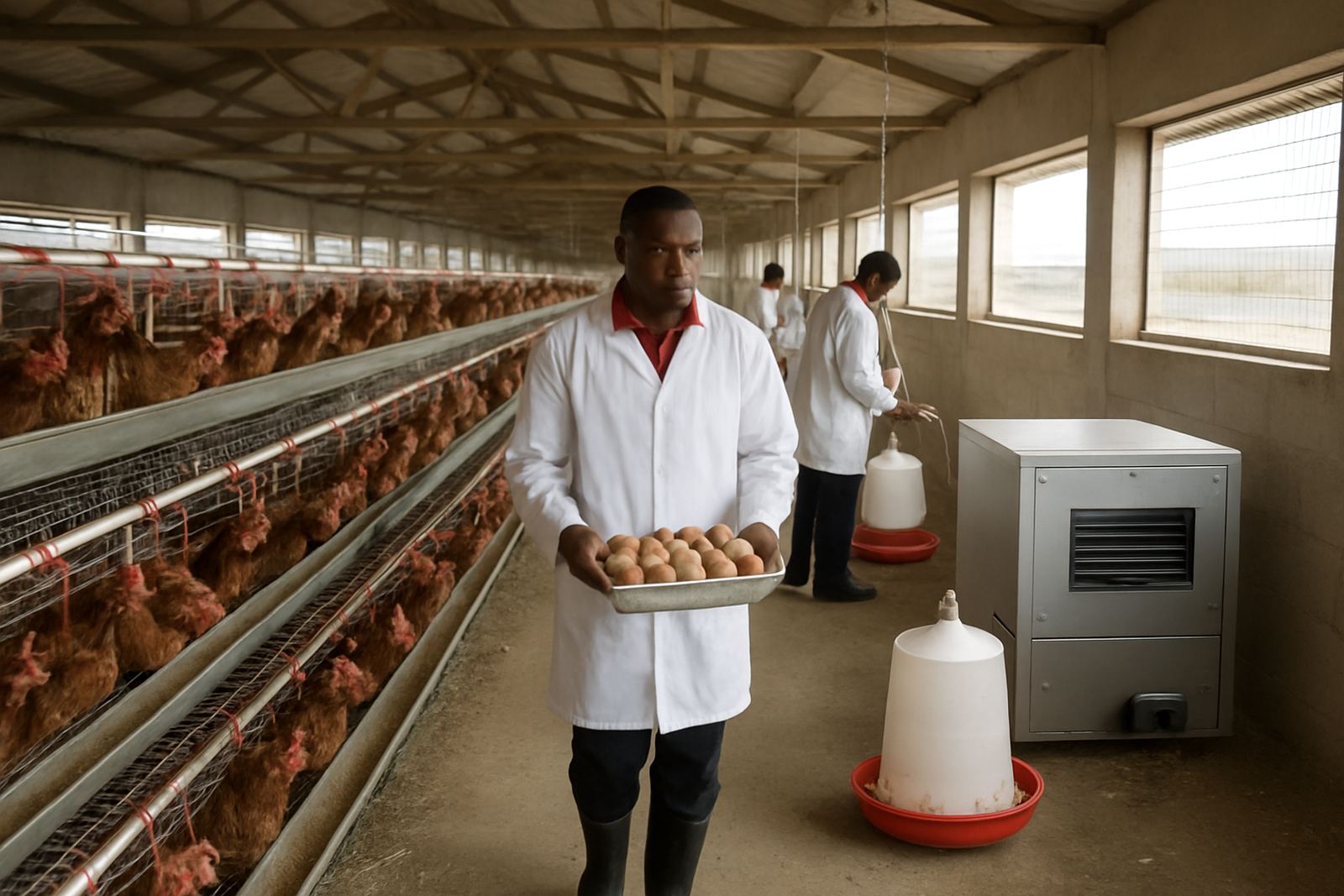
- Laying-hen cages for compact egg production, sized to suit the house width and walkway access
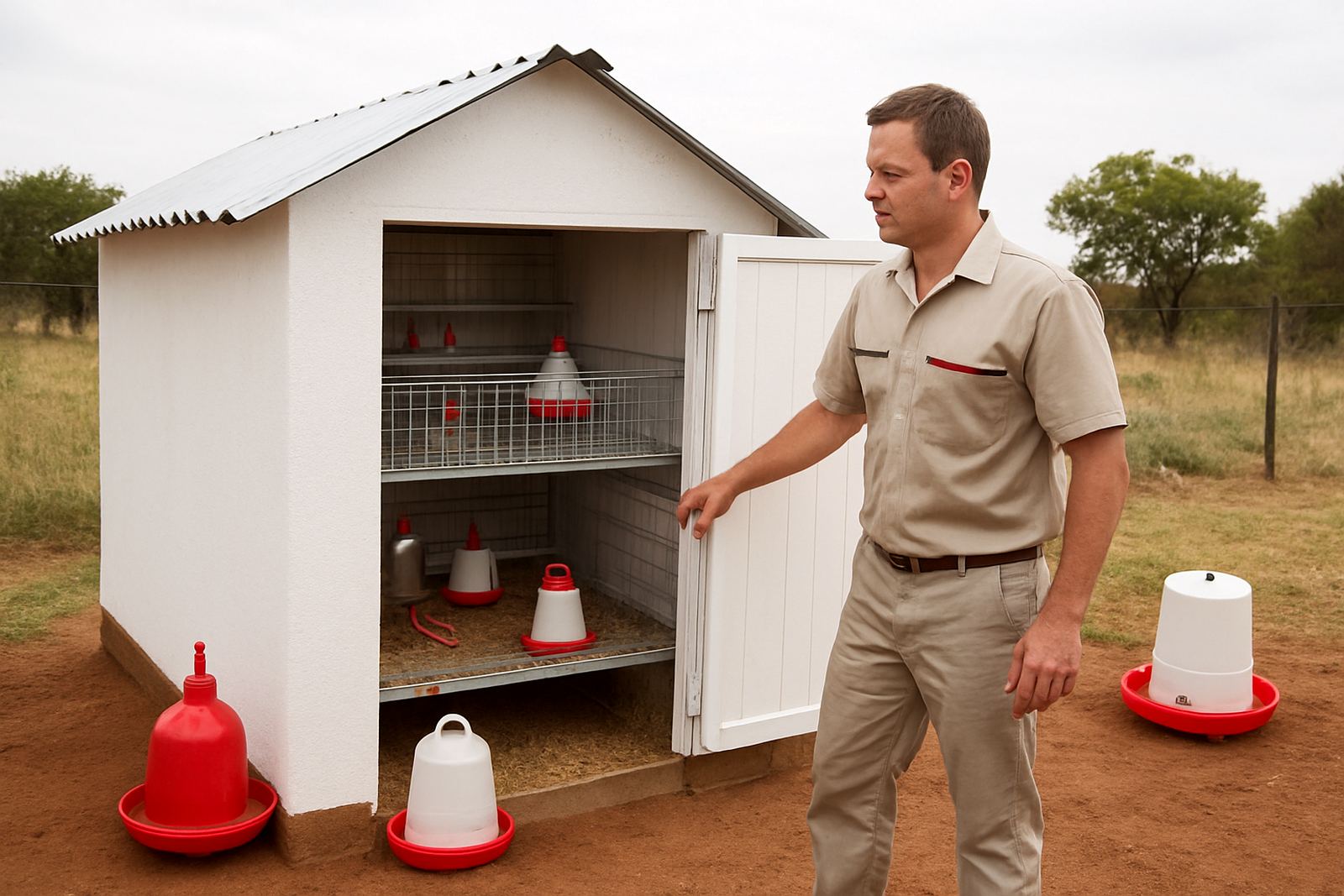
- Chick brooders for early-stage heat and shelter, especially where night temperatures drop
- Incubators for farms that want to hatch their own replacement stock
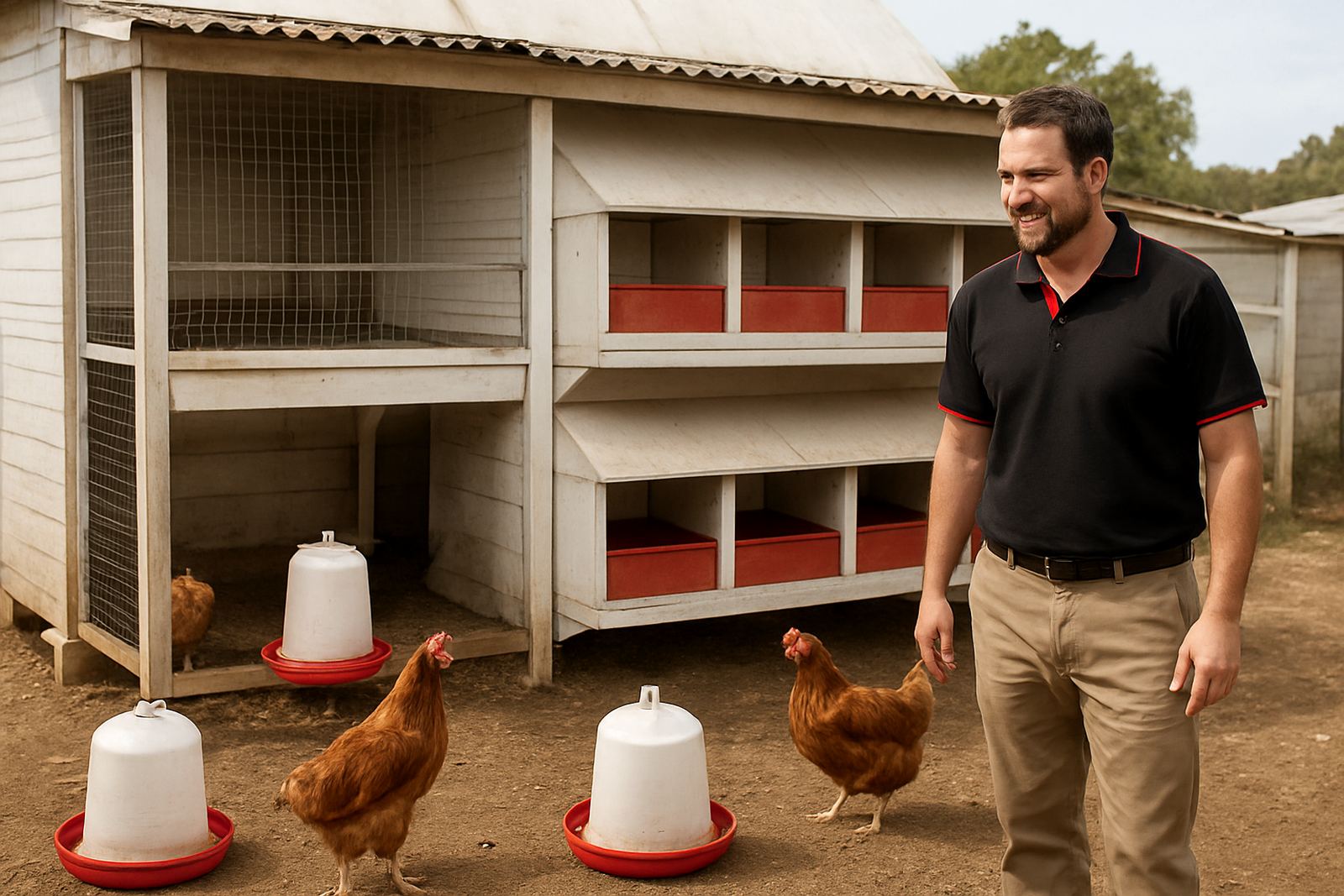
- Feeders and drinkers matched to bird numbers, so smaller flocks do not waste feed and water
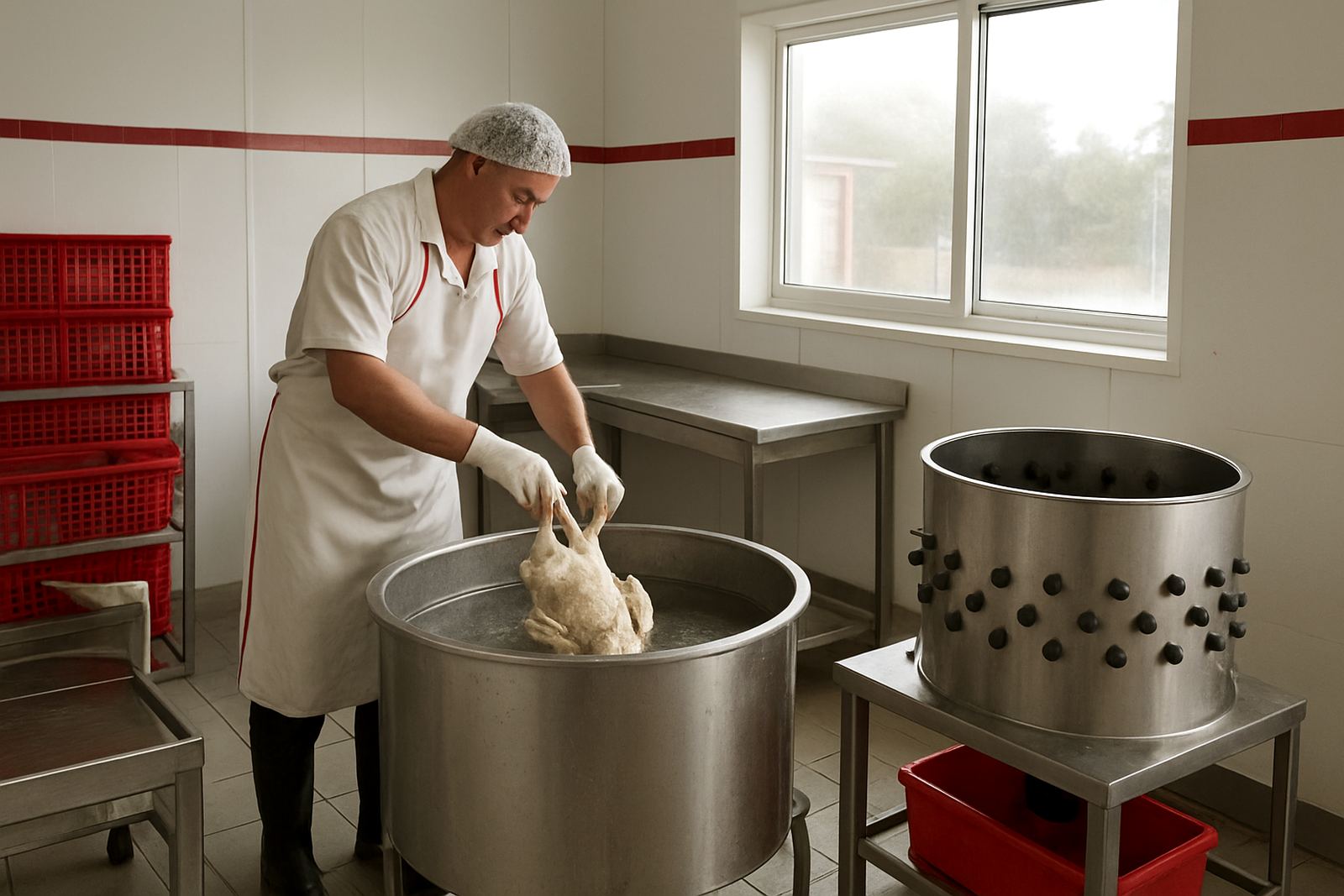
- Simple abattoir equipment for co-operatives and farmers adding on-farm processing in approved rooms
For many smallholders, the best start is a basic layout with manual feeding, reliable drinkers and enough working space to clean around each row. If birds are kept in cages, drainage and droppings removal must be part of the plan from day one, not added later.
Layout advice for houses, yards and service access
A good layout saves money every week. If the feed store is too far from the house, bags get wet or damaged. If the water line is too small, drinkers starve during peak heat. If the house is cramped, staff start bending cages, stepping over hoses and missing sick birds.
We normally advise a simple service flow: feed store near the house entrance, water line kept off the ground, and clear access for cleaning and bird removal. In coastal areas and humid inland regions, corrosion control matters. Galvanised fittings and proper airflow help equipment last longer, especially in KwaZulu-Natal and parts of Mpumalanga.
- Leave enough aisle space for loading feed and moving crates
- Put water storage where pressure can be maintained during outages
- Keep the hatchery or brooder area separate from older birds
- Plan for wash-down points and drainage that will not flood walkways
- Allow space for a future second house or extra cage rows if the business grows
Typical budget ranges in Rand for smallholder projects
Budgets vary a lot because a starter project may only need a few fittings, while a co-operative may need a full house fitout with processing space. As a broad guide, a very basic smallholder setup can begin around R25 000 to R60 000 for feeders, drinkers, brooders and limited housing fittings. A more complete layer or broiler starter house often sits between R80 000 and R250 000 depending on size and finish.
If incubators, cage systems or processing-room equipment are included, the budget can move higher. A small cooperative that wants to hatch, rear and process in-house may need R250 000 to R600 000 or more, depending on capacity and how much civil work is already in place. We always recommend budgeting for spare parts, a backup water plan and installation supervision, because the cheapest quote is not always the lowest cost over 12 months.
Common mistakes that hurt small farms
Smallholder poultry fails for practical reasons more than technical ones. The birds are fine, but the project was underplanned. Feed is stored in a damp room, drinkers are too few, or the flock size is larger than the house can handle. We see the same avoidable faults across farms in North West, Free State and Limpopo.
- Buying equipment before measuring the house properly
- Ignoring power cuts and not planning for backup heat or water movement
- Using too few drinkers, which causes stress and uneven growth
- Mixing different bird ages in one area
- Skipping training for the person who will handle daily checks
- Choosing materials that rust quickly in humid or coastal conditions
A common issue is spending on bird numbers before spending on the basics. Good equipment does not fix a poor layout. It only works when the feeding, watering, cleaning and movement of birds are all thought through. A small mistake at the start can cost a lot in feed waste and mortalities, so it is worth taking a slower first step.
How we support owner-managed farms and co-operatives
John F Marshall works from Jet Park, Boksburg and supports poultry projects across Gauteng, Mpumalanga, Limpopo, North West, Free State and KwaZulu-Natal. The work usually starts with site planning and equipment selection, then continues through house layouts, installation supervision and commissioning. That approach suits smallholder projects because the owner often needs one team that understands the full chain, not separate suppliers for every item.
Our team includes people who deal with operations, project coordination, technical sales, service, procurement and training. That means we can help with initial set-up, spares supply and maintenance programmes as the flock grows. If the farm later adds a processing room or expands bird numbers, we can assist with upgrades instead of starting again from zero.
Smallholder poultry should be practical, not complicated. The right starter set, the right house layout and a clear weekly routine make the business easier to run, even when power is off or labour is limited.