Breeder farms need more control than broiler houses
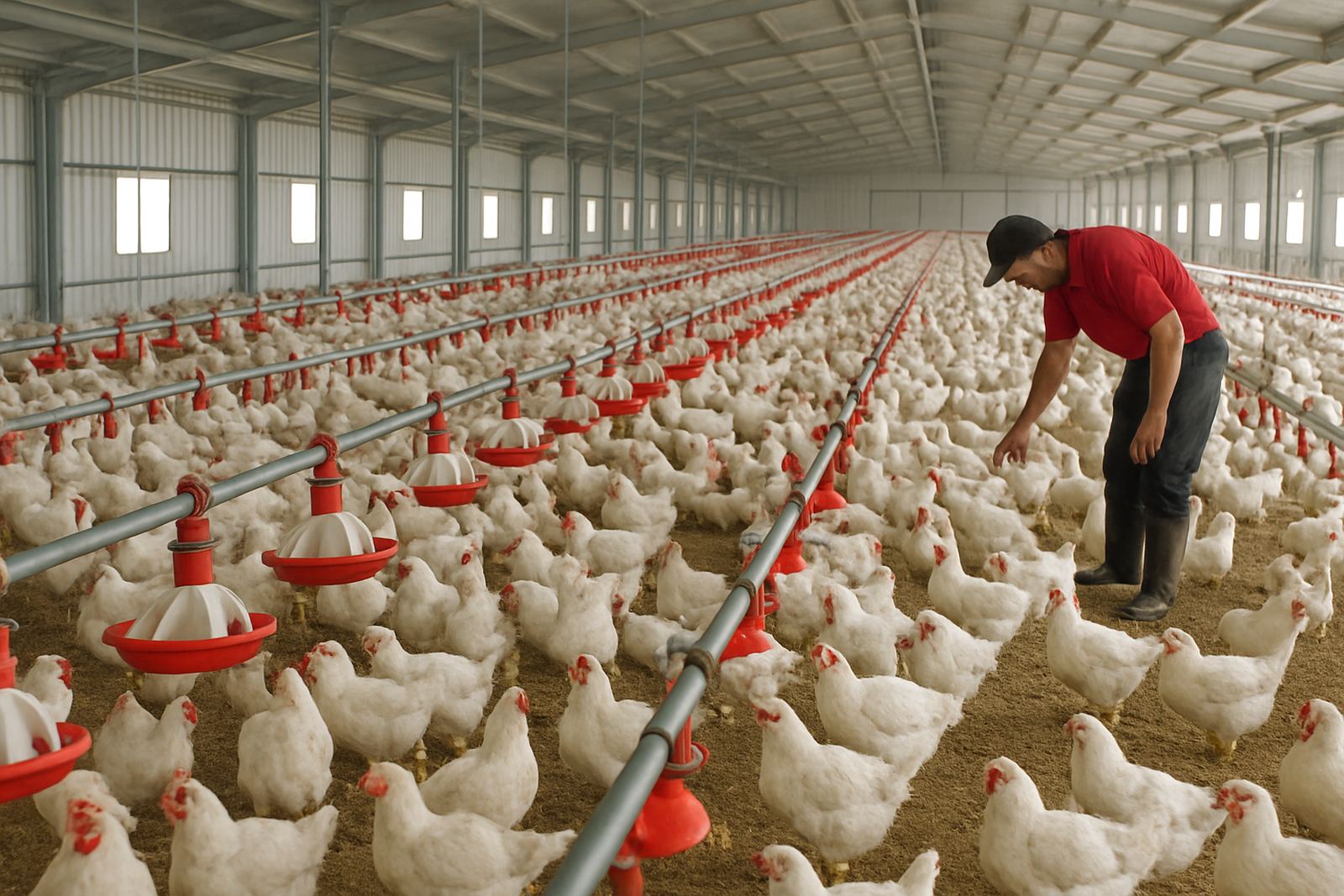
A breeder house works differently from a grow-out unit. The aim is not only to keep birds healthy, but to protect fertility, keep nesting behaviour steady and collect clean hatchable eggs with as little breakage as possible. That means the house must support daily routines for mating ratios, nest access, lighting, feeding and egg pickup. If the flock is fighting for space, or if egg routes are awkward, you lose time and money very quickly.
We often meet clients who have a good building but a poor internal layout. Feed lines are too high, drinkers drip onto litter, nests are too far apart, or egg collection paths cross with worker traffic. In breeder systems those small faults become daily losses. A proper setup keeps birds calm and workers moving in a straight line, with clear zones for production, collection and cleaning.
In South Africa, breeder farms also need to handle heat, load-shedding and local water quality. In KwaZulu-Natal you may be fighting humidity. In Limpopo and North West, high summer temperatures can push house conditions hard. Good planning matters from day one, not after the first batch has been placed.
Typical breeder equipment and what each part does
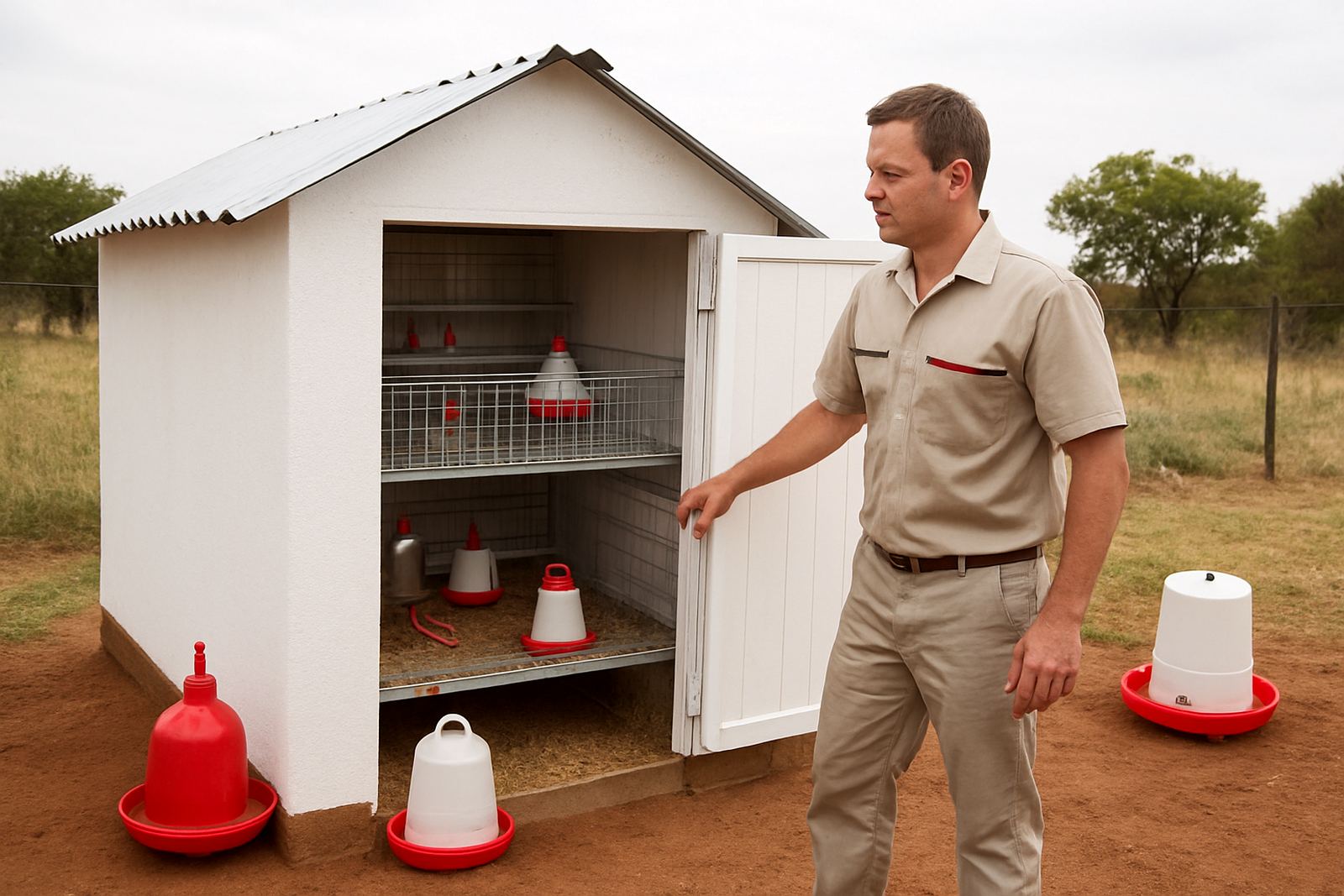
A breeder farm package usually combines housing hardware, flock management items and egg handling equipment. The exact set depends on bird numbers, house width, your labour team and whether eggs are moved by hand or by a more organised collection route. We help select equipment that suits the house size and the way your team works, not just the catalogue spec.
- Nests for controlled egg laying, with enough access points to reduce floor eggs
- Feeders sized for breeder intake control and even feed spread
- Drinkers matched to bird age and water pressure
- Perches and internal fittings where the breeding programme allows
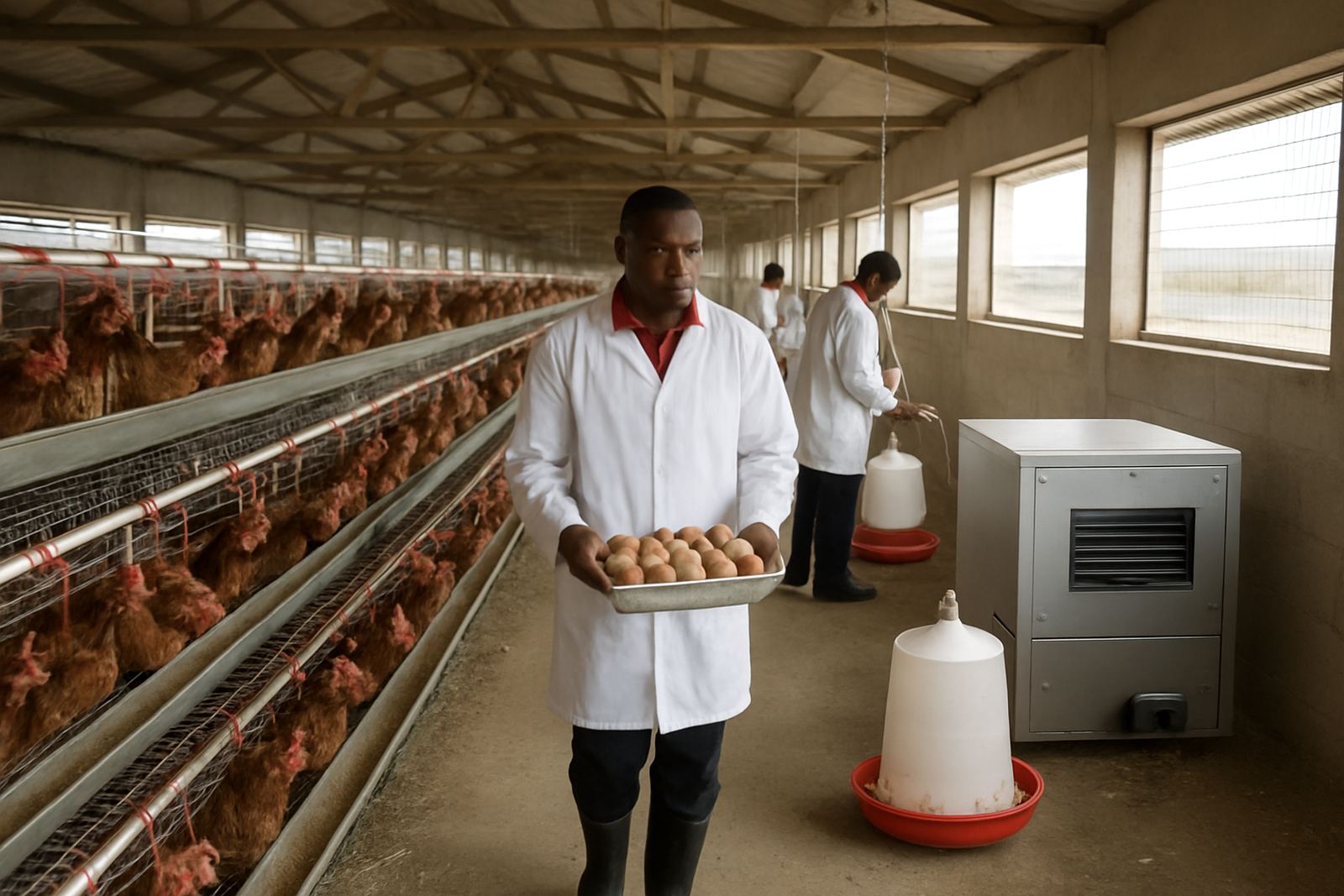
- Egg trays, transfer trolleys and handling stations for hatchable eggs
- Lighting control components for stable day length management
- Weighing and monitoring points for flock condition checks
- Wash-down and biosecurity fittings for cleaner routines at the house entrance
For larger operations, we also look at service access, spare parts holding and room to expand in the next cycle. A breeder farm should not be built so tight that every future upgrade means tearing out working equipment.
Layout planning for better egg quality and flock movement
Layout is where breeder farms succeed or fail. The house needs a straight, practical flow from bird area to nest area to egg collection and out to the clean room or packing point. If staff have to cross back and forth, breakable eggs suffer and biosecurity gets weaker. We usually start with the building itself, then fit the equipment around the real structure, not the other way round.
Good planning also means checking floor slope, ventilation path, water entry points and electrical points before anything is installed. In some older houses, the biggest issue is a narrow service aisle or badly placed doors. A small change at plan stage can save a lot of labour later. It is much cheaper to move a wall opening on paper than to do it after equipment is already on site.
For breeder clients in municipal areas, we also consider drainage, wash-down water and waste handling. Some farms need better runoff control around egg rooms and service yards. If the site is near a coastal area or in a high-rainfall zone, corrosion and damp can shorten the life of fittings if the layout does not allow for clean, dry storage.
- Keep nest access clear from feed and service routes
- Separate dirty entry points from egg handling areas
- Leave space for crates, trays and empty return movement
- Provide easy access for maintenance and repairs
- Plan for a backup power route if load-shedding is frequent
Common mistakes that cost breeder farms eggs and time
Many breeder farms lose value because the equipment is right in principle, but the daily routine is not. The usual mistake is under-sizing nests or spacing them poorly, which leads to floor eggs and uneven usage. Another common fault is incorrect drinker height, which creates wet litter and dirty eggs. We also see feed systems set up without enough adjustment range for the flock stages.
Another issue is skipping proper operator training. A breeder house can have good equipment, but if staff do not know how to check levels, clean correctly or spot wear early, performance drops. A short training session at installation is not enough on its own. Teams need clear handover notes and a simple maintenance programme.
Some farms try to save money by buying in stages without checking compatibility. Later they find that trays, nest modules or service parts do not match the existing set-up. That leads to delays and extra spend. It is better to seperate essential items from optional extras right at the start.
Budget ranges for breeder farm setups in rand
Breeder farm budgets vary a lot depending on house size, whether you are fitting one house or a full site, and how much civil or electrical work is needed before equipment can go in. As a practical guide, a small breeder house retrofit may start from about R180 000 to R450 000 for selected equipment and key fittings. A more complete house setup can move into the R750 000 to R2.5 million range, especially where nest systems, controlled feeding, egg handling points and support fittings are included.
For turnkey breeder projects, where planning, equipment selection, installation supervision, commissioning and training are all part of the job, the budget can be much higher. It depends on the number of houses, flock capacity and whether the project includes processing room fitout or an expansion upgrade. We work with clients who want a phased plan as well, which helps spread spend across building stages and production cycles.
- Entry level retrofit: R180 000 to R450 000
- Mid-size house package: R450 000 to R1.2 million
- Full breeder house system: R1.2 million to R2.5 million
- Turnkey multi-house project: from R2.5 million upwards
Final pricing depends on site access, transport, house size and the amount of support needed after commissioning. For farms outside Gauteng, delivery and site days are quoted according to the route and installation programme.
How we support breeder projects from planning to handover
John F Marshall has supported poultry and industry equipment projects since 2009, with a Gauteng head office and work across South Africa. Our team includes operations, projects, technical sales, service, procurement and training support, so breeder clients get a practical handover and not just a pile of boxes.
For breeder farms we can assist with site planning, equipment selection, house layouts, installation supervision, commissioning, operator training, maintenance programmes and spares supply. Where needed, we also help with processing room fitout and expansion upgrades later in the project life. That is useful when the original breeder plan needs to grow with demand or when a second house is added.
From Jet Park in Boksburg, we support farms in Gauteng, Mpumalanga, Limpopo, North West, Free State and KwaZulu-Natal. If you are building or upgrading a breeder operation, the best starting point is a clear site brief, house dimensions and your target bird numbers. From there we can work out the right equipment mix and a sensible budget.
For breeder farms, clean layout and steady flock control matter every single day. Get those right and the rest of the operation becomes much easier.