Getting pullets ready for laying from day one
Pullet rearing is not just about keeping chicks alive. It is about raising uniform birds with even body weight, good feather cover and correct frame size so they move into laying houses on time and start well. If the early weeks are uneven, the problems show later as poor peak production, mixed flock size and extra feed cost.
Most clients come to us when they are moving from floor rearing to a more controlled system, or when existing houses are giving too many weak birds. In Gauteng, Mpumalanga, Limpopo and the Free State, the main issue is usually temperature control. In coastal areas and KZN, humidity and wet litter become a bigger risk. The house has to suit the birds and the local conditions, not the other way round.
Typical equipment for a practical pullet house
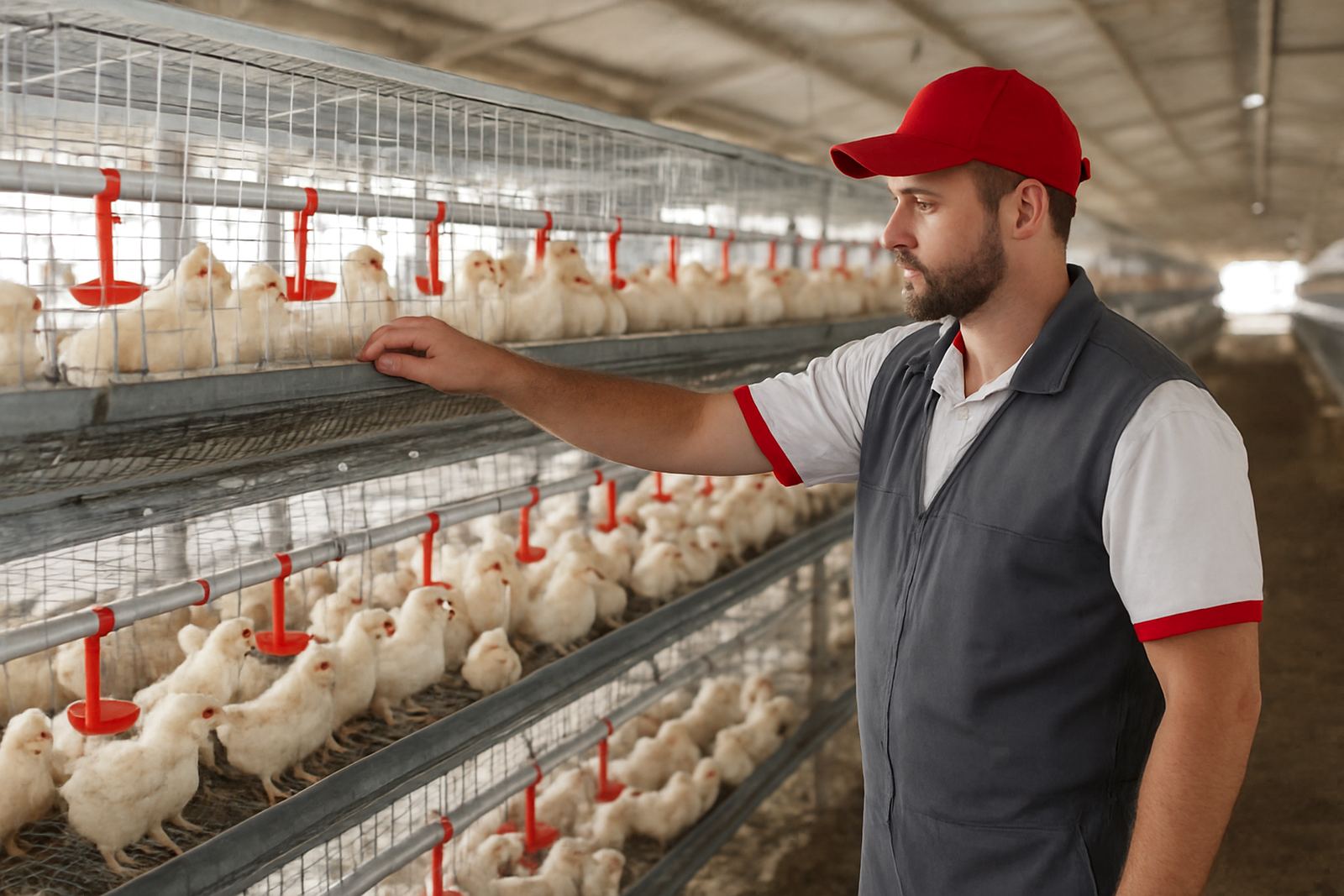
A rearing setup needs to be simple enough for staff to manage every day, but accurate enough to keep the flock consistent. The exact package depends on flock size, house width and whether the site uses full environmental control or natural ventilation. We supply and plan the equipment around the bird numbers and the available building footprint.
- Starter and grower feeders for even feed access
- Drinkers matched to the house type and water pressure
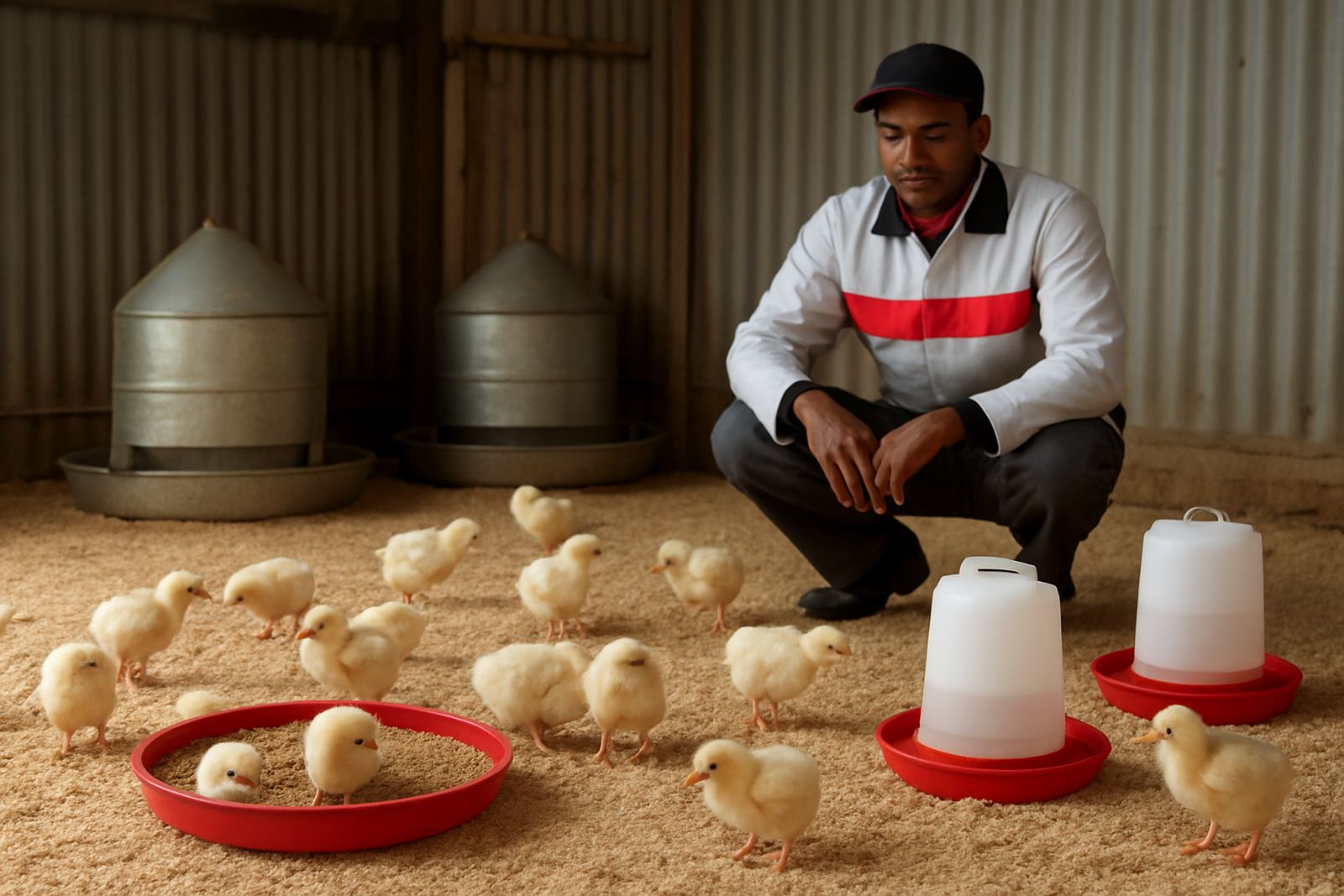
- Brooders or heating systems for day-old chicks
- Perches and rearing structures where the flock needs early conditioning
- Partitions and guardrails for brooding and bird flow
- Egg collection not required, but service walkways and access points matter
- Fan, inlet and lighting layout where climate control is used
For smaller sites, a basic but well set up house may be enough. For larger operations, controlled feeding lines, timed lighting and a planned ventilation pattern make day-to-day work easier and help reduce bird loss.
House layout and planning that save trouble later
A pullet house should allow easy movement of staff, feed and birds. The house needs enough space for brooding zones, grow-out sections and service access. One common mistake is fitting too much equipment into the building, leaving no room to check drinkers, replace parts or move birds properly. Another is leaving the feed bin, water points or electrical lines in positions that make maintenance awkward.
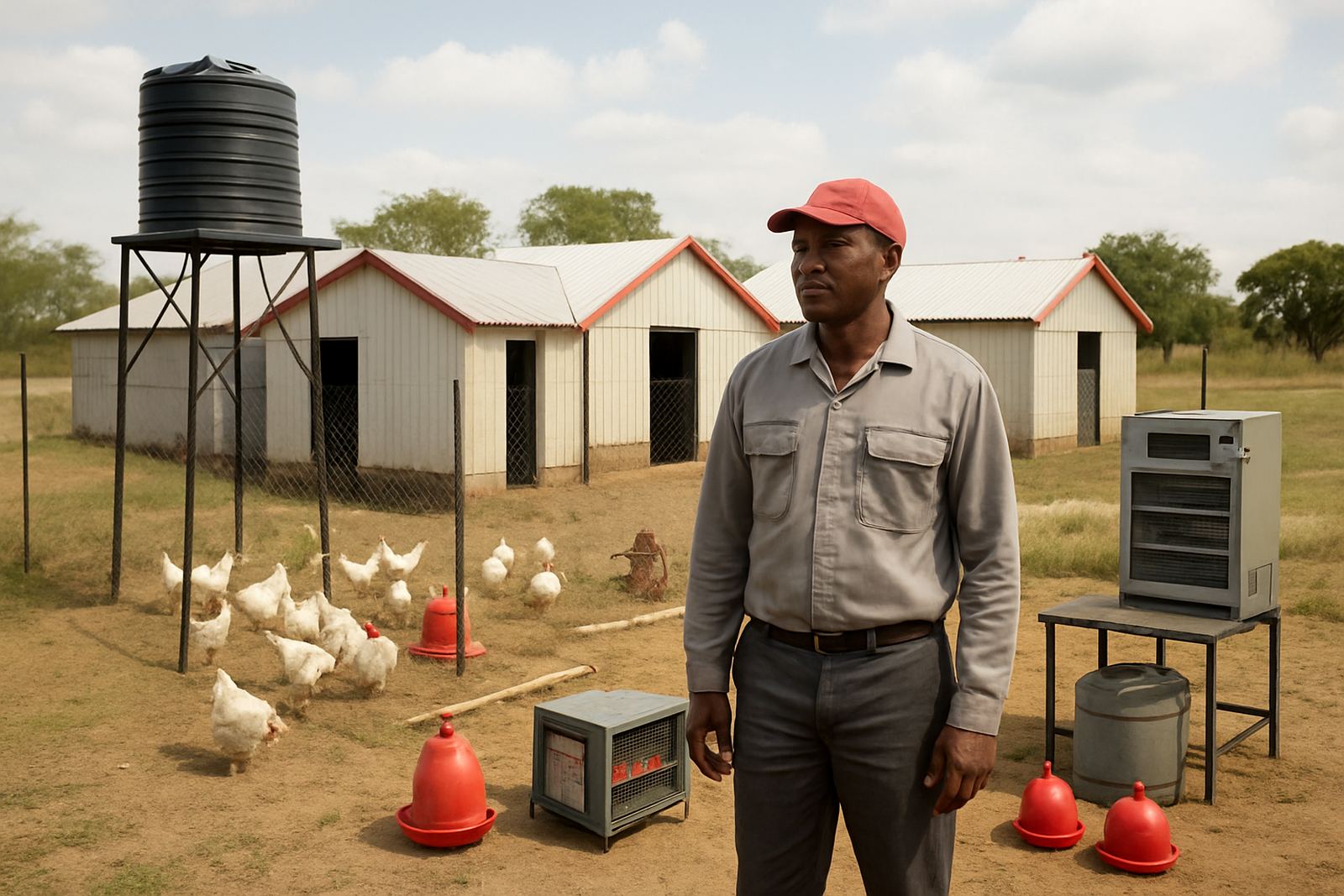
We normally look at the full site before equipment is selected. That includes roof height, floor finish, drainage, stormwater handling and where the load-shedding backup will sit. In areas with municipal supply issues, a water storage plan is important too. If power fails and the house has no backup or alarm, young birds can be in trouble very quickly.
- Keep the house layout simple and repeatable across all houses on site
- Allow for service access at both ends of the building where possible
- Plan for the generator, changeover and fuel storage early
- Check that the floor slope and drainage can handle wash-down and spills
- Use lighting and curtain or inlet positions that support even bird behaviour
Common mistakes that reduce pullet quality
The biggest errors are often small ones repeated every day. Uneven feed distribution gives birds different growth rates. Poor drinker height leads to wet litter and foot problems. Wrong heat settings in the first week can affect appetite for the rest of the cycle. If the flock is not handled gently, it can become skittish and uneven, and that shows later when the birds are moved into laying production.
We also see houses that were designed for another purpose and then adapted for pullets without enough thought. That can mean poor airflow, dark corners, bad access for cleaning, or no plan for growth. In some cases the electrical installation is not suitable for poultry work and the client only finds out when the first major repair is needed. Better to sort that out before birds arrive.
Our team can assist with site planning, equipment selection, house layouts, installation supervision, commissioning and operator training so the house runs as intended from the start.
Budget ranges in Rand for South African rearing projects
Budget depends on capacity, level of control and whether the building already exists. A basic rearing fitout for a smaller house can start from around R180 000 to R450 000, mainly for feeders, drinkers, brooding and basic support items. A more controlled house with better ventilation, automated feeding and stronger backup provision can move into the R600 000 to R1,5 million range per house. Larger turnkey projects with multiple houses, service rooms and processing or support areas can go well above that.
It helps to budget for spares, training and maintenance right from the start. A cheaper setup that needs constant patching is usually more expensive over 3 to 5 years. We advise clients to compare not only the purchase price but also labour time, electricity use, water use and replacement part availability.
- Small upgrade package: R180 000 to R450 000
- Controlled single-house fitout: R600 000 to R1,5 million
- Multi-house turnkey rearing project: from about R2 million upward
- Allow extra for generator backup, water storage and civil works
Support from Jet Park to poultry sites nationwide
John F Marshall has been supplying agriculture and industry equipment since 2009, with a Gauteng base in Jet Park, Boksburg and project work across South Africa. Our team includes Lerato Mokoena, Sibusiso Dlamini, Anika van der Merwe, Thabo Nkosi, Nadine Jacobs and Musa Cele, each focused on a practical part of the job from procurement to training and support.
We work on pullet rearing projects in Gauteng, Mpumalanga, Limpopo, North West, Free State and KwaZulu-Natal. Whether the site is a new build or an expansion upgrade, the aim is the same: healthy, even birds that are ready to move into laying houses without avoidable losses. If the flock starts right, the laying side has a much better chance of paying back properly.
For local supply, planning support or a full project discussion, contact info@johnfmarshall.co.za.