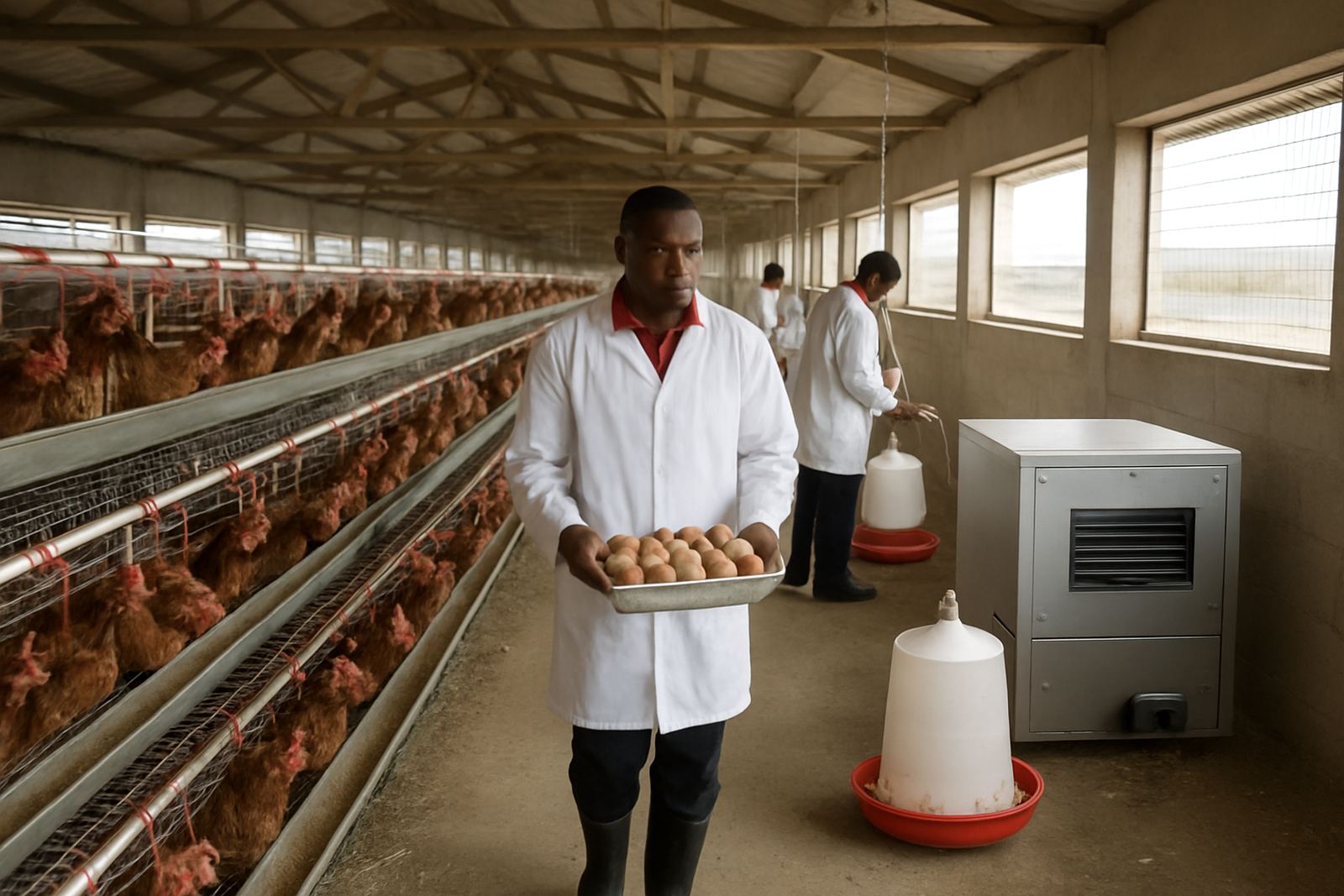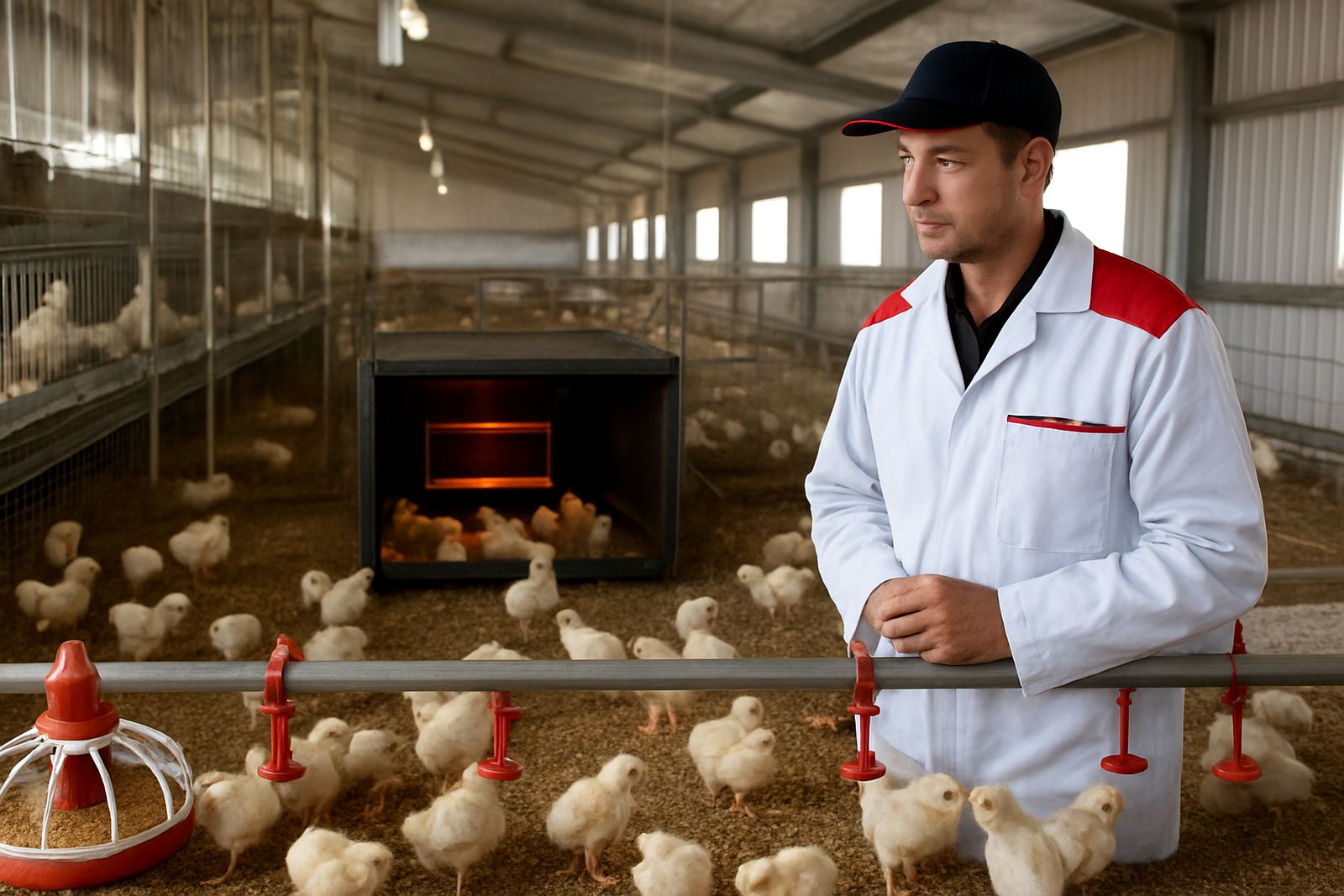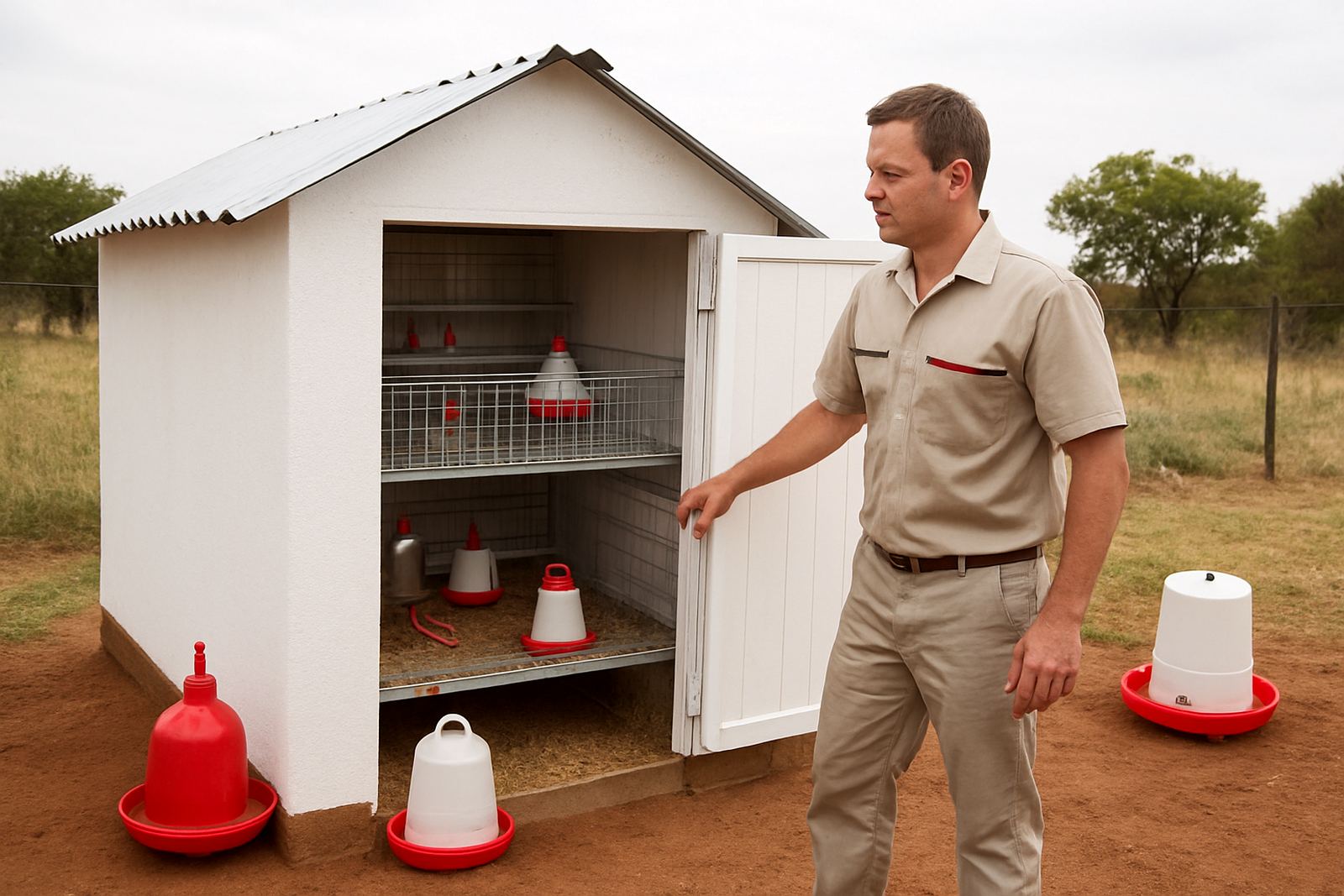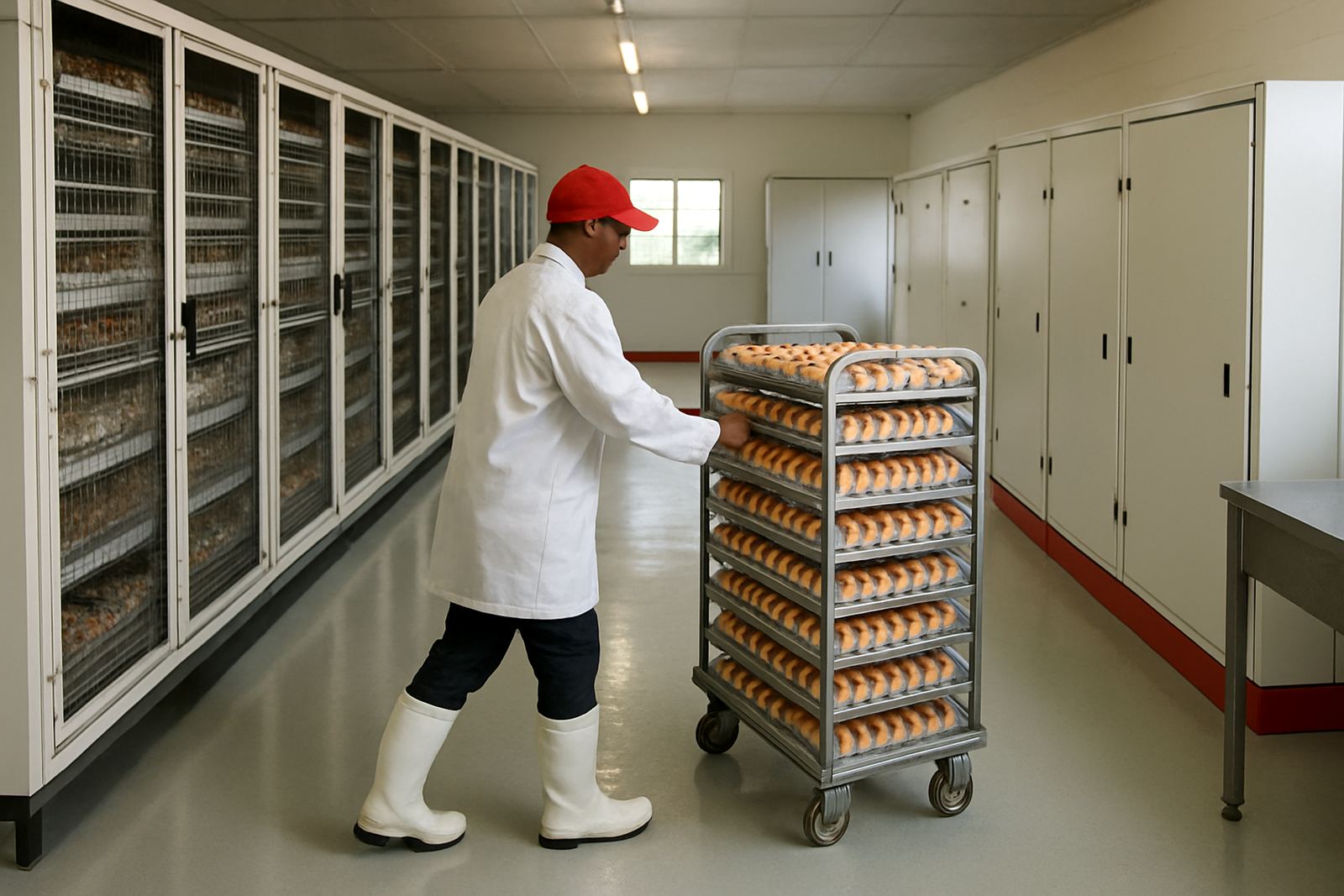
What a hatchery setup must do on day one
A hatchery is not only about setting eggs and waiting for chicks. It has to hold temperature and humidity within range, move eggs and chicks cleanly, and keep power interruptions from upsetting the cycle. In Gauteng, Mpumalanga and Limpopo we often see projects where the building is ready but the airflow, floor slope or washdown points were never planned, and that costs time later.
For a new hatchery or an upgrade, we start with the numbers. How many eggs will be set each week, what hatch window is needed, and where will chicks be counted, boxed and collected. If the client is supplying growers across North West or KwaZulu-Natal, the flow from egg intake to chick dispatch needs to be short and easy to keep clean, because any bottleneck shows up fast when volumes climb.
- Planned egg set per week or per month
- Target hatch percentage and chick output
- Egg source, storage time and transport distance
- Power backup for load-shedding and outages
- Washdown, drainage and hygiene points
We also check water quality, room insulation and the service access around the hatchery. If a machine needs cleaning or a sensor needs replacement, there must be space to work without stopping the whole room.
Typical equipment in a working hatchery line
The exact set depends on scale, but most hatcheries need a mix of incubation, hatching and chick handling equipment. For smaller producer units, one or two setters and a matching hatcher may be enough. For larger commercial projects, we look at batch flow, egg trays, transfer trolleys and a clear separation between dirty and clean areas.
A common layout includes setters for incubation, hatchers for the final stage, egg storage equipment, candling and transfer tables, chick counting and grading areas, ventilation equipment, and washing or sanitising stations. Some sites also need weighing scales, packing benches, chick boxes, and a separate room for spares and consumables. The right feed and drink systems for brooding are often planned at the same time, so the chicks move straight into a controlled house.
- Incubators for controlled temperature and humidity
- Hatchers for the final hatch period
- Egg storage racks and transfer trolleys
- Chick handling tables, counters and packing points
- Cleaning points, drainage fittings and washroom equipment
- Backup power connection points and alarms
We often advise clients to think beyond the machine list. If the site is in a warm area such as Nelspruit or Polokwane, ventilation and heat rejection matter just as much as the machine size. If the hatchery is near the coast, corrosion control and humidity management become part of the equipment spec too.
Layout planning that keeps eggs, chicks and people moving
A good hatchery layout keeps each stage in one direction. Eggs come in, move through storage and setting, then hatch, then chicks are counted and sent out. People should not cross from the dirty side back into the clean side without a proper change point. That sounds basic, but it is where many small projects get into trouble.
We normally plan room sizes around equipment footprints, trolley turning circles and service access. There must be enough clearance for cleaning, maintenance and safe movement of trays. Floors should drain properly, doors should suit trolley movement, and lighting must be bright enough for inspection work. If the site is in a municipal area with strict effluent rules, wash water handling needs attention from the start.
- Separate egg intake, incubation, hatch and dispatch zones
- Allow space for trolleys, trays and cleaning access
- Keep electrical panels in dry, reachable positions
- Plan for staff flow, hand washing and changing points
- Use surfaces that can be cleaned without damage
When we visit a site in Jet Park, Boksburg or out on a project in the Free State, we look for practical issues like door widths, floor levels and where a generator or inverter can sit. These details save a lot of frustration once the hatchery is running daily.
Common mistakes that cut output or raise wastage
One mistake is buying equipment before confirming the building conditions. An incubator can only perform to spec if the room stays within range and air can move correctly. Another common problem is under-sizing the egg storage area, so eggs sit too long before setting and the hatch pattern gets uneven.
We also see hatcheries without enough backup power planning. Load-shedding can interrupt climate control, and even a short stop can disturb temperature recovery. The answer may be a generator, inverter support or staged power management, depending on the project size. A fourth issue is weak training. Operators need to understand egg rotation, alarm response, cleaning routines and chick handling, not just the start button.
- Buying machines before the room layout is final
- Ignoring backup power and alarm response
- Mixing clean and dirty traffic paths
- Not planning for spare parts and service access
- Skipping operator training on daily checks
We have also seen sites with the right equipment but no spare trays, no extra sensors and no maintenance schedule. That leads to stoppages at the worst time. A hatchery should be set up with daily use in mind, not just handover day.
Budget ranges for hatchery projects in Rand
Budget depends on capacity, level of automation and the building condition. A small starter hatchery with basic incubation and chick handling equipment may begin from about R250 000 to R600 000, excluding major building work. A mid-sized commercial setup can move into the R900 000 to R2,5 million range once hatching rooms, handling tables, controls and backup power are added.
Larger turnkey hatchery projects, especially where the client wants full planning, installation supervision, commissioning and training, can run from about R3 million upward. That figure shifts with room finishes, ventilation, electrical work, drainage, spare kits and whether the site needs processing room fitout nearby. On some rural projects, transport and installation travel also affect the total.
We are careful to separate equipment cost from building cost. A proper quote should show what is included, such as layout advice, commissioning and operator training, and what is outside the supply scope. This makes it easier to compare offers fairly and to keep the project within budget, even when the site is far from Gauteng.
How John F Marshall supports hatchery projects across South Africa
John F Marshall has supported agriculture and industry equipment projects since 2009, with a Gauteng base in Jet Park, Boksburg and work across South Africa. Our team includes people who handle site planning, technical sales, project coordination, service and spares, so the hatchery design and the install stay aligned from the start.
For hatcheries, we can assist with site planning, equipment selection, house layouts, installation supervision, commissioning, operator training, maintenance programmes and spares supply. If your project includes brooders, feeders, drinkers or later-stage poultry house upgrades, we can plan that into the same supply chain. That helps when you are scaling from a small hatchery to a wider poultry project across Gauteng, Mpumalanga, Limpopo, North West, Free State or KwaZulu-Natal.
We aim to keep the advice practical. If a client only needs a few parts and a service visit, we handle that. If they need a full hatchery build, we work through the steps in order so the equipment, building and daily work all fit together. You should not have to rework a room after the gear arrives, and that is the point.