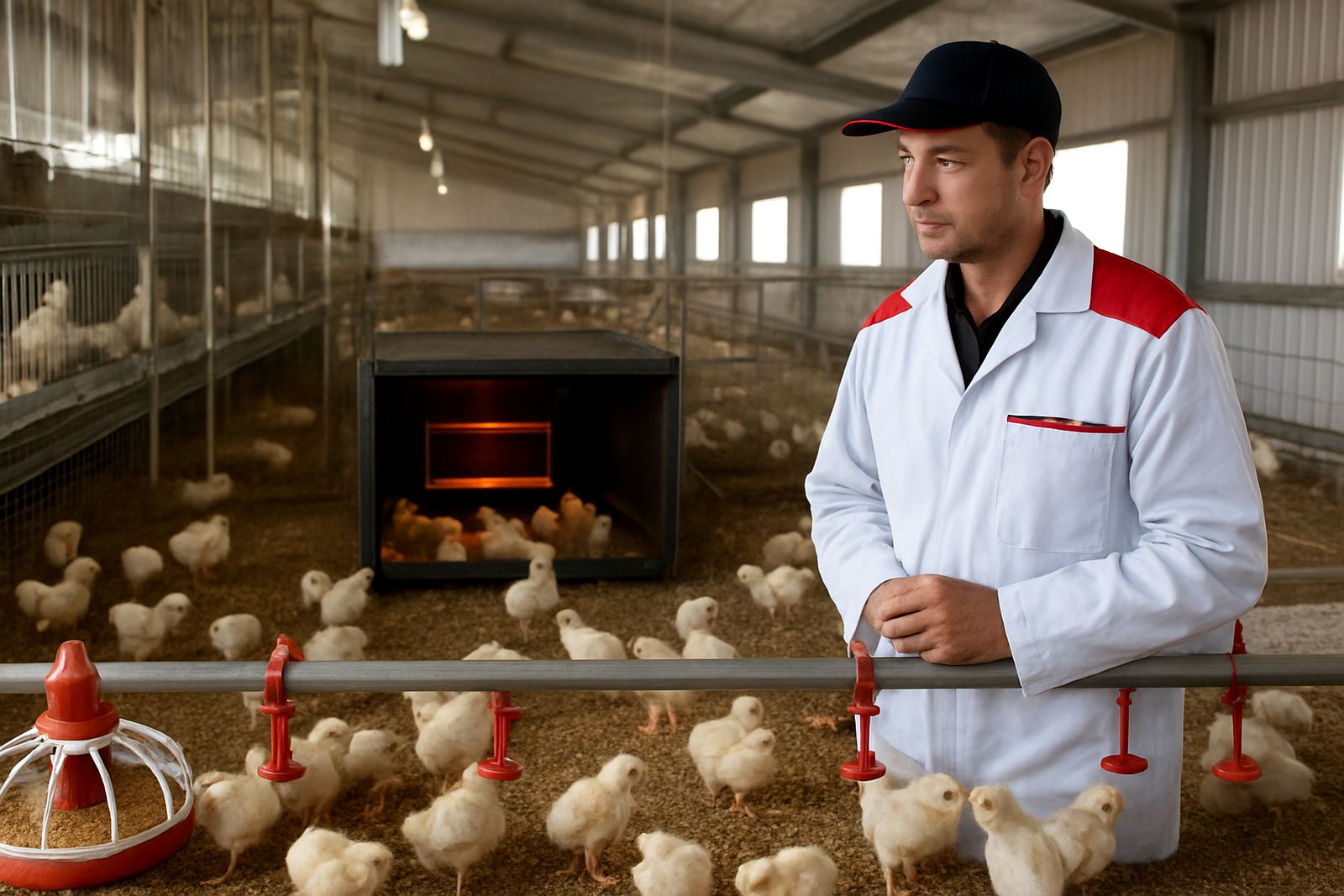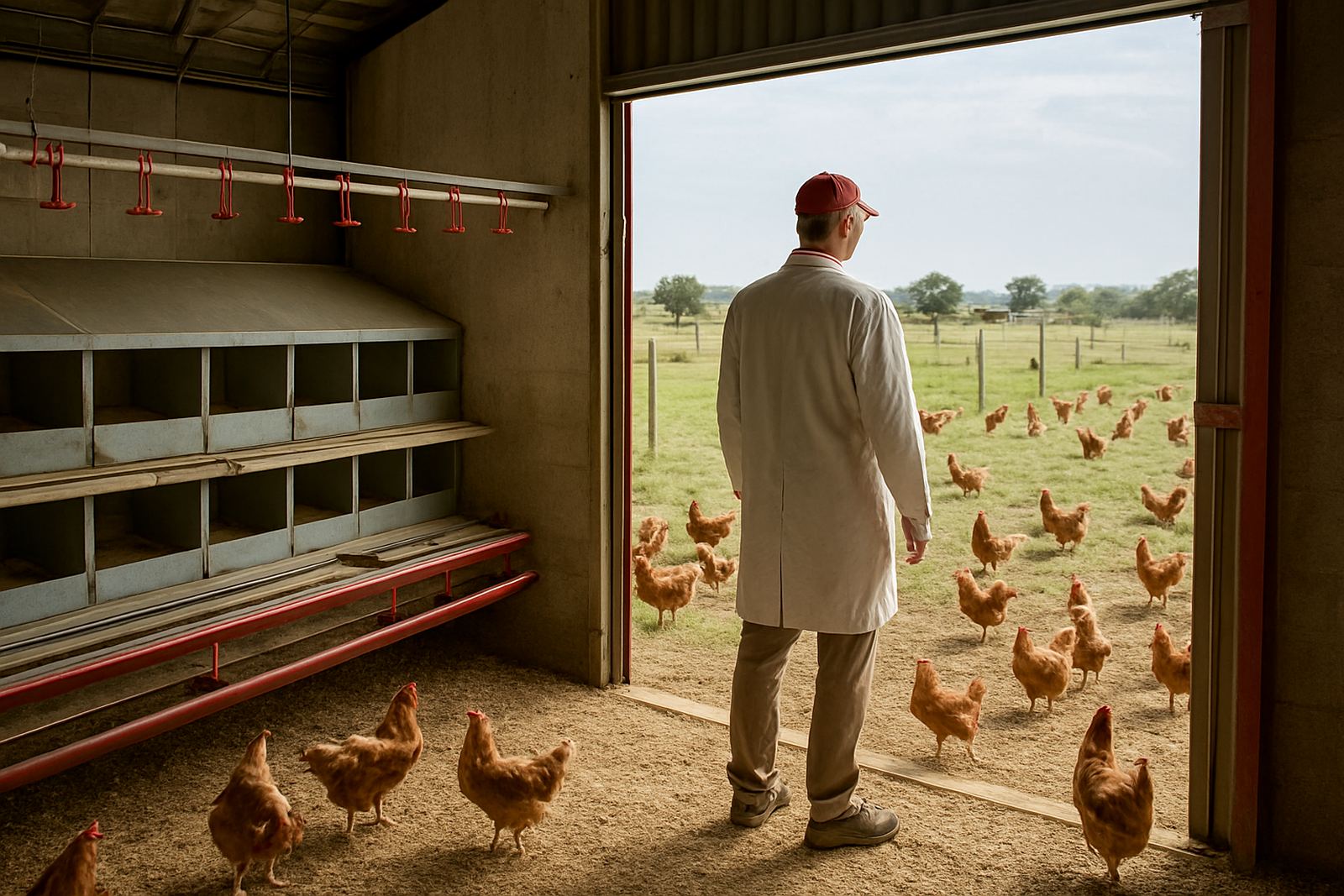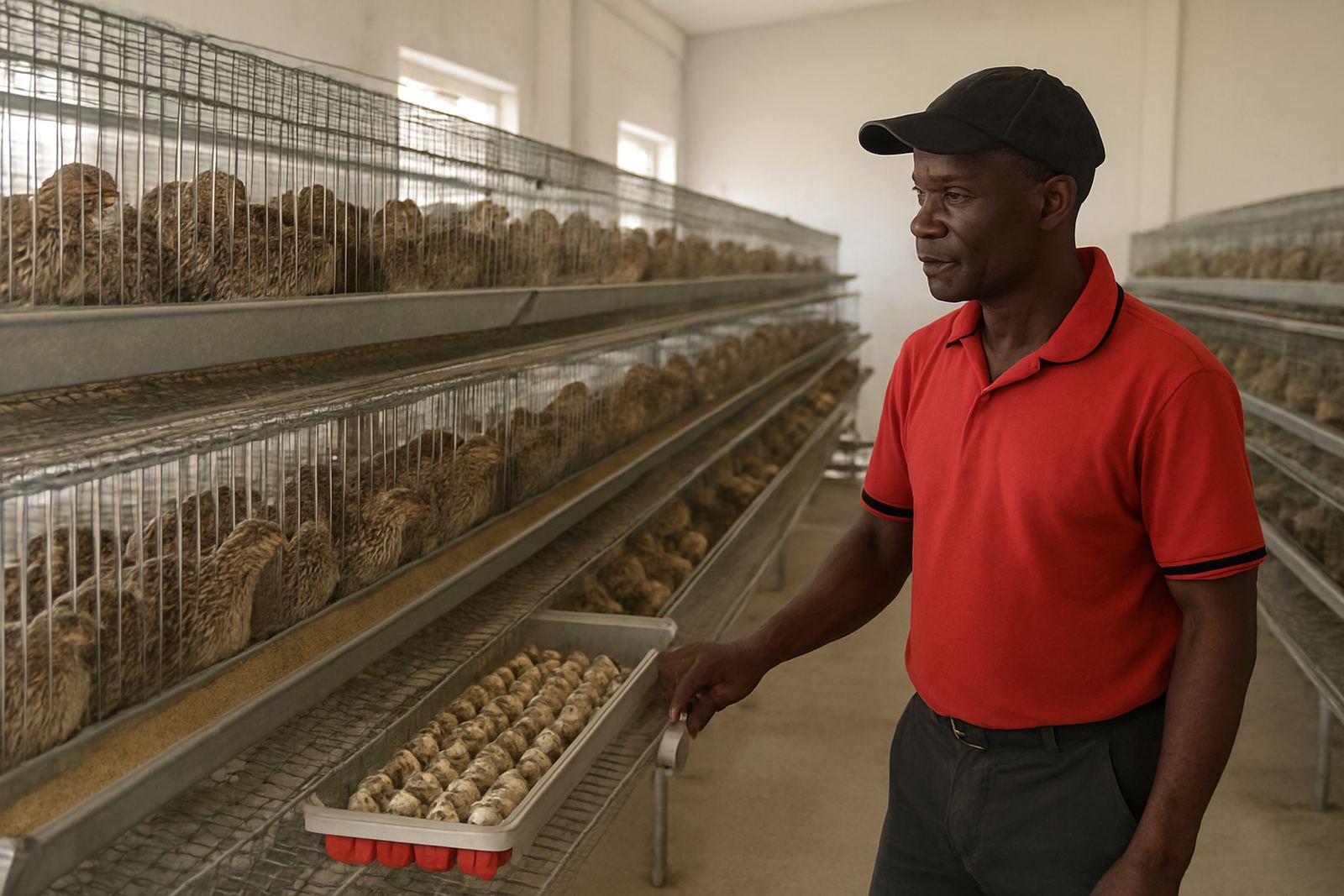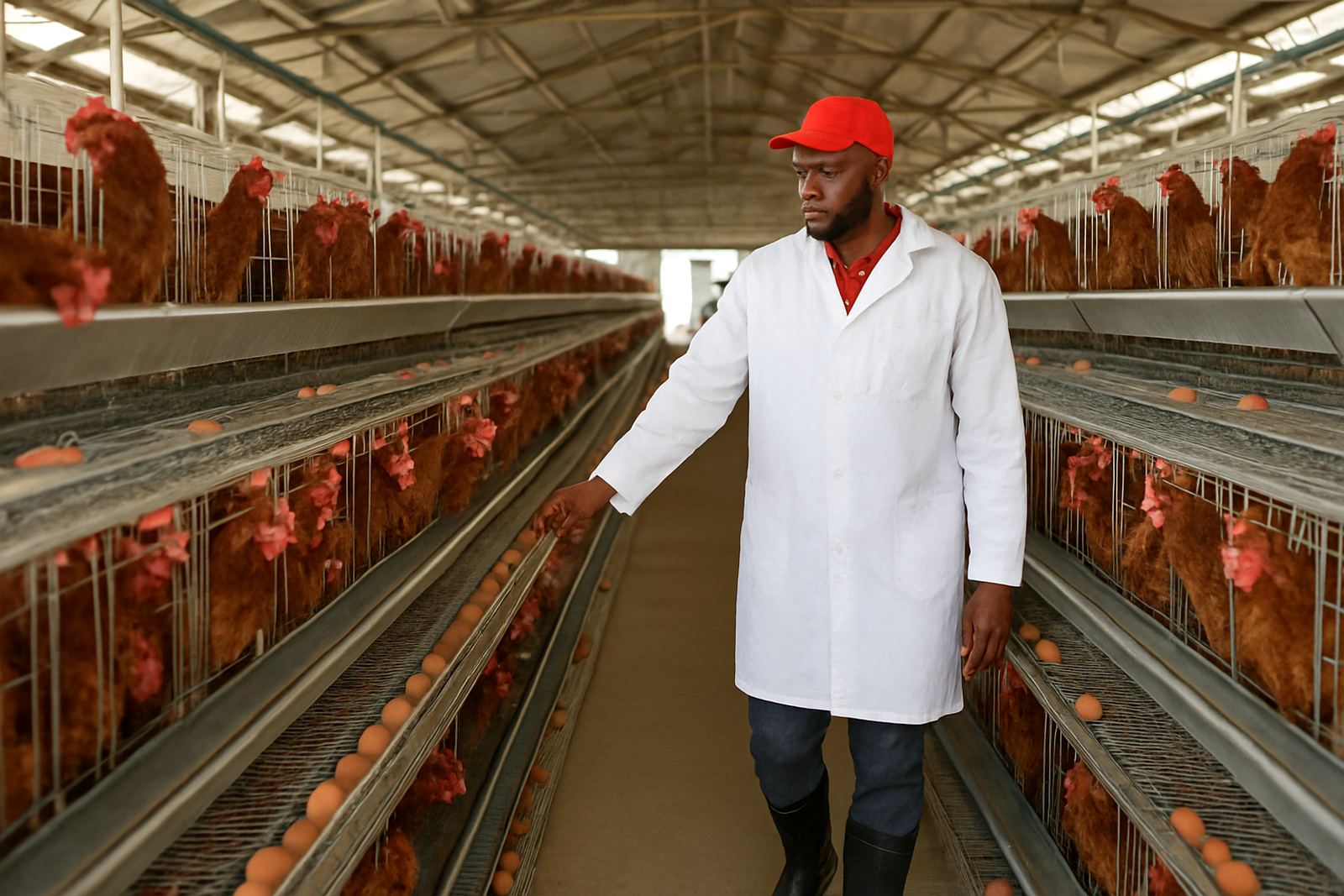
What a commercial layer house needs to do
A layer house has one main job, keep birds productive and eggs moving out cleanly every day. For a new farm in Gauteng, Mpumalanga or Limpopo, that starts with the correct house size, the right cage density and enough space for feed, eggs and staff movement. If the layout is wrong, the birds can still lay but the operation becomes costly to run, hard to clean and slow to scale.
Most commercial clients come to us with a site, a target bird count and a budget range. From there we look at whether the farm is starting with one house or building in phases. In many cases the better plan is to equip one house properly, prove the management system, then add capacity in stages. That approach helps with cash flow and makes it easier to match egg output to buyers in the local market.
Typical equipment for table egg production
A layer project normally combines housing equipment with simple support systems around it. The exact set depends on the house width, the number of tiers, the access points and whether the farm wants manual or more automated handling. In warm areas like Nelspruit or Polokwane, ventilation and shade planning matter as much as the cage line itself.
- Layer cages sized for the bird count and house dimensions
- Feeding systems matched to the feed route and storage point
- Drinking lines or drinkers with pressure control and easy flushing
- Egg collection tables, conveyors or hand-collection points
- Manure removal planning for hygiene and fly control
- Lighting layout for stable production and flock monitoring
- Backup power or generator tie-in for load-shedding periods
On some sites the chicken house is ready but the support items are not, and that causes delays. A feeder line without proper access, or drinkers installed too close to the wall, can make servicing difficult. Small details like this matter every day, not just on commissioning day.
Planning the house layout before buying equipment
The right layout starts with measurements, not with a catalogue choice. We look at clear span, column positions, roof height, floor levels and door openings. Then we check how feed will enter the site, where eggs leave, and where workers will move during daily routines. In many smaller towns, the road access and turning space for delivery trucks is also a real issue.
Good planning keeps traffic separate. Feed should not cross the clean egg route. Maintenance access should not block bird movement. If a farm is near the coast or in a humid area, corrosion risk must be considered early so that the house can be fitted with suitable materials and sensible cleaning routines. That helps the equipment last longer and keeps breakages down.
- Allow for service walkways and safe access to all equipment
- Keep feed storage close enough to reduce labour but not inside the clean egg zone
- Plan for washing down and drainage from the start
- Leave space for future expansion, even if it is only one extra house
Common mistakes on layer farm setups
The most expensive mistake is buying equipment before the final house layout is checked. Another common issue is underestimating labour. A house that looks fine on paper can become difficult to manage if eggs must be carried too far, feed sacks are moved by hand all day, or the staff route passes through dirty areas. We see this often on older farms being upgraded around North West and Free State.
People also tend to forget power interruptions. With load-shedding, any automated or semi-automated system must be able to restart safely, and critical areas may need backup supply. Water pressure should be stable too, because drinkers and flushing routines can suffer when municipal or borehole supply is inconsistent. One loose planning choice can lead to daily headaches, and those losses add up quick.
Another mistake is treating biosecurity as an afterthought. Gates, change areas, footbaths, pest control points and cleaning access should all be part of the plan. If a site has good equipment but weak control points, disease risk and contamination risk remain high.
Budget ranges for commercial layer projects
Budgets vary widely because house size, bird numbers, automation level and civil works all change the final figure. A small commercial layer setup with basic cages and manual handling can start in the lower hundreds of thousands of Rand for equipment only, while a larger multi-house project with improved handling, planning and fitout can move into the millions. Turnkey work, including layout input, installation supervision and commissioning, will sit higher than supply-only projects.
As a rough guide, clients often budget separately for cages, drinking and feeding systems, egg handling, electrical work, water storage, labour prep and spares. It is better to split the project into phases if the full capital amount is not available at once. That way the first house can start earning while later houses are being prepared.
- Supply-only equipment for a single house: often from about R250 000 to R900 000, depending on size and spec
- Installed and commissioned house package: often from about R450 000 to R1,5 million
- Turnkey layer project with planning, installation and support: often from about R1 million upward
These ranges are general and should be checked against the actual site. The final number depends on bird count, the condition of the building and the level of automation chosen.
How John F Marshall supports layer farms
We work from Jet Park in Boksburg and support poultry projects across Gauteng, Mpumalanga, Limpopo, North West, Free State and KwaZulu-Natal. For layer farms, our team helps with site planning, equipment selection, house layouts, installation supervision, commissioning, operator training, maintenance programmes, spares supply, processing room fitout and expansion upgrades.
That means the client gets practical support from first measurement to first egg run. Lerato Mokoena handles operations flow, Sibusiso Dlamini coordinates projects, Anika van der Merwe supports technical sales, Thabo Nkosi manages service follow-up, Nadine Jacobs handles procurement and Musa Cele leads training and support. John Frederick Marshall oversees the business direction. When a site needs to grow later, we can also help the client compare expansion options against the original house plan so the next phase fits properly.
A better start for table egg production
Layer farms work best when the equipment and the layout are planned together. A sound setup reduces labour, keeps eggs cleaner and makes day-to-day management simpler. It also gives the owner more control over costs, which matters when feed prices rise or power supply becomes unreliable.
If you are starting a new table egg project or improving an older house, it is worth getting the measurements and flow right before anything is ordered. That saves money, avoids rework and gives the farm a cleaner path to growth.