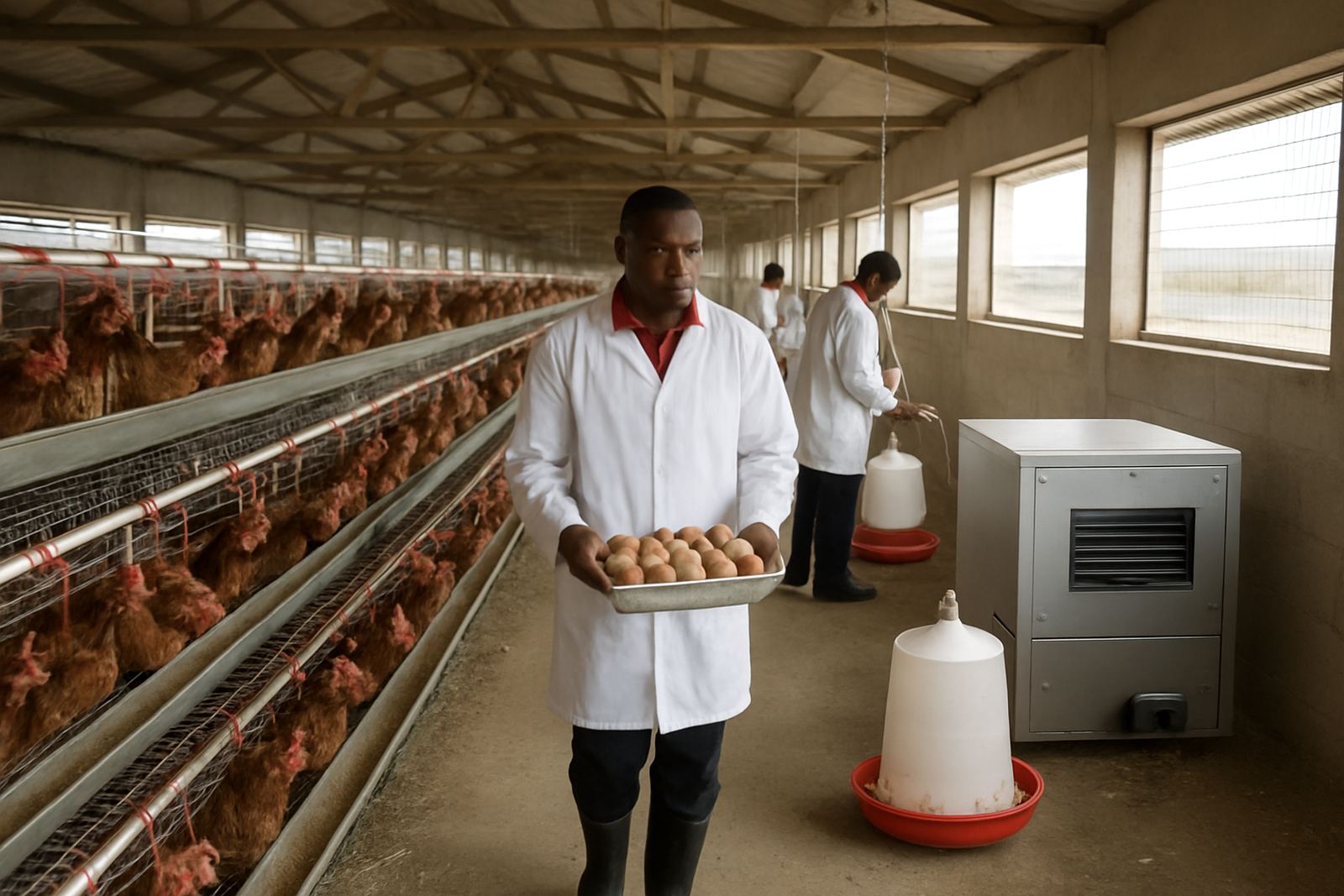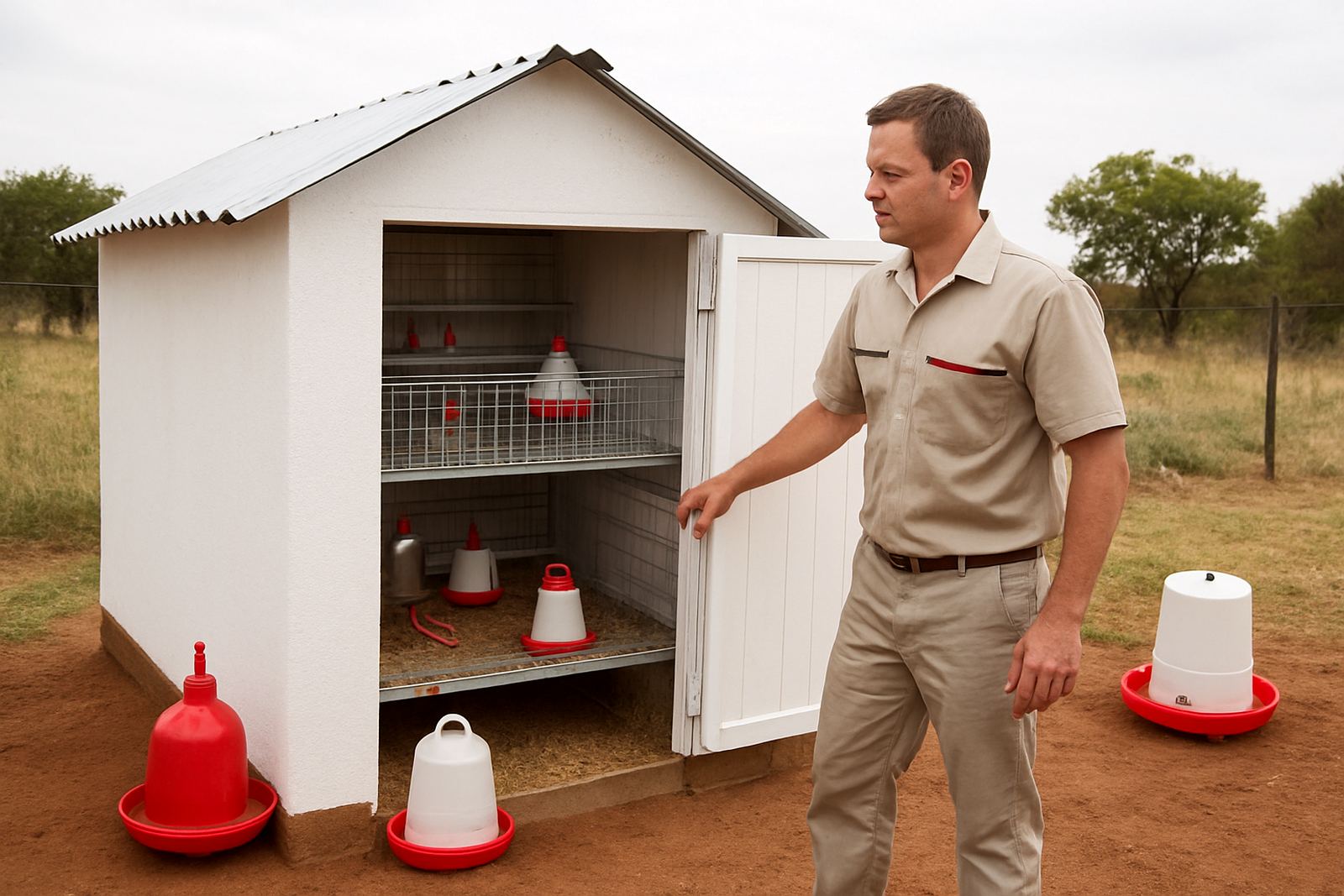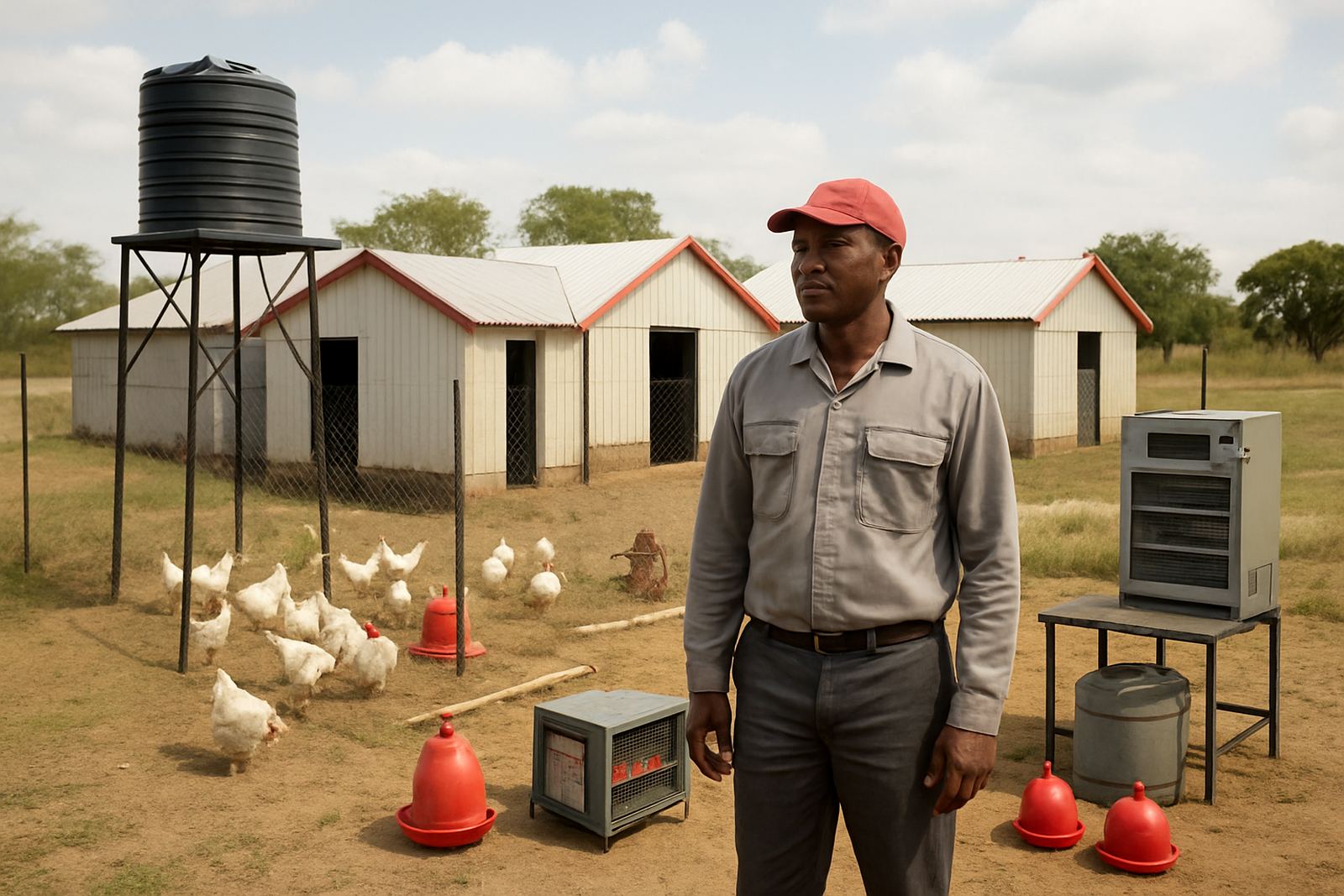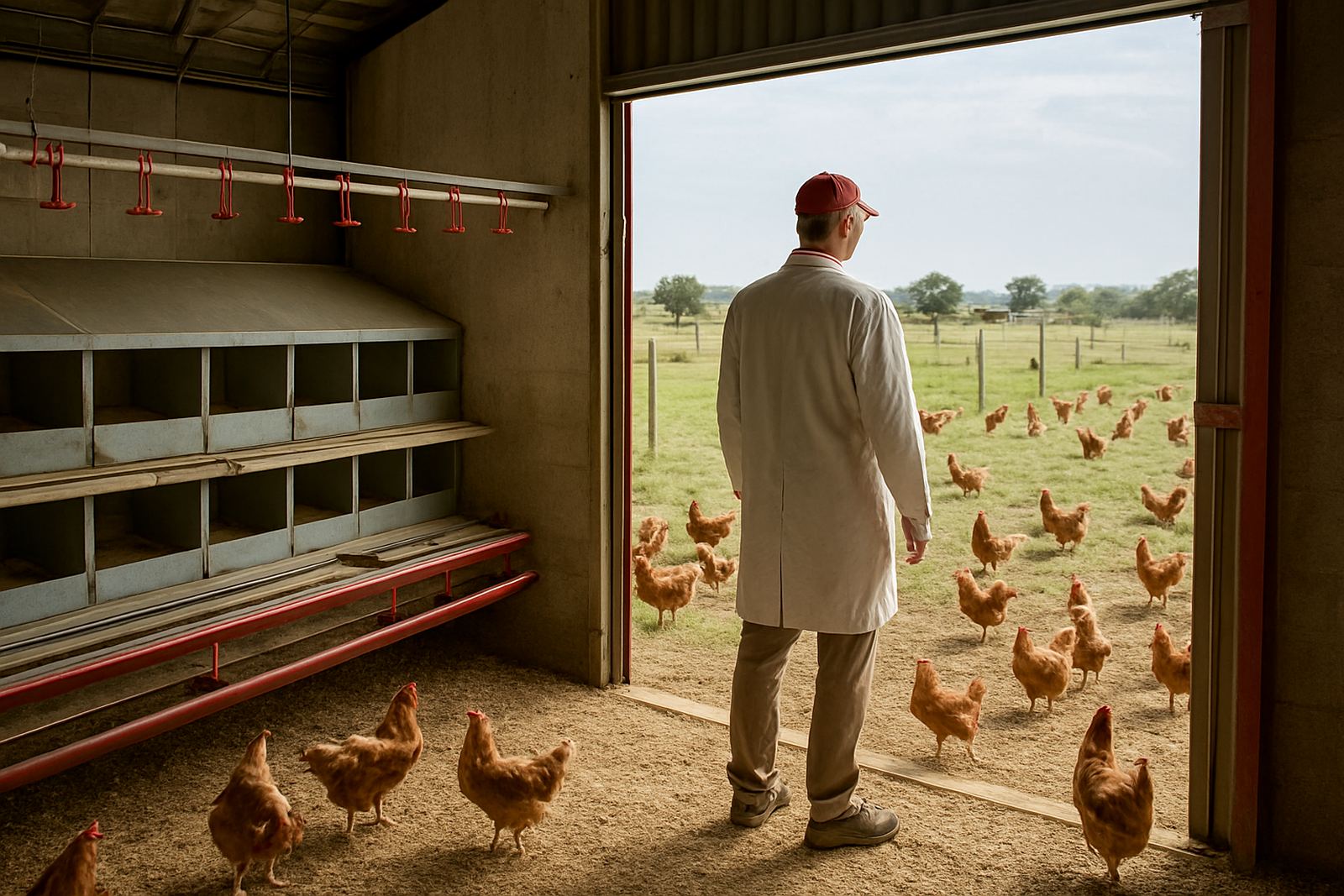
What a free-range layer house needs on day one
Free-range systems place more pressure on the inside of the house because birds are moving out to range areas, then back in for lay times, feed and water. The house must guide birds naturally to the right places, keep eggs clean, and allow staff to work quickly without stressing the flock. In Gauteng, Limpopo or KwaZulu-Natal, that means planning for heat, dust, wind and seasonal rain from the start.
A typical project starts with the bird count, house size and your collection routine. We look at floor area, pop-hole positions, daylight control, manure handling and how the team will move through the house. If the layout is wrong, you will see floor eggs, dirty shells and uneven bird condition. A good setup saves labour every day, not just at commissioning.
- Lay nests sized to suit the flock and the number of birds per section
- Feed troughs or chain feeders matched to house width and stocking density
- Drinker lines or manual drinkers placed for easy access and cleaning
- Perches and partitions where needed to guide bird flow
- Egg collection routes that keep crates away from feed and litter
Nest systems that cut floor eggs and dirty shell losses
Nest choice matters more than many new farmers expect. In free-range houses, birds will use the quietest, driest and safest spot available, so the nest bank must be easy to find and comfortable enough to hold the flock in the right place. We often advise on community nests, roll-away nests, or a mix depending on labour, house width and whether eggs are hand-collected or moved to a packing point.
For most houses, the goal is simple: enough nest space so birds are not queuing in the morning. If nests are too few or set too high, hens lay on the floor or on feed lines. That leads to cracked shells, contamination and extra labour. Good nest placement also reduces pecking and keeps the house cleaner. A small adjustment in height or curtain control can make a big difference, especially in wet weather.
- Place nests in the calmer part of the house, away from draughts and entry points
- Allow clear access paths so birds can move in and out without crowding
- Keep nest floors dry and check lining or bedding regularly
- Use egg collection points that are easy to sanitise after each run
Feeding and watering layouts for birds that range by day
Free-range layers still depend on the house for most of their intake. Feed delivery needs to be reliable, because birds that miss feed early in the day often start laying unevenly. We supply feeder solutions for smaller houses and larger commercial units, with advice on line spacing, feed depth and how to keep systems simple when electricity is inconsistent. Load-shedding is part of life in many parts of South Africa, so manual back-up access is worth planning for.
Water is just as important. In warm areas like Mpumalanga and Limpopo, birds can dehydrate quickly, while coastal humidity can make drinker hygiene a daily task. Drinkers must be easy to flush, adjust and inspect. If water pressure varies, or tanks are poorly positioned, the house will show it in bird condition and egg numbers. We also consider the route from the bulk tank to the house so staff are not dragging hoses through muddy areas.
- Set drinker height for the age of the flock and adjust often during grow-out
- Keep feed lines level to prevent uneven distribution
- Provide shut-off and flush points for cleaning and water safety
- Plan for manual feeding and water backup during power interruptions
Planning the house around range access and egg flow
A free-range unit is more than a house with an outdoor door. The range area, house layout and egg handling routine must work together. If pop-holes are too few, birds bunch up at the exit. If they are too many, you lose control over movement and predator protection. The best layout depends on terrain, prevailing wind and where waterlogging is likely after summer rain.
In a turnkey project, we help with site planning, house layouts and installation supervision so the building team and equipment team are working to the same drawing. That includes checking concrete levels, service routes, crate movement and space for a simple processing room fitout where grading or packing happens. It is also where local municipal rules come into play, especially for drainage, waste control and access roads.
- Keep egg collection routes short and dry
- Separate clean egg handling areas from feed and manure areas
- Allow enough turning space for vehicles and small bakkies
- Plan drainage so stormwater does not run back into the house
Common mistakes that cost money in the first six months
The most common mistake is under-sizing the equipment for the bird numbers on the farm. The second is placing equipment where it is easy to install, rather than where birds use it best. We often see nests against noisy walls, drinkers too close to doors, and feed lines that force staff to walk too far during daily checks. Those are small errors on paper, but they create daily losses.
Another issue is skipping training. Even a good system can perform badly if the team does not know how to set heights, spot leaks or clean correctly. Thabo Nkosi and the support team focus on practical operator training, maintenance routines and spares supply so the farm can keep moving. A simple service schedule is cheaper than emergency repairs after a weekend breakdown. It sounds basic, but many farms only react once they are already behind.
- Do not guess stocking density without checking house width and bird behaviour
- Do not buy equipment before confirming power points, water supply and floor levels
- Do not leave spare parts planning to the last minute
- Do not ignore shade, wind and predator pressure on the range side
Budget ranges for free-range egg projects in Rand
Budgets vary widely because a free-range egg farm may be a small starter unit or a larger commercial site with pack handling, processing room upgrades and multiple houses. For a basic laying house setup, equipment spend may start from around R150 000 to R350 000 for a smaller unit, depending on flock size and the mix of nests, feeders and drinkers. A more complete commercial setup with improved layout planning, installation support and additional handling points can move into the R500 000 to R1,5 million range.
Turnkey poultry projects with house planning, commissioning and training sit higher again, especially where the site needs civil work, drainage corrections or a phased expansion. We always advise customers to budget for spares, cleaning tools and maintenance items as well. A project that only covers the first purchase often ends up costing more in the second season. For farms in North West or Free State, transport and site access can also affect final cost, so it helps to quote from an actual layout rather than a rough estimate.
John F Marshall works from Jet Park, Boksburg, with poultry projects across Gauteng, Mpumalanga, Limpopo, North West, Free State and KwaZulu-Natal. If you are building a new free-range layer house or upgrading an older one, we can help with equipment selection, installation supervision and ongoing support from the first birds through to expansion.