What contract growers are trying to achieve
Contract growing is not the same as running a small backyard flock. The grower is usually working to a set bird number, a target bodyweight, feed conversion expectations and a strict collection or dispatch schedule. That means the equipment has to support repeatable results, not just fit into the shed.
In Gauteng, Mpumalanga and the colder Highveld areas, many growers also deal with wide temperature swings and load-shedding. In KZN and parts of Limpopo, humidity and heat become the main issue. We plan for those realities from the start so the house can perform through the full cycle, not only on a good week.
- Bird comfort at placement and during growout
- Easy feed and water access across the full house
- Fast catching and movement at turnaround
- Simple cleaning and maintenance between cycles
Typical equipment for a contract growing house
The right set-up depends on broiler numbers, house width, the contract spec and whether the site is a new build or an upgrade. A basic grower house may only need feed and water lines with housing for chick start-up, while a larger operation may need auto-feeding, pressure-regulated drinkers, winches, spare parts and handling points for quicker turnaround.
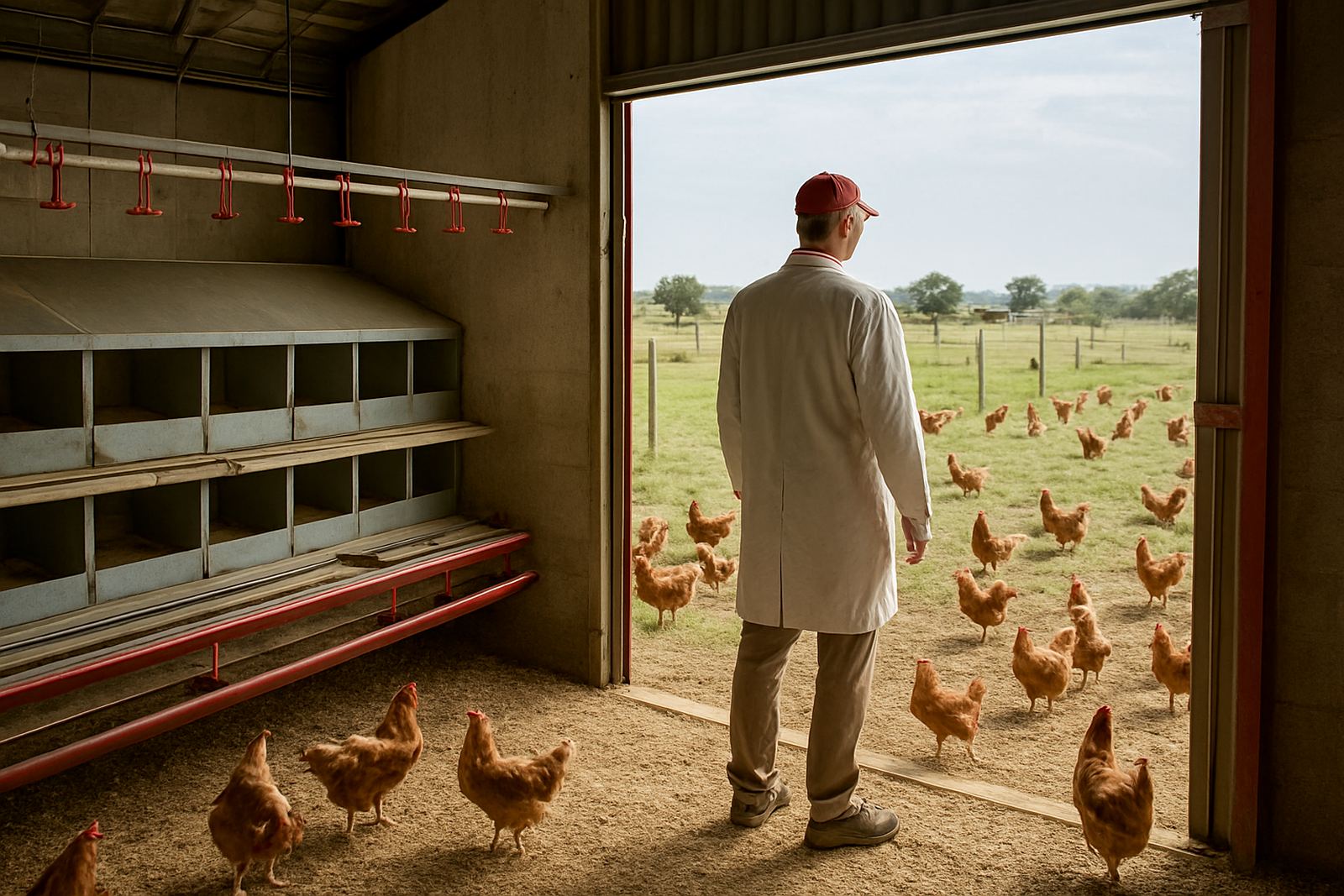
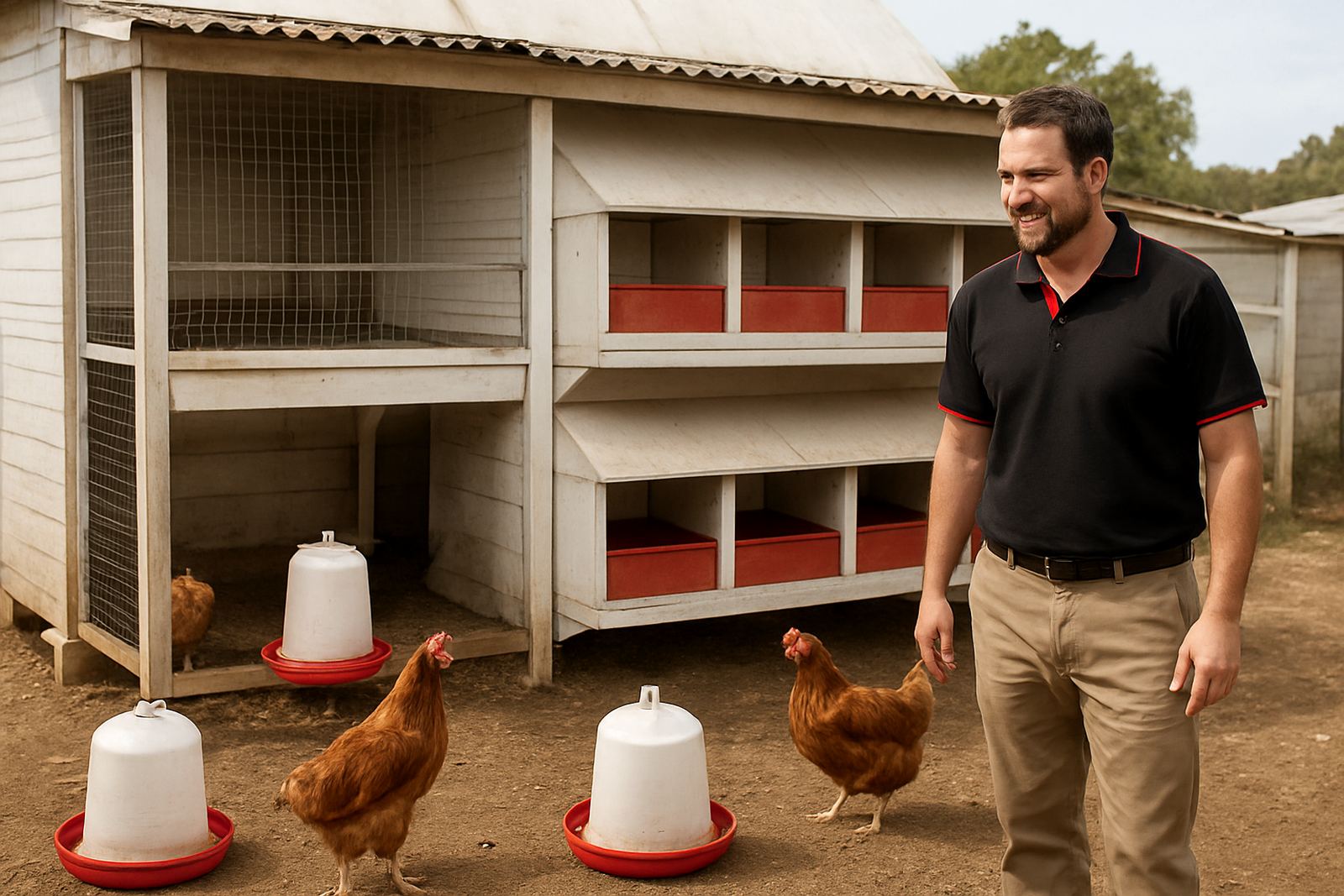
Common equipment we supply and plan around includes laying-hen style cage systems where required for breeder related work, though most contract grower houses use open floor systems with drinkers, feeders, brooders for start-up, and practical isolation or storage points for tools and chemicals. For sites tied to processing, we also look at loading areas and simple abattoir-related handling where needed, especially if birds are moved on tight schedules.
- Feeders and feed lines sized to bird age and house length
- Drinkers with pressure control and easy flushing points
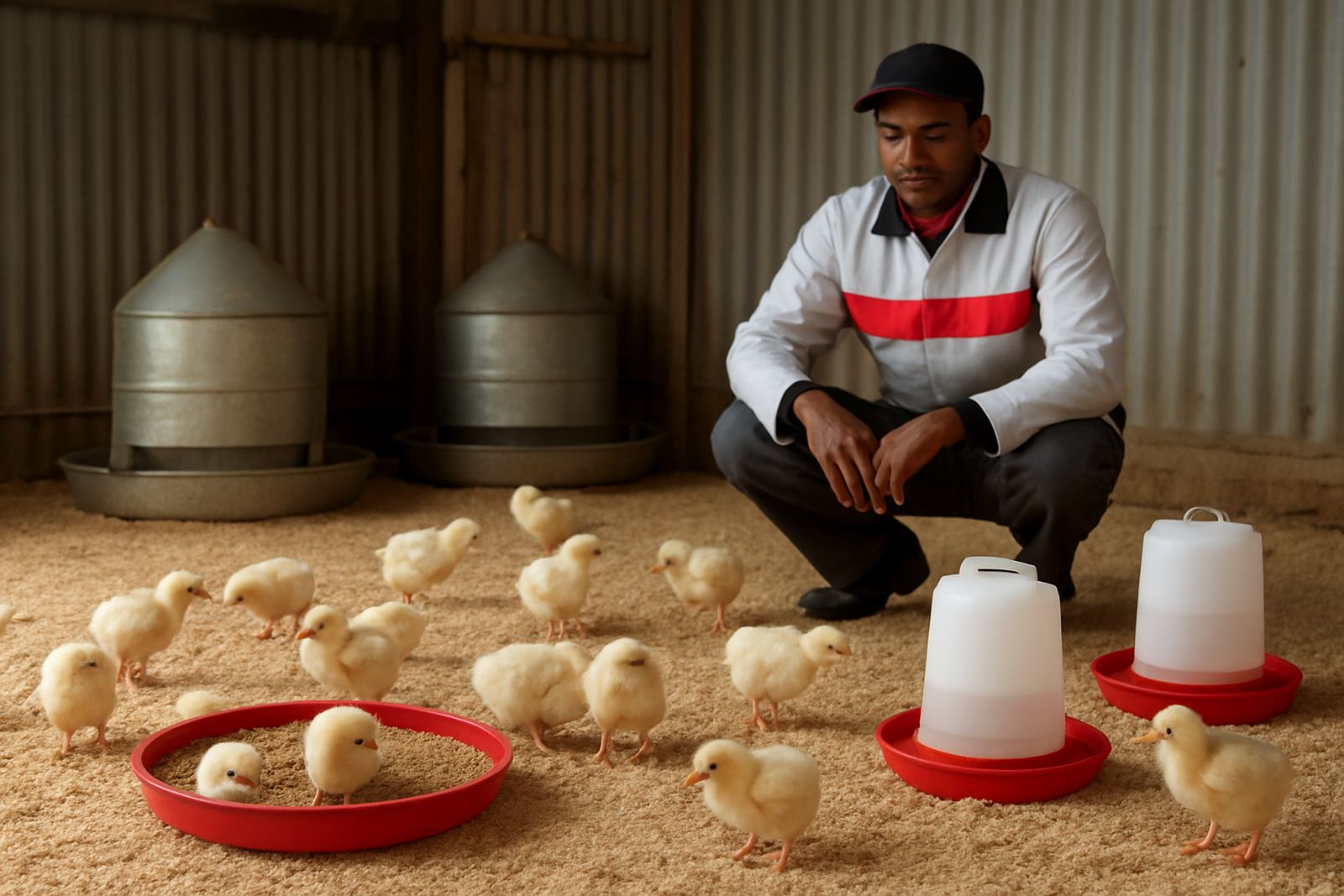
- Brooders or heating for the brooding phase
- Fans, curtains or ventilation aids where the structure calls for it
- Disinfection points, footbaths and wash-down access
Layout planning that saves money later
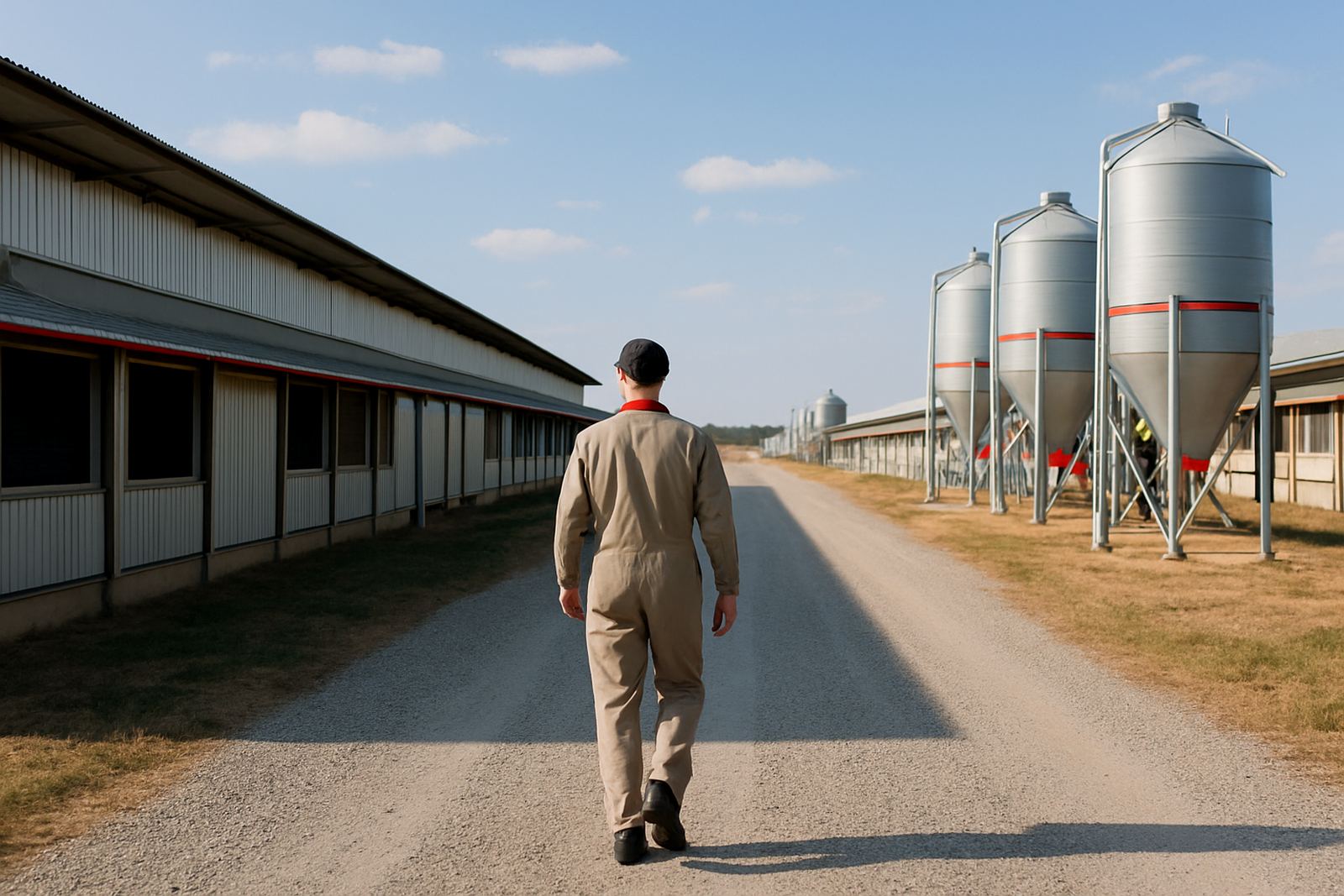
A good layout is usually cheaper than buying extra gear later. We start with the house size, side wall height, floor level, access points, power supply and water source. Then we place the main lines so staff can move through the house without stepping over hoses or blocking access during feeding and checks.
For contract growers, the biggest planning issue is often working space around the ends of the house. If there is no room for trolleys, crates, tools or maintenance access, the site slows down at the exact time it should be moving faster. We also check for drainage, especially on sites that flood after rain or have poor municipal run-off. A small slope problem can become a disease problem.
- Keep feed and water lines straight and serviceable
- Leave clear catch and loading passages at both ends if possible
- Plan electrical points away from wash-down areas
- Allow for spares storage and safe chemical handling
Common mistakes on contract grower sites
We are often called in after a grower has already spent money on the wrong items. The most common mistake is under-sizing equipment for the bird count or buying separate parts that do not work together. Another issue is using a layout that looks fine on paper but is awkward for staff, especially during brooding or catching when time is tight.
Power back-up is another one. On the Highveld, a few hours without power can upset temperatures, water pressure and lighting. If the site has no backup, the grower is left chasing losses. Poor training is just as risky, because even good equipment can underperform when the crew is not shown how to start, clean and adjust it properly. Sometimes the problem is simple, like a line set too low or a drinker pressure setting that was never checked.
- Buying to price instead of to bird numbers
- Ignoring service access and cleaning space
- Skipping backup power or water storage
- Not training operators before the first placement
Budget ranges for growers in Rand
Contract grower budgets vary a lot, but there are still useful ranges. A modest house upgrade with drinkers, feeders, small heating support and basic fittings may start around R120,000 to R250,000. A more complete grow-out setup with better ventilation, more line equipment and stronger installation support often lands between R350,000 and R900,000 per house.
For larger sites or new projects with multiple houses, backup systems, commissioning and staff training, budgets can move into the R1.2 million to R2.5 million range or higher. That depends on house length, bird capacity, utility connections and the level of processing or handling support needed. We help clients stage the spend where it makes sense, instead of forcing everything into one purchase.
It is usually better to budget properly at the start than to patch the site every cycle. Small faults cost more over time, and when birds are tied to contract deadlines, delays become very expensive.
How we support contract growers across South Africa
From our Jet Park base in Boksburg, we work with contract growers in Gauteng, Mpumalanga, Limpopo, North West, Free State and KwaZulu-Natal. Our team handles site planning, equipment selection, house layouts, installation supervision, commissioning, operator training, maintenance programmes, spares supply, processing room fitout and expansion upgrades.
John Frederick Marshall leads the business, with support from Lerato Mokoena, Sibusiso Dlamini, Anika van der Merwe, Thabo Nkosi, Nadine Jacobs and Musa Cele. That mix matters on grower jobs because one site may need layout advice, while another needs urgent spares and service after a power issue or a water line fault.
If you are setting up a new contract house or trying to improve an existing one, we can help you match the equipment to the target output and handling rules. A well planned grower site does not need to be fancy, it just needs to work every cycle.