Broiler grow-out starts with a workable house plan
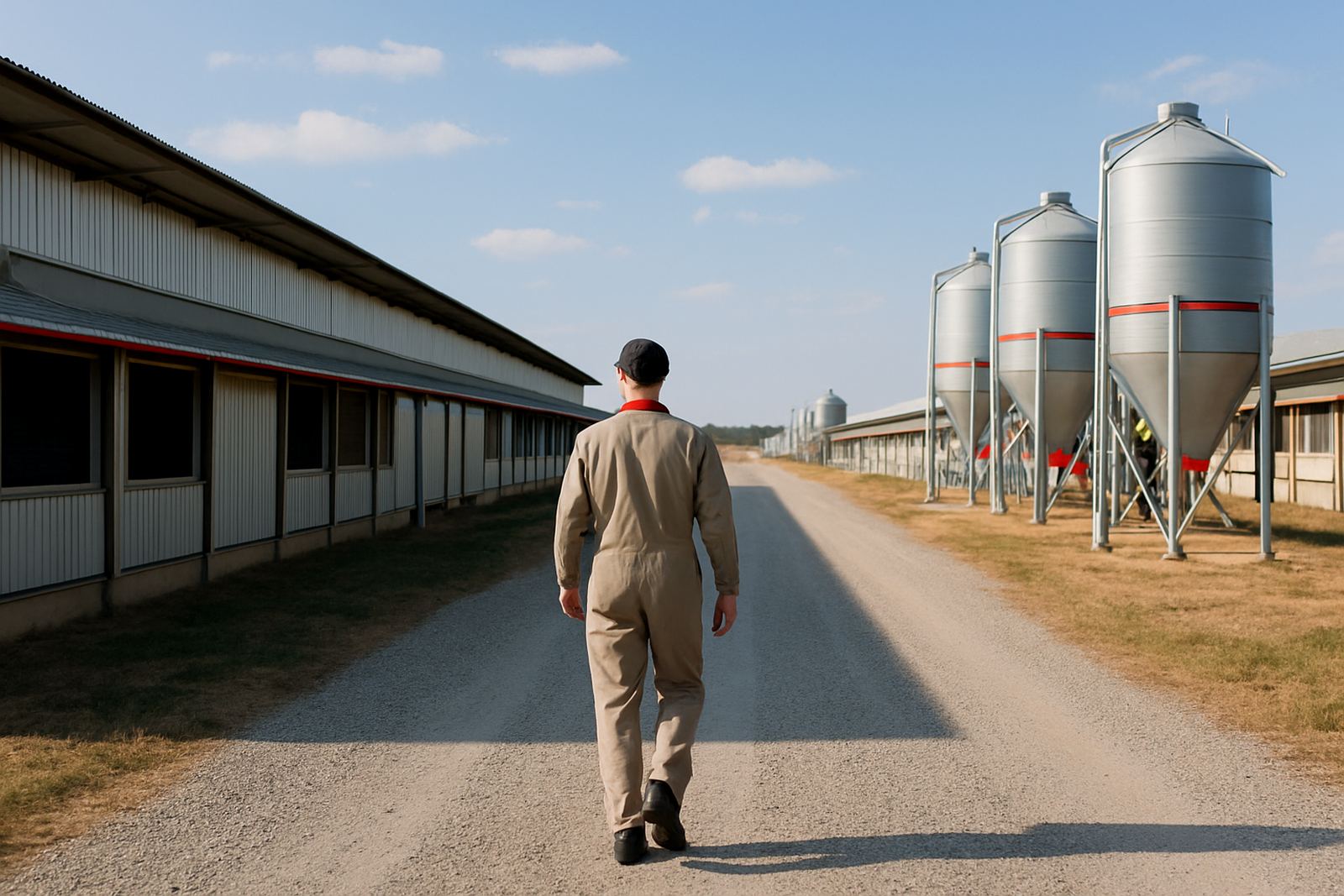
A good broiler house is not only about fitting birds into a building. It starts with site planning, the house orientation, the amount of air movement you can get in summer, and how you will manage water, power and access for feed and catch trucks. In Gauteng and the hotter inland provinces, heat build-up can punish a poor layout. On the coast, humidity and corrosion bring their own problems, so the materials and fixing methods matter as much as the equipment list.
For new projects, we look at the full site first. That means road access, drainage, slope, power supply, borehole or municipal water, and where a generator or backup system can sit if load-shedding is part of daily life. We also check the space you need for biosecurity, footbaths, dead bird handling, and a safe route for litter removal and end-of-flock catching. If the house is too tight on one side, or the ridge and side vents are not balanced, the flock pays for it later.
Typical equipment set for meat bird production
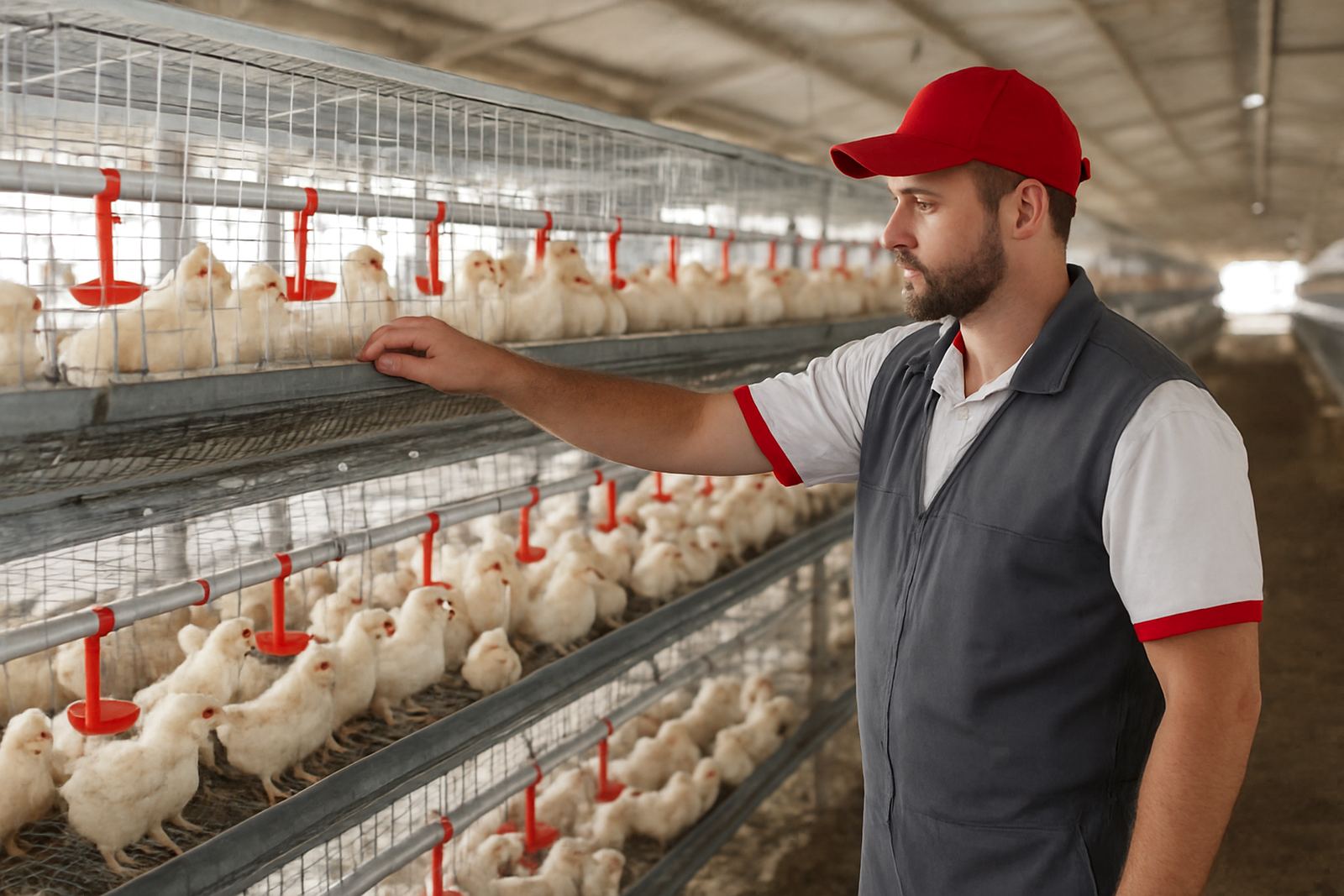
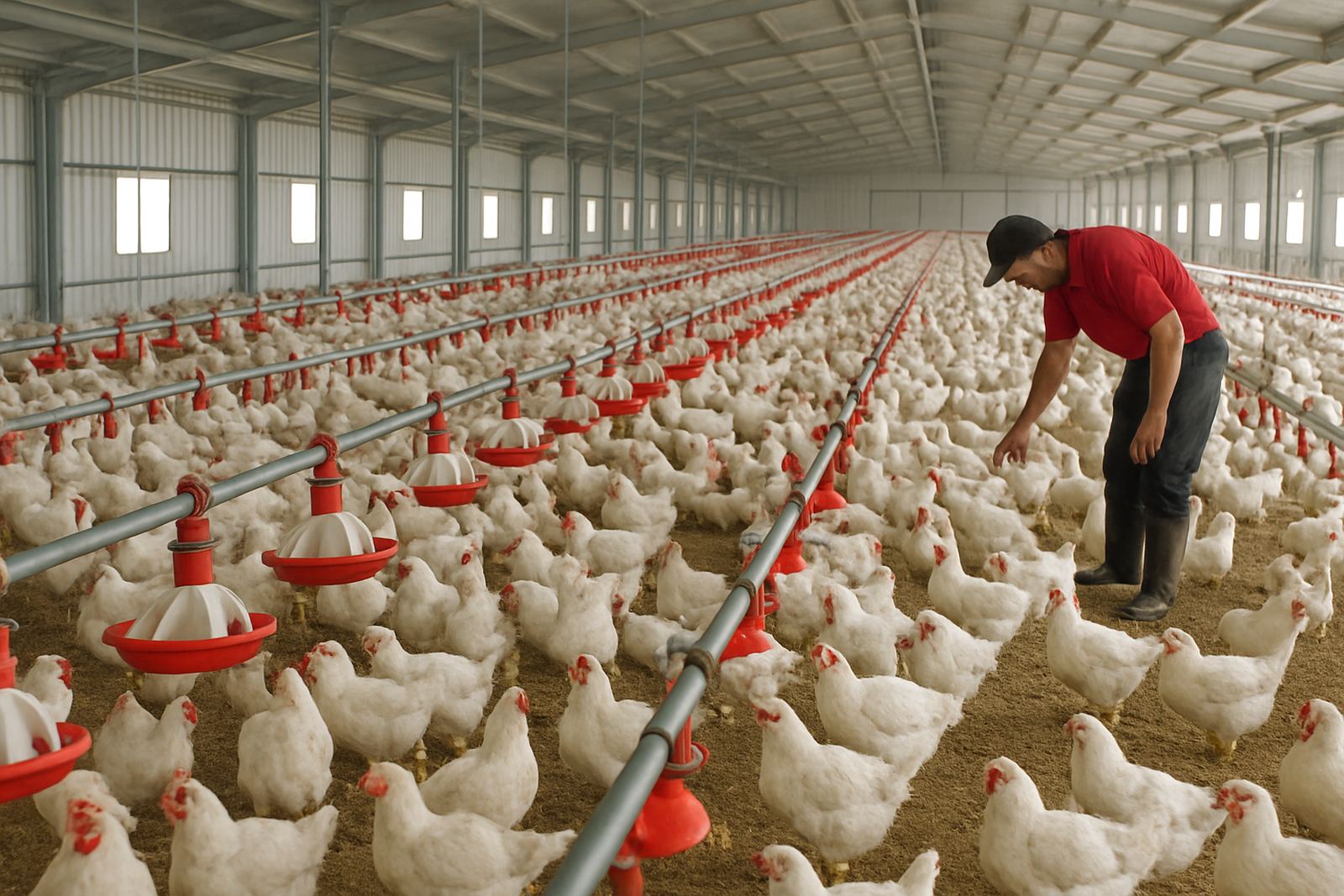
Broiler equipment depends on the house type, bird numbers and the level of automation you want. A basic grow-out house may run with manual feeding and drinker lines, while larger units use automated feeding, nipple drinking, control gear and better alarm cover. The right mix keeps labour under control and helps you hold uniform growth across the house.
- Feeder systems sized for the bird count and house width
- Drinker lines with nipple drinkers and height adjustment
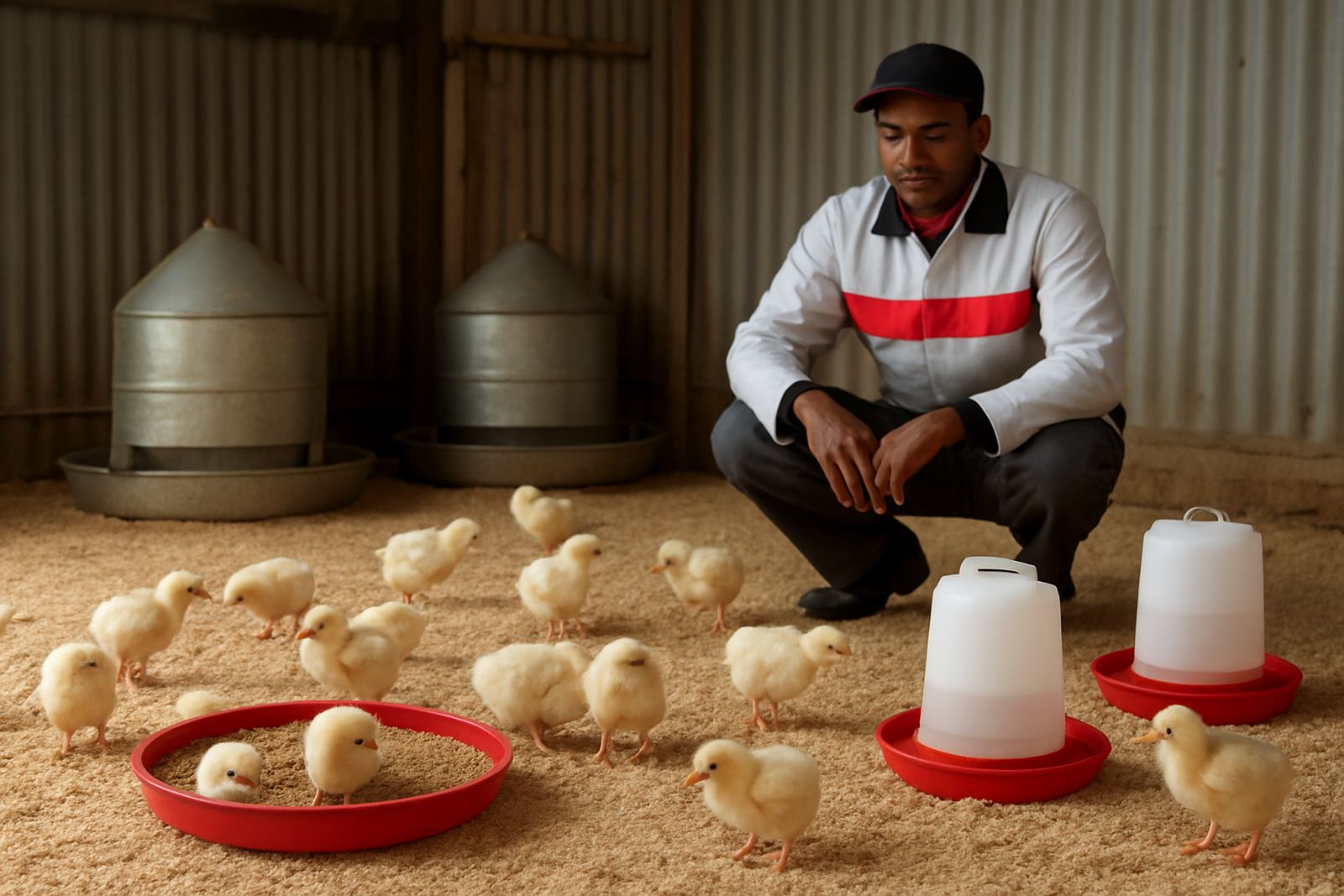
- Brooding equipment for the first 7 to 14 days
- Ventilation fittings, inlet control and fans where required
- Environmental control panels, sensors and alarms
- Weighing and monitoring tools for bird checks
- House heaters or gas brooders depending on the setup
For chicks, the brooding zone must give enough warmth without wasting fuel. Water pressure must be set properly from day one, otherwise you get wet litter, dirty birds and uneven growth. Feed should be reachable without crowding, and the line height must be easy for staff to adjust as birds grow. Small faults here, like a line sitting 20 mm too low, can affect the whole batch.
Layout advice that saves feed, power and labour
Broiler houses work best when the daily walk-through is simple. Staff should be able to check water, feed, temperature and mortalities without crossing the house ten times. We often recommend a clear route from the entry point to the brooding end, with service points placed where they can be reached fast during power interruptions or weather changes.
Good layout also helps with cleaning and turnaround between flocks. Leave enough space for washing, drying and litter removal, and think about where waste water goes so it does not flow back into the house. On farms near municipal areas, drainage and discharge must be handled carefully to avoid complaints and fines. If you are building in stages, it is better to allow for the next house now than try to squeeze it in later.
- Plan for generator access and safe fuel storage
- Use corrosion resistant fittings in humid or coastal areas
- Keep water storage high enough for stable pressure
- Allow service space around control panels and motors
- Separate clean and dirty traffic routes where possible
Common mistakes on broiler projects
The most common mistake is buying equipment before the house is properly measured and checked. A line that is too long, or a feeder system that does not suit the roof height, creates problems that are costly to fix. Another issue is under-sizing the water system. If pressure falls when everyone draws water at the same time, birds slow down and the flock never quite catches up.
We also see houses with poor ventilation planning, especially where owners expect fans to cover for a weak natural airflow pattern. Fans help, but they do not replace a house that has been laid out badly. Poor training is another one. Staff must know how to set brooding temperatures, adjust drinker height, read flock weight trends and spot wet litter early. A short training session on day one is not enough.
Sometimes the budget is spent on the visible items and not on the parts that keep the system running. Switchgear, spare nipples, valves, sensors and emergency basics should be part of the order from the start. Missing these items can stop a house for hours, or longer if spares have to be sourced from far away.
Budget ranges for broiler houses in Rand
Costs vary by house size, automation level, the condition of existing structures and how much electrical and water work is needed. For a small to medium broiler setup, a basic line equipment package can start in the low hundreds of thousands of Rand per house. A more automated system, with better control gear and more complete brooding support, can move into the mid hundreds of thousands or more. Full turnkey projects, including planning, supply, installation supervision and commissioning, usually sit much higher because the house structure, utilities and support systems are included.
In practice, most owners should budget for more than just cages or lines. Allow for house preparation, concrete work, water storage, wiring, controls, backup power and training. It is safer to build a realistic budget from the start than to keep adding items later. If you are expanding an existing farm, we can phase the work so one house stays productive while the next is being fitted out.
- Basic equipment package: from the low hundreds of thousands per house
- Mid-level automated setup: often several hundred thousand Rand per house
- Turnkey project: depends on house count, utilities and civil work
Support from first placement to harvest
Our team works across Gauteng, Mpumalanga, Limpopo, North West, Free State and KwaZulu-Natal from the Jet Park, Boksburg base. John Frederick Marshall leads the business, with support from Lerato Mokoena, Sibusiso Dlamini, Anika van der Merwe, Thabo Nkosi, Nadine Jacobs and Musa Cele. That means you deal with people who understand projects, spares, training and after-sales support, not just a one-time supply.
For broiler farms, we can help with site planning, equipment selection, house layouts, installation supervision, commissioning, operator training, maintenance programmes and spares supply. If your site has uneven service, high summer heat, coastal humidity or access limits, we can work through the details before orders are placed. The best time to fix a problem is during planning, not after the flock is inside.
Email info@johnfmarshall.co.za when you want a practical setup for a new broiler house or an upgrade to an existing farm.