What a scalding tank does in the line
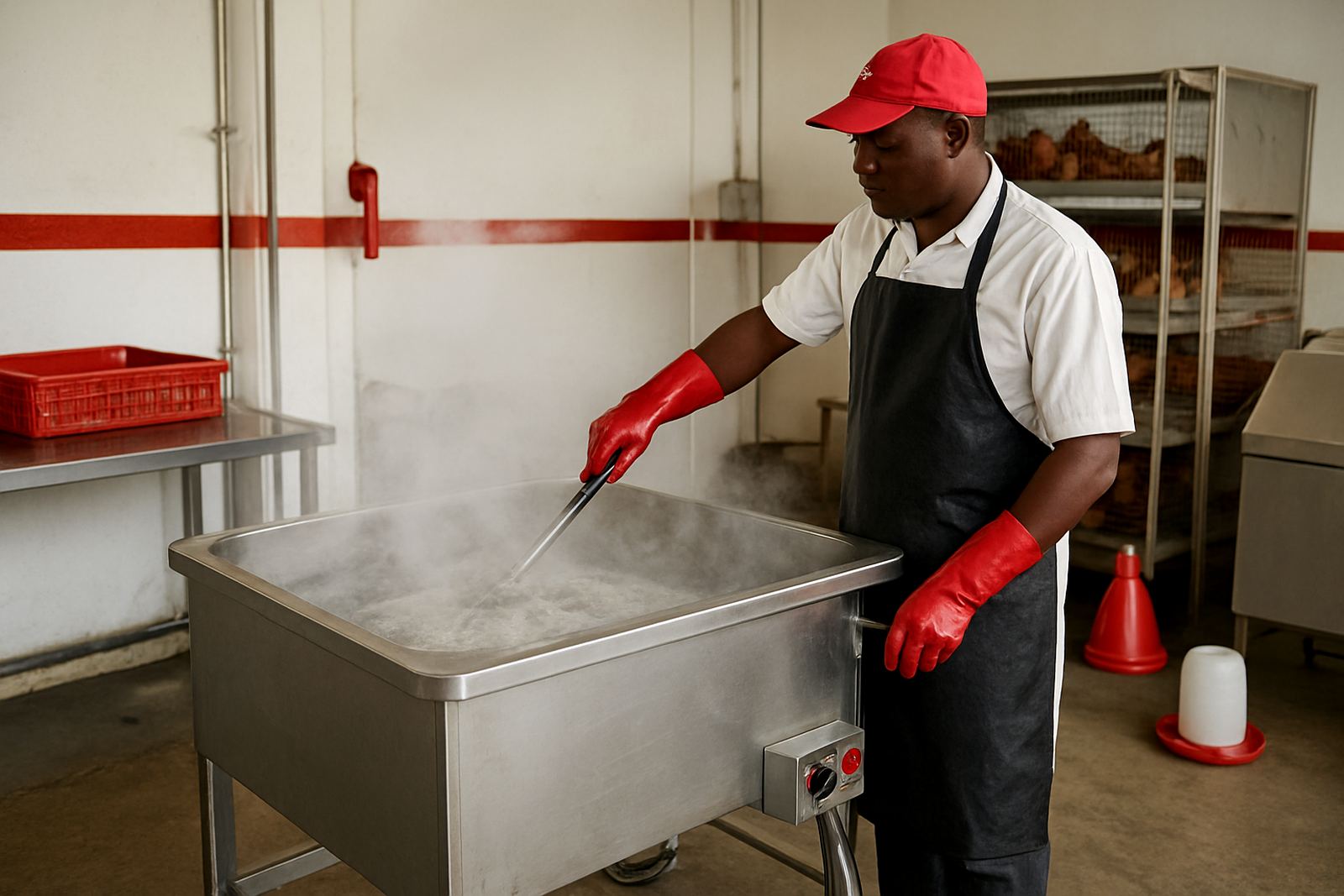
A scalding tank holds heated water at a controlled temperature so birds can be immersed briefly before plucking. The aim is simple: loosen the feather follicles evenly, keep skin damage down and help the plucker do a cleaner job. If the water is too cool, feathers stay tight and plucking slows. If it is too hot, skin tears and carcass quality drops.
For poultry operations in South Africa, that temperature control matters in hot summers, cold Highveld mornings and during load-shedding when equipment cycles on and off. A proper tank gives you a stable bath, correct depth and a drainage point that makes wash-down faster at the end of the shift.
- Used after slaughter and before mechanical or hand plucking
- Suitable for chickens, larger table birds and mixed batches where process control is needed
- Helps improve throughput and reduce rework at the plucking stage
Tank sizes, heating options and layout choices
We supply heated scalding tanks in different sizes to suit a backyard processing room, a growing farm or a full abattoir set-up. Smaller tanks are common where batch sizes change through the day. Larger units suit a more regular kill flow and can be positioned close to the plucking area to reduce handling time.
Common options include insulated bodies, stainless steel contact parts, lid covers, temperature gauges, basket or cradle supports and stand-mounted or floor-set layouts. Some operators want a single-bird tank for tight spaces, while others need a longer tank with more water volume for higher turn-over. The right size depends on bird count per hour, available floor space and how the carcasses move from stun to bleed to scald to pluck.
- Small batch units for farm processing rooms
- Medium tanks for contract or on-site poultry plants
- Custom length and depth where house layout requires a specific footprint
- Options for drain valve placement and access panels for cleaning
Power, gas and installation needs on site
Heating can be arranged to suit the site power supply and daily operating pattern. In some rooms an electric heat source is practical, especially where the tank runs for set batches and power is stable. Where electricity supply is limited or operating costs need to be managed, a gas-heated setup may be preferred. The final choice depends on local supply, available amperage and how often the tank must recover temperature between batches.
Installation should allow safe access around the tank, good floor drainage and a clear wash-down route. In coastal areas from KwaZulu-Natal to parts of the Eastern corridor, corrosion resistance matters because humidity is unforgiving. In Gauteng and the Free State, room temperature swings can affect heat-up times, so insulation and lid fit become important. We also look at water inlet pressure, outlet drain direction and whether the unit will sit in a processing room, under cover or in a dedicated abattoir bay.
- Electrical supply assessment before ordering
- Gas bottle or reticulation arrangement where gas heating is selected
- Floor drainage, slip control and splash management around the tank
- Positioning for smooth movement into the plucking stage
Where scalding tanks suit best
These tanks are used by poultry farms, small abattoirs, rural processors and expansion projects that need a dependable scalding stage before plucking. They suit new turnkey poultry projects as well as upgrades to older rooms that still have useful buildings but need better process flow. If your operation runs in Mpumalanga, Limpopo, North West, Free State or KwaZulu-Natal, we can match the tank to the site conditions and the level of production you are planning for.
They are also useful where local municipal rules call for contained wash-down water, proper hygiene zoning and a clear wet area. A well placed scalding tank can reduce cross-traffic in a cramped processing room and help the team keep the workflow cleaner. In practise that means less backtracking, fewer wet floors and a better pace during the kill run.
Care, cleaning and service intervals
Like any wet-area equipment, a scalding tank needs regular cleaning and a proper service routine. Water that sits too long can build scale and residue, and any residue around the heating element or gas burner area can affect performance. Daily wash-down, scheduled descaling and a quick check of temperature readings should be part of the operating routine. It’s simple work, but it saves time later.
Our service approach covers preventative maintenance, spares supply and operator training so the tank stays usable through busy periods. We also advise on cleaning chemicals that are suitable for stainless steel and coated surfaces, because the wrong product can mark the finish or shorten component life. If a tank starts recovering heat too slowly, the issue is often not the tank body itself but power supply, thermostat settings or scale on the heat transfer surfaces.
- Empty and rinse after each production run
- Check thermostat, burner and heating controls weekly
- Inspect seals, valves and drain fittings monthly
- Book servicing before peak slaughter periods or holiday rushes
What to confirm before you order
Before we quote, it helps to have a few practical details ready. We need to know bird type, expected birds per hour, whether the room uses electricity or gas, available floor space and the direction you want the drain to run. If the tank must fit into an existing room, a simple layout sketch or site photo can save time and avoid rework.
Also confirm whether you want a manual batch tank or one that will feed a more regular line, and whether the area is under roof or fully enclosed. If the site is in a high-humidity coastal zone or a place with frequent supply interruptions, we can advise on insulation, covers and control gear that will cope better. The more exact the details, the better the fit, and the less chance of making expensive changes later.
- Bird species and expected batch size
- Power supply or gas availability
- Room dimensions, drainage points and access doors
- Preferred finish, controls and any custom brackets or stands
Key facts
| Product type | Heated poultry scalding tank for pre-pluck processing |
|---|---|
| Typical use | Loosening feathers before manual or mechanical plucking |
| Size range | Small batch units to custom larger tanks for poultry rooms |
| Heating options | Electric or gas heated, depending on site supply |
| Materials | Stainless steel contact surfaces with corrosion-aware components |
| Services available | Site planning, installation supervision, commissioning, training and maintenance |