Built for hatchery movement, not just storage
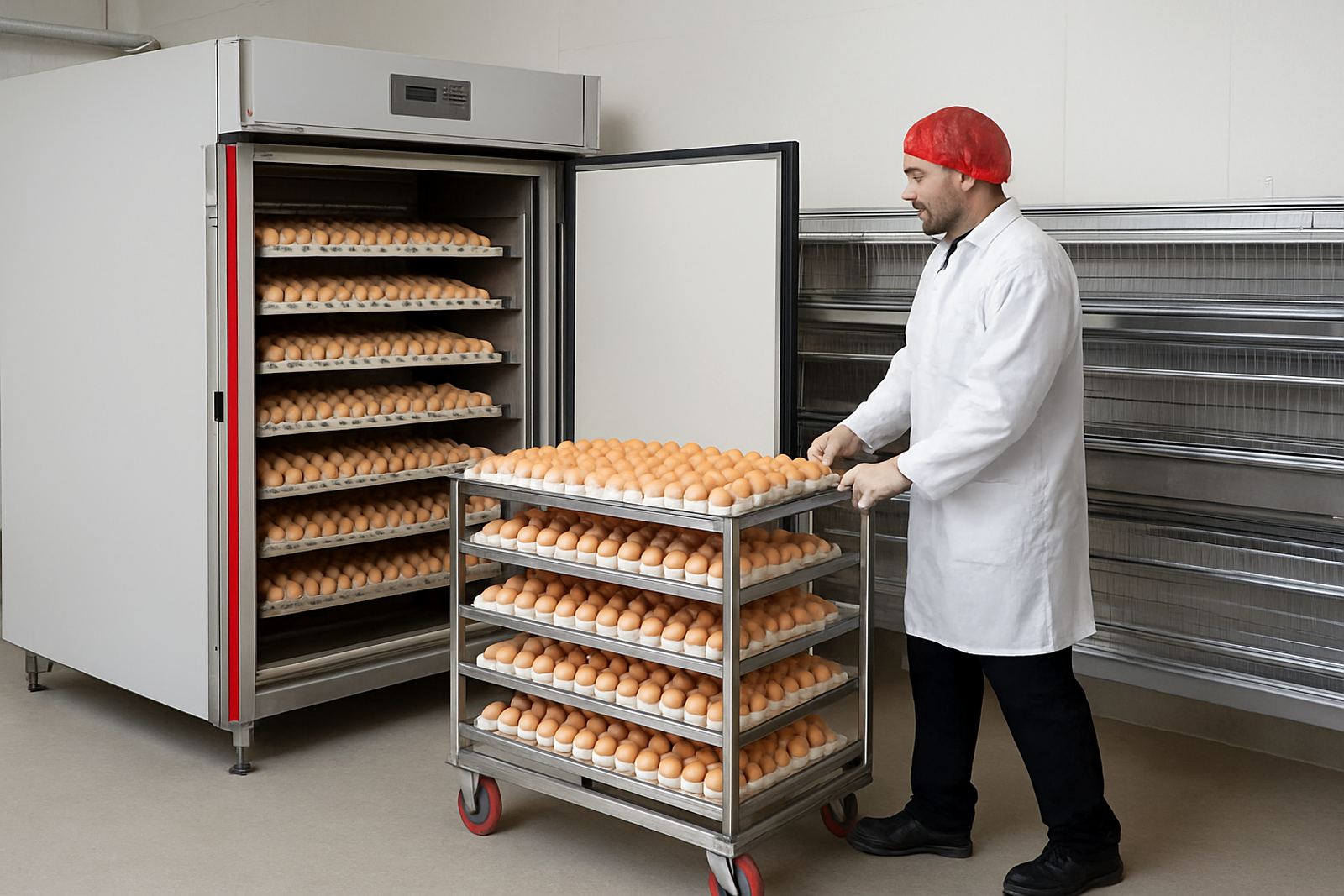
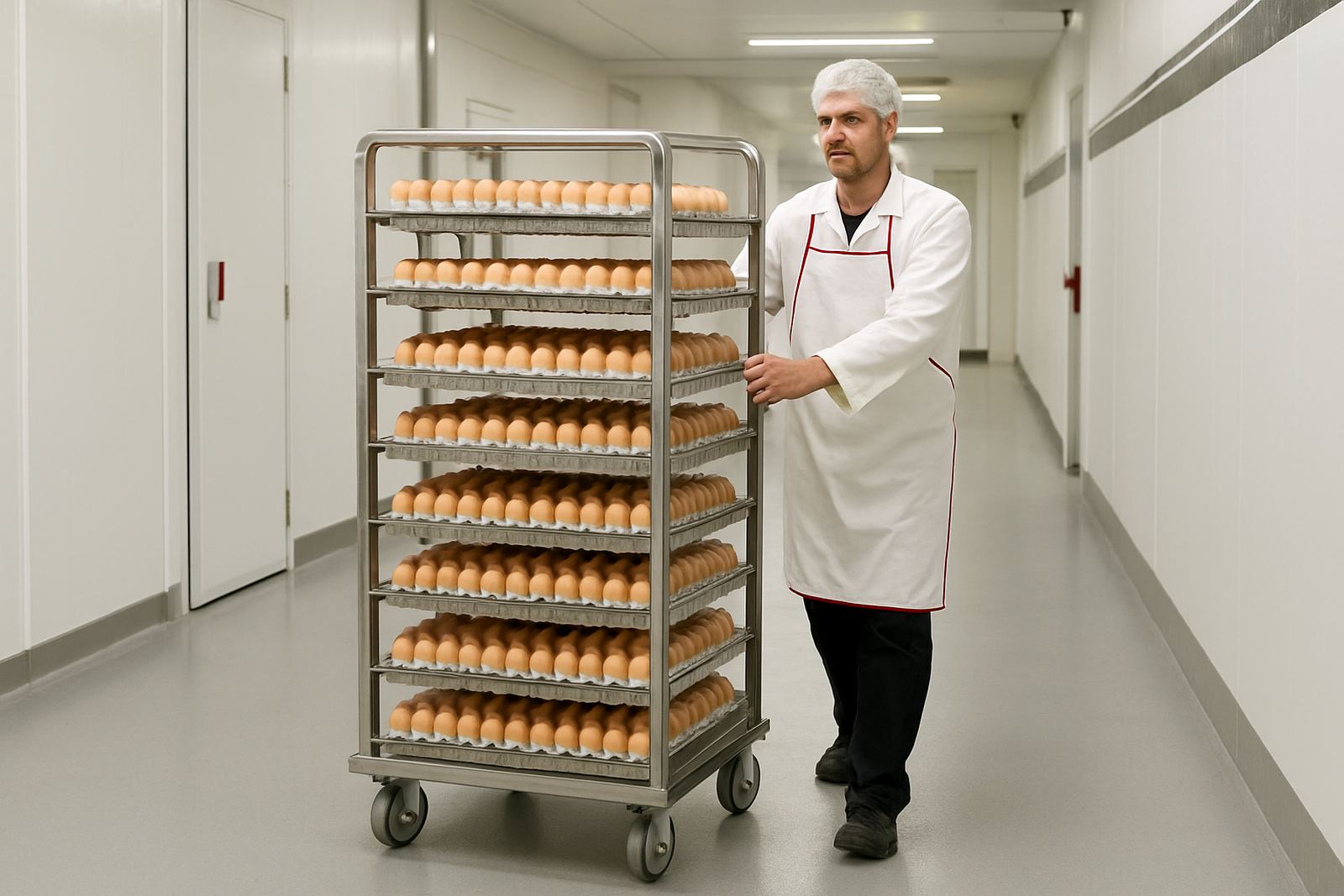
Our egg trolleys are made for moving incubation trays safely through hatchery areas, from egg receiving to setter rooms and transfer points. The frame, runners and wheel layout are chosen so staff can push a full trolley along smooth floors without fighting sway or tray movement, even when the day is busy and the generator has kicked in during load-shedding.
These trolleys are used in commercial hatcheries, breeder farms and poultry project sites where eggs must be handled carefully and kept in order. They suit farms near Boksburg, Middelburg, Polokwane, Rustenburg and Pietermaritzburg where floor surfaces, humidity and cleaning routines can vary quite a bit. If you are moving 1 000 eggs or 10 000 eggs in a shift, the trolley must keep pace and still stay easy to clean.
- Designed for incubation trays and hatchery handling routes
- Helps reduce tray-to-tray contact and manual carrying
- Suitable for both new hatcheries and upgrade work
- Can be matched to your tray size and working aisle width
Sizes, tray counts and wheel options
Egg trolley sizes depend on the tray format you use and how many levels you want to carry. We work with common hatchery tray configurations and can match the trolley frame to your process, whether you need a narrow unit for tight passageways or a larger trolley for higher output. The right choice depends on tray footprint, loaded weight and how the trolley turns in your rooms.
In practical terms, a trolley should roll straight, not twist under load, and should be easy to park beside setters, graders or packing benches. For sites with slightly uneven floors or expansion joints, the wheel type matters just as much as the frame. Coastal humidity, wash-down chemicals and rough handling also affect service life, so the finish and wheel material must suit the site.
- Single-size or multi-size tray compatibility depending on your setup
- Fixed or swivel castors for straight-line travel or tighter turning
- Brake wheels available for safe parking on smooth floors
- Heavy-duty frames for frequent daily movement
Where egg trolleys suit best in the hatchery
Egg trolleys work best anywhere trays need to move in sequence, especially where staff are carrying eggs between clean zones. They are useful in setter areas, candling rooms, transfer rooms, hatch transport points and tray return routes. They also help when a hatchery is designed with separate clean and dirty paths, which is often needed to keep traffic controlled and comply with good poultry hygiene practice.
For turnkey poultry projects, we often plan the trolley route before finalising the room layout. That makes it easier to set aisle widths, door positions and turning space correctly. A trolley that is too wide for the corridor becomes a daily problem, and if the wheels are not right, staff end up lifting instead of rolling. That is the kind of thing that slows a site down, proper quickly.
- Hatcheries handling setters, hatchers and transfer operations
- Breeder farms moving eggs from collection to cool rooms
- Sites needing separate clean and soiled traffic routes
- Projects where labour saving and tray control matter
Installation, room fit and power needs
Egg trolleys do not need power or gas, which makes them simple to add to a hatchery or poultry house project. What they do need is the right floor finish, door width and turning space. If your site is being built or upgraded, we check access routes, thresholds and wash-down flow so the trolley can move without snagging on lips, drains or tight corners.
When trolleys form part of a bigger hatchery fitout, we also look at how they fit with equipment like incubators, brooders, feeders, drinkers and processing room layouts. The aim is to keep the work moving in one direction with less backtracking. If the floor has slope or water run-off, parking points and brakes should be planned early, not left for later when the room is already finished.
- No power or gas connection required
- Needs level access and proper aisle sizing
- Works well in new builds and retrofit projects
- Can be included in site planning and installation supervision
Cleaning, servicing and day to day care
Because hatchery areas are washed and disinfected often, egg trolleys must be easy to rinse and inspect. Frames should be checked for coating wear, loose fasteners and wheel damage. In humid areas, especially along the KwaZulu-Natal coast, rust spots and seized castors can show up quickly if the trolley is not cared for. A simple cleaning routine after each batch helps keep the trolley usable for years.
We recommend checking wheel bearings, brakes and tray supports during routine maintenance visits. If the trolley is used near a brooder or warm holding area, heat can also affect tyres and plastics over time. Keeping spares on hand for wheels, bolts and tray supports reduces downtime when a unit needs attention. It is a small job to fix early, but a bigger issue if ignored.
- Wash, dry and inspect after regular use
- Check castors, bearings and brakes on a schedule
- Keep spares for high-wear items
- Remove damage early to avoid tray losses
What to check before you order
Before ordering egg trolleys, it helps to confirm the tray size, loaded weight and number of trays per trolley. You should also measure door openings, corridor widths and any tight turns between rooms. If the trolley will move over drains, ramps or floor joints, tell us up front so the wheel set can be matched to the site. These details matter more than people think, especially when a hatchery is running with limited staff.
We also ask about your cleaning method, storage space and whether the trolley will stay indoors or move between buildings. If the project is part of a new hatchery or an expansion upgrade, we can align the trolley supply with site planning, equipment selection, installation supervision, commissioning and operator training. That way the trolleys arrive ready to fit the workflow, not just sit in the way.
- Tray dimensions and tray count per trolley
- Door widths, aisle widths and turning space
- Floor condition, slope and wash-down method
- Preferred wheel type, brakes and finish
Key facts
| Product type | Movable egg trolley for hatchery tray handling |
|---|---|
| Typical tray compatibility | Matched to incubation tray size and workflow |
| Frame finish | Wash-friendly metal finish for indoor poultry use |
| Wheel options | Fixed, swivel or brake castors depending on route |
| Power or gas | Not required |
| Best use | Setter rooms, transfer areas, hatchery routes and breeder farms |