What a pan feeding line does in a poultry house
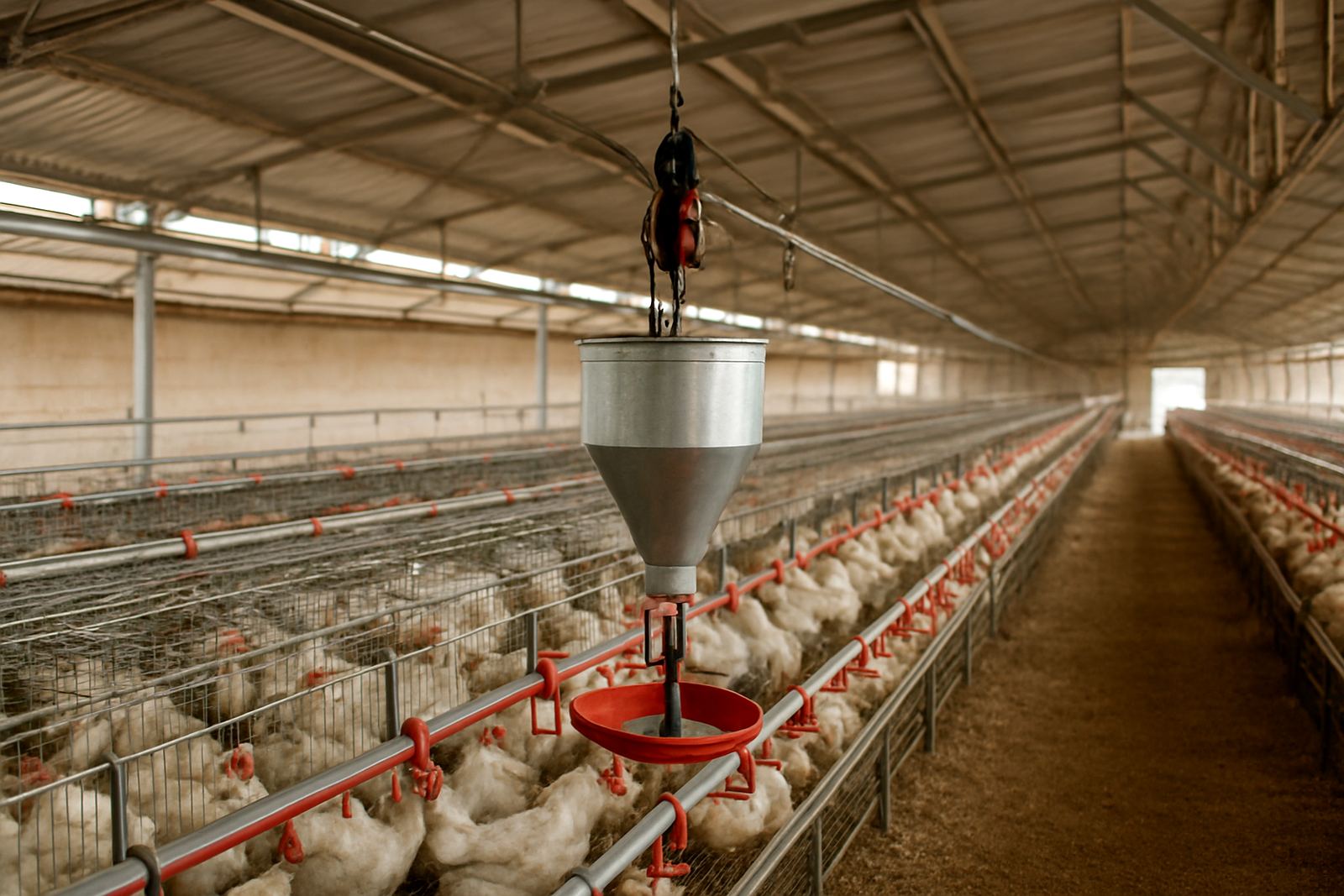
A pan feeding line moves feed along a house on an automated auger system and drops it into evenly spaced pans. The aim is simple: every bird gets access to feed without long walks, heavy manual labour or repeated trough filling through the day. In a well set up house, the line helps keep feed distribution even from end to end, which matters when stocking density is tight and birds need a steady start.
These systems are commonly used in floor-reared broiler houses and in some rearing setups where birds are grown in batches. They suit houses that are long enough to justify automation and where labour saving, feed control and cleaner house management are important. For farms dealing with load-shedding, the system can be linked to backup power so feeding does not stop when the mains do.
Line sizes, pan spacing and control options
Pan feeding lines are selected to suit the house length, bird type and feeding programme. The main choices are the number of lines, pan spacing, auger diameter and drive arrangement. A typical setup may use 1.5 m to 3 m pan spacing depending on age group and bird access, with line lengths matched to the full house bay, often from 30 m to 150 m or more per line.
In most commercial houses, systems are built around a central feed supply hopper, a tube line with auger, suspension points and pan assemblies with height adjustment. Some houses use one line, while larger houses may use several lines across the width. Control can be manual or linked to automatic timers and house controllers so feeding cycles run at set times.
- House length matched to line length and feed delivery points
- Pan depth and lip height suited to bird age and feed type
- Auger size selected for feed volume and transfer distance
- Single or multiple lines depending on house width and stocking rate
- Timer or controller integration for set feed runs
Where pan feeding works best in South African conditions
Pan feeding lines work best in larger poultry houses where the owner wants controlled feed access and lower daily labour. They are a practical choice for broiler growers in Gauteng, Mpumalanga, Limpopo, North West, Free State and KwaZulu-Natal, including areas where long houses and high summer temperatures make manual feeding hard to manage. Coastal humidity can also make feed handling messier, so a closed line system helps keep feed in the pans and off the floor.
These systems are often fitted into new builds, but they can also be added during upgrades if the house structure is sound. They suit houses with proper sidewall ventilation, good floor levels and enough roof height to allow line clearance above litter and equipment. In older houses, planning is important because uneven floors and weak roof steel can affect hanging points and the final drop height.
- Broiler houses with regular batch turnaround
- Rearing houses needing even feed access across long rows
- Sites aiming to reduce manual labour and feed spillage
- Operations that need better control during load-shedding periods
- Farms planning phased expansion one house at a time
Installation, power supply and backup planning
Installation starts with house measurements, wall positions, service routes and feed storage layout. Our team plans the line spacing, suspension points and drive end position before any fittings go in. Proper alignment matters, because a line that is out by a few millimetres over a long run can wear faster and give uneven feed drop. We also check access for maintenance and whether the feed bin, hopper or transfer system will sit where it can be serviced safely.
Power needs depend on the number of lines, house length and control setup, but the motors are generally suited to standard agricultural electrical supply when installed correctly. On sites that experience load-shedding, backup power should be included in the overall house design. If a generator or inverter system is used, the feeding circuit must be mapped with the rest of the house services so switching is orderly and the feed schedule stays on track.
Gas is not normally required for the pan feeding line itself, though many poultry houses run heating and feed systems side by side. When that happens, the layout must keep gas heaters, electrical feeds and hanging points clear of each other. Good separation reduces heat stress on cables and makes service work easier later on.
Care, cleaning and service intervals that keep the line working
A pan feeding line needs routine care to keep wear under control and feed delivery steady. The auger, drive end, pans, drop tubes and suspension cables should be checked between batches and again after any house washdown. Dust build-up, bent pans and stretched components can lead to poor feed flow or uneven bird access, so small issues should be handled early before they affect the whole house.
In houses with heavy use, we recommend a planned maintenance programme rather than waiting for a breakdown. That includes checking motor mounting, gearbox condition, tension settings and pan height adjustment. Parts exposed to moisture or coastal air may need closer attention, especially where washdown water remains in the house for longer than expected. If a spare motor, auger section or pan set is kept on site, downtime is usually shorter.
- Clean pans and lines between batches
- Inspect auger wear and drive alignment regularly
- Check hanging points and cables after washdown
- Keep spare wear parts on site for key houses
- Test timers and controllers after power interruptions
What to confirm before you order a pan feeding line
Before ordering, it helps to confirm the house size, bird type, target stocking density and feeding programme. We also need to know whether the line is for a new house, an upgrade or a replacement in an existing building. The more accurate the house measurements, the better the final layout will be, because line length, suspension points and feed capacity all depend on those figures.
Useful ordering checks include the feed storage position, available power, controller type, ceiling height and any obstructions such as pillars, fans or service pipes. If you want the line to work with future expansion, say so early. That way the plan can allow for extra lines or longer runs without reworking the house later on. Our Gauteng base in Jet Park, Boksburg supports projects across South Africa, from first layout through to training. If you are unsure about any dimension, send it through and we will work it out with you, lekker straightforward.
- House length, width and roof height
- Bird type, age group and target bird count
- Feed type and expected feed flow rate
- Power availability and backup supply plan
- Need for new build, upgrade or replacement installation
Key facts
| System type | Automated pan feeding line for floor-reared poultry houses |
|---|---|
| Typical line length | From 30 m to 150 m plus, depending on house size |
| Pan spacing | Usually 1.5 m to 3 m, based on bird age and stocking rate |
| Power requirement | Single or three phase supply depending on house layout and motor set |
| Control options | Manual start, timer control or house controller integration |
| Support | Site planning, installation supervision, commissioning and operator training |