What a cooling pad wall does in a poultry house
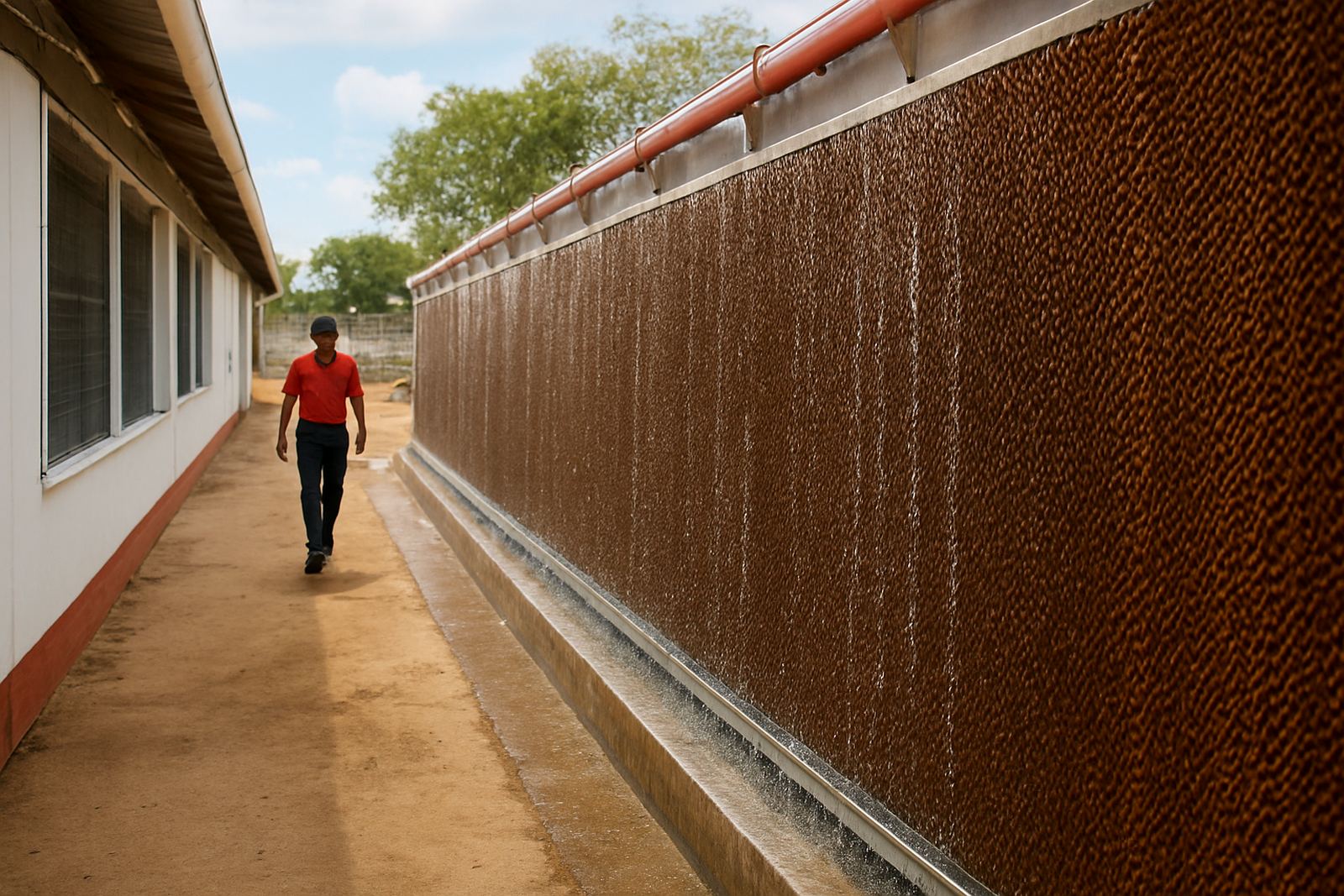
A cooling pad wall is an evaporative cooling section fitted into the side wall of a poultry house or rearing unit. Warm outside air passes through a wetted pad, loses heat through evaporation, and then enters the house at a lower temperature. This helps reduce heat stress, keeps air movement more useful in the house, and supports bird comfort when outside temperatures climb above what natural ventilation can handle.
These systems are most often used with tunnel ventilation, but they can also be planned into cross-ventilated houses where the building layout and fan capacity allow it. In South African conditions, a pad wall is often the difference between a house that runs properly in November and one that struggles every afternoon. They are especially useful where humidity is moderate and the water supply is steady.
Pad sizes, cell thickness and frame options
Cooling pad walls are normally built to the full height of the opening and then sized to the fan design and house length. Common pad thicknesses are 100 mm, 150 mm and 200 mm, with the 150 mm and 200 mm options used where longer cooling time is needed. Pad media is usually supplied in modular blocks so damaged sections can be replaced without stripping the full wall.
Frames can be supplied in galvanised steel, aluminium or treated timber depending on the project and budget. For coastal or high moisture areas, corrosion resistance should be treated as a must, not a nice-to-have. Water distribution tops, collection troughs and end seals must be matched to the pad depth and airflow rate, otherwise the cooling drops off and the edges dry out.
- Pad thickness options: 100 mm, 150 mm, 200 mm
- Typical height: from 1,000 mm up to full wall height
- Module widths: made to suit opening sizes and fan layout
- Frame materials: galvanised, aluminium or treated timber
Where cooling pad walls work best
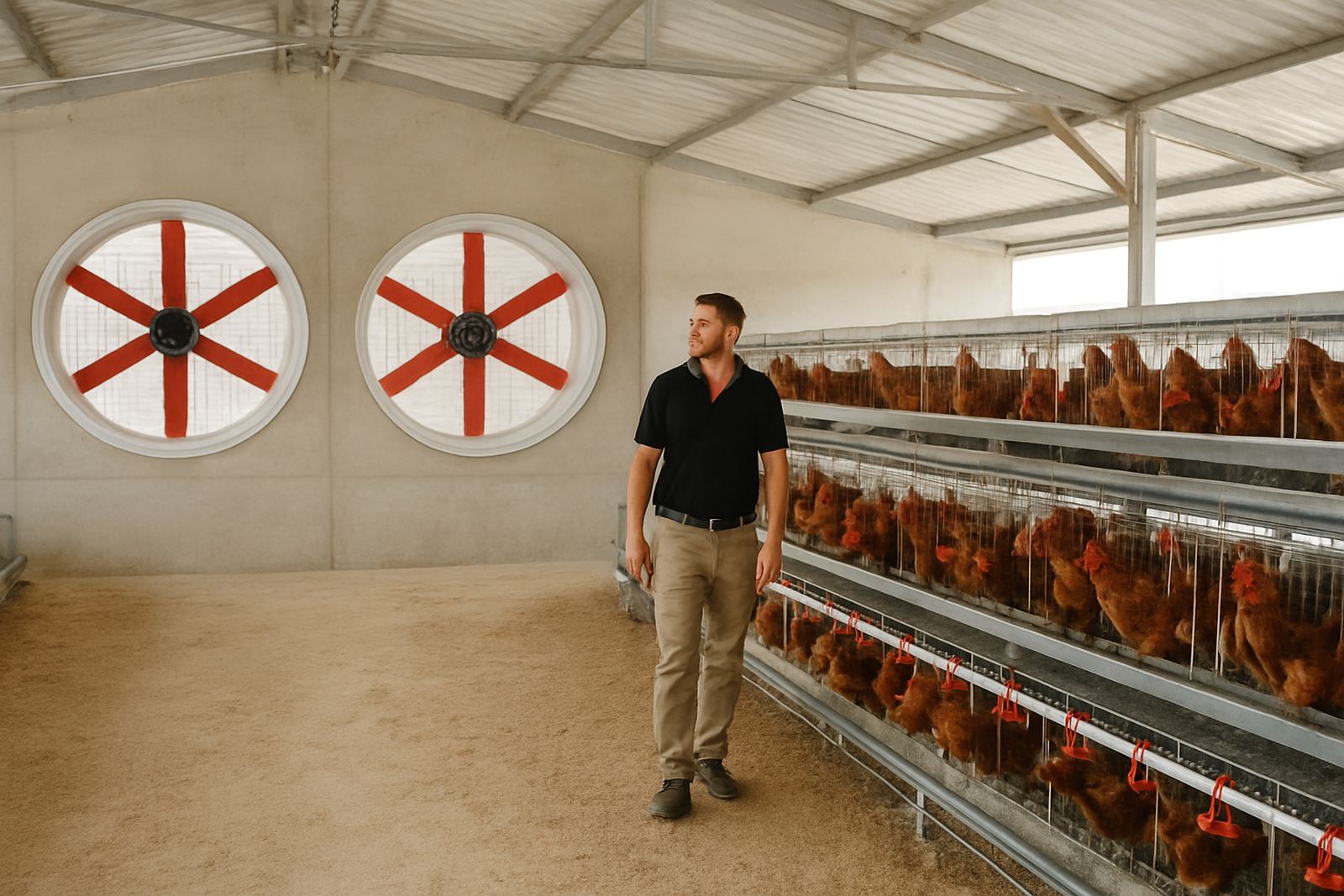
Cooling pad walls suit broiler houses, layer houses, rearing houses, hatchery rooms, holding areas and some processing spaces where controlled incoming air is needed. They work best on sites with strong ventilation fans and a layout that allows air to move in a straight line across the house. If the building has too many leaks, poor end sealing or weak fan pull, the pad wall will not give its full benefit.
They are a practical fit for hotter inland areas like Gauteng, North West, Limpopo and parts of Mpumalanga. They can also help in KwaZulu-Natal where daytime heat is the issue, although high humidity means the cooling effect may be less than in drier regions. In all cases, the house plan should take into account local water pressure, load-shedding backup and the distance from the inlet wall to the fan end.
- Best for hot periods and houses that already use mechanical ventilation
- Useful where bird density is high and temperature rises quickly
- Can be fitted into new houses or added during an expansion upgrade
- Requires good sealing, correct fan spacing and enough water flow
Installation, water supply and power needs
A cooling pad wall is not only a pad and a frame. It needs a sump or water tray, pump, return line, distribution pipe, filtration and a shut-off arrangement for maintenance. The wall opening must be measured properly so the pad sits flat and air cannot bypass around the sides. If there is a gap at the edges, performance drops and the system starts wasting water.
Power needs are usually modest for the pump, but the full system depends on the house fans and any control gear driving the ventilation cycle. For farms that deal with load-shedding, backup power planning is important because the pad wall only works when air is moving through it. Without fan pull, you are just wetting a wall. Water pressure should be stable, and on borehole or tank-fed sites the system should include filtration to reduce blockages from silt or scale.
During installation, our team checks the wall line, pump position, overflow handling and drain point. We also look at access for cleaning, because a system that cannot be reached safely ends up being neglected.
Care, cleaning and routine servicing
Cooling pad walls need regular checking through the season. Pads should stay evenly wet, not dripping in one area and dry in another. Algae, dust, lime and fine feed particles can build up on the pad face and reduce airflow. In some areas, especially where borehole water is hard, mineral scale becomes a bigger issue than dirt. That is why a simple service routine matters.
We recommend flushing the line, checking the pump strainers, inspecting the distribution holes and confirming that water returns to the sump properly. Pads should be cleaned with care so the cells are not crushed. A damaged pad may still look serviceable from a distance, but it can create dead spots and uneven cooling across the house.
- Check pad wetting before each hot spell
- Clean trays, pump strainers and feed lines on a set schedule
- Replace broken pad modules promptly
- Inspect seals, corners and support frames for leaks or rust
What to check before you order a pad wall
Before ordering, measure the wall opening height and width, confirm the ventilation fan capacity and note the house length. You also need to know whether the system is for new construction or a retrofit into an older house. If the site has uneven floors, low ceilings or existing drainage issues, these must be allowed for in the layout. It is better to sort out a drainage problem now than after the first hot week.
Tell us what water supply you have, whether it is municipal, borehole or tank fed, and whether the site has pressure fluctuations during peak use. Also confirm if there is backup power for the pump and fans, and whether the house has any local noise or effluent rules that affect the installation point. For turnkey poultry projects, we can help with site planning, house layouts, equipment selection and commissioning so the pad wall works as part of the full house system.
- Opening size and wall height
- Fan count, fan size and airflow target
- Water source, pressure and filtration needs
- Corrosion risk from coastal humidity or chemical wash-downs
- Access for cleaning, maintenance and future expansion
Supplied from Jet Park for projects across South Africa
John F Marshall is based in Jet Park, Boksburg and works on poultry projects across Gauteng, Mpumalanga, Limpopo, North West, Free State and KwaZulu-Natal. We supply cooling pad walls as part of practical poultry house setups, with support from site planning through to training and after-sales service. If you are replacing worn pads, expanding a house, or fitting out a new line, we can help select the right wall size and structure for the conditions on site.
Our team can also assist with spares supply, maintenance programmes and installation supervision, which is especially useful where the build is under time pressure and the house needs to be running before the next placement. The aim is simple enough: a cooling system that fits the house, fits the water supply, and keeps doing the job when the weather turns.
Key facts
| Product type | Evaporative cooling pad wall system for poultry and agricultural buildings |
|---|---|
| Pad thickness | 100 mm, 150 mm or 200 mm |
| Frame options | Galvanised steel, aluminium or treated timber |
| Typical use | Broiler houses, layer houses, rearing houses and holding rooms |
| Water requirement | Filtered, steady supply with return to sump or tray |
| Installation support | Site planning, supervision, commissioning and training available |