What a hatcher incubator does at the end of the cycle
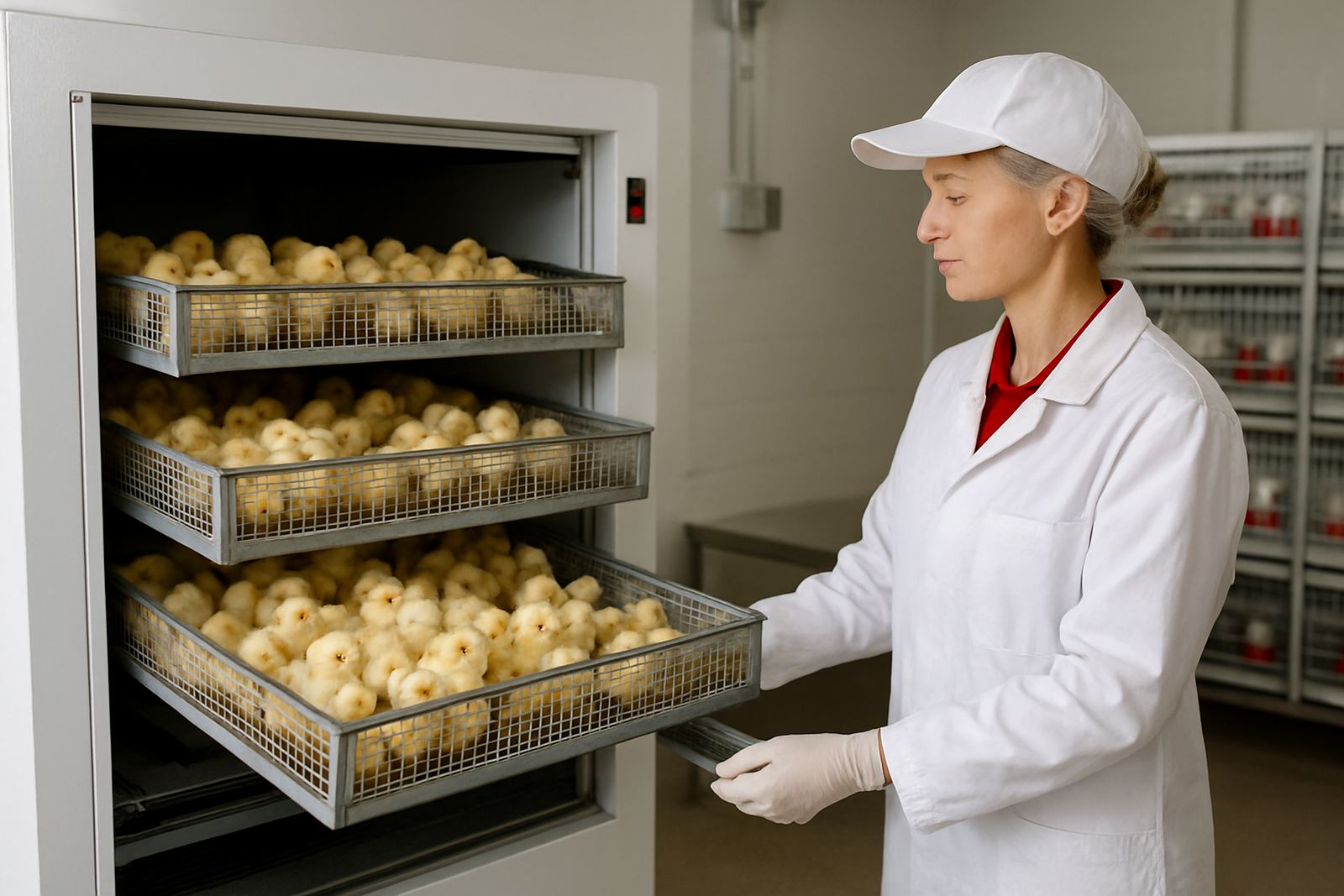
A hatcher incubator keeps eggs in a stable, warm and humid chamber during the last stretch before chicks hatch. At this stage the eggs do not need turning any more, so the machine is set up differently from a setter. The main job is to hold a steady environment until the chicks are dry enough for safe removal and grading.
In practice this means better control over hatch timing, less handling and a cleaner working routine in the hatchery. For operators running more than one room, the hatcher also helps keep batches separate, so you can plan chick take-off and cleaning without rushing the next load. That matters when power supply is irregular or when the site must work around municipal water limits and load-shedding schedules.
- Final-stage incubation for fertile eggs
- Chick take-off after hatching
- Batch separation for cleaner hatchery flow
- Suitable for commercial and project-based poultry setups
Sizes, capacities and build options
We supply hatcher units in different capacities to suit small, medium and larger poultry projects. The right size depends on how many eggs you set per week, how many hatch days you run at once and how much room you have for staging, hygiene and chick handling. Some clients want a single cabinet for a starter operation, while others need a bank of units linked to a full hatchery layout.
Cabinet size, tray count and airflow arrangement should be matched to the house plan. A unit that is too small will force tight loading and uneven results, while an oversized unit may waste space and power. In humid coastal areas, especially around KwaZulu-Natal, stronger moisture control can be worth the extra spend. In drier inland areas, the focus may be on stable heat and reliable insulation.
- Single cabinet units for smaller hatch runs
- Multi-tray commercial units for regular chick output
- Options for manual or programmed control systems
- Stainless or coated internal surfaces depending on use and cleaning routine
Installation, utilities and room layout
Correct installation is important because the hatcher works best in a room with controlled temperature, clean air and enough space around the unit for access and servicing. We look at the room layout, door positions, floor finish, drainage and cleaning route before supply or fitment. Good planning also helps with biosecurity, since you do not want dirty crates or waste moving through the clean side of the hatchery.
Most hatchers need a stable electrical supply, and for some sites a backup generator or inverter system is advisable. If the area suffers from load shedding, you should plan for restart time and temperature recovery. Some units may also need humidity support and, where specified, gas connection for heating or backup functions. The exact requirement depends on the model and the room setup.
- Level floor and enough working space around the unit
- Ventilation that keeps air fresh but not draughty
- Reliable power with backup if outages are frequent
- Clean water supply where humidity systems are fitted
Typical technical specs to check before you order
When you compare hatcher incubators, do not look only at the outside size. Check the working specifications, because these affect hatch consistency and running cost. A well-matched unit should hold temperature evenly across the chamber, keep humidity within the required band and recover quickly after the door is opened. Recovery time matters when a batch is being checked or removed in stages.
We can help you compare options in plain terms, from tray capacity to power draw and control type. This is useful when you are planning a new project in Mpumalanga or expanding an existing hatchery in Gauteng. A clear specification also helps with procurement, because you can match the machine to the house plan and available supply instead of guessing.
- Temperature range and control accuracy
- Humidity range and water requirement
- Voltage and phase requirement
- Tray capacity and egg loading layout
- Power consumption and backup tolerance
- External dimensions for room planning
How to care for the unit between hatch cycles
Hatchers need regular cleaning because fluff, shell fragments and moisture build-up can affect hygiene and air flow. The best routine is to remove waste promptly, wash the chamber with approved cleaning products and dry it fully before the next batch. Operators should also check fans, seals, probes and trays after every cycle. A small fault picked up early is far cheaper than a lost hatch.
Where water quality is poor, scale can build up in humidification parts and block performance. In coastal areas, salty air can also affect metal fittings over time, so routine inspection is worth the effort. Keep a written service record and note any drift in temperature or humidity. That makes it easier to spot wear before it becomes a bigger problem.
- Clean after every hatch cycle
- Check fan movement and air flow
- Inspect door seals and tray runners
- Descale water parts where needed
- Log any alarms, faults or unusual readings
What to confirm when placing an order
Before ordering, it helps to confirm the exact purpose of the unit and the scale of your hatchery. A hatcher for a farm near Nelspruit may not need the same layout as a unit for a larger Free State operation. We ask clients to confirm the expected egg numbers, room size, floor finish, power supply and whether the site has water on tap or relies on storage tanks.
It is also worth checking how the hatcher will fit into the rest of the workflow. If you are adding brooders, feeders and drinkers for day-old chicks, the take-off area should be close enough for quick transfer but separate enough to keep the room clean. If the site is part of a turnkey poultry project, we can align the hatchery side with the rest of the plan, from layout to installation supervision. A short conversation now saves a lot of sorting later, and avoids costly changes after delivery.
- Number of eggs per batch and hatch frequency
- Available floor space and door access
- Power supply details and backup arrangements
- Cleaning method and water source
- Whether you need spare trays, probes or service support
Support for hatcheries across South Africa
John F Marshall works from Jet Park, Boksburg and supports poultry projects across Gauteng, Mpumalanga, Limpopo, North West, Free State and KwaZulu-Natal. Our team can assist with site planning, equipment selection, installation supervision, commissioning and operator training, so the hatcher is set up to work as part of the full operation. We also supply spares and maintenance programmes for sites that need ongoing support.
For hatcheries that are expanding, a proper review of the room, the load on the electrical system and the cleaning process can make a real difference. That is especially true when operations grow faster than the original building plan. If you need a practical match between machine size, utility supply and day-to-day use, we can help you work through the options in detail.
Key facts
| Product type | Dedicated hatcher incubator for final-stage incubation and chick take-off |
|---|---|
| Capacity | Available in single and commercial multi-tray options, matched to project size |
| Power supply | Electric supply required, with backup planning recommended for load-shedding areas |
| Humidity control | Controlled humidity chamber for chick hatch and drying |
| Construction | Easy-clean interior with service access for routine maintenance |
| Use | Commercial hatcheries, poultry projects and farm-based egg production |
| {'q': 'How is a hatcher different from a setter?', 'a': 'A setter is used earlier in the incubation cycle and usually turns the eggs. A hatcher is for the last stage only, when turning stops and the eggs are kept in a controlled chamber until the chicks hatch.'} | {'q': 'Do I need backup power for a hatcher incubator?', 'a': 'If your area has load-shedding or unstable supply, backup power is strongly advised. It helps protect temperature and humidity during outages and reduces the risk of hatch loss.'}, {'q': 'Can you help choose the right size for my hatchery?', 'a': 'Yes. We look at weekly egg numbers, room size, utilities and future expansion so the unit fits the operation properly and does not create problems later.'} |