How manure removal belts work in a poultry house
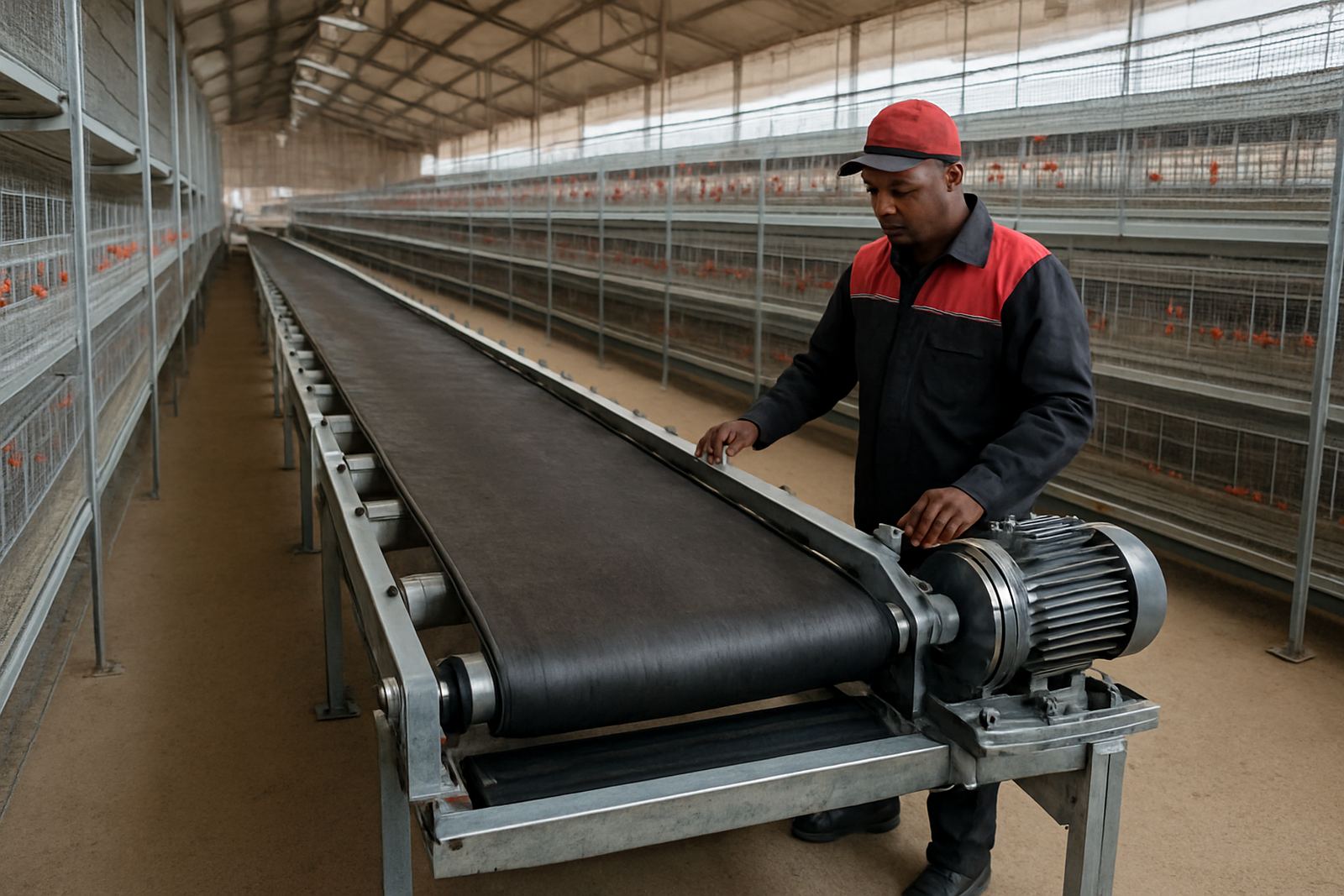
Manure removal belts sit under the cages or beneath the bird area and carry droppings to a collection point. A drive system moves the belt at set intervals, usually after birds have settled, so manure is taken out before it builds up in the house. That cuts down on moisture, ammonia smell, flies and the mess that comes with hand scraping. In warm areas like Limpopo and KwaZulu-Natal, it helps a lot with fly pressure and wet litter around the house edges.
The belts are made for repeated running and cleaning, and the support structure keeps the belt tracking straight along the full length of the house. On larger units, manure can be discharged onto a cross conveyor or into a trailer point for removal. The result is a cleaner house routine with less labour and better control over where waste ends up, which matters when neighbours are close or municipal runoff rules are strict.
- Removes manure regularly instead of leaving it under the house for long periods
- Helps keep ammonia levels lower around the birds
- Reduces labour compared with hand cleaning
- Supports cleaner floors, walkways and service areas
Sizes, belt widths and layout choices
Manure removal belts are normally specified to suit the cage row length, house width and the type of poultry system in place. Common belt widths include 500 mm, 650 mm, 800 mm and 1 000 mm, with lengths made to match the cage run. For long houses or multi-row systems, the layout may include more than one belt line so the waste can be handled in stages. The aim is to keep the belt working evenly, without sagging or overloading at the discharge end.
Choice of belt thickness, support rollers, drive position and tensioning points depends on house size and how often the belt will be run. In coastal areas like Richards Bay or parts of the Eastern Cape, corrosion resistance becomes important because humidity can shorten service life if the wrong fittings are used. Galvanised supports are common, and where conditions are harsher, extra attention is given to fasteners, bearings and drive protection.
- Widths commonly supplied: 500 mm, 650 mm, 800 mm, 1 000 mm
- Lengths matched to cage rows and house span
- Single-row or multi-row discharge layouts available
- Galvanised or corrosion-resistant parts for damp conditions
Where manure belts suit best
These systems suit laying-hen houses, breeder houses and some rearing setups where a cleaner floor and stronger hygiene control are part of the management plan. They are a good fit for operations that already use cages and want to improve droppings removal without changing the whole house layout. On new projects, the belts can be built into the initial design, which makes installation neater and avoids last-minute support changes.
They also suit sites that need better control for environmental and odour reasons. In peri-urban areas around Gauteng, Free State towns and parts of Mpumalanga, waste handling often needs to be planned carefully because water run-off and storage space are limited. A belt system can make collection more orderly and keeps manure moving to a defined point, which helps when staff are working around other equipment at the same time.
- Laying houses with cage systems
- Breeder houses needing routine manure removal
- Sites where odour and fly control are a concern
- Projects that need cleaner access around the house
Installation, drives and power requirements
Installation starts with accurate house measurements, belt run alignment and a proper check on the discharge side. The frame must be level so the belt tracks correctly and does not rub at the sides. Drive units are normally placed at the collection end, with tensioning set so the belt runs smoothly but not too tight. If the belt is badly aligned at the start, it tends to wander later and that causes wear and tearing at the edges.
Most manure removal belts run on electric drive motors sized to suit the load and belt length. The exact motor rating depends on the number of rows, manure build-up and how often the system will be started each day. In areas with load-shedding, it is wise to plan for backup power or to set the belt timing around generator use. We also look at where the control panel sits, how cables are protected from moisture and how easy it is for staff to reach shut-off points during cleaning or service work.
- Level mounting and correct belt alignment are essential
- Electric drive sizing depends on length and load
- Backup power planning is useful where outages are common
- Control points should be easy to reach for operators
Care, cleaning and servicing over time
Like any moving part in a poultry house, manure belts need regular checks. Tension should be inspected, rollers must turn freely and the belt surface should be checked for cuts, fraying or manure build-up at the edges. If droppings are left to harden on the belt, it can add strain to the drive and make cleaning harder. A quick rinse or scrape routine after use helps keep the system in better condition, though the method will depend on house design and drainage.
Service planning should include bearings, drive chain or gearbox checks, electrical inspections and spare belt sections where the system is heavily used. At busy sites it helps to keep a small spares list on hand so a breakdown does not stop house routines for long. Our team also trains operators on safe start-up, lock-off steps and the signs that show a belt is beginning to track out of line.
- Check belt tension and tracking on a set schedule
- Keep rollers, bearings and drives free of dirt build-up
- Inspect for wear at discharge points and corners
- Hold key spares to reduce downtime
What to check before you order
Before ordering a manure removal belt, measure the house length, row count and discharge position. You will also need to know the cage type or support spacing, the available power supply and whether the site has room for a collection point or cross conveyor. If you are planning a new build, it is better to include the belts in the house layout early so the installation does not clash with feed lines, egg handling routes or staff walkways.
It is also important to confirm the manure handling method after removal. Some sites want direct collection into a trailer, while others need a fixed drop point for later removal. Ask about galvanising, motor ratings, belt width, safety guards and spare part supply before placing the order. If the house is in a humid or dusty area, say so upfront, because it affects the parts we choose and the maintenance plan we recommend.
- House length, width and number of rows
- Discharge method and available collection space
- Power supply and backup power arrangements
- Corrosion conditions, cleaning routine and spare parts needs
Key facts
| Product type | Belted manure removal system for poultry houses |
|---|---|
| Common belt widths | 500 mm, 650 mm, 800 mm, 1 000 mm |
| Drive | Electric motor driven, sized to house load and belt length |
| House suitability | Laying hens, breeders and selected rearing systems |
| Typical materials | Galvanised support structure, heavy-duty belt, rollers and tensioners |
| Service support | Installation supervision, commissioning, training, maintenance and spares |