How a setter incubator works in the hatchery cycle
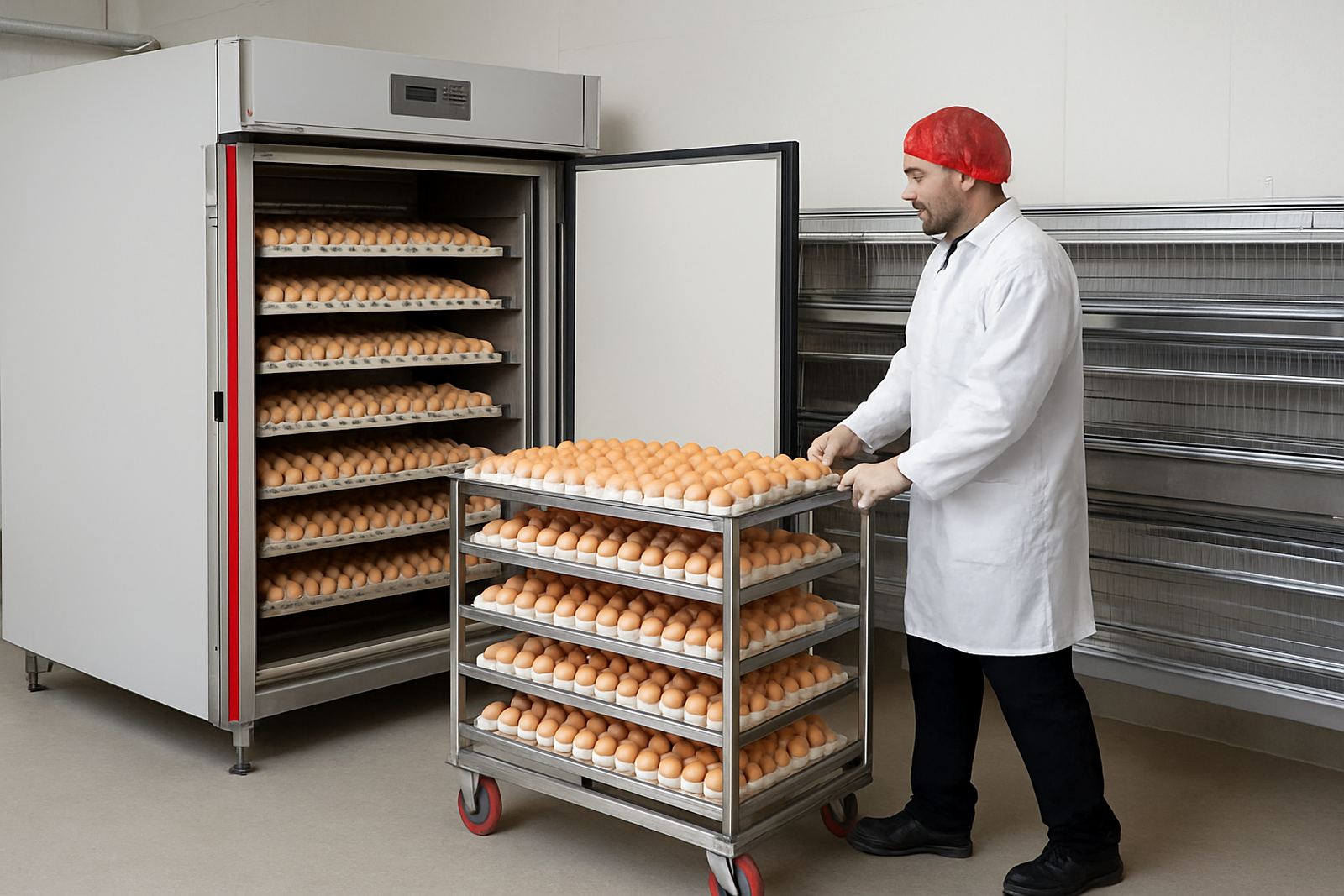
A setter incubator holds fertilised eggs in a controlled environment for the main incubation period, before they are moved to hatcher baskets near the end of the cycle. The aim is even heat, steady airflow and regular egg turning so the embryo develops at the right pace and does not stick to the shell membrane.
In practical terms, the setter is the workhorse of the hatchery. It needs accurate temperature control, reliable humidity management and consistent turning angles. If those basics drift, hatchability drops and chick quality can suffer. That is why the machine choice must match your egg type, batch size and the way your team works day to day.
We supply setter incubators for poultry businesses that want planned output, whether the project is a new hatchery in Gauteng or an expansion on an existing site in Mpumalanga, Limpopo or KwaZulu-Natal.
Setter sizes, tray capacity and machine options
Setter incubators are available in different sizes depending on the number of eggs you need to handle per cycle. Smaller units suit breeder farms and starter hatcheries, while larger cabinet systems suit commercial operations that run regular batches and need repeatable results.
Options vary by configuration, but the main choices usually include single cabinet or multi cabinet layouts, manual or automatic egg turning, digital control panels, alarm systems, and airflow arrangements suited to the house or room temperature where the unit will stand. Some projects also need remote monitoring, separate temperature probes, or matched hatching cabinets for a full line-up.
- Small hatchery units for lower batch volumes and training setups
- Medium capacity systems for steady weekly production
- Large cabinet systems for commercial hatcheries and contract supply
- Matched setter and hatcher combinations for planned loading cycles
- Tray and trolley layouts that suit the egg size and the labour available
The right set-up is not only about capacity. It is also about how often you load, how long the power stays stable, and whether the room can handle heat build-up on hot Gauteng afternoons or humid coastal conditions.
Where setter incubators suit best
Setter incubators suit hatcheries linked to broiler farms, layer replacement programmes, breeder operations and agri projects that need controlled chick output. They are also used where eggs must be incubated in batches and moved through a fixed production schedule, rather than left to improvised handling.
They work well in rooms or buildings where temperature can be kept stable and where the hatchery team can follow cleaning, turning and loading routines. In areas with load-shedding, the room should have backup power planning from the start, because the setter cannot simply lose heat for long and still deliver consistent results.
- Commercial hatcheries supplying day-old chicks to nearby growers
- Breeder farms that need reliable internal hatch output
- New poultry projects that want a phased start-up
- Replacement and expansion projects on existing hatchery sites
- Operations that need tighter control than still-air or basic incubators can offer
For sites in Boksburg, Middelburg, Polokwane, Rustenburg or Pietermaritzburg, we also look at access, floor loading, ventilation and drainage before any machine is finalised.
Installation needs, power supply and room conditions
Setter incubators need a proper hatchery room, not a corner with a plug point. The floor must be level, the air must move properly and the room should stay within the temperature range recommended for the unit. If the room runs too hot, the machine works harder. If it runs too cold, recovery after loading takes longer and the control system has to fight the environment.
Most setter systems are electric and need a clean, stable supply with correctly sized protection, isolators and earthing. For sites affected by municipal interruptions, backup power should be sized for the full electrical load of the setter, plus ventilation, controls and any support equipment. Gas is not usually the primary heat source for a setter cabinet, but gas-fired room heating or backup heating can form part of the hatchery design where the project calls for it.
- Check available single-phase or three-phase power before ordering
- Allow space around the machine for airflow, cleaning and servicing
- Keep the hatchery dry, dust controlled and easy to sanitise
- Plan generator or inverter support if load-shedding is part of daily operations
- Include ventilation and room cooling where ambient heat is high
We assist with site planning, house or room layout and installation supervision so the setter is not squeezed into a space that was never meant for controlled incubation.
Care, cleaning and servicing routines
A setter incubator will only perform well if it is cleaned and checked on schedule. After each cycle, trays and internal surfaces should be cleaned according to the hatchery sanitation programme, then dried properly before the next load goes in. Dust, fluff and egg residue build up quickly in a working hatchery, so a quick wipe is not enough.
Service routines should include thermostat checks, sensor inspection, fan and motor checks, turning mechanism inspection, seal condition and alarm testing. If there is a trend toward uneven hatch results, the cause may be a probe fault, poor room ventilation or a worn drive part rather than the eggs themselves.
- Clean after every cycle and sanitise before reloading
- Check turning movement and tray alignment regularly
- Inspect seals, fans and heating elements for wear
- Keep spares on hand for sensors, relays and moving parts
- Record temperature and humidity readings for each batch
Our service team can support maintenance programmes, spares supply and operator training so your hatchery staff know what normal operation looks like and what should trigger a call-out.
What to check before you order a setter incubator
Before placing an order, work through the actual production numbers, not just the space available on paper. You need to know how many eggs per week or per month will be loaded, what type of eggs they are, and whether the project will expand later. A machine that is too small becomes a bottleneck. One that is too large can be costly to run and harder to manage.
It also helps to check the support side early. If the hatchery is in a rural area, factor in delivery access, voltage stability, service response times and spare parts availability. On some projects we also look at processing room fitout and expansion upgrades at the same time, because the setter is only one part of the wider poultry system.
- Egg volume per cycle and expected weekly throughput
- Available floor space, door width and route for installation
- Power supply, backup plan and control panel requirements
- Need for automatic turning, alarms or remote monitoring
- Future growth plans and whether matched hatchers are needed
If you are planning a new hatchery or upgrading an existing one, we can help you select the right setter incubator and line up the practical details before the equipment arrives.
Key facts
| Product type | Setter incubator for controlled egg incubation |
|---|---|
| Function | Main incubation stage before transfer to hatcher units |
| Capacity range | Available in small, medium and large cabinet configurations |
| Control system | Digital temperature and humidity control with alarms |
| Turning system | Manual or automatic egg turning, depending on model |
| Typical use | Commercial hatcheries, breeder farms and poultry projects |