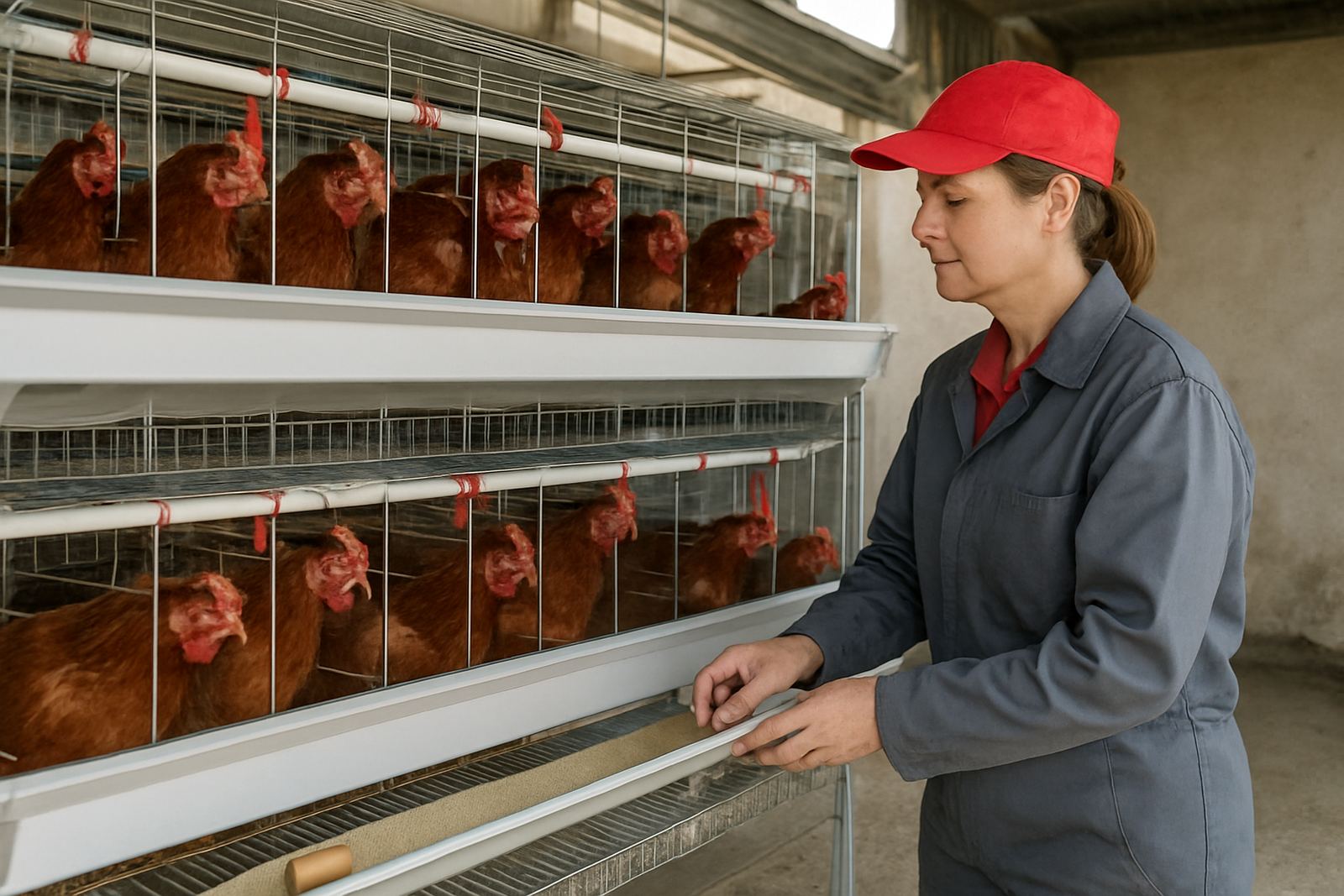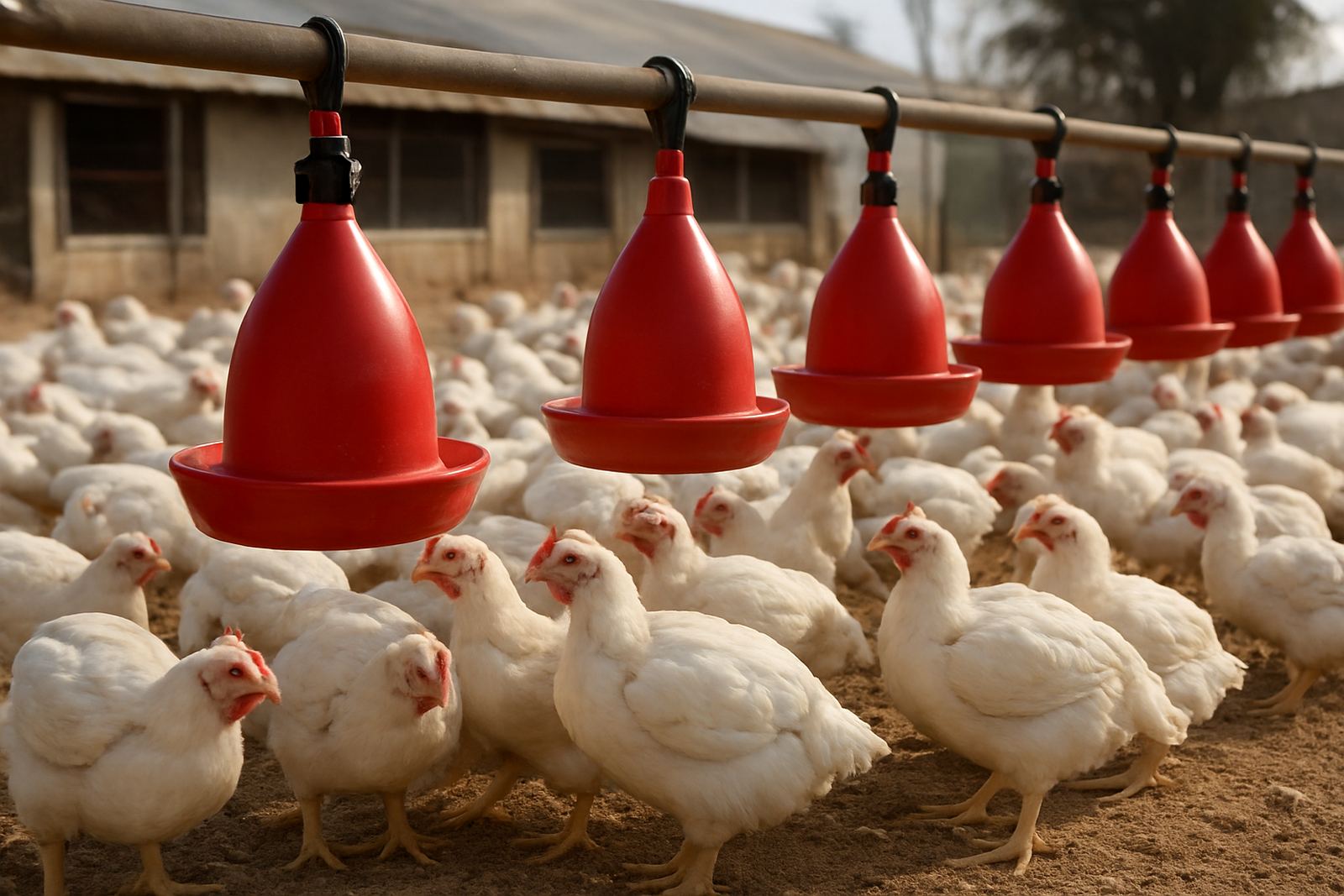
Straightforward nest housing for daily egg collection
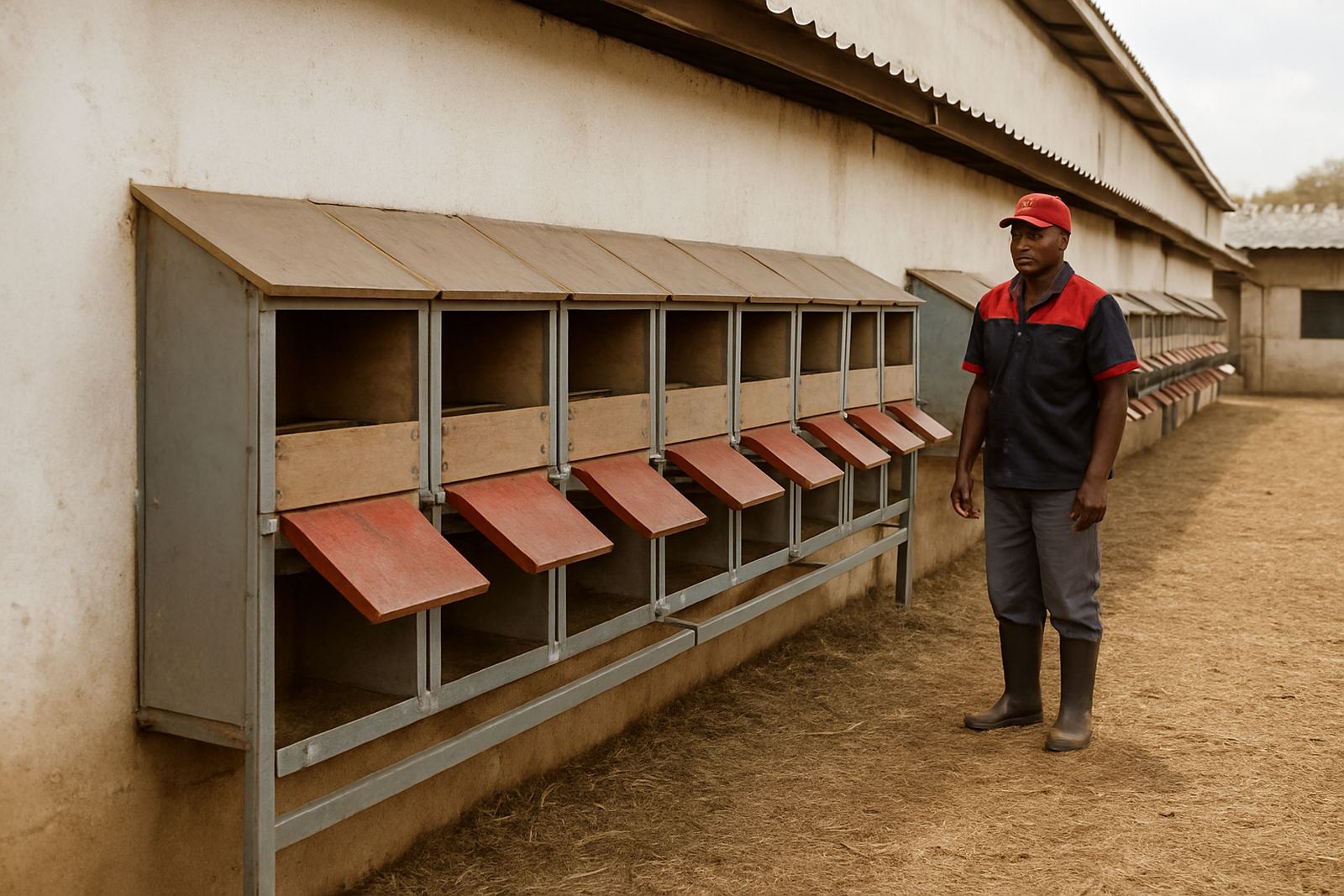
Manual nest boxes are fixed banks of individual nesting compartments that give hens a calm, dark space to lay and make egg collection easier for the team. They are commonly used in breeder houses, free-range layer setups and smaller commercial houses where mechanised egg belts are not needed. The aim is simple: keep eggs cleaner, reduce floor laying and give the birds a place they learn to use quickly.
For many farms in Gauteng, Limpopo and Mpumalanga, manual nests remain a practical choice because they do not depend on motors, belts or control panels. That matters when load-shedding is part of the day or when a house is being run on a tighter budget. The units are easy to place in rows, service by hand, and move within a house layout if the flock plan changes later on.
Sizes, bank layouts and mounting options
We supply manual nest box banks in practical sizes for small and medium flocks, as well as larger house runs. The right layout depends on the breed, stocking rate and how much floor space is available between feed lines, drinkers and service walkways. In most houses, nest banks are installed along the side wall or in the centre run so birds can enter from both sides.
Common options include single-sided banks for narrow houses and double-sided banks for wider sheds. The boxes can be supplied as floor-standing units or wall-supported units, depending on the structure and the cleaning routine. Where houses are exposed to coastal humidity or heavy wash-down, a galvanised finish is a good choice for longer service life.
- Single-sided banks for narrow passages and side-wall placement
- Double-sided banks for better bird access in wider houses
- Floor-standing frames for easier repositioning during house changes
- Wall-supported units where floor space needs to stay open
- Galvanised steel construction for farm use and cleaning
Where manual nest boxes work best
These nest boxes suit breeder flocks and free-range layers that are trained to lay indoors before birds are allowed more movement. They are also used in layer houses where egg collection is done several times a day by hand. If the house has good litter management, enough roosting space and a sensible lighting programme, hens take to the nests quickly and floor eggs usually drop.
They work well on farms where staffing levels are modest and the collection route needs to stay short. A clean nest bank can improve egg handling in houses near Pretoria, Boksburg, Polokwane, Mbombela and the surrounding rural districts, where dust, temperature swings and daily labour routines all need to be considered. Good layout planning is still important, because birds need clear movement to the nests without crowding around feeders or corners.
- Breeder houses with planned mating ratios and controlled egg collection
- Free-range layer houses where birds return indoors for laying
- Smaller commercial units that do not require automatic collection
- Expansion houses where the owner wants simple, low-service equipment
Installation, house layout and utility needs
Manual nest boxes do not need electricity or gas to operate, which makes them simple to install in new houses and in older buildings as part of an upgrade. Even so, they still need correct placement. The bank should sit on level ground, with enough aisle space for egg trays, cleaning buckets and safe bird movement. If the house floor is uneven, the frame must be packed and anchored properly so the row stays steady.
When we plan a poultry house, we look at the route from the egg collection point to the grading or pack area, the position of drinkers and feeders, and the available width for staff to pass through. A good installation avoids dead corners and prevents birds from backing up in the walkways. For houses with high stocking density, the nest row should be positioned early in the house plan, not treated as an afterthought.
- No electrical supply required for normal use
- No gas connection required
- Suitable for new houses or retrofit projects
- Allow space for manual access, egg trays and cleaning tools
- Check floor level, wall fixing points and house width before ordering
Cleaning, servicing and spare parts planning
Manual nest boxes are easy to keep in service if the house team follows a regular cleaning routine. Bedding or nest pads should be checked daily, droppings removed, and broken hinges or loose fasteners corrected before they become a bigger problem. In dusty areas or where ventilation is weak, dirt can build up faster than expected, so weekly checks are worth doing even when the flock seems settled.
For longer life, inspect the frame joints, nesting surfaces and support legs after every flock cycle. If birds are pecking at the unit edges, check for sharp points or bent sheet metal. A small amount of wear is normal, but sagging panels and loose fittings should not be left until the next cycle. We can assist with maintenance programmes and spares supply so the nest bank stays in order and doesn't turn into a nuisance halfway through production.
What to confirm before you place an order
Before ordering manual nest boxes, it helps to confirm the house dimensions, flock size and the way eggs will be collected. The wrong bank length or too few nest openings can create pressure points in the flock and poor uptake. We also recommend checking whether the house is breeder or layer use, because the handling, access and layout differ a bit from one system to the next.
Give attention to the finish needed for your area, the available floor loading, and any local wash-down or hygiene rules that apply if you are near an abattoir or processing room. In some farms, the nest row also needs to fit around future expansion, so it is worth planning for a second bank now rather than forcing a bad layout later. A careful order saves time on site and keeps the installation clean.
- House length, width and internal clear height
- Breed type and expected bird numbers per house
- Single-sided or double-sided layout
- Galvanised finish or other corrosion-resistant requirement
- How often eggs are collected and where they are taken after collection
- Any future house expansion or layout change planned
Key facts
| Product type | Manual nest box banks for poultry houses |
|---|---|
| Typical use | Breeder flocks and free-range layer housing |
| Material | Galvanised steel frame with nest compartments |
| Mounting | Floor-standing or wall-supported options |
| Power or gas | Not required |
| Finish | Practical farm-use finish for dry or humid conditions |