Bell drinkers for everyday poultry watering
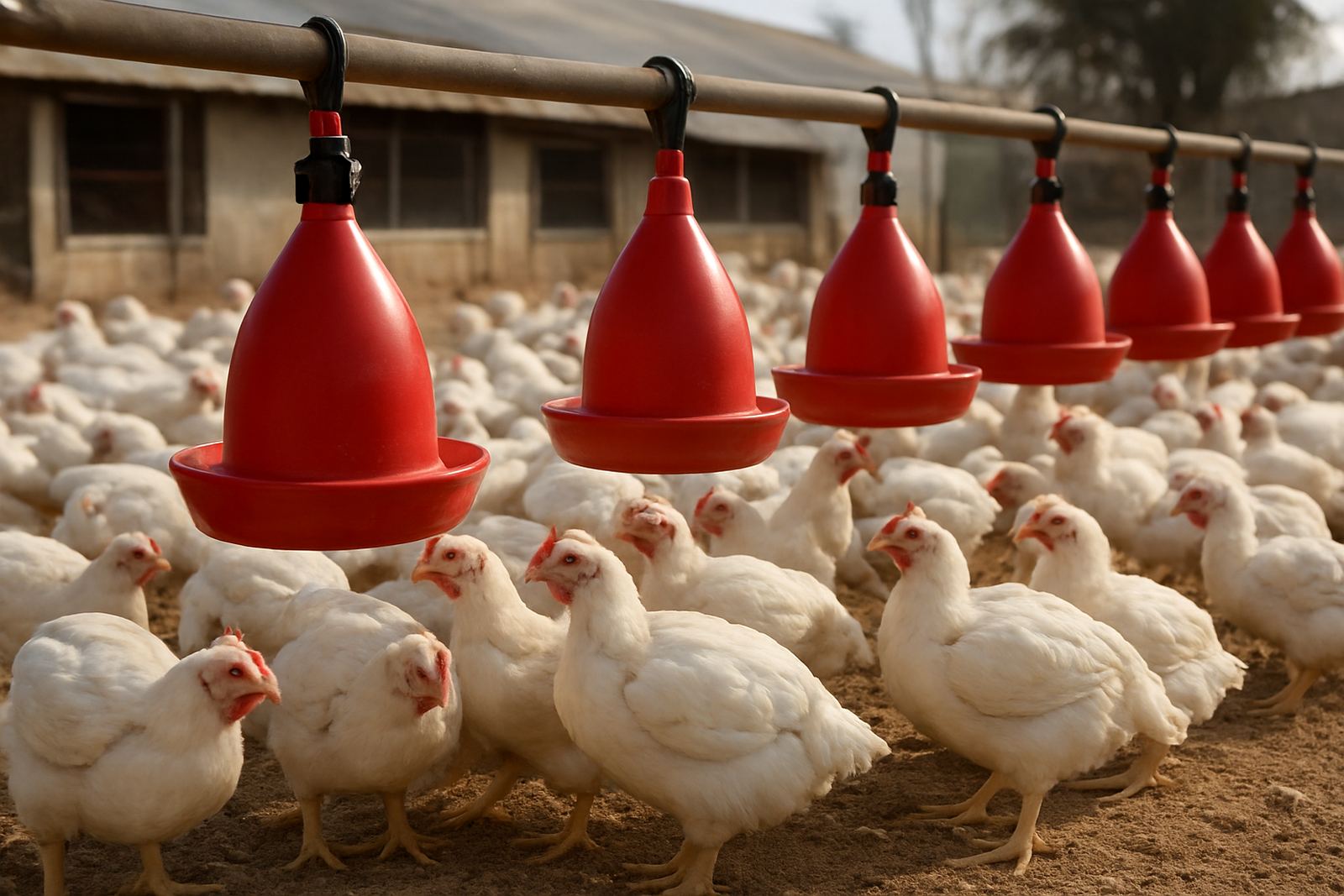
Bell drinkers are a common choice in floor-based poultry houses because they keep water available in a controlled way and reduce spillage compared with open trays or pans. They hang from the water line and refill automatically, so birds drink from the rim and the water level stays consistent through the day. In broiler houses and grow-out sheds, that consistency matters because wet litter quickly leads to smell, caking and foot problems.
These units are used where operators want a practical watering point that is easy to inspect and simple to maintain. They work well in new builds and in older houses that need a more manageable drinking system. For South African conditions, the main benefit is everyday control. On hot days in Mpumalanga or Limpopo, birds need easy water access, and in coastal areas the fittings must cope with moisture and corrosion. Bell drinkers fit that brief without adding unnecessary complication.
Sizes, water lines and hanging options
Bell drinkers are supplied in different diametres and mounting formats so the layout can match the house size and bird age. The right choice depends on the number of birds, the width of the house, and how much line spacing you want between rows. Smaller units are useful for younger birds and tighter house layouts, while larger bowls suit faster-growing birds that drink more per cycle.
- Common bowl sizes range from about 30 cm to 40 cm across, depending on flock density and line spacing.
- Hanging height is adjusted as birds grow, starting lower for chicks and lifted in small steps as they feather out.
- Units can be fitted to suspended water lines with pressure control, so the flow stays steady from house to house.
- Some layouts use anti-drip parts and easy-clean clips to cut down on wastage and reduce labour.
When we plan a house, we look at the full row count and bird placement first. A 12 metre house with standard line spacing needs a different arrangement from a long multi-bay house in North West, and the last thing anyone wants is dead spots where birds crowd one corner and leave another line underused. Good planning saves water and keeps the litter drier.
Where bell drinkers suit best
Bell drinkers are best suited to floor systems, grow-out houses and poultry units that need a clear, repeatable watering setup. They are commonly used in broiler production, replacement stock and mixed-age houses where the operator wants a visible drinking point that can be checked during a quick walk-through. In many cases they are chosen where labour is limited and the manager needs a system that does not need constant fiddling.
They also suit projects where the house is being expanded in stages. If a farm in Gauteng starts with one or two houses and adds more later, bell drinkers can be matched across the site so training, spares and maintenance stay simple. They can also form part of a larger turnkey poultry project, together with feeders, brooders and ventilation planning. That helps when a new site must meet municipal water use requirements and the operator wants a cleaner internal layout from the start.
- Suitable for broiler grow-out houses
- Suitable for floor-reared replacement birds
- Useful in new builds and retrofit upgrades
- Works well where operators need visible water points for quick checks
Installation, pressure and utility needs
Bell drinkers do not need electrical power at the drinker point itself, but they do rely on a well set water supply, clean filtration and correctly sized pressure control. In practical terms, that means the line must be level, the inlet must be stable, and the house should have a pressure setup that keeps each bowl filling at the same rate. If the pressure is too high you get overspill, and if it is too low the birds spend too much time waiting.
During installation we check line spacing, ceiling height, hanging points and access for cleaning. The house needs enough clearance for staff to move between lines without hitting fittings or bending supports. On sites with load-shedding or weak borehole supply, we also review the holding tanks and pump arrangement so the house does not lose water flow when demand rises. That is a basic check but it saves a lot of trouble later.
- No electrical connection is required at the drinker body
- Water filtration and pressure control are strongly recommended
- Hanging points must carry the weight of the line when full
- Install should allow for regular height adjustment as birds grow
Cleaning, service and wear parts
Like any poultry watering equipment, bell drinkers need regular cleaning and inspection. Limescale, feed dust and litter dust can build up inside and around the rim, especially where water is hard or the house runs warm. A weekly washdown between batches is normally the minimum, and in high-use sheds some operators clean more often. The aim is simple: keep the bowl free of sludge and check that the valve closes properly after each refill.
Wear parts are usually limited to seals, valves, clips and suspension items, which makes servicing straightforward. If one bowl is damaged, it should be replaced quickly rather than left to leak. Small leaks may look harmless but they wet the litter and attract birds away from the line. Our service team can help with maintenance programmes, spares supply and operator training so the house team knows what to look for on each round.
In coastal and humid areas, fittings should be checked for corrosion and mineral build-up a little more often. In drier inland regions the issue is usually dust and grime. Either way, routine care keeps the system working and avoids unnecessary water loss. It is better to fix a clip or seal early than to chase a damp patch later on.
What to check before you order
Before ordering bell drinkers, it helps to confirm the house dimensions, bird type and the way the water system is arranged. A few numbers up front prevent delays on site and reduce the chance of ordering the wrong fittings. If you are planning a new house or replacing older drinkers, send the layout early so we can match the equipment properly.
- House length, width and roof height
- Bird type and target flock density
- Number of drinking lines required
- Water source, pump setup and filtration detail
- Whether the project is new build, upgrade or partial replacement
- Local delivery area and site access for offloading
For farms in Gauteng, Mpumalanga, Limpopo, North West, Free State and KwaZulu-Natal, delivery and installation planning should also consider road access and on-site storage. If equipment is being staged before a house is finished, keep it under cover and off the floor. That avoids damage and keeps fittings clean before commissioning.
Bell drinkers supplied with project support
John F Marshall supplies bell drinkers as part of poultry equipment packages and turnkey projects, with support that covers site planning, house layouts, installation supervision, commissioning and operator training. That matters because watering equipment does not work in isolation. It has to suit feeders, brooding, ventilation and cleaning routines as well.
Our team in Jet Park, Boksburg works with poultry projects across South Africa, from small upgrades to full house rollouts. If you need a straight equipment supply or a full project plan, we can assist with the right specifications and the practical details that keep the house running day to day. For ordering, spares or product questions, contact info@johnfmarshall.co.za.
Key facts
| Product type | Bell drinkers for floor poultry systems |
|---|---|
| Common bowl size | About 30 cm to 40 cm |
| Application | Broiler houses, grow-out houses, replacement stock |
| Installation need | Suspended line with pressure control and filtration |
| Maintenance | Regular washdown, seal and valve checks |
| Supply areas | Gauteng, Mpumalanga, Limpopo, North West, Free State, KwaZulu-Natal |