What a killing cone does in day-to-day processing
A killing cone is a simple holding cone used during bird processing to keep a bird secure and positioned correctly before bleeding. It helps staff work in a steady sequence and reduces unnecessary movement during the process. For many poultry farms and small processors, this is the difference between a rushed setup and one that runs with proper order.
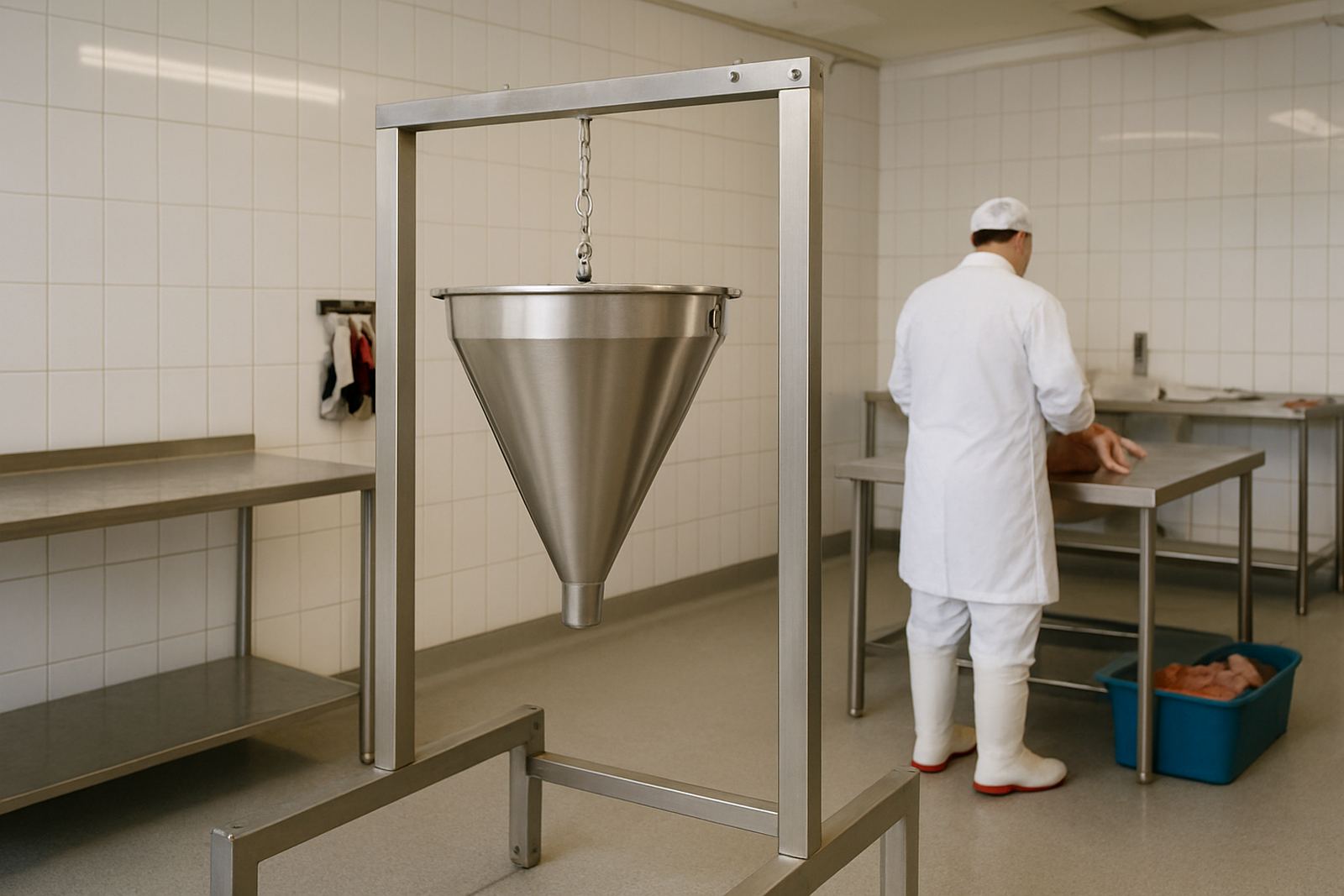
Cones are typically fitted to a stand or frame so birds can be handled at a workable height. They suit chicken, duck and similar small birds, depending on the cone opening and depth. In a farm room or a dedicated processing area, the cone stand becomes part of the routine equipment list together with scalding, plucking, washing and draining points.
Where there is regular throughput, the stand should be positioned so blood drainage, rinsing and cleaning can be managed without creating a mess on the floor. That matters in humid areas, and also on sites where water supply is limited or load-shedding affects the rest of the processing line.
Cone sizes and layout options to match your throughput
We supply cone stands in practical layouts for small-scale bird processing. The correct size depends on bird weight, how many birds are handled in a session, and whether one person or a team is using the equipment. A stand that is too low slows the process, while one that is too high becomes awkward and unsafe.
Common options include single-cone, two-cone, four-cone and multi-cone stands. For a grower doing occasional on-farm processing, a single or two-cone unit may be enough. For a small commercial room or a school, church or community project, a larger stand gives a better flow. We can also advise on spacing so operators have enough room to work without bumping each other.
- Single cone stands for low-volume use
- Two to four cone stands for small team processing
- Custom frame sizes for specific bird weights and room layouts
- Portable or fixed stands depending on cleaning and storage needs
Materials, hygiene and cleaning points to look for
In a processing area, the cone stand must be easy to wash down and not trap dirt in corners. Smooth surfaces are important because blood, feathers and wash water can collect quickly during use. A good stand should also cope with repeated cleaning chemicals without rusting too fast.
For South African conditions, especially where coastal humidity or heavy summer use is part of the picture, material choice matters. Galvanised or stainless steel components are often preferred, with a frame that stays stable on a wet floor. If the unit is used in a processing room that must meet municipal or veterinary hygiene rules, easy drainage and access around the stand become essential.
- Smooth, cleanable surfaces with no sharp exposed edges
- Corrosion resistance for wet processing areas
- Stable base to reduce movement on tiled or concrete floors
- Drainage planning so water does not pool around the stand
Where killing cones fit best on South African sites
Killing cone stands suit poultry farms, small abattoirs, processing rooms and agricultural training projects. They are often used where birds are processed in batches and the team needs a simple, repeatable method. In Gauteng, Mpumalanga, Limpopo, North West, Free State and KwaZulu-Natal, we see them used on both farm and semi-commercial setups.
They are also useful where a project is being expanded in stages. Many customers start with a small line-up of cones, then add scalding, plucking and chilling equipment later. That approach works well when budgets are managed carefully and the room must keep operating during upgrades. If you are planning a new poultry unit, the cone stand should be considered alongside flow, cleaning space and waste handling from day one.
For sites near residential areas or under local processing limits, a neat processing room with proper cone stands makes it easier to keep the work controlled. It is better to plan the bay size and water points early than try to squeeze the equipment in later.
Installation, power and water planning
Killing cone stands themselves do not normally need electricity or gas, which makes them practical for sites affected by load-shedding. What they do need is a suitable room or work area, level flooring, washing access and enough space for safe movement. If they are installed close to other equipment, there must still be clear access for operators and cleaning.
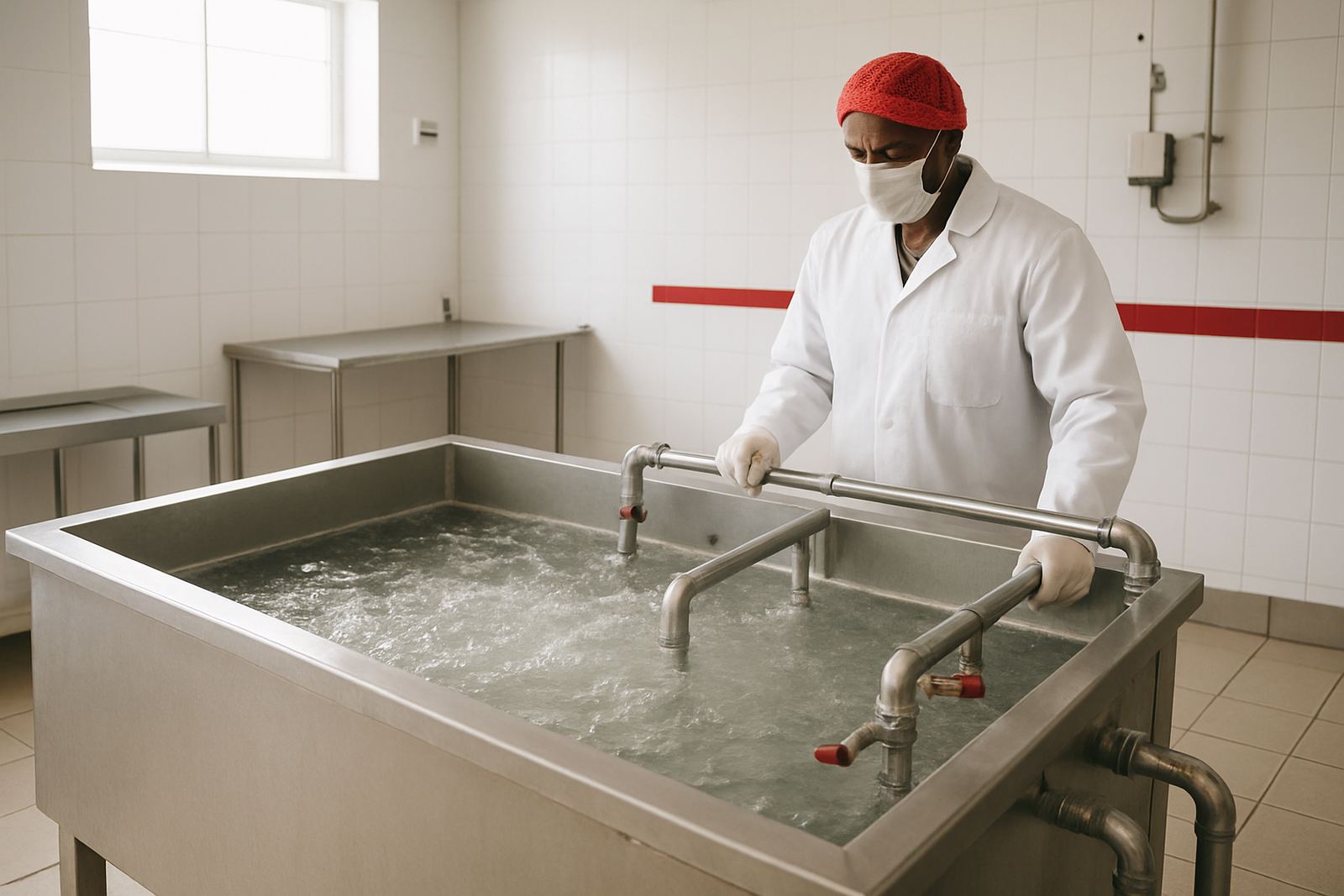
When fitting a processing area, we look at the full workflow. The cone stand may sit near the kill area, blood drainage point and rinse point, with the next stage of processing close by. If the room uses powered equipment elsewhere, such as scalder tanks or pumps, we can advise on the power arrangement around the entire line. In some projects, a gas-fired or electrically heated process section is planned separately from the cone station so the work continues during outages.
Floor drainage, hose access and wall protection are small details that save a lot of time later. A stand placed in the wrong corner can slow the whole room, so layout matters as much as the cone itself.
Care, servicing and parts support
A cone stand should be rinsed after use, washed with a suitable cleaning agent and dried where possible. Rust spots, loose fixings or bent cone holders should be checked early, before they affect daily use. Regular servicing is simple, but it should be done consistently or the stand starts to wear unevenly.
Our team supports maintenance programmes, spares supply and practical operator guidance for poultry equipment used across South Africa. If a site has multiple operators, short training helps keep the cleaning routine and handling sequence consistent. That reduces wear on the equipment and keeps the processing area more orderly, which is important when different people are using the room on different days.
- Wash and dry after every processing session
- Check bolts, welds and base stability monthly
- Keep spare fixings and any replaceable holders on hand
- Inspect for corrosion where standing water or blood may collect
What to confirm before you place an order
Before ordering killing cones, check the bird type, average bird size and the number of birds processed in one session. Also confirm the available floor space, whether the stand needs to be movable, and what cleaning water and drainage are available. These details determine whether a standard unit is suitable or a custom frame is the better option.
It also helps to know whether the stand will be used in a home farm room, a shared processing area or a more formal abattoir environment. If the site has municipal or agricultural compliance requirements, the layout and materials should be selected accordingly. We can assist with site planning, equipment selection, installation supervision and commissioning, so the killing cone stand fits properly into the full process instead of becoming an afterthought.
For quotation accuracy, send the bird type, quantity, preferred size and any room dimensions you have. A clear brief saves time and avoids buying a stand that is too small or awkward for the workflow.
Key facts
| Product type | Bird holding cone stand for small-scale processing |
|---|---|
| Common layouts | Single, 2-cone, 4-cone and custom multi-cone frames |
| Typical use | Chicken, duck and similar small birds |
| Material options | Galvanised steel or stainless steel components, depending on application |
| Installation needs | Level floor, wash-down access, drainage and clear working space |
| Power or gas requirement | None for the cone stand itself |
| Maintenance | Wash, inspect fixings, check corrosion and keep the frame stable |