What a farm feed silo does on site
A feed silo is a bulk storage vessel used to hold poultry feed outside the house or feed room, then discharge it into augers, hoppers or feed bins as needed. On commercial layer and broiler sites, that means fewer bags moving around, less spoilage from moisture, and quicker feed delivery to the lines. It also helps keep the feed store neater and reduces the chance of contamination from dust, rodents or standing water.
For many farms, the best result comes from matching the silo size to the house count, delivery frequency and storage method on site. A well-sized silo can cut down on truck traffic and manual handling, which matters when labour is tight or when the farm is running through load-shedding and you need simple, dependable equipment.
- Suitable for mash, pellets and crumbles, depending on your feeding system
- Can feed one house, several houses or a central feed distribution point
- Useful where bag storage is cramped or humidity is high
Typical silo sizes and build options
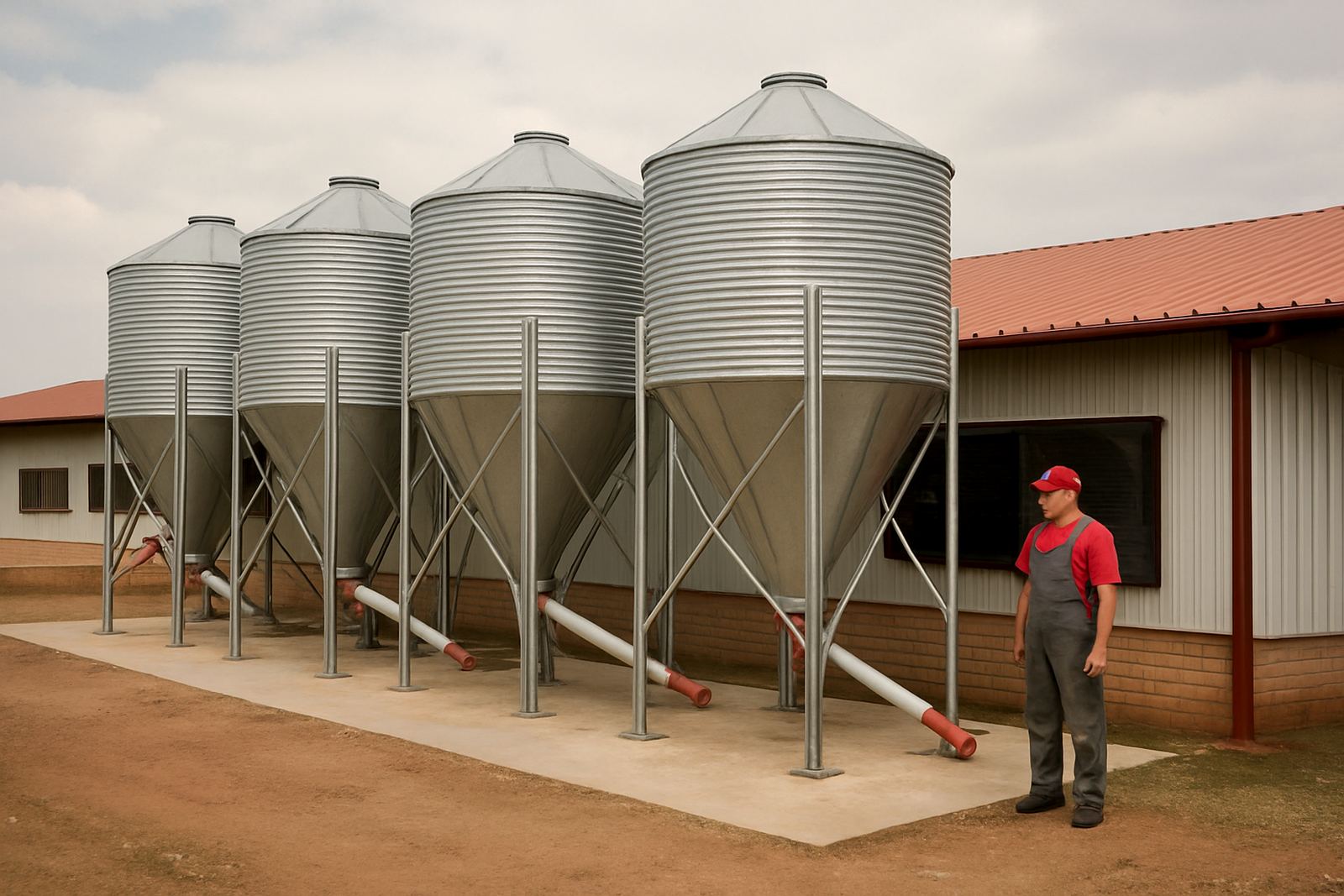
We supply feed silos in a range of farm sizes, commonly from around 3 tonnes up to 50 tonnes or more, depending on the project and the feed budget. Smaller units suit breeder and layer sites with tighter intake cycles, while larger silos suit broiler farms that want longer storage and fewer deliveries. Height, diameter and hopper angle are selected to suit the feed flow and the available ground space.
Common build choices include galvanised steel bodies, bolted panel construction, inspection hatches, venting, level indicators and outlet fittings matched to the auger or discharge pipe. In coastal or high-rainfall areas, proper coating and sealed joints are worth checking, because rust starts where poor fastening and trapped moisture meet.
- Galvanised steel silo body for general farm use
- Conical hopper base for reliable discharge
- Top fill hatch, safety access and level view points
- Optional ladder, cage and guard rails where required
Where feed silos suit best
Feed silos work well on layer farms, broiler units, rearing houses and integrated poultry projects where feed flow needs to be predictable. They are also practical on mixed agricultural sites where feed is brought in bulk and stored for more than a few days. On bigger farms, a central silo bank can feed several houses, which makes planning simpler and keeps delivery points organised.
They are especially useful where there is limited hard floor storage, or where the feed room gets hot and humid. In places like Durban, Nelspruit, Tzaneen or parts of Limpopo, feed can pick up moisture quickly if it sits in bags too long. A proper silo helps protect feed quality and keeps the site cleaner. It also supports municipal hygiene requirements where runoff, vermin control and storage order are checked.
- Layer houses with regular feed draw and steady consumption
- Broiler farms needing bulk intake between flocks
- Remote sites where delivery timing can be irregular
- Projects that want cleaner traffic flow around the houses
Installation, foundations and site services
Feed silos need a level, engineered base and proper anchoring. The foundation size depends on the silo capacity, soil conditions, wind loading and whether the unit is mounted close to a feed room, auger run or truck offload point. On some sites, the groundworks are more important than the silo itself, because poor drainage or soft fill will cause movement and alignment problems later.
We normally plan the silo position with the delivery vehicle turning circle, the house layout and the feed line route in mind. If the site has long runs or more than one house, the discharge line must be kept practical so feed does not bridge or block. Power needs are usually limited to augers, motors, level alarms or feed transfer equipment. Gas is not normally required for the silo itself, though the full poultry project may include gas-fired heating in brooder areas.
- Concrete base sized to the selected silo and soil conditions
- Safe access for delivery trucks and maintenance staff
- Auger, motor and control layout matched to the feed route
- Earthworks and stormwater planning to keep the base dry
Care, cleaning and servicing over time
Feed silos last better when the farm treats them as part of a regular service plan, not a fit-and-forget item. The body should be checked for corrosion, loose fasteners, water ingress, damaged seals and signs of feed hang-up. The outlet, auger connection and top hatch need particular attention after heavy rain or strong winds. Even a small leak can lead to caking and spoilage, and then the whole line starts giving trouble.
We recommend routine inspections before the rainy season and after any storm damage. In older sites, check for sagging brackets, worn discharge points and damage from birds, rodents or farm vehicles. If the silo is part of a larger poultry project, it is sensible to include it in the same maintenance programme as feeders, drinkers and ventilation equipment. That way problems are picked up early, not after the feed has already bridged inside the cone.
- Inspect seals, fasteners and outlet components every month
- Clear dust and spilt feed before it attracts pests
- Check access ladders, cages and guards for damage
- Keep a record of deliveries, usage and any feed flow issues
What to confirm before you place an order
Before ordering a feed silo, confirm your target capacity, the number of houses it will serve, the feed type, and the discharge method you want to use. It helps to know whether the silo feeds directly into a house system, a central transfer auger, or a manual handling point. If your project is in a windy area, coastal area or on a sloping site, those conditions should be shared upfront so the right base and finish can be selected.
You should also check access for delivery and erection, including gate widths, overhead lines, soft ground and any municipal or estate rules for equipment height. For new poultry projects, it is wise to lock in the silo position while the house layout is still being finalised, because moving it later can affect trenching and feed line runs. If you are expanding an existing farm, send photos, measurements and a site sketch so the replacement or extra unit fits properly. A rushed choice often costs more than a careful one, plain and simple.
- Required storage capacity in tonnes
- Number of houses or lines served
- Feed type and discharge arrangement
- Site access, base size and available footprint
Key facts
| Product type | Bulk feed silo for poultry feed storage and line supply |
|---|---|
| Typical capacity range | About 3 tonnes to 50 tonnes plus, depending on project needs |
| Material | Galvanised steel body with hopper base |
| Main fittings | Top hatch, outlet, level indication, ladder and safety guards as specified |
| Installation needs | Concrete base, anchoring, access for delivery vehicle and auger alignment |
| Power / gas needs | No direct gas requirement; power only if paired with augers, transfer motors or control equipment |