What a feather plucker does in the dressing line
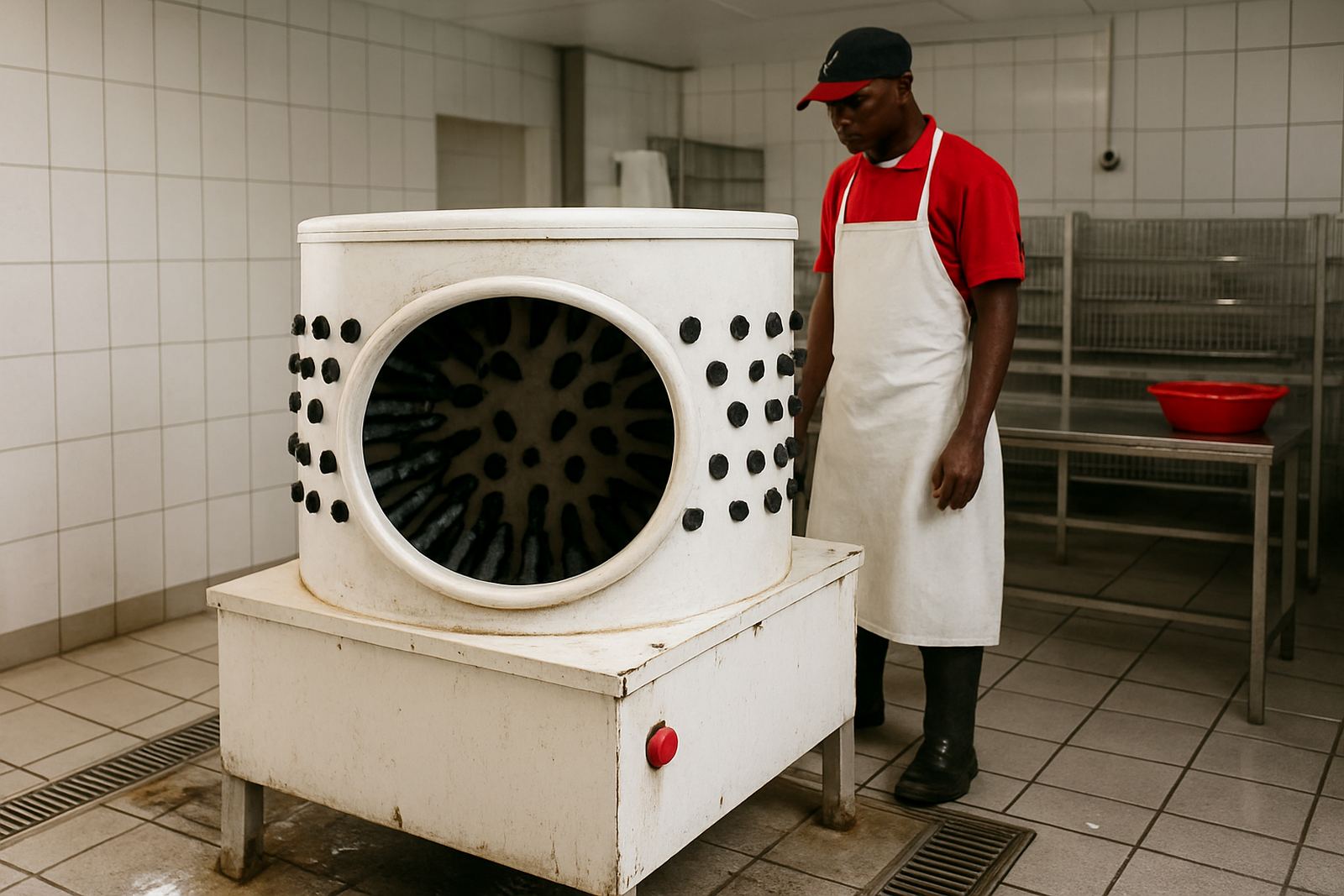
A feather plucker is a mechanical unit that removes feathers from poultry after scalding, using rubber fingers set in a rotating drum or tub. Once birds are scalded to the correct temperature, the plucker helps give a cleaner finish than hand plucking and keeps throughput more consistent when you have a steady queue of birds. In many small abattoirs and on-farm processing rooms, it becomes the point where labour savings really show up.
These machines are used for chickens, cockerels, spent hens, ducks and similar birds, depending on the finger layout and drum size. For heavier birds, the plucking cycle may need a little adjustment to avoid skin damage. The important thing is matching the machine to your bird size, scalding method and daily numbers, not just buying the biggest unit available. That is where a lot of operators go wrong.
- Removes feathers mechanically after scalding
- Speeds up dressing for batch processing
- Helps achieve a neater finish before washing
- Suitable for small farms, butcheries and abattoirs
Drum sizes and options for different bird volumes
Feather pluckers are normally selected by drum diameter, drum depth and motor size. Smaller machines suit farms doing limited weekly batches, while larger units are better where birds must move through quickly and the same operator also handles grading, evisceration and packing. We can supply stand-alone units or units fitted into a fuller processing room layout with scalding, singeing, washing and drainage planning.
Typical options include single-drum units for smaller batches, larger drum units for higher volumes, and machines with different finger patterns for birds that are soft-skinned or more mature. Some installations use a fixed tub with a top mounted drive, while others use a side drive arrangement for easier access during cleaning. The best choice depends on floor space, water control and how often the machine will run during a shift.
- Small batch units for farm slaughter and local supply
- Medium duty models for butcheries and retail processing rooms
- Higher capacity models for commercial poultry lines
- Different rubber finger layouts for mixed bird sizes
Where feather pluckers suit best in South African conditions
These machines suit operations from Boksburg and the rest of Gauteng through to Mpumalanga, Limpopo, North West, Free State and KwaZulu-Natal. They are common where operators need faster dressing but do not yet have a full automated line. In rural areas, they are often paired with a small generator or backup supply because load-shedding can interrupt work right in the middle of a batch. On coastal sites, extra care is needed for corrosion from humidity and wash-down water.
Feather pluckers also make sense where municipal wastewater rules must be respected. Feathers, grease and wash water need to be managed properly, so the machine should be set near a drain point, with enough space for clean-out and bucket collection. In a well planned room, the plucker sits after scalding and before final rinse, with the floor sloped so water does not pool around the operator’s boots.
- Suitable for on-farm processing and registered abattoirs
- Can be included in a new poultry project or added to an existing room
- Works well where labour is tight and batches must move quickly
- Best installed close to drainage and washable wall finishes
Power, water and installation needs
Most feather pluckers run on electric motor drive, with the exact supply depending on drum size and load. A smaller unit may work on single-phase supply, while larger units usually need three-phase power. If you are operating from a site with unstable supply, we can advise on generator capacity and starter type so the machine does not trip when several motors come on together. Gas is not normally required for the plucker itself, but it may be part of the wider dressing line if you are heating water for scalding.
Installation should allow safe access around the machine, room for loading and unloading, and a washable surface underfoot. The unit must sit level to avoid excess vibration. Water is needed for cleaning the machine after use, and some operators fit a hose point or quick rinse line nearby. If the machine is being placed in a new processing room, we can assist with layout so bird flow, drainage and operator movement all make sense from day one.
- Electric drive, usually single-phase or three-phase depending on size
- Needs a level floor and good drainage
- Allow space for loading, unloading and wash-down
- Backup power planning advised in load-shedding areas
Care, cleaning and servicing that keep output steady
A feather plucker will perform better if it is washed down properly after each session and inspected before the next run. Feathers and skin fat can build up around the fingers and splash area, so the machine should be rinsed, brushed and dried where practical. Operators should check the fingers for wear, loose fixings and uneven rows, because damaged fingers reduce picking performance and can tear skin. It is simple work, but it matters.
We also recommend a servicing plan for bearings, drive components and electrical controls. If the unit is used daily, keep a record of cleaning and any parts that were replaced. In dusty inland towns, and in hot rooms where equipment works hard, small faults can become downtime very quickly. A proper maintenance routine helps prevent that and keeps your dressing line moving when orders are up.
- Clean after every shift to reduce feather build-up
- Inspect rubber fingers and replace worn sets on time
- Check bearings, belts or drive components regularly
- Keep spare fingers and basic service parts on site
What to check before you place an order
Before ordering a feather plucker, start with your bird type, weekly volume and the space available in the room. Then confirm whether the birds are processed wet after scalding, what power supply is on site, and how the waste water will leave the room. If you are upgrading from manual plucking, measure the floor area carefully so the new unit does not block movement to the chill room or packing table. Small details like door width and hose access can save a lot of trouble later.
It also helps to check whether you need the machine on its own or as part of a turnkey poultry project. John F Marshall can assist with site planning, equipment selection, installation supervision, commissioning, operator training and spares supply. With poultry projects across South Africa, we know the practical questions that matter in the field, not just on paper.
- Bird size and daily or weekly throughput
- Single-phase or three-phase power on site
- Available floor space and drainage position
- Need for spare fingers, service parts and operator training
Key facts
| Machine type | Mechanical feather plucker for poultry dressing |
|---|---|
| Bird types | Broilers, cockerels, spent hens, ducks and similar poultry |
| Drive supply | Single-phase or three-phase depending on model size |
| Construction | Washable frame with rubber plucking fingers and drainage-friendly body |
| Use | Standalone unit or part of a processing room or abattoir line |
| Support | Planning, installation supervision, commissioning and spares supply |