What Broiler Crates Do on a Poultry Site
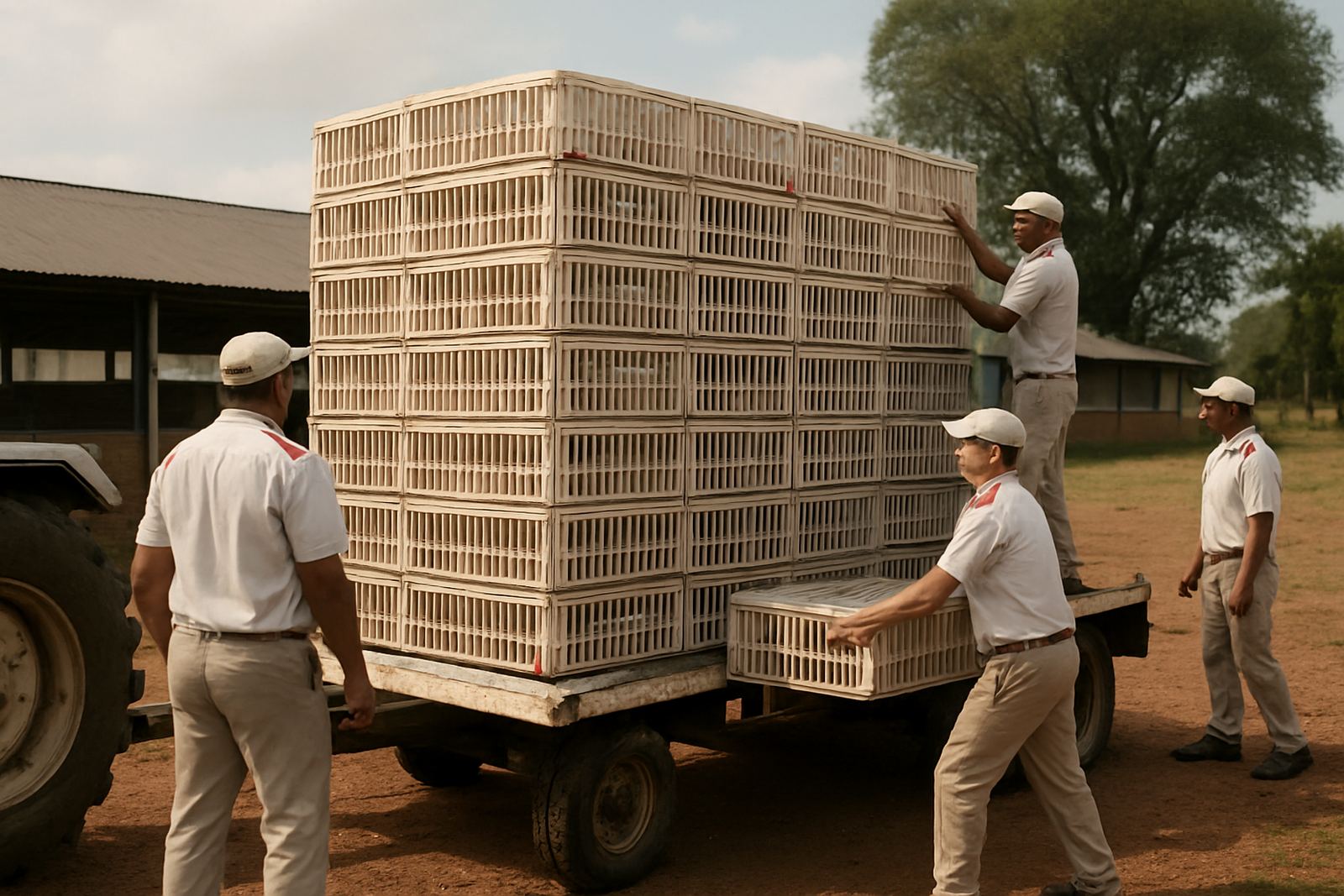
Broiler crates are purpose-made containers for live bird movement, usually between the poultry house, loading area and processing room. They help keep birds contained, reduce handling time and make loading more organised when a flock is being sent for slaughter or relocated between sites.
On farms around Gauteng, Mpumalanga, Limpopo and KwaZulu-Natal, crates are often used during early morning collections to limit heat stress. In hotter areas and coastal humidity, good airflow through the crate matters just as much as strength. Birds should not be crammed in, because poor stocking in the crate can lead to bruising, wing damage and avoidable mortality.
We supply crates that suit commercial broiler handling where cleanability, stackability and practical weight are important. The right crate also makes life easier for the catching team, the loader and the processing crew, so the whole chain moves quicker with less faffing about.
Sizes, Construction and Handling Options
Broiler crates are generally supplied in standard poultry transport sizes, with variations depending on bird weight, truck body size and the handling method used on site. Most units are moulded from durable plastic for repeated wash-downs and regular use. The crate walls include ventilation openings, while the base is shaped to stay stable during lifting and stacking.
Common options include crates with front loading or top loading access, depending on how birds are caught and loaded. Some systems use flat lids or gate-style openings, and some include interlocking corners to stop movement when stacked. If you are running a busy unit, that small detail saves time and damage during transport.
Typical ordering choices include:
- Standard broiler transport crates for live bird movement
- Stackable units for truck loading and yard storage
- Crates with smooth internal surfaces for easier wash-down
- Options with stronger corner support for repeated handling
- Crates suited to manual loading or trolley-based movement
For farms with different bird sizes, it is worth matching the crate height and ventilation pattern to the actual flock weight rather than guessing. A crate that is too shallow or too tight can create problems during peak summer catches.
Where Broiler Crates Fit Best
Broiler crates suit commercial poultry farms, catch-and-load operations, independent growers and processing facilities that need live birds moved in a controlled way. They are also useful for contract growers working with scheduled collections, where birds need to be ready in batches and loaded quickly.
These crates are a good fit for:
- Broiler houses sending birds to an abattoir
- Relocation between rearing sites or holding areas
- Operations needing hygienic, repeatable bird handling
- Sites with narrow loading bays or mixed truck access
- Producers wanting faster turnaround at collection time
For rural sites, the crate system should also suit the local road conditions and vehicle set-up. If trucks are travelling on rough gravel roads in parts of Limpopo or North West, the crate needs secure stacking and proper tie-down points so the load does not shift en route.
Power, Gas and Installation Requirements
Broiler crates themselves do not need electrical power or gas. They are a handling item, not powered equipment. What matters is how they are stored, washed and moved on the farm. A clean, level area near the loading point is ideal, with enough space to stack crates safely and keep the catching route clear.
If crates are part of a wider live bird handling setup, you may want planning around wash-down water, drainage and traffic flow. In some municipal areas, wastewater from cleaning poultry equipment must go through proper soakaway or drainage control, especially where there is a processing room on site. That is worth checking before the first delivery arrives.
For larger projects, we can help with site planning, house layouts and loading point placement so crates move in one direction without crossing dirty and clean traffic. It keeps the process easier to manage and cuts down on waiting time when the flock is due out.
Care, Washing and Servicing Between Loads
Broiler crates should be cleaned after every live bird run. Feather debris, dust and manure left behind can build up quickly and create smell, contamination and wear on the crate surface. A simple wash-down routine with approved cleaning chemicals and good drying time is usually enough, provided the crates are inspected for cracks and worn corners.
Check the crate handles, interlocking edges and base supports before every use. If a crate is warped or damaged, it may stack poorly and become unsafe during transport. We also recommend keeping a small spare set on hand so a busy flock can still be collected if one or two units are taken out of service.
Basic care checklist:
- Wash after use and allow full drying before stacking
- Inspect for cracks, broken lugs or sharp edges
- Store out of direct sun where possible to slow UV wear
- Keep crates off damp ground to reduce dirt buildup
- Record the number of cycles if your site runs heavy weekly volumes
If your operation is near the coast, salt air can speed up wear on any metal rack or trolley used with the crates, so fittings should be checked regularly. A little upkeep goes a long way, and it keeps the handling team from fighting tired equipment on a hot catch day.
What to Check Before You Order
Before ordering broiler crates, confirm the bird type, average live weight, transport distance and the loading method used at your site. A crate that suits 1.8 kg birds may not suit heavier birds later in the production cycle. You should also confirm truck bed size, stacking height and whether the farm uses manual loading or assisted handling equipment.
It helps to ask these questions first:
- How many birds are moved per load and per week?
- What is the average bird weight at catching?
- Will the crates be loaded by hand or with handling equipment?
- Do you need a crate that nests, stacks or locks in place?
- Is the wash-down area on a concrete slab with drainage?
- Will the crates be used only on one site or between multiple branches?
We work with poultry businesses across Gauteng, Mpumalanga, Limpopo, North West, Free State and KwaZulu-Natal, so we know the practical questions that come up when a flock is due out and the truck is already in the yard. If you are planning a new project or upgrading an existing one, we can help you match the crate selection to the rest of the live bird handling system.
Broiler Crate Supply for Poultry Projects and Expansions
John F Marshall supplies broiler crates as part of poultry equipment projects and upgrade work for growers, processors and integrated operations. Because we also handle site planning, equipment selection, installation supervision and operator training, we can make sure the crate choice fits the broader flow from house to processing room.
That is useful when a business is expanding capacity or standardising handling across several farms. The right crate spec supports faster loading, better bird condition and less damage to equipment, which matters when you are working to a schedule and there is no room for delays.
If you need live bird transport equipment for a new build, expansion or replacement programme, we can help with the practical details and make sure the order is set up properly from the start.
Key facts
| Product type | Broiler transport crates for live bird movement |
|---|---|
| Material | Durable plastic construction for repeated wash-down use |
| Loading style | Manual handling or assisted loading, depending on site setup |
| Typical use | Collection to processing, short haul relocation, inter-site bird movement |
| Care | Wash after each use, inspect for cracks and worn lugs |
| Service area | Gauteng, Mpumalanga, Limpopo, North West, Free State and KwaZulu-Natal |