What a chick brooder does in the first days
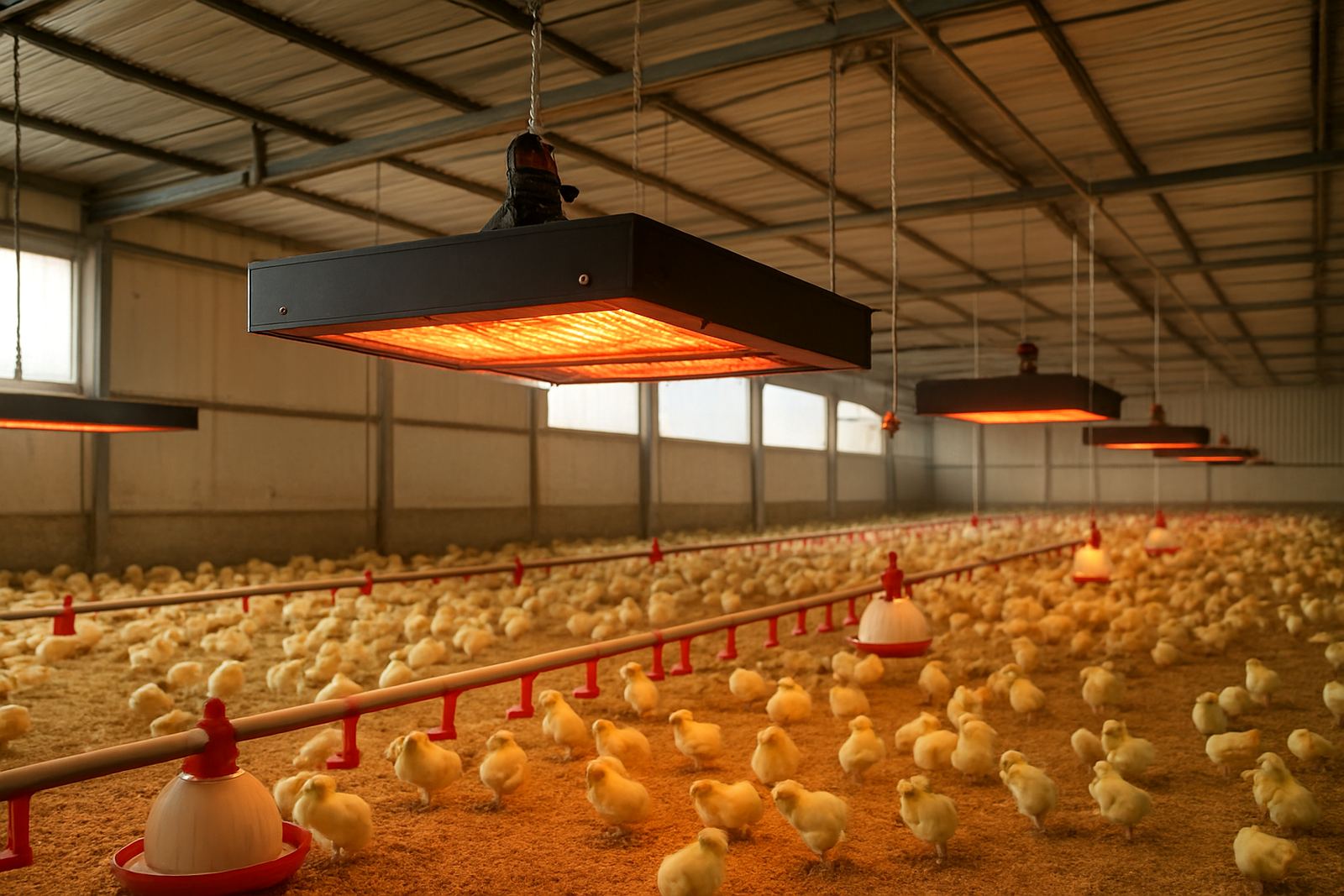
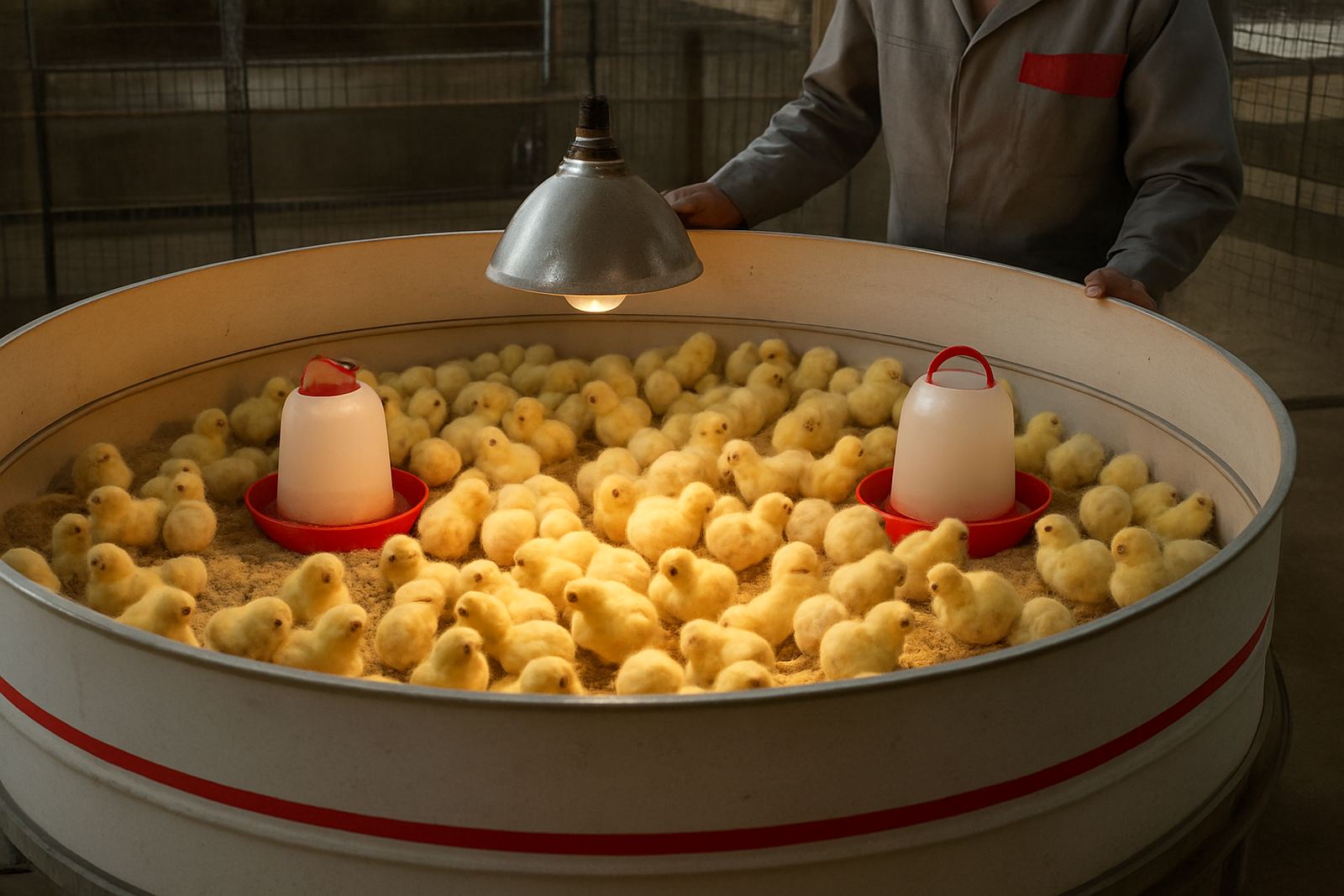
A chick brooder gives steady heat where it matters most, close to the birds and over the floor area they use in the first week. Day-old chicks cannot regulate body temperature properly, so they need a warm start, dry litter and enough space to spread out without piling up. That is the job of the brooder, and it must do it without hot spots, smoke or constant fiddling.
Our chick brooders are used in broiler houses, rearing sheds and smaller hatchery or brooding rooms where early management is critical. In colder parts of Gauteng, Free State and the Highveld, the right brooder helps keep mortality down during cold snaps and load-shedding periods, while coastal farms often need good humidity control and corrosion-conscious care because of damp air.
A well set brooder also saves labour. Instead of chasing uneven temperatures across a house, the operator can set the heat, check bird spread and carry on with feeding and water checks. That makes a real difference in the first 7 to 14 days, when every small error shows up later in growth and uniformity.
Brooder sizes and fuel options we can supply
Brooder units are selected by house width, bird density and whether you are heating a full house or only a brooding section. We supply practical sizes for small farms and larger commercial setups, from single units for a narrow shed to multiple units arranged along the house line. The aim is even heat coverage, not just high output on paper.
- Typical heat output ranges from about 8 kW to 30 kW per unit, depending on model and fuel source
- Units can be configured for gas-fired heating or electric-assisted systems where the supply is stable
- Portable and fixed mounting options are available, depending on house layout and cleaning method
- Reflector and directional heat styles can be used where chicks are brooded in defined zones
- Stainless or coated components may be specified for houses with high wash-down frequency or coastal humidity
For most poultry houses, the better question is not only how much heat is needed, but how fast the unit responds after a cold start and how easy it is to service when the house is full. If you are running in areas like Boksburg, Middelburg, Polokwane or Pietermaritzburg, that practical side matters as much as the rating plate.
Where chick brooders suit local poultry operations
Chick brooders suit commercial broiler growers, layer rearers, contract growers and hatchery support rooms where day-old birds need a controlled start. They are also useful on mixed farms that bring in smaller batches and do not want to heat a full building when only part of the house is occupied. If your house spacing, air movement and curtain control are sound, the brooder becomes easier to manage and more economical to run.
These units are often chosen for houses with manual labour rather than highly automated control rooms, since they can be checked visually and adjusted by trained staff. In many South African areas the challenge is not only cold, but also power cuts, wind-driven draughts and large day-night temperature swings. A brooder that starts quickly and holds temperature better gives you a better margin when conditions turn poor.
For projects in North West, Mpumalanga and Limpopo, we often look at fuel access, bottle changeover planning, service access and litter depth before final selection. On the coast, we also check whether the fittings need extra protection from rust and whether the house has enough ventilation to clear moisture without robbing heat from the chicks.
Installation, gas supply and electrical needs
Installation should be planned before birds arrive, not after the first cold night. Brooders need correct hanging or mounting height, safe clearances, enough aisle space for servicing and a heat pattern that matches the house layout. We also check whether the house floor is level and whether curtains, side walls or partitions are causing dead air pockets.
- Gas installations must follow safe cylinder placement, regulator selection and leak testing before commissioning
- Electrical supply should be checked for load capacity, stable voltage and proper isolation points
- Where load-shedding is common, back-up planning should include gas availability or generator support
- House ventilation must allow combustion gases to clear properly, without creating direct draughts on the birds
- Mounting height and spacing should be set to the chicks age and the brooding area size
We can assist with site planning, house layout checks and installation supervision so the equipment is set up for daily use, not just first-day testing. If the brooder is part of a new poultry project, it is worth matching it with feeders, drinkers and house layout at the same stage. That keeps the work neater and avoids costly changes later on.
Care, cleaning and servicing that keep heat even
Brooders last longer when they are cleaned, checked and kept free of dust build-up. Burners, jets, reflectors and guards should be inspected before each placement cycle. If the unit is running on gas, any smell of gas, uneven flame or sooty marks should be dealt with straight away. Small faults caught early are cheaper to fix than a house full of weak chicks.
After cleaning out, check for blocked air passages, loose fittings, worn hoses and damaged connectors. Coastal houses may need a bit more attention on metal parts because damp air and wash-down chemicals can start corrosion. If the brooder is stored between cycles, keep it dry and covered, not left against wet concrete or in a feed store where dust gets into the controls.
We also recommend a simple service routine for growers who run repeated batches. That can include pre-season inspection, spare part checks, flame testing and staff refresher training on safe start-up. A well managed unit does not need constant attention, but it should never be left until it fails mid-placement.
What to confirm before you order
Before ordering, work through the practical details so the unit matches the house and the flock. The wrong heat source, wrong size or poor mounting height will show up quickly once the chicks arrive. It is better to confirm the basics now than lose time later adjusting equipment in a full house.
- House width, length and planned brooding zone size
- Number of chicks per placement and target stocking density
- Fuel type available on site, gas or electric support
- Power supply condition, including back-up during outages
- Ventilation method, curtains, fans and draught control
- Surface conditions, cleaning routine and corrosion risk
- Need for spares, service training or maintenance support
If you are expanding an existing poultry operation, it also helps to confirm how the new brooders will sit with the current feeder and drinker lines. That way the early heat zone and bird movement line up properly. Our team can help with selection, supply and support from Jet Park in Boksburg to projects across Gauteng, Mpumalanga, Limpopo, North West, Free State and KwaZulu-Natal.
Key facts
| Product type | Chick brooder units for day-old poultry |
|---|---|
| Typical heat output | About 8 kW to 30 kW per unit, depending on model |
| Fuel options | Gas-fired or electric-assisted, subject to site conditions |
| Use | Broiler houses, layer rearers, hatchery support rooms and rearing sheds |
| Materials | Steel body with coated or stainless parts where specified |
| Support | Installation supervision, commissioning, training and spares supply |