What an evisceration table does in the processing line
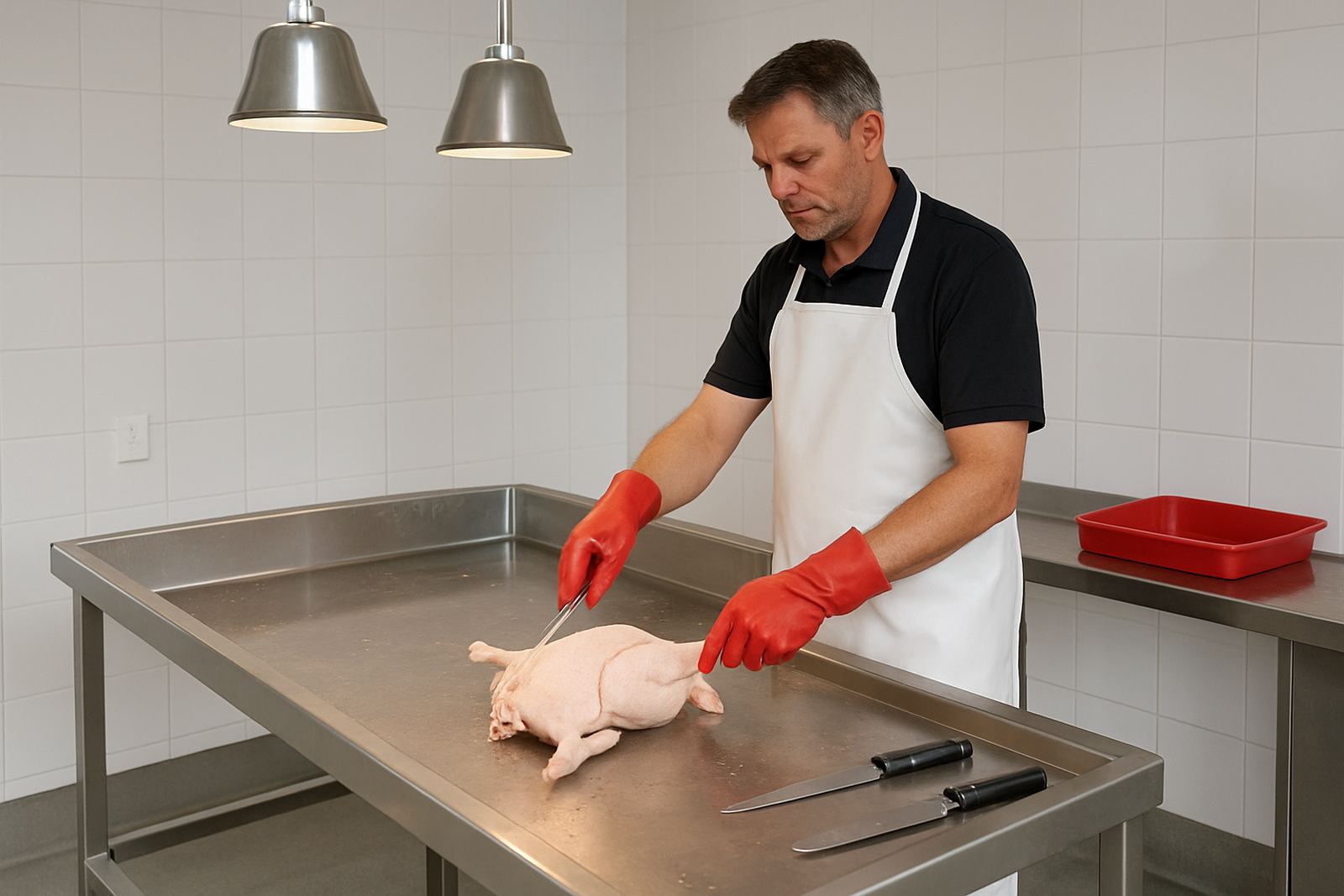
An evisceration table is the working surface used after scalding and plucking, where the bird is opened, inspected and prepared for the next step in the process. It gives staff a clear, level area for controlled work instead of using makeshift benches that are hard to clean and slow down the line.
For poultry rooms in Gauteng, Mpumalanga and KZN, the right table helps keep the sequence orderly. It supports better hygiene, reduces handling mistakes, and makes it easier to separate dirty and clean tasks in the room layout. Stainless construction is important because blood, water and cleaning chemicals are part of daily use.
Sizes, sink layouts and working options
We supply evisceration tables in practical sizes to suit the available room and the number of operators. Common lengths are 1.2 m, 1.5 m, 1.8 m and 2.4 m, with widths generally from 600 mm to 900 mm. Height is usually set around 850 mm to 900 mm, but this can be adjusted to suit the working team and the rest of the processing line.
Options can include one or two wash-up sinks, splash backs, undershelves, drain outlets and hand rinse points. In smaller rooms, a compact single-station table may be enough. In larger abattoir rooms, a longer table with multiple work positions keeps throughput steady and avoids crowding.
- 304 stainless steel top for food handling areas
- Adjustable feet for uneven floors
- Raised edge or splash back where needed
- Undershelf for trays, tools or inspection items
- Drain point to assist wash-down and floor cleaning
Where these tables suit best
Evisceration tables are used in poultry abattoirs, on-farm processing rooms, hatchery-linked dressing areas and upgraded units that need a proper work station. They suit operations that process birds in batches, whether for local supply, live bird processing, or part of a broader turnkey poultry project.
They are a practical fit for facilities in humid coastal areas too, where mild steel can rust quickly and damp conditions stay around after cleaning. Stainless surfaces handle this better, provided the room has proper drainage and the tables are washed and dried correctly after use. In the Highveld, dust control matters as much as moisture, so the table should be part of a planned room layout not an afterthought.
- Small and medium poultry processors
- Farm abattoirs and on-site dressing rooms
- Processing room upgrades and extra lines
- Projects needing separate clean and dirty work zones
Installation, utilities and room planning
Most evisceration tables do not need heavy power on their own, but the room around them does need the right services. Good water supply, drainage, lighting and floor falls are more important than plug points for the table itself. Where a wash sink or spray point is fitted, a water connection and waste outlet must be planned before installation.
If the table is being added to a new processing room, we normally check the access width, floor level, doorway sizes and how staff will move carcasses between stations. In a tight room, even 100 mm of wasted space can slow the process. We also look at cleaning routes so the team can hose down the area without water running back into the work zone.
- No dedicated power required for standard manual tables
- Water and drainage required if sinks or wash points are included
- Level floor preferred, with adjustable feet to correct small differences
- Allow enough clearance for trolleys, trays and operator movement
Cleaning, servicing and daily care
Stainless tables are straightforward to maintain, but they still need proper daily cleaning. Wash the surface after each shift with approved detergent, then rinse and dry where possible. Pay attention to welded joints, corners, drain points and any undershelf fixings because dirt will collect there first.
For sites running through load-shedding, keep cleaning routines simple and consistent so the team can finish sanitation without delay. If the room loses power, the table itself remains usable, which is one reason many operators prefer manual stainless work stations for critical dressing areas. A basic service check every few months helps confirm that feet are secure, joints are sound and no fittings have loosened.
What to confirm before placing an order
Before ordering, it helps to confirm the bird size, expected throughput, room dimensions and whether the table must include sinks or storage. A table for 500 birds a day is not the same as one for a larger plant running repeated batches. The more detail we have, the better the layout can be matched to the room and the team.
It is also important to check the finish and steel grade, because the wrong material can show early staining in wet rooms. Ask about inlet and outlet positions, splash protection, and whether the table needs to work with existing processing equipment. If the room is being expanded later, we can set the first unit so future stations line up properly.
- Bird numbers per shift and expected line speed
- Available room size and doorway access
- Need for sink, spray, drain or undershelf options
- Steel grade required for wet or coastal conditions
- Floor slope, water points and waste outlet locations
- Future expansion plans for extra stations or equipment
Support for poultry projects and processing rooms
John F Marshall supplies evisceration tables as part of poultry equipment and processing room projects across South Africa. From Jet Park in Boksburg, we work with farms and processors in Gauteng, Mpumalanga, Limpopo, North West, Free State and KwaZulu-Natal. The aim is to match the table to the room, not simply sell a piece of stainless steel and leave the rest to chance.
Our team can assist with site planning, equipment selection, house layouts, installation supervision, commissioning, operator training and maintenance programmes. Where the room needs more than a table, we can also assist with processing room fitout, spares supply and expansion upgrades so the line stays practical as the business grows.
Key facts
| Material | Food-grade stainless steel construction |
|---|---|
| Typical lengths | 1.2 m, 1.5 m, 1.8 m and 2.4 m |
| Typical width | 600 mm to 900 mm |
| Working height | About 850 mm to 900 mm, adjustable |
| Options | Sink, splash back, undershelf, drain outlet, adjustable feet |
| Use case | Poultry dressing, inspection and evisceration areas |