How egg collection belts work in a layer house
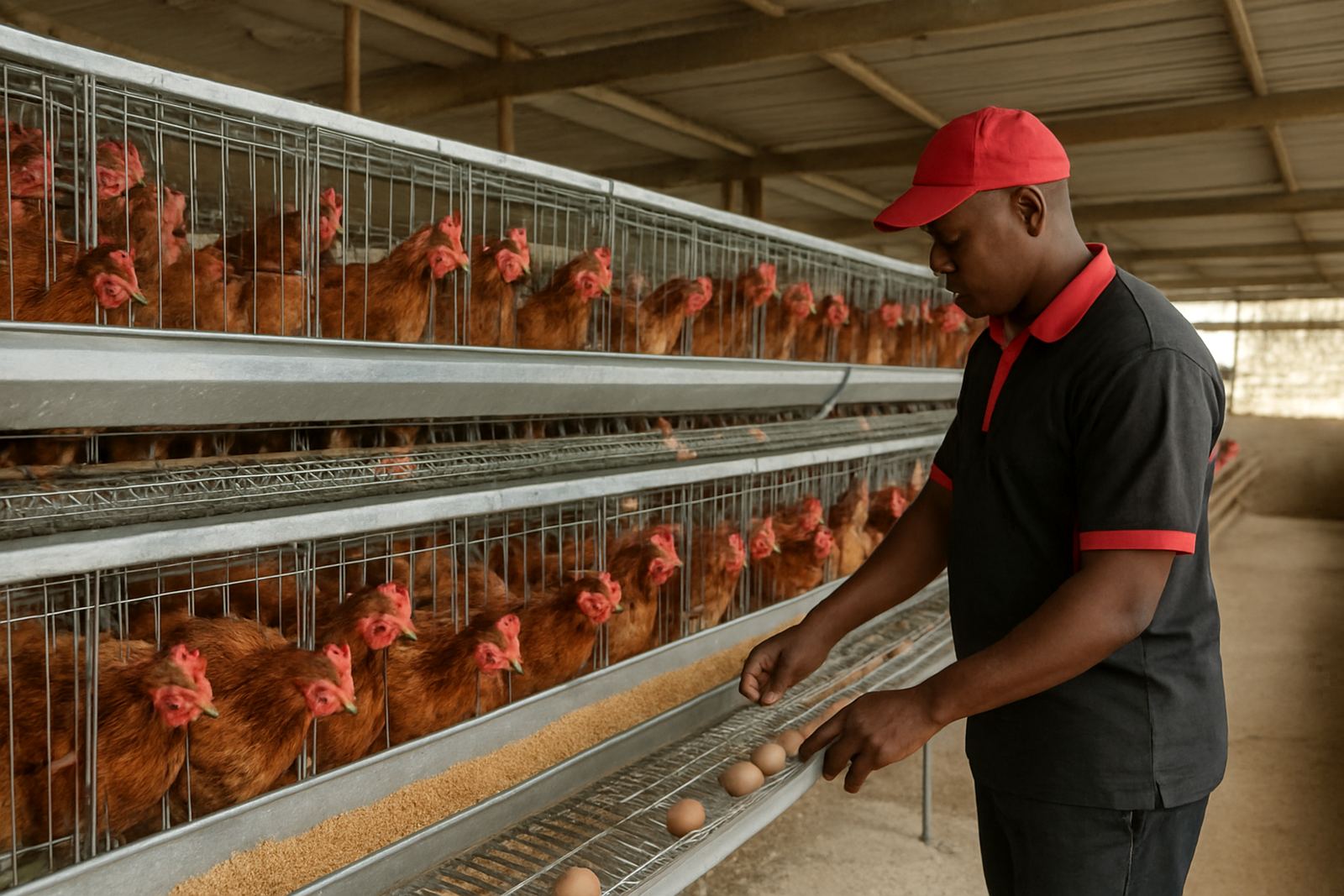
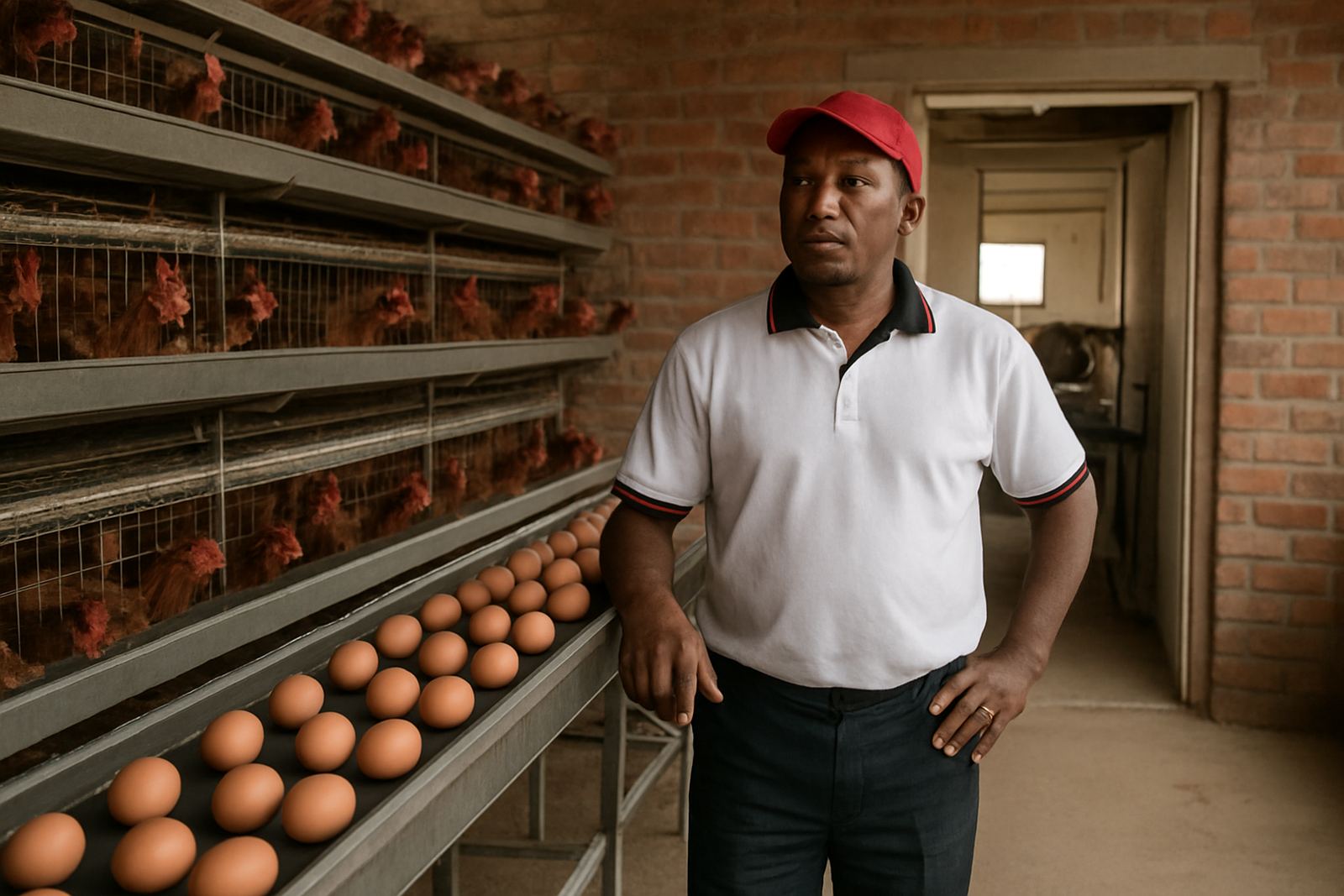
An egg collection belt is fitted to the front of laying-hen cages so eggs roll onto a moving belt instead of being picked up by hand at each row. The belt carries the eggs to the end of the house, or to a cross conveyor, where they can be packed into trays for grading and dispatch. It keeps eggs moving in one direction and helps reduce breakage caused by repeated handling.
For South African layer units, this matters when power is unstable, labour must be kept efficient, or houses are long enough that hand collection takes too much time. The system is simple in principle, but it must be measured correctly to match the cage row spacing, egg output and house length. If the pitch is wrong, eggs can stall or stack up at turns, which is where cracks start.
Sizes, belt widths and drive options
Collection belts are usually specified to suit the cage row pitch and the number of rows in the house. Common widths range from 100 mm to 300 mm per row, with wider transfer belts used where eggs are moved across a full house line. The belt surface is made to carry eggs smoothly while still gripping enough for a controlled feed.
Drive arrangements can be side drive or end drive, depending on the house layout and the point where eggs leave the rows. A proper project will also take the incline into account, because too steep a lift can let eggs roll back. In hot houses, belt tension and roller alignment become more important since heat expands components and minor misalignment can turn into daily wear.
- Suitable for manual collection points, cross conveyors and central packing tables
- Available for new houses or retrofit on existing laying cages
- Can be matched to 2 row, 3 row, 4 row or multi-tier layouts
- Works with plastic tray handling at the transfer point
Where the system fits best
Egg collection belts suit medium to large layer houses where eggs are collected several times a day and the farm wants better control over cracking, dirt contamination and labour use. They are a practical choice for farms near Boksburg, Delmas, Polokwane, Pietermaritzburg and other production areas where temperatures, dust and load-shedding all affect daily work.
They also make sense for farms that plan future expansion. If you are adding more cages in stages, the belt path and motor points can be planned so later rows tie into the same collection flow. That avoids patchwork changes later on, which is where systems often become messy and expensive to keep going.
- Layer houses with regular egg picking schedules
- Operations that need less manual lifting and fewer tray movements
- Sites with longer row runs where hand collection is slow
- Projects that may expand in phases over 12 to 24 months
Installation, power needs and site preparation
Installation starts with house layout checks, row measurements and confirmation of support points. The belt must sit level enough to move eggs without jolting, and the end discharge must line up with trays, conveyors or collection tables. We normally check the floor falls, wall clearances, cable routes and whether the house already has enough space for service access. A belt that cannot be reached for cleaning or tensioning becomes a nuisance quickly.
Power needs are modest compared with many processing items, but they still need to be planned properly. Most systems run on single-phase or three-phase motor drives depending on size and house length, with control options that can be tied into the farm’s electrical layout. In areas with frequent load-shedding, many farms ask for a backup power plan or at least a restart procedure so the belts can resume without damaging eggs left on the line.
For inland and coastal sites, we also allow for corrosion and moisture. Coastal humidity can affect chains, bearings and fixings, so selection of materials and basic protection matters. The belt system should be fitted where the operator can see transfers clearly, because if eggs back up at one point the issue is usually spotted early and sorted fast.
Care, cleaning and servicing that keeps the line moving
Routine care is simple if it is done on schedule. Keep the belt clean, check alignment, inspect rollers and make sure the drive is not running hot. Dust, feathers and broken shell fragments build up in layer houses, and if they are left in the belt path they can cause drag and uneven travel. Tension should be checked after the first few weeks of use, then at regular service intervals.
Good servicing also includes checking motor mounts, bearings, belt joins and the discharge end where eggs leave the line. If one section starts to track badly, it can be corrected before it damages the belt edge. We advise farms to keep spare fasteners, belt repair parts and a basic service log. That saves time when the house is busy and there is no room for a long stoppage.
- Wash off dust and shell debris before it hardens
- Inspect belt tracking and adjust before the edge frays
- Grease moving parts at the intervals set for the house
- Keep spare belt joiners and key fixings on site
What to confirm before you place an order
Before ordering, it helps to confirm the cage row count, row length, egg output per house, discharge point and whether the system will be installed in a new build or an existing unit. You should also check available power, wall openings, staff collection workflow and whether the eggs will go straight to trays, grading or another handling step. This avoids buying a belt that is too short, too slow or awkward to service.
It is also worth confirming the farm’s biosecurity rules and cleaning method. Some sites need equipment that can be washed down more easily, while others want simple dry-clean maintenance because of local water supply limits. If the house is in a high dust area or close to the coast, that should be mentioned at the quoting stage. A small detail can save a lot of trouble later, especially when the farm is running under pressure.
- House length, row layout and cage configuration
- Egg collection rate per hour and transfer method
- Available electrical supply and backup power plan
- Cleaning method, access space and spare parts support
Key facts
| Product | Egg collection belts for laying cages |
|---|---|
| Use | Organised egg transfer from cage front to collection point |
| Common belt widths | 100 mm to 300 mm per row |
| Power | Single-phase or three-phase drive options |
| Application | New builds and retrofit layer houses |
| Support areas | Gauteng, Mpumalanga, Limpopo, North West, Free State, KwaZulu-Natal |