What a coal brooder does in a poultry house
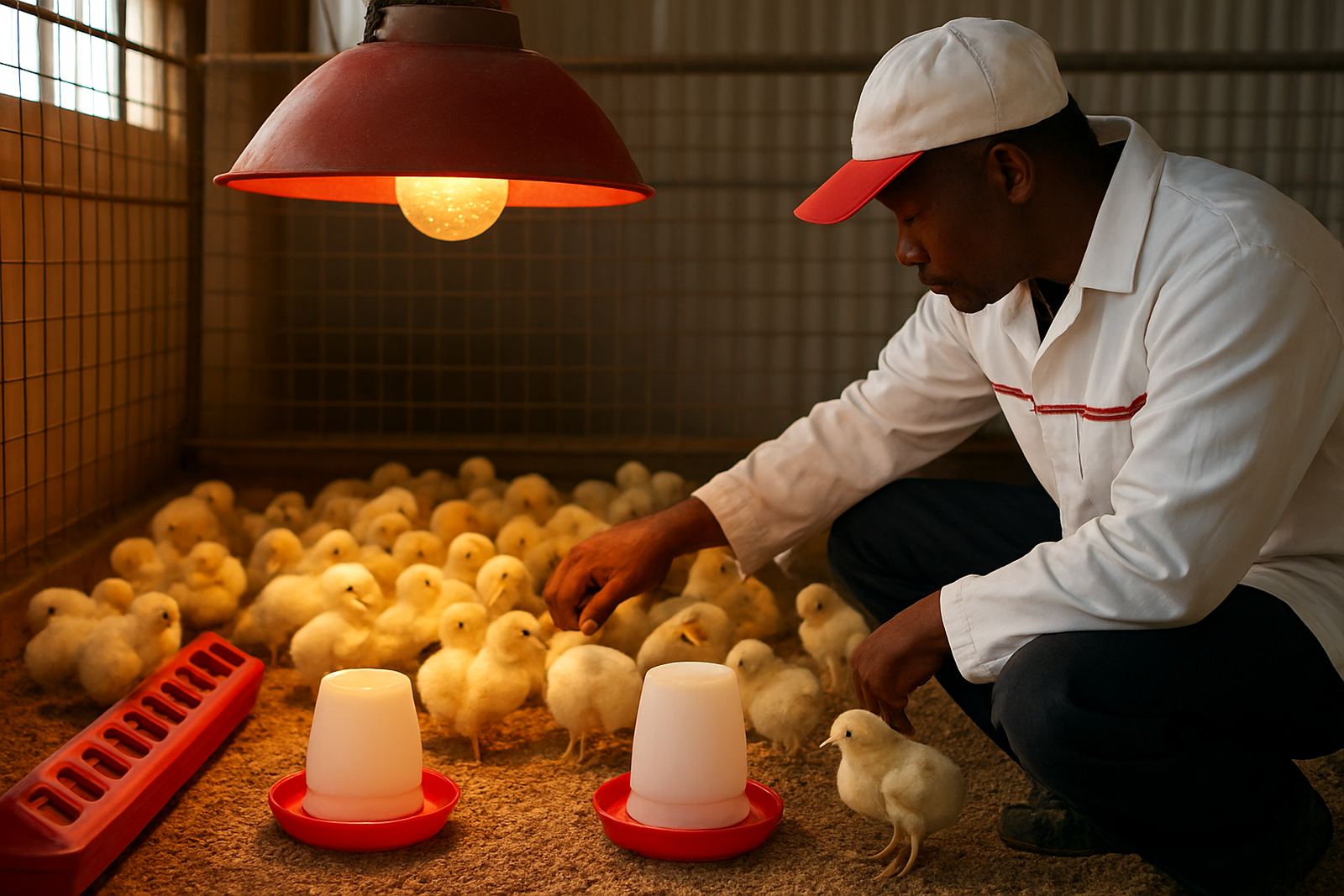
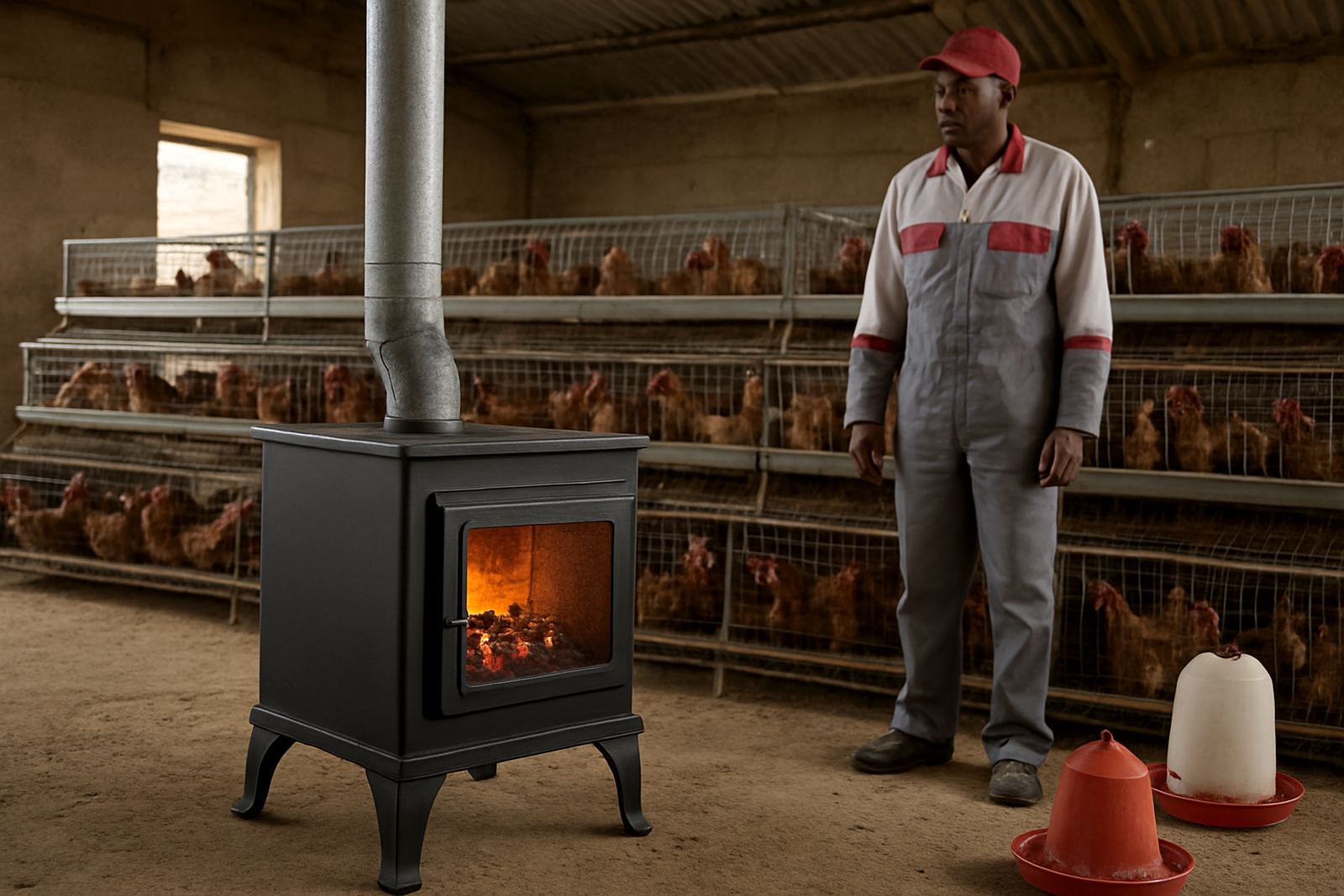
A coal brooder is a solid-fuel heating unit used to warm young birds in the first weeks after placement. It gives a steady radiant heat zone under and around the brooder, helping chicks start feeding and drinking properly when night temperatures drop. On many South African farms this remains a practical choice, especially in rural areas where paraffin, gas or power supply is not the easiest option.
The unit is normally fitted in broiler houses, rearing houses and small hatchery rooms where a dependable heat source is needed before birds are fully feathered. It is a hands-on system, so the team must watch temperature, ventilation and ash build-up closely. When managed well, it gives predictable brooding heat with simple equipment and low dependence on the grid.
Sizes, output ranges and typical configurations
Coal brooders are supplied in different body sizes and heat outputs so the unit can match house width, bird numbers and the fuel available on site. Smaller models suit compact rearing houses or nurseries, while larger units are used in longer poultry sheds where heat has to spread further down the house. The correct size depends on how many chicks are being brooded per cycle, the house insulation and the expected winter conditions in places like the Highveld or the Free State.
Most installations use one brooder per defined floor area, with spacing set by the heat pattern rather than by the length of the house alone. In some houses a row of smaller units gives better control than one oversized unit. Our team normally checks house dimensions, curtain arrangement and ventilation points before recommending the final setup.
- Small units for nursery sections and start-up houses
- Medium units for standard broiler houses with moderate insulation
- Larger units for colder sites or wider houses
- Single-unit and multi-unit layouts for phased brooding zones
Where coal brooders suit local conditions best
These brooders suit farms that can store and handle coal, anthracite or other approved solid fuel on site and want a heat source that is less dependent on gas deliveries. They are often chosen where load-shedding is a daily reality and the farmer wants to avoid putting all brooding risk on electrical heaters. In Mpumalanga, Limpopo and North West, they are also practical where labour and fuel handling are already part of the routine.
They can work well in coastal and inland areas, but the ventilation plan must be set correctly. Coastal humidity slows drying of litter, so the house needs good airflow without pulling heat away too fast. In colder inland districts, the brooder output may need a tighter house envelope and better sidewall sealing. A small mistake on airflow can waste fuel quickly, so site conditions should be checked before the order is placed.
- Rural poultry units with available solid fuel
- Sites with unstable electricity supply
- Farms where gas storage is limited or unwanted
- Brooding houses needing simple, familiar operation
Installation, flue routing and power needs
Installation starts with safe positioning, floor clearance and proper clearance from curtains, litter and wall linings. Coal brooders need a stable base, correct flue routing and enough space for loading, cleaning and safe operation. The flue must discharge in a way that keeps smoke away from bird level and does not create back-draft inside the house. On tight sites we often review the house roof line and wind direction before final placement.
Most coal brooders do not need a large electrical supply, but some layouts use small fans, thermostats or monitoring devices that need a basic power point. If the house relies on pumps, alarms or an automatic drinker line, the total power load should be checked so the brooder system does not sit in a weak circuit. Gas is not required for the brooder itself, which helps on farms where cylinders or piping would complicate the set-up. We also look at fire safety, ash disposal and access routes for bringing fuel in and out.
Running the brooder cleanly through the season
Good brooder care is mostly about consistency. The unit should be lit, watched and adjusted at the same times each day so the chicks are not pushed from cold to too hot in one cycle. Ash should be removed often, because restricted airflow will reduce heat output and make the fire harder to manage. The surrounding floor and litter must stay dry, since damp litter can lead to odour, poor comfort and slower chick movement.
Operators should check the grate, fire chamber, fuel feed area and flue joints at each turnaround. Any sign of warping, cracking or soot leakage needs attention before the next placement. In busy production houses, a short cleaning routine after every batch saves fuel and time later on, and it reduces the chance of smoke problems when the weather turns still. If the brooder is left dirty, the next batch often starts badly.
- Remove ash before it blocks airflow
- Inspect flue joints for leaks and loose clamps
- Keep fuel dry and stacked off the floor
- Check burner doors, handles and seals before placement
- Clean the brooder between batches, not only at year end
What to confirm before you order
Before confirming a coal brooder, check the house length and width, insulation level, number of chicks per batch and the fuel source you plan to use. It also helps to know whether the site has a loading area for fuel sacks or loose coal, and whether staff have the time and experience to manage a solid-fuel heat source daily. A brooder that suits one farm may be the wrong choice for another just down the road.
Useful ordering details include the required heat coverage, whether the house is single span or multi-bay, and how the flue will exit the building. If the farm is in a windy area or near the coast, mention that too, because it affects smoke handling and temperature control. Our team can assist with site planning, equipment selection, house layouts, installation supervision, commissioning, operator training and maintenance programmes across Gauteng, Mpumalanga, Limpopo, North West, Free State and KwaZulu-Natal.
- House measurements and bird numbers
- Fuel type and storage method
- Ventilation style and curtain arrangement
- Need for spare parts, training or maintenance support
Supplied for practical poultry work in South Africa
Coal brooders remain a practical option where the farm wants direct heat, simple operation and less dependence on external utilities. They are best matched to producers who understand that solid-fuel heating needs daily attention and disciplined house management. When the unit is sized correctly and the house is prepared properly, it can support healthy chick start-up without complicated controls or expensive fuel systems.
John F Marshall supplies poultry equipment from our Jet Park, Boksburg base and supports projects across South Africa. If you are planning a new house, adding a brooding section, or replacing an older unit, we can help you compare the options and set up the right layout for the site.
Key facts
| Fuel type | Coal or other locally available solid fuel |
|---|---|
| Use | Chick brooding in poultry houses and nursery areas |
| Typical application | Broiler, rearing and hatchery support spaces |
| Installation needs | Stable base, flue routing, safe clearance, basic power if controls are fitted |
| Maintenance | Ash removal, flue checks, grate and seal inspection between batches |
| Support areas | Site planning, training, spares, servicing and commissioning |