What a carcass drip rack does in a poultry room
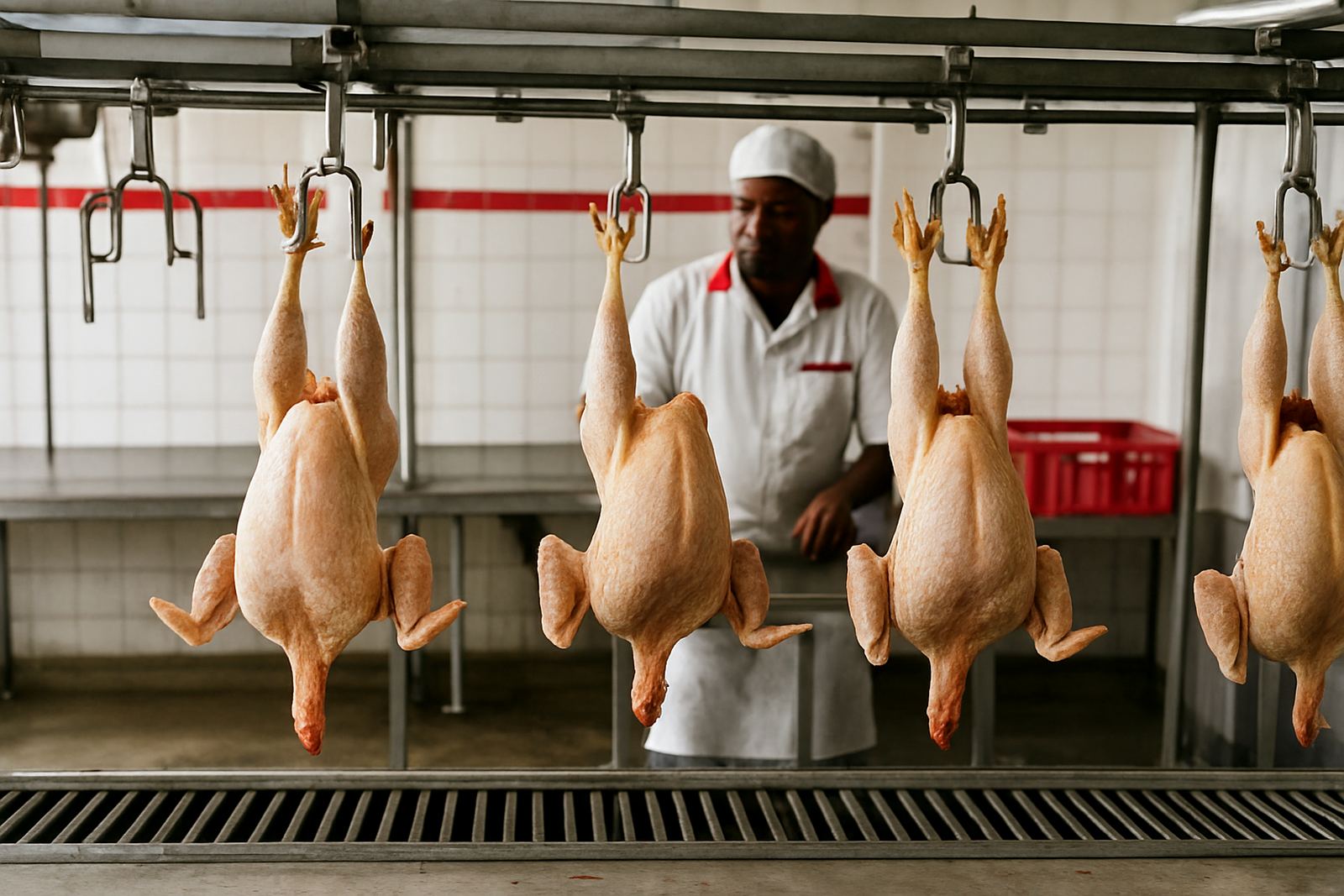
A carcass drip rack is a hanging rack used after washing, chilling or inspection so excess water can drip off in a controlled way. It keeps carcasses off tables, floors and crates, which helps with hygiene and cuts down on water tracking through the room. In a busy processing area, that small bit of order matters a lot, especially where staff are working around wash-downs and frequent cleaning.
These racks are usually fitted in the clean side of the processing room or in a transfer area close to the wash point. They are common in poultry plants, abattoirs, food prep rooms and smaller on-farm processing units. If your operation has mixed traffic, the rack helps keep the post-wash step separate from packing and dispatch, so the room runs more neatly and people are not stepping through wet patches all day.
Sizes, hanging styles and finish options
Carcass drip racks can be made to suit the amount of product you handle and the space you have. Some customers need a short wall-mounted unit for a compact prep room, while others want a longer free-standing rack that can handle a steady flow of carcasses. The layout usually depends on the hanging point, clear floor space and how many birds move through the area at one time.
- Single-row racks for tighter rooms and smaller daily volumes
- Multi-row racks for higher throughput and longer draining time
- Wall-mounted, ceiling-supported or free-standing frames
- Stainless steel contact areas for wet, wash-down conditions
- Galvanised support frames where the rack sits outside the wet zone
Typical hooks, bars and spacing are set to suit carcass size, whether you are handling broilers, larger birds or mixed weight batches. As a guide, many customers ask for hook centres between 100 mm and 200 mm, with overall rack lengths from about 1,500 mm up to 4,000 mm or more depending on room size. A good fit avoids crowding and lets the water drain instead of pooling on the skin.
Where drip racks fit best
These racks suit plants that need a simple holding point after washing or rinsing. They are used in poultry slaughter rooms, small abattoirs, processing rooms on farms, and pack-out areas where carcasses are prepared before chilling or packing. If your site has temperature control, the rack can sit in the cool room entry zone or in a chilled prep space, provided there is enough air movement for drainage and staff can clean around it properly.
They also help where municipal drainage rules are strict, because less water gets dragged across the floor and into the wrong areas. In Gauteng, Mpumalanga and coastal areas like KwaZulu-Natal, that can be useful in rooms where humidity stays high and floors take longer to dry. A well placed rack saves time during clean-up and keeps the path between wash and pack more practical. It is a straight-forward bit of kit, but it makes the room easier to manage day after day.
- Suitable for poultry abattoirs and on-farm slaughter rooms
- Works well in post-wash, pre-pack and pre-chill areas
- Useful in new builds and expansion upgrades
- Fits into small rooms where floor space is limited
Installation, services and utility needs
Carcass drip racks do not need power or gas on their own, which makes them simple to install and easy to include in a larger processing layout. What does matter is the fixing method, the wall or ceiling load point, the available headroom and the drainage path under or around the rack. If the frame is carrying a full load of wet carcasses, the supports must be set properly and fastened into sound structure, not just cladding.
For new rooms, we normally look at the rack together with the wash area, line flow and cleaning plan. If the unit is near a floor drain, it should be positioned so water runs off naturally and does not collect under the staff route. In older buildings around Boksburg, Middelburg, Polokwane or Rustenburg, we often find that a small adjustment to the mounting height or rail position makes the whole area easier to use. Where needed, our team can assist with site planning, house or room layouts, installation supervision and commissioning so the rack sits in the right spot first time.
Cleaning, maintenance and daily care
Because the rack works in a wet environment, cleaning is part of the job. After use, the frame should be washed down, dried where possible and checked for wear at the hooks, welds and support points. Stainless parts are usually simple to keep in good condition, but they still need regular inspection, especially where hard water leaves mineral marks or where cleaning chemicals are used too strong.
Simple routine care helps the rack last longer and keeps the room neater. If a hook bends or a fastener loosens, fix it before the next shift rather than waiting for a failure. In coastal areas, salt air and damp conditions can shorten the life of lighter frames, so finish choice matters. We can also supply spares and support maintenance programmes for sites that want regular checks built into their schedule.
- Wash after each production run
- Check hooks, brackets and fixing points weekly
- Rinse off chemical residue before the next use
- Look for corrosion, sharp edges or loose welds
What to confirm before you order
Before you place an order, it helps to have a few measurements ready. The rack should match the carcass type, the room width and the available height under any beams or pipework. You should also think about how many carcasses you want hanging at one time, how long they need to drain, and whether the rack will sit beside a wash bay, in a cool room or in a processing line. That saves a lot of back and forth later.
Please check the following:
- Carcass type and average weight
- Required rack length and hanging capacity
- Mounting style, wall, ceiling or free-standing
- Available floor space and headroom
- Material preference, stainless or mixed finish
- Cleaning method and drainage position
If you are expanding an existing room, send a photo and rough measurements with your enquiry. That makes it easier to match the rack to the space, and to spot any issues with clearance or cleaning access before fabrication starts. Our team in Jet Park, Boksburg works with poultry projects across Gauteng, Mpumalanga, Limpopo, North West, Free State and KwaZulu-Natal, so we are used to fitting equipment to different building types and local site conditions.
Why South African operators add them to the line
For many operators, the value is in the small practical gains. Carcasses drain more neatly, staff spend less time carrying wet product around, and the room is easier to keep tidy during the day. That matters in places where labour needs to work fast and the cleaning team has to come in on time after production. It also helps when you are training new staff, because the process is clearer and the handover from wash to next stage is simple to explain.
John F Marshall supplies agriculture and industry equipment from Jet Park, Boksburg, and supports turnkey poultry projects as well as single-item supply. If you need carcass drip racks as part of a new plant, an upgrade or a replacement order, we can help with equipment selection, installation supervision, operator training and spares support. We have been working with poultry and processing equipment since 2009, so we understand what has to work in day-to-day use, not just on paper.
Key facts
| Product type | Carcass drip rack for post-wash hanging and draining |
|---|---|
| Typical build | Stainless steel contact parts with optional galvanised support frame |
| Mounting options | Wall-mounted, ceiling-supported or free-standing |
| Common lengths | About 1,500 mm to 4,000 mm plus, made to order |
| Hook spacing | Usually 100 mm to 200 mm centres, depending on carcass size |
| Utilities required | No power or gas required |