How feed augers move feed through a poultry house
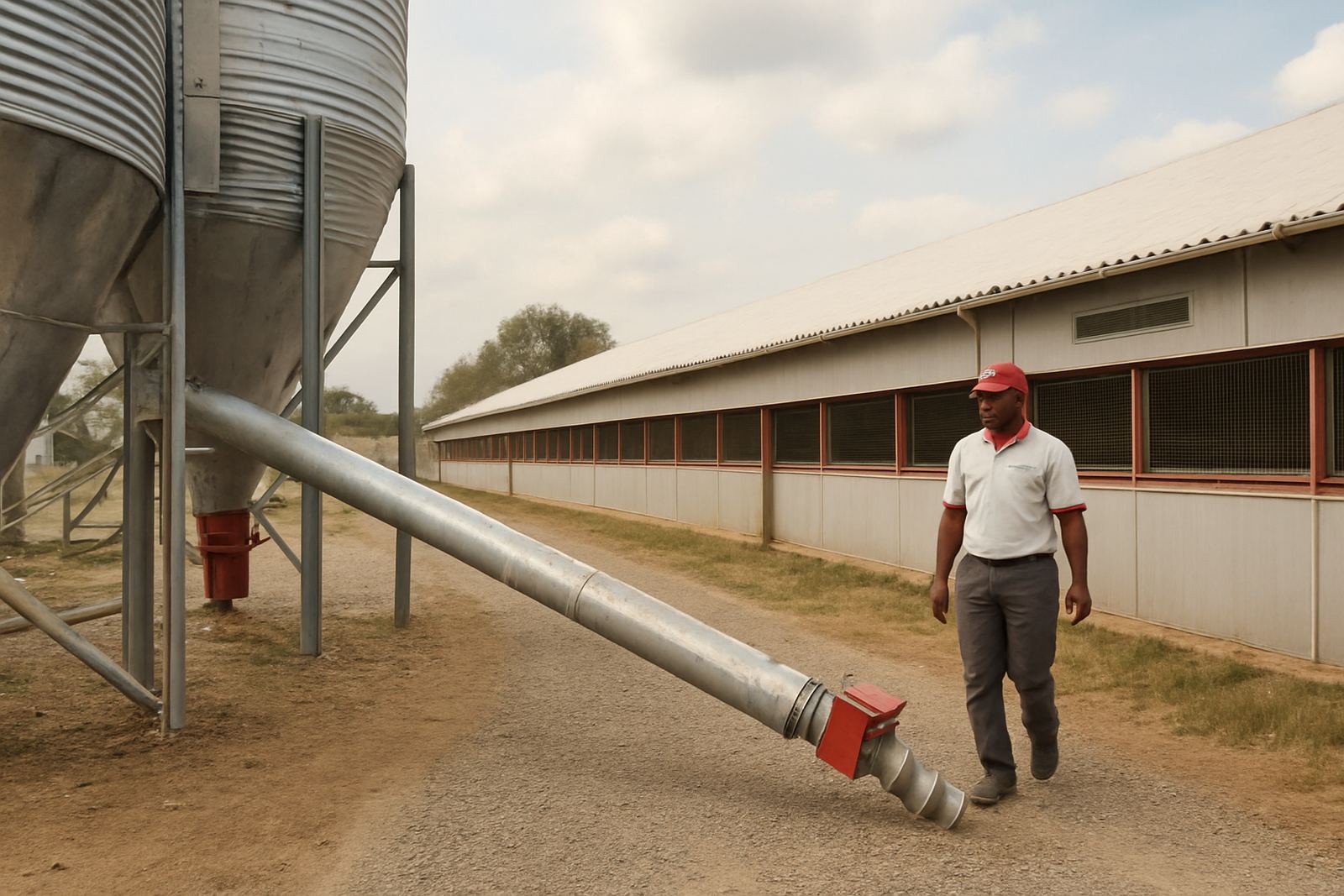
An auger is a rotating spiral inside a tube or flexible line that carries feed from one point to another. In practical terms, it takes feed from a storage point and pushes it along to the feeder line or a day bin, so operators are not carrying bags down the house twice a day. That matters on larger sites, but it also helps on smaller units where time, labour and consistency all count.
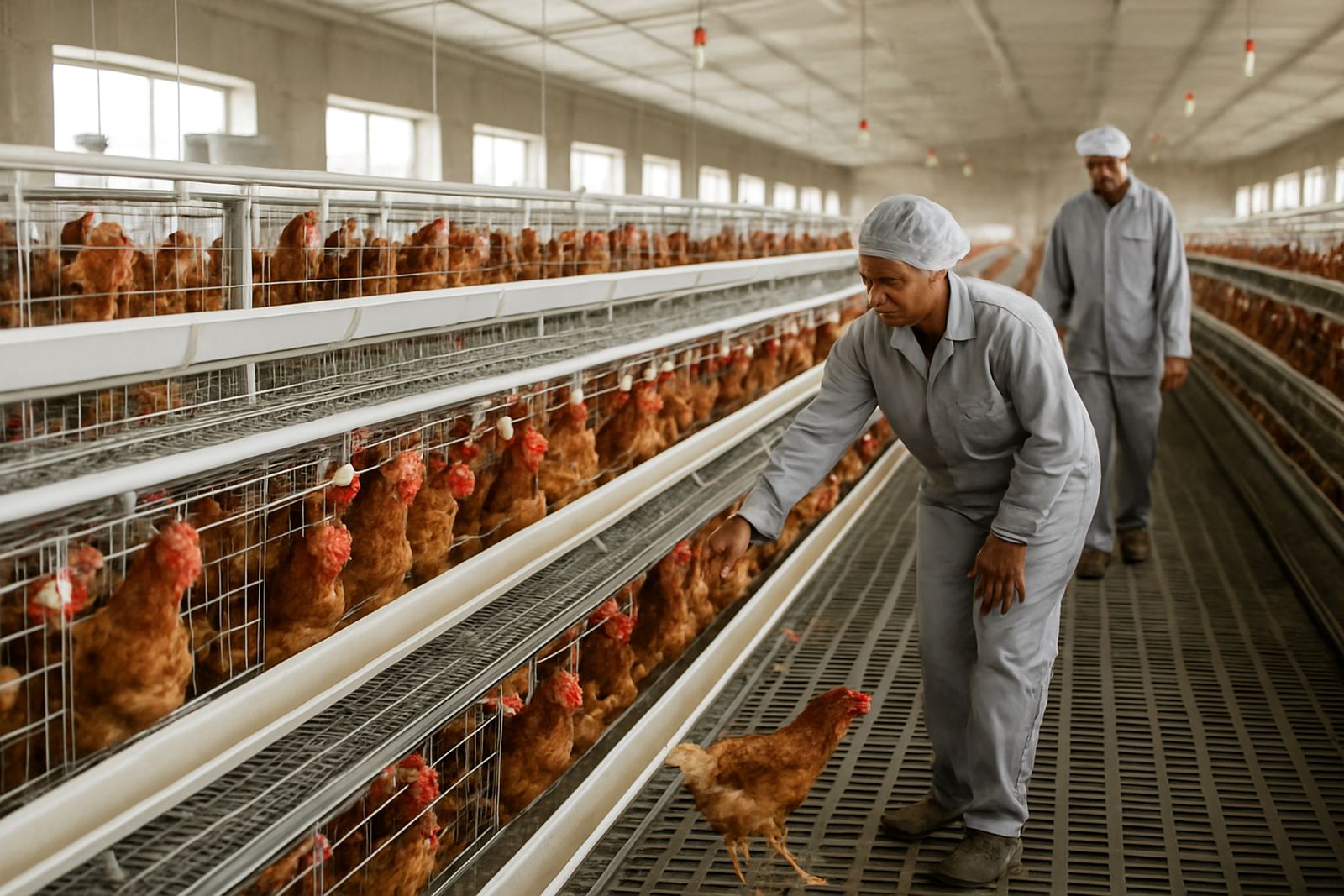
Feed augers are often chosen for poultry houses because they can be set up to suit the house length, the feed route and the type of feeder in use. On layer units, they are commonly used to move feed into pan or chain feeding systems. On rearing houses, they help keep feeding even across the full length of the house, which supports better flock uniformity. They also reduce spillage, which is important when feed prices are tight and the yard must stay clean.
Sizes and layout options for different sites
Feed augers are supplied in different diameters, tube lengths and drive arrangements depending on the application. Short runs can work well from a bulk bin to a single house, while longer installations may need intermediate support points and a stronger drive unit. Flexible augers are useful where the line has to bend around obstructions. Rigid tube systems are usually preferred where the route is straight and feed flow must stay consistent.
Typical options include fixed speed systems, controlled start and stop operation, and layouts that feed one or more houses from a central storage point. For Gauteng and the inland provinces, where houses can be spread across open sites, the routing needs to be planned properly so the feed line does not pick up unnecessary wear. Coastal humidity in KwaZulu-Natal can also affect bearings and electrical parts if they are not protected well.
- Common tube sizes are selected to match feed type and house demand
- Longer houses often need stronger drives and proper support spacing
- Flexible lines suit irregular routes, while rigid lines suit straight runs
- Systems can be arranged for single house or multi house feeding
Where feed augers suit best
Feed augers suit poultry projects where clean feed transfer and predictable delivery are important. They are used on laying hen houses, rearing houses, broiler operations and small to medium feed stores linked to the production area. They can also form part of a turnkey poultry project where feed handling, bird flow, drinker lines and housing layout are planned together from the start.
They are practical in areas where manual handling is not ideal, such as a site with limited staff, a house that must be fed at fixed times, or a farm that needs to keep vehicle movement down during wet weather. In Mpumalanga and Limpopo, dust and heat can be a factor, so correct sealing and regular inspection are important. On municipal or peri urban sites, a neat fixed installation can also help with yard control and access management.
These systems are not only for new builds. They can be added to existing houses during an expansion, or fitted during an equipment upgrade when a farmer is replacing older feed pans, hoppers or transfer lines. The right setup depends on the feed flow rate, house size and the way labour is organised on site.
Installation needs, power supply and site checks
Installation should be planned before equipment arrives on site. The line must be aligned correctly, with enough clearance for service access and enough support to prevent sagging. The drive motor, gearbox and control point should be placed where they can be reached safely without crossing wet floors or moving bird traffic. On a typical poultry house, the installation team will also check the route for feed transfer points, bends and any areas where the line may rub or strain.
Feed augers normally run on electric power, so stable supply is needed. On sites affected by load shedding, many operators link the feeding schedule to generator or backup power planning so feed delivery is not interrupted. If the site has an inverter or generator system, the starting load must be checked against the motor size. Where voltage drop is an issue, which happens on some rural and edge of town sites, the cable size and protection must be specified properly.
- Check house length and the exact feed route before ordering
- Confirm power supply, phase and available backup power
- Allow space for inspection covers and drive maintenance
- Make sure support frames suit the floor and wall construction
Care, servicing and spare parts planning
Good care keeps an auger system feeding evenly and avoids unnecessary downtime. The line should be checked for noise, vibration, feed build up and worn couplings. Bearings, motors and gearboxes need routine inspection, and the tube or trough should be kept clear of compacted feed. If feed is left inside for long periods, especially in warm humid conditions, it can harden and make the system strain on start-up.
Servicing should be part of the farm’s maintenance programme, not something done only after a fault. In practical terms, that means checking fasteners, drive alignment and safety guards on a set schedule. Spare parts should be kept for wear items such as couplings, bearings, seals and drive components. On bigger sites, it is wise to hold at least one critical spare so a fault does not stop the whole house. A little attention during cleaning and changeover saves a lot of trouble later.
What to confirm before you place an order
Before ordering feed augers, the site team should confirm the full layout and operating needs. The same basic system can perform very differently depending on the feed type, run length and the number of houses being served. If the line is too small it will struggle to move feed properly, and if it is oversized the installation cost goes up without adding value.
Useful order details include the house length, number of feeder points, feed type, storage position and the preferred control method. It also helps to know whether the system will be installed in stages or as a full project. For farms in Gauteng, North West, Free State, Mpumalanga, Limpopo and KwaZulu-Natal, local transport, access roads and service support should also be considered before final sign-off.
- House or shed dimensions in metres
- Feed source position and capacity
- Required feed delivery speed or output target
- Power supply details and backup arrangements
- Any future expansion plans on the same site
Support for poultry projects across South Africa
John F Marshall supplies feed augers as part of broader poultry project support, from site planning through to installation supervision and training. That means the equipment is not treated as a stand-alone item only. It is matched to the house layout, the feeding system and the way the farm will operate once birds are in place. The goal is simple: move feed cleanly, keep labour manageable and make servicing straightforward.
From the Jet Park base in Boksburg, the team supports poultry sites across Gauteng and beyond. For new houses, expansion work or equipment replacement, the right auger setup can save time every day and reduce the strain of manual feed handling. It is a practical part of a well planned house, and when it is specified correctly it does its job quietly for years.
Key facts
| Application | Feed transfer from storage to poultry feeders, day bins or house lines |
|---|---|
| Typical sizes | Selected to suit house length, feed type and required delivery rate |
| Construction | Rigid tube or flexible line options with motor driven spiral auger |
| Power | Electric drive, with sizing confirmed against available mains or backup supply |
| Use environments | Poultry houses, feed rooms, rearing units and expansion projects |
| Service needs | Routine checks on bearings, couplings, alignment, seals and drive components |