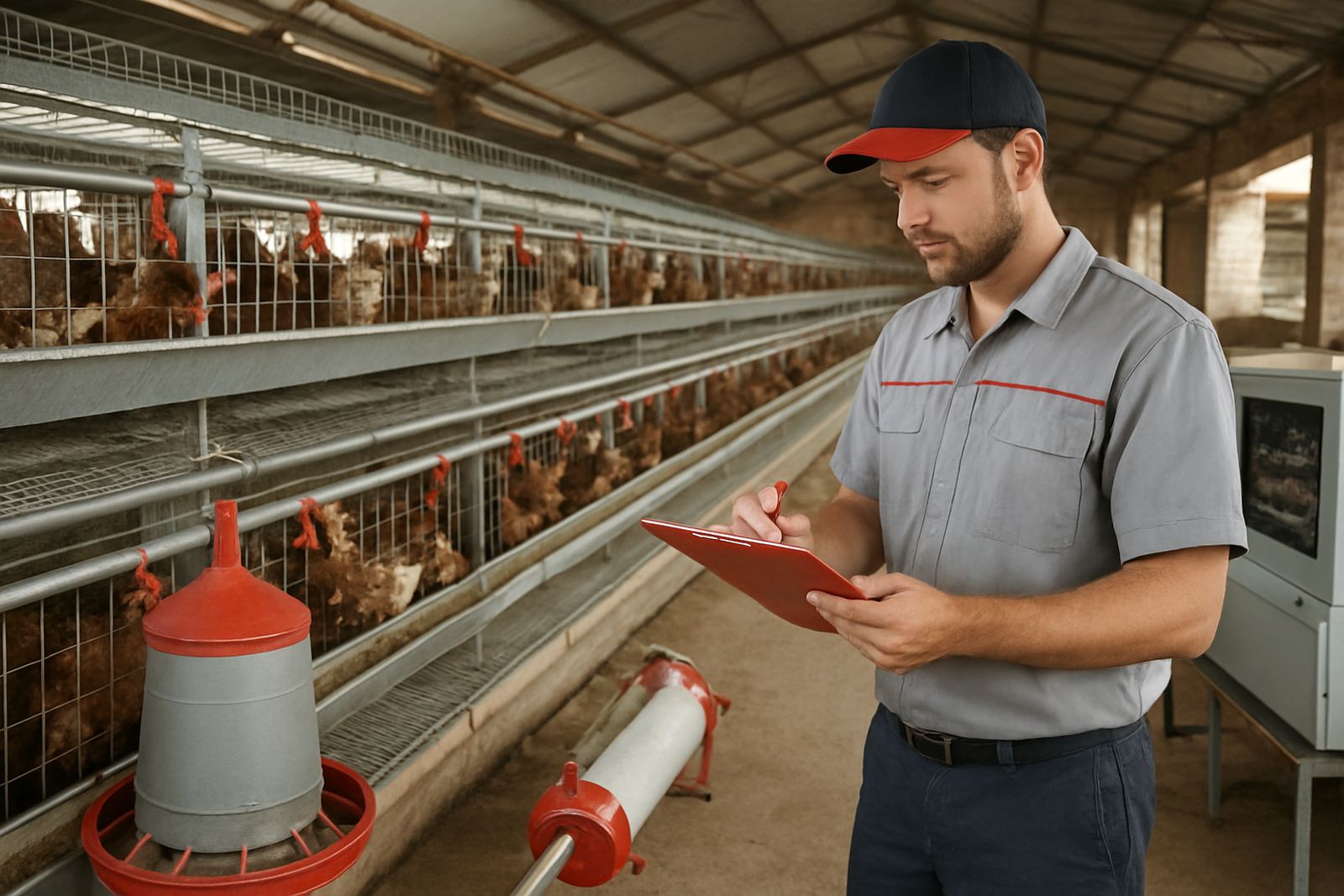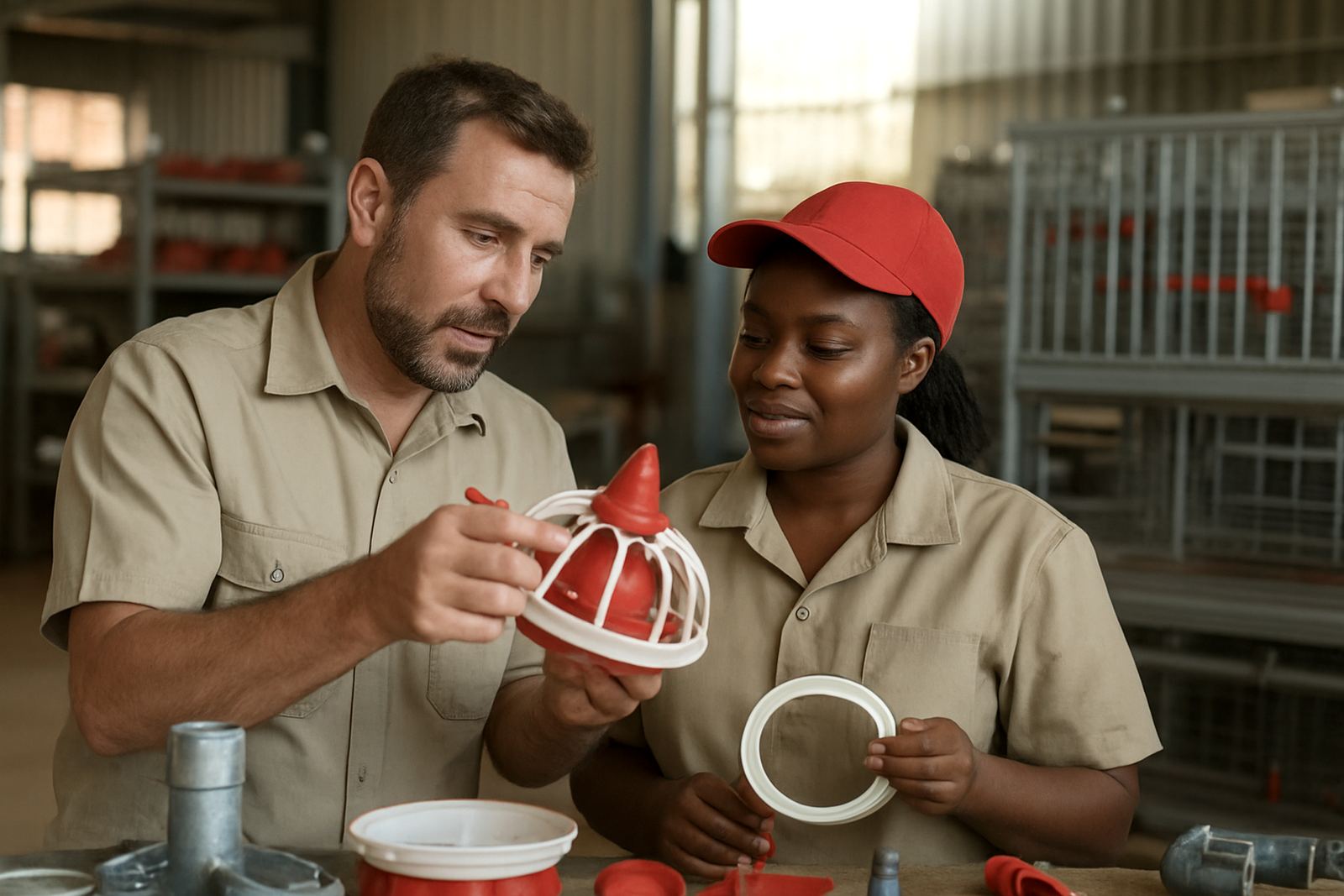
Start with the equipment details you can see
The quickest way to get the right spare is to give us the information already on site. Even if the original paperwork is missing, there is usually enough on the machine, control panel or housing to narrow it down. A clear photo from your phone often saves a lot of back and forth.
Send the equipment type, the number of units affected, and any visible markings, plates or dimensions. If the part has broken, keep the old one beside a ruler or tape measure and take a photo from the front and side. That helps us compare hole spacing, shaft size, thread type and mounting points, which is where many identification mistakes happen.
- Equipment type and where it is used
- Photo of the whole unit and the worn part
- Any serial number, size or voltage detail
- How many parts are needed
- Your location for collection or delivery
Common replacement parts we help identify
Most requests come through for routine wear items on poultry houses, incubators, brooders and processing areas. These parts may look simple, but the wrong size can cause feed spillage, uneven water delivery, poor temperature control or longer downtime.
We often assist with items such as motors, belts, chains, bearings, valves, nipples, trays, sensors, heating elements, switches, clamps, sockets and controller parts. For laying-hen cages, feed lines and drinker systems, small differences in length or connector type matter. In abattoir areas, seals, blades, guards and fittings must match the existing equipment and the cleaning routine on site.
- Feeders, drinkers and cage system components
- Incubator and brooder controls, fans and heaters
- Motors, belts, chains and drive parts
- Abattoir fittings, guards and wear items
- Electrical and control accessories
How to request spare parts support
When you contact us, please describe the fault plainly. For example, say whether a drinker is leaking, a feeder line is not turning, an incubator is holding temperature poorly, or a brooder is tripping power after load-shedding. That context helps us work out whether you need one part or a few items replaced together.
We will ask a few follow-up questions if needed, then compare your details with the installed equipment. If the item is still in production, we will confirm the match. If the original part is no longer available, we will advise on a suitable equivalent or a small upgrade that keeps the system working properly. We try to keep the process simple, especially for farms and processing rooms that cannot wait around for days.
- Email clear photos to info@johnfmarshall.co.za
- Include your farm or factory location
- State if the part is urgent or planned
- Mention any repairs already done
- Ask for fitment or only supply, as required
What happens before we release a part
Some spares can be supplied directly, while others need confirmation against the installed layout. This is especially important on older houses, custom installations and projects that have been expanded over time. A part that looks close enough may still cause strain on motors, poor alignment on chains or a leak that comes back within weeks.
For that reason we check measurements, compatibility and the condition of nearby parts. If the wear pattern suggests a wider problem, we will point it out. That might mean replacing a bushing, checking a pulley, or adjusting a sensor bracket at the same time. It costs less to sort the cause now than to keep replacing the same item again and again.
Keeping stock on hand for South African conditions
In Gauteng, Mpumalanga, Limpopo, North West, the Free State and KwaZulu-Natal, heat, dust, humidity and power interruptions all affect equipment life. Coastal moisture can rust fittings quicker, while inland dust can work its way into moving parts and bearings. If you run a poultry house or processing room, a small spares pack can keep you going when deliveries are delayed.
We can help you plan a sensible stock list for the parts that fail most often on your system. That usually includes wear items, seals, sensors, belts, valves and a few electrical components. Keep them in a dry cupboard away from chemicals and washing water, and label each item by location and machine number. It sounds basic, but it saves time when the lights go off or the line stops mid-shift.
Getting urgent help for breakdowns and downtime
If you are dealing with a breakdown, tell us what has stopped, what is still running and whether birds, feed or product are affected. That helps us prioritise the request. We support projects and equipment across South Africa from our Jet Park, Boksburg base, and we understand that a day lost in a poultry house can affect the whole week.
For urgent cases, send the details straight away and include a contact number. If you have a technician on site, we can work with them to confirm the replacement and talk through the fitment steps. When a system needs more than one part, we will help you separate the must-have items from the extras so you can get production moving again first.